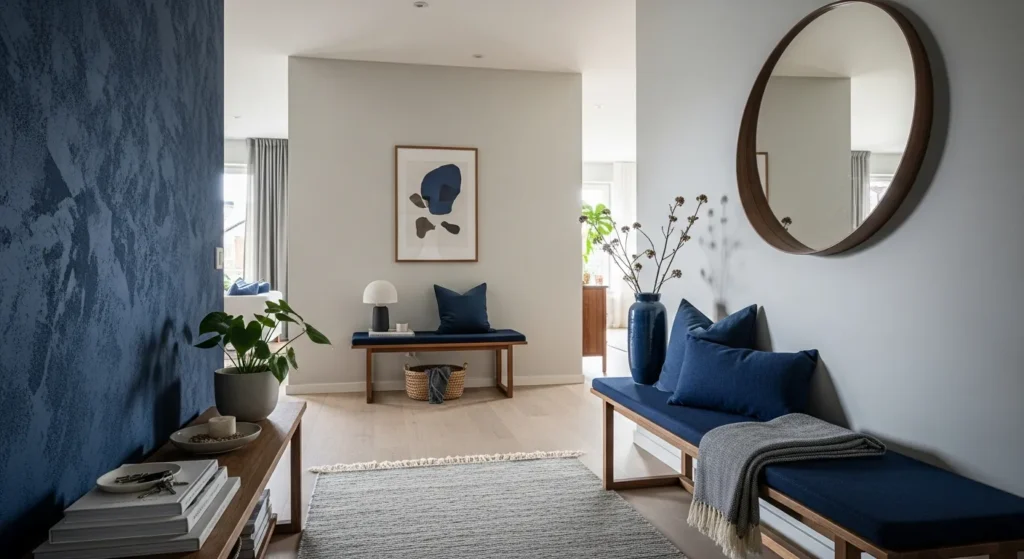

Hello, lovely design friends! Let’s talk about the very first thing you—and your guests—see when walking through the front door: your entryway. Too often, this hard-working area becomes a chaotic dumping ground for keys, mail, and mismatched shoes. But what if we transformed it into a breathtaking, calming sanctuary that instantly melts away the stress of the outside world?
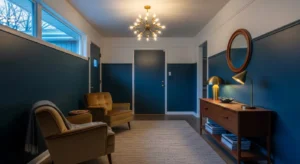
Lately, I have been absolutely obsessed with the Japandi aesthetic. If you haven’t heard of it yet, it is the perfect, harmonious marriage between Japanese minimalism and Scandinavian functionality. It is cozy, clean, and incredibly grounding for everyday living. If you are searching for transformative Japandi Entryway ideas, you have found the ultimate starting point. While you might typically associate Japandi style with pale woods and creamy off-whites, I am here to introduce you to a game-changing twist: Navy Blue.
Specifically, we are talking about true, deep navy hues (like Hex: #000080) paired with rich indigos. Adding a bold yet soothing splash of this classic hue to your foyer elevates the entire vibe from simple to sophisticated. Grab your favorite cup of tea, get cozy, and let’s dive into how you can design the ultimate welcoming space that perfectly balances mindful living with striking, elegant color!
#112236
#D9C5B2
#F2EFE9
#1A2436
#D9C5A0
#F4F1EB
The Psychology of Navy Blue in Japandi Entryway Ideas
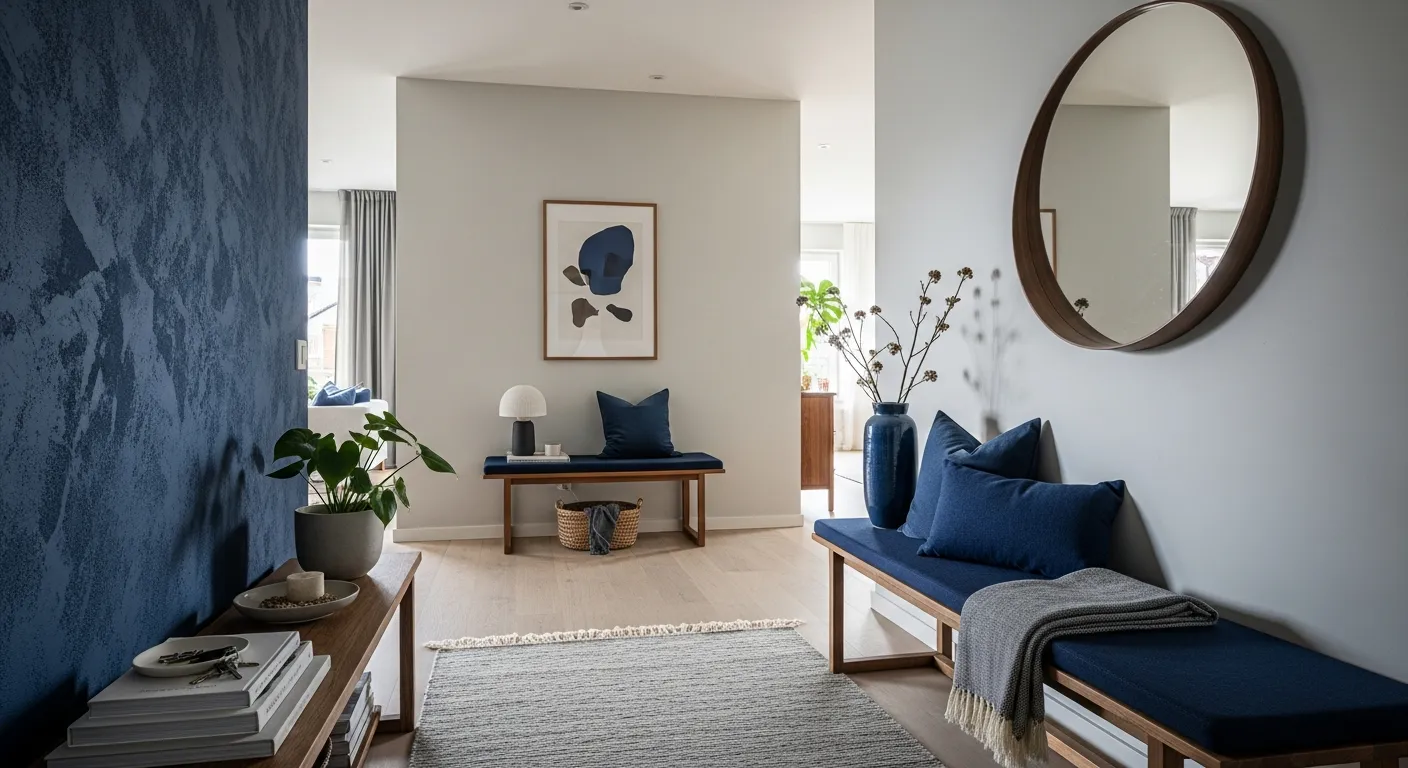
When we discuss the psychological impact of color, your entryway serves as the vital transition point between the chaotic outside world and your personal sanctuary. In traditional Japandi design, we often look to the natural world for inspiration. A deep, rich navy blue mimics the expansive midnight sky or the calming depths of the ocean. It represents stability, introspection, and profound calmness.
By utilizing navy blue as a primary color or an accent wall in your foyer, you immediately signal to your brain that it is time to slow down. While stark whites can sometimes feel overly clinical, a dark, moody blue acts as a warm embrace. It beautifully highlights the wabi-sabi philosophy—finding beauty in natural imperfection—by creating a high-contrast background that makes the grain of natural wood and the raw texture of ceramics pop beautifully.
Essential Furniture & Decor Elements
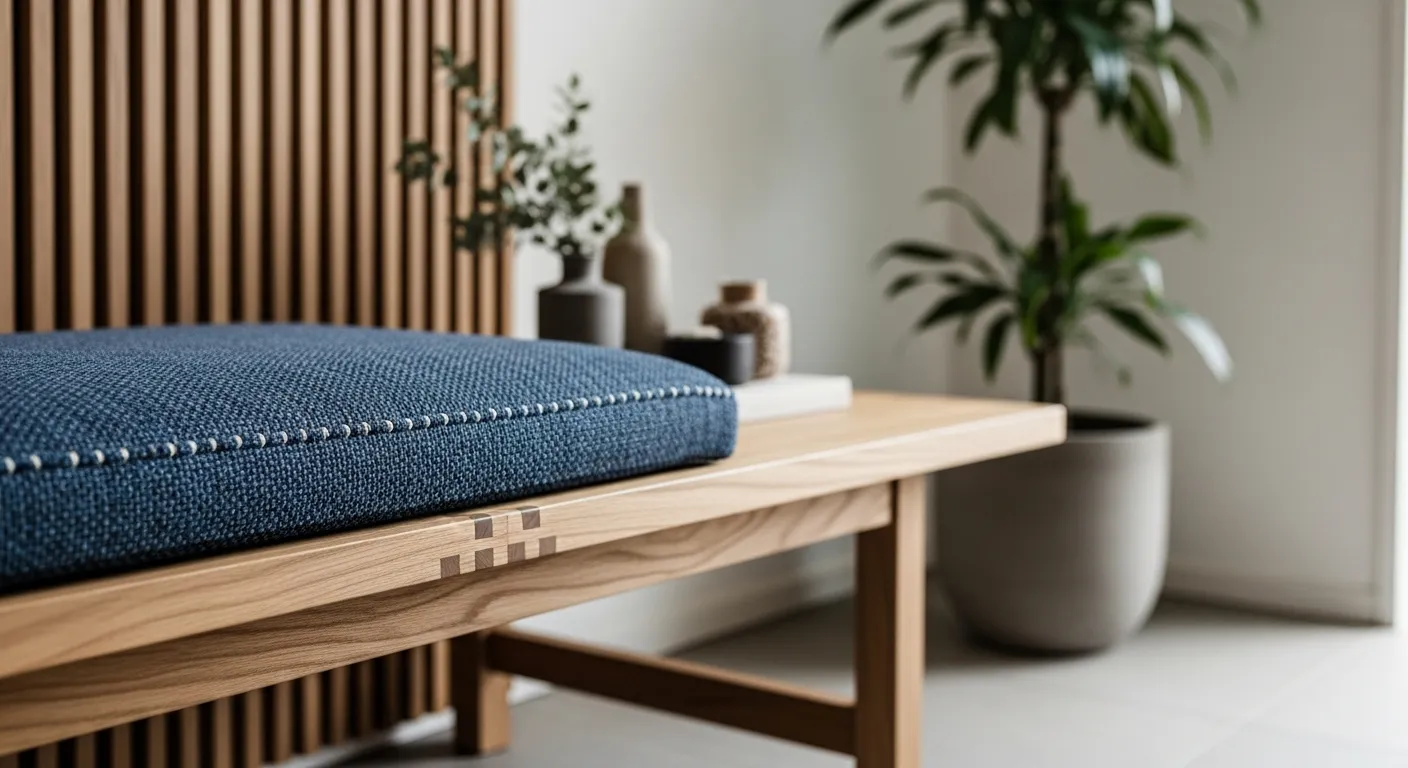
The secret to nailing the Japandi aesthetic lies in striking the perfect balance between Japanese elegance and Scandinavian functionality. Every item in your entryway should serve a distinct purpose while maintaining a beautiful, unpretentious form. Here are the must-have elements to bring this look to life:
- Warm Wood Console Table: Opt for light-to-medium woods like white oak, ash, or walnut. Look for clean, straight lines or gentle curves with minimal hardware.
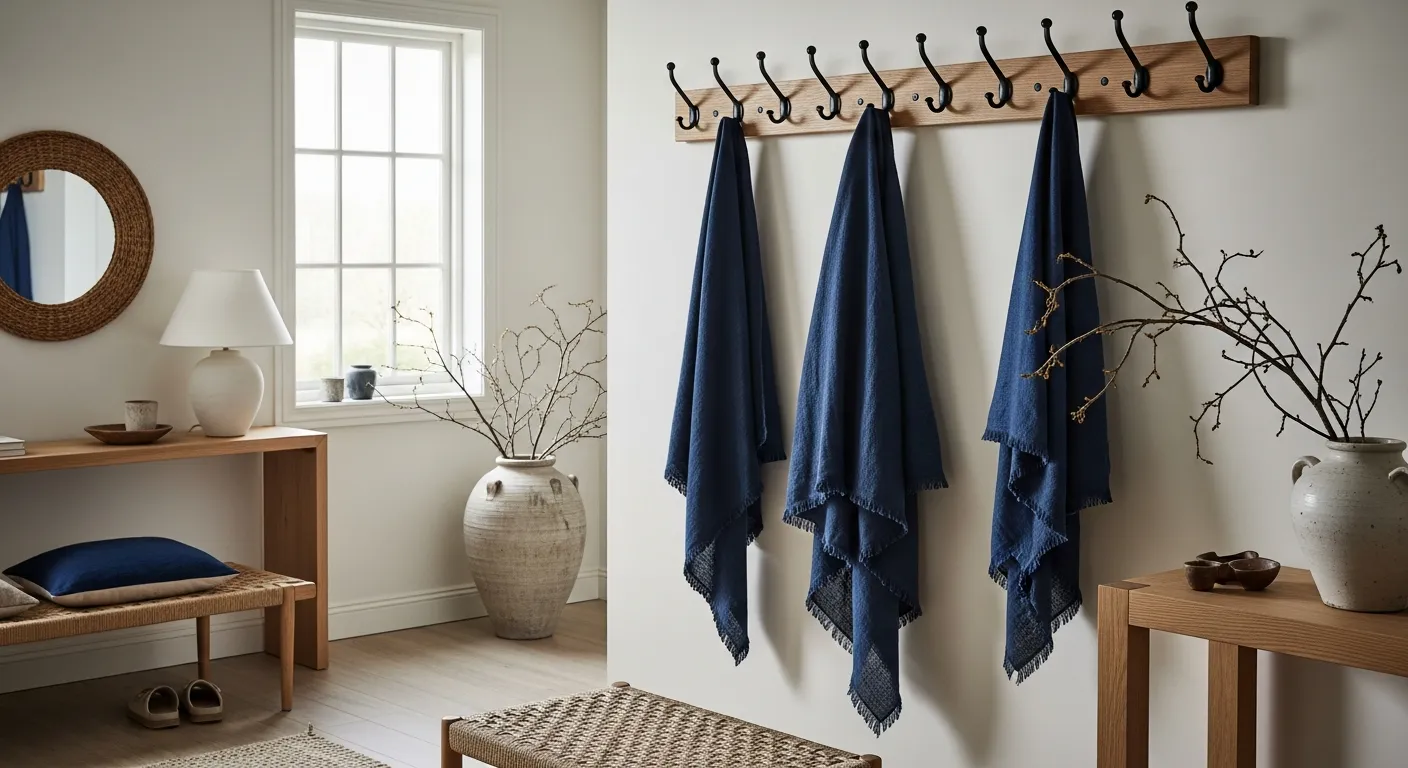
- Textured Ceramics: Bring in unglazed, handmade vases or bowls. The rough texture provides a tactile contrast against a smooth navy wall.
- Asymmetrical Mirrors: A mirror is essential for a quick reflection check and for bouncing light around the space. An organic, pebble-shaped mirror leans beautifully into the Japandi vibe.
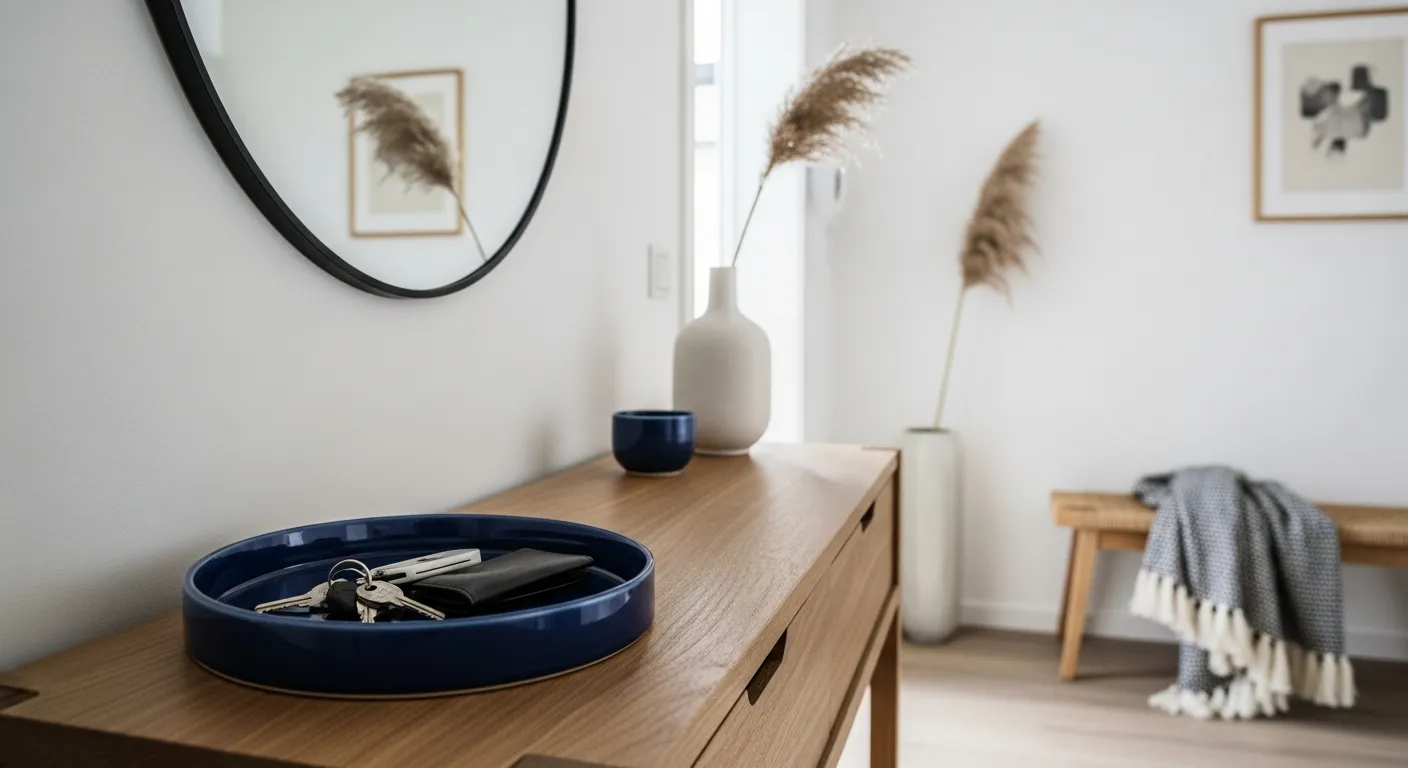
- Concealed Storage: Clutter is the enemy of tranquility. Use woven baskets, linen boxes, or closed-drawer consoles to hide away keys, mail, and dog leashes.
- Natural Touches: A single, sculptural branch in a tall vase brings the outside indoors, a hallmark of Japanese interior philosophy.
Color Combinations & Palette Ideas
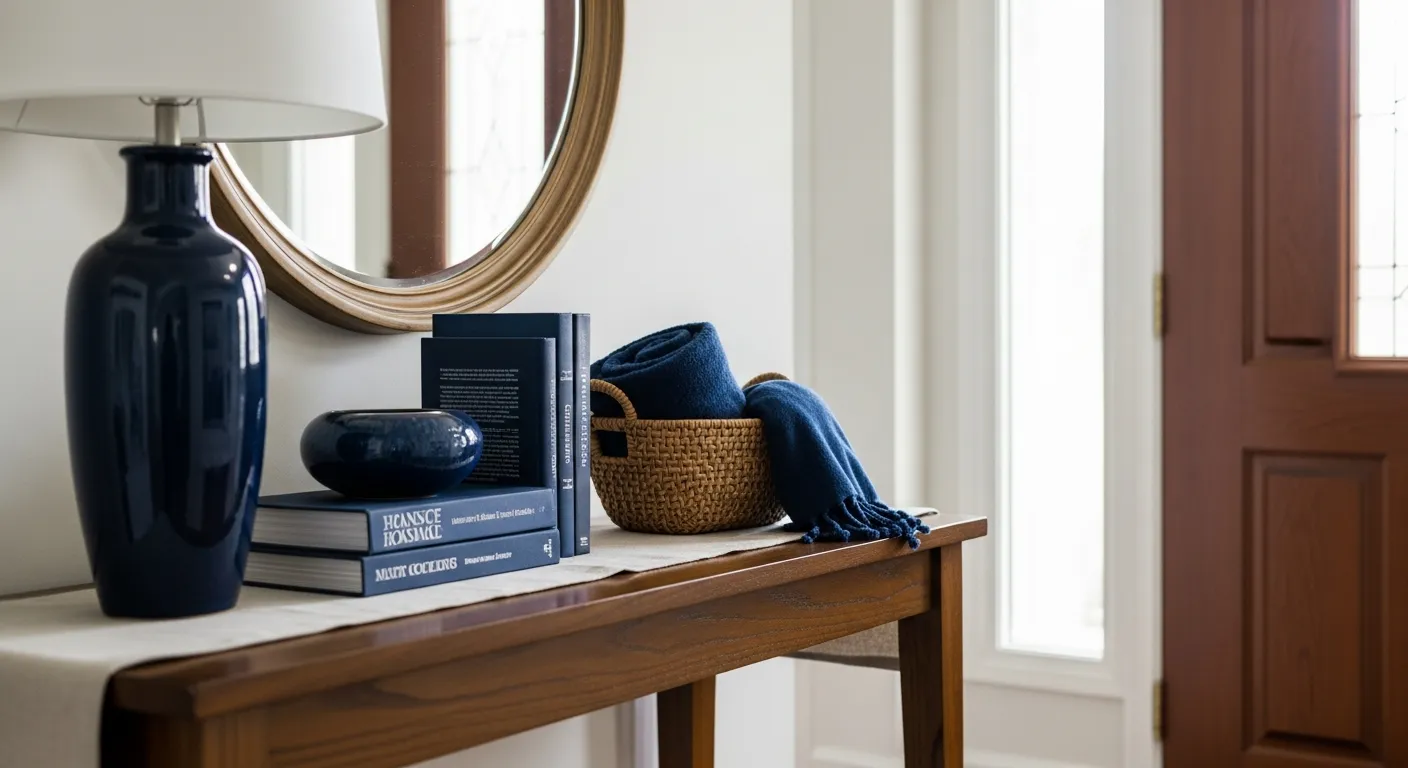
Designing around a bold color like navy blue requires a thoughtful approach to ensure the space feels balanced rather than heavy. To maintain the light, airy feeling inherent in Japandi style, we rely heavily on the 60-30-10 rule. Let your warm, creamy neutrals and wood tones serve as the dominant 60%, use your deep navy as the supportive 30%, and reserve the final 10% for metallic accents or darker contrasting textures.
Consider these beautiful color pairings to complement your navy blue entryway:
- Navy & Warm Oat (#D9C5B2): This pairing mimics the look of driftwood against a dark sea. The warmth of the oat hue neutralizes the cool tones of the navy.
- Indigo Slate & Soft Cream (#F2EFE9): A slightly softer alternative to stark white, cream creates a seamless, gentle contrast that feels welcoming and lived-in.
- Deep Indigo (#112236) & Golden Sand (#D9C5A0): The subtle golden undertones in light oak furniture truly shine when placed against a nearly black-blue backdrop.
Styling Tips for Minimalist Japandi Entryway Ideas
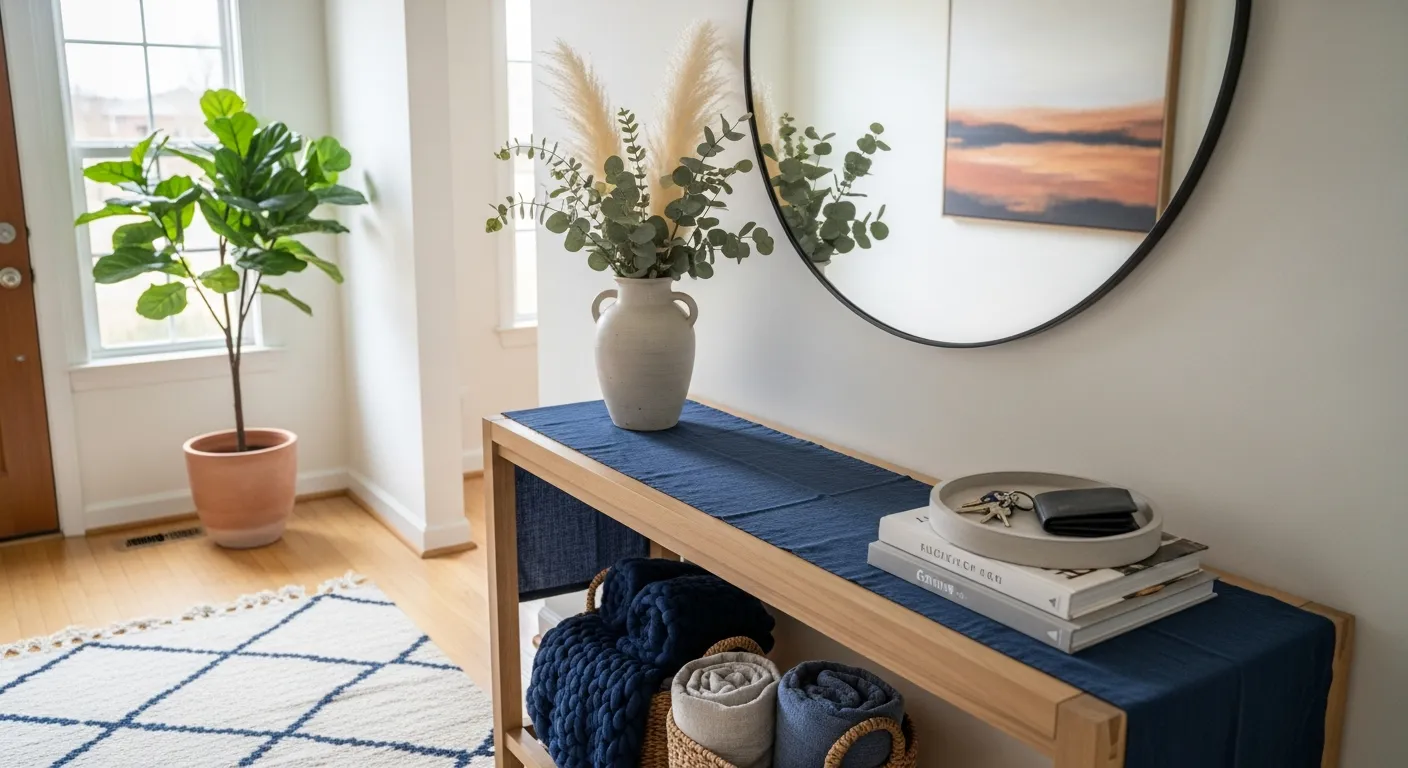
Styling a minimalist space is truly an art form. When you have fewer items on display, the items you do choose to feature must carry their weight aesthetically. The goal of incorporating these Japandi Entryway ideas is to create visual interest without visual noise.
First, embrace asymmetry. Rather than placing a lamp on both ends of your console table, try placing a slender lamp on one side and balancing it with a low, textured catch-all bowl on the opposite end. Secondly, focus heavily on layering. Lean a framed piece of abstract, neutral artwork against the wall, and overlap it slightly with a textured ceramic vase. This creates depth and dimension.
How to Recreate This Look (Steps, Budget & FAQ)
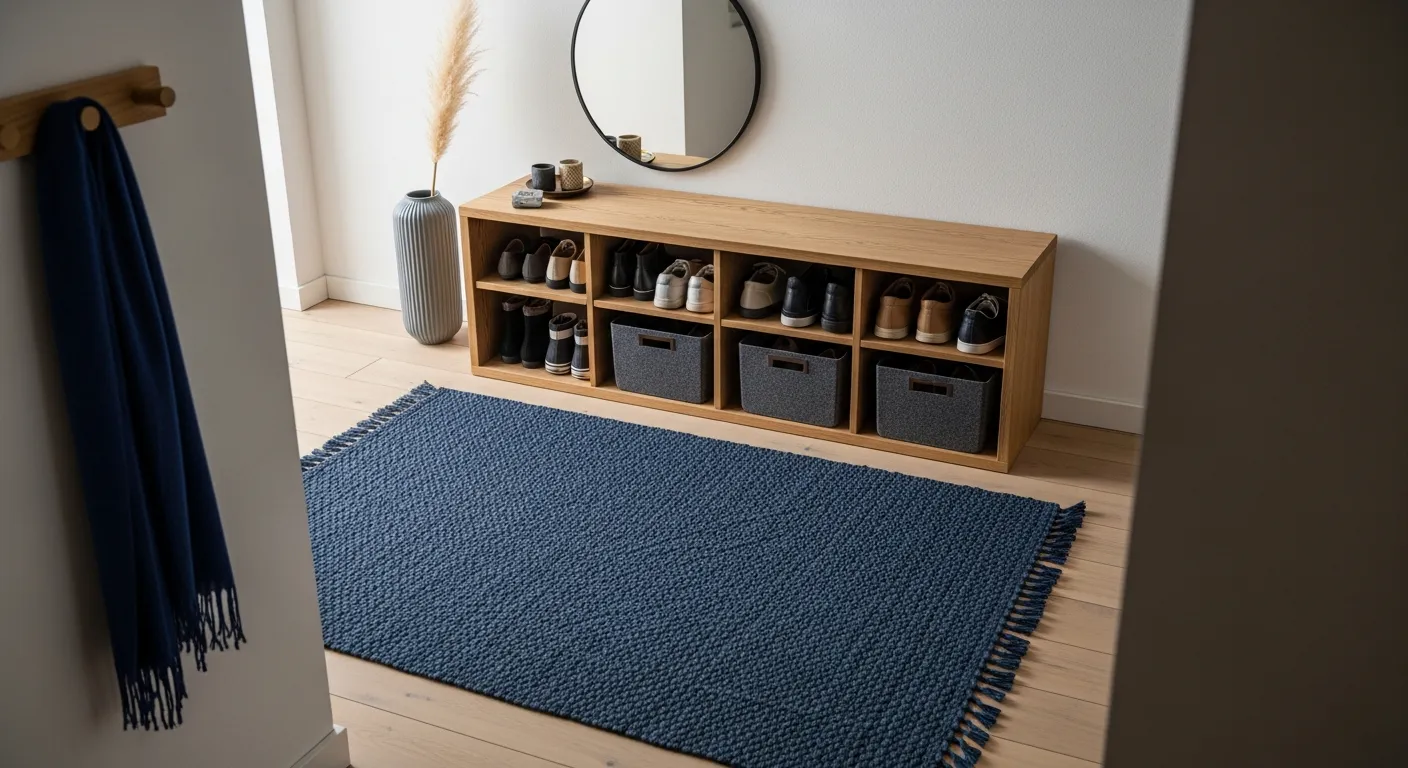
Ready to transform your own home? Recreating a navy blue Japandi entryway is entirely achievable, whether you have a sprawling foyer or a compact hallway. Follow these simple, actionable steps to curate your own Zen-inspired drop zone.
- Declutter Ruthlessly: Start with a completely blank slate. Remove everything from the area. If an item doesn’t serve a daily functional purpose or bring you immense joy, it doesn’t belong in your entryway.
- Establish the Navy Anchor: Choose your focal point. This could be painting an accent wall in a rich, matte navy blue, adding a large piece of navy artwork, or even laying down an indigo jute runner rug. A matte paint finish is highly recommended as it absorbs light and hides wall imperfections, leaning into the wabi-sabi aesthetic.
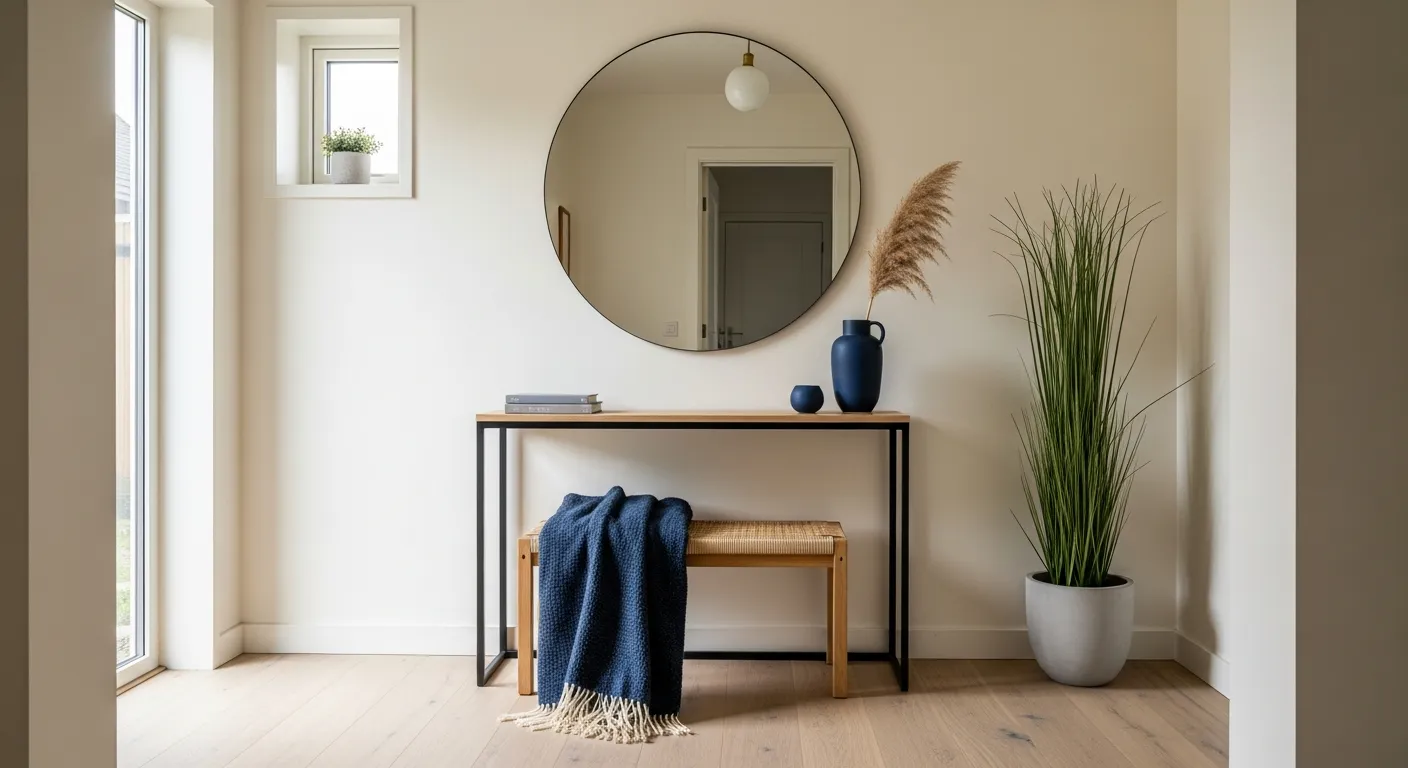
- Add Warm Wood Tones: Bring in your main furniture piece. A slender oak console or a slatted ash wood bench provides the perfect Scandinavian functionality needed to soften the dark blue.
- Layer Functional Decor: Add your organic mirror, a textured ceramic bowl for keys, and subtle, warm-toned lighting to cast a welcoming glow.
Estimated Budget Breakdown
You don’t need to spend a fortune to achieve a premium Japandi aesthetic. Here is a realistic breakdown of what you might expect to spend to recreate this look:
- Premium Matte Navy Paint (1 Gallon): $50 – $75
- Light Oak Console Table or Bench: $150 – $350
- Organic Shaped Wall Mirror: $60 – $130
- Textured Ceramic Vases & Decor: $40 – $90
- Woven Storage Baskets: $30 – $60
- Total Estimated Cost: $330 – $705
Frequently Asked Questions
Will a navy blue wall make my small entryway feel smaller?
Not necessarily! Dark colors like navy blue often recede to the eye, blurring the corners of a room and creating an illusion of infinite depth. As long as you balance the dark wall with light wood furniture, a bright ceiling, and strategic mirror placement to bounce natural light, your space will feel vast and sophisticated.
What are the most budget-friendly Japandi Entryway ideas?
If you are working on a tight budget, focus on the power of paint and thrifted textures. Paint is incredibly inexpensive for the high impact it provides. For decor, visit local thrift stores to find beautifully imperfect stoneware and pottery. You can even use the viral “baking soda and paint” DIY trick to give cheap glass vases an expensive, unglazed ceramic look.
Your entryway sets the tone for your entire home. By stepping away from the expected and embracing the moody, grounding depth of deep blues, you create a space that feels deeply personal and intentionally designed. I sincerely hope that bringing these Japandi Entryway ideas to life in your own home helps you craft a daily welcoming experience that is as peaceful as it is beautiful. Remember, interior design isn’t just about how a space looks—it is about how a space makes you feel. Happy styling, friends!