
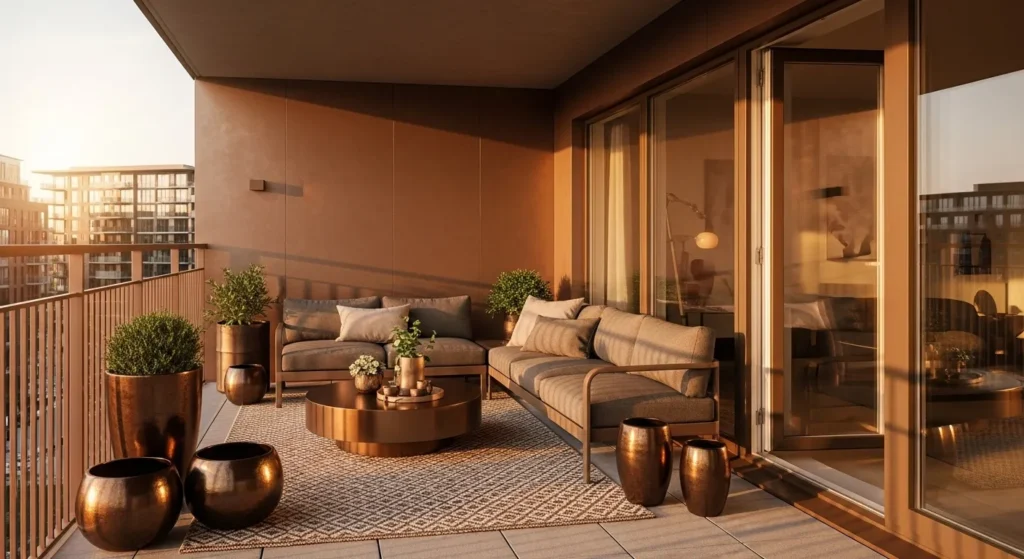
If you’re looking for Scandi Outdoor Balcony ideas that feel warm (not stark), bronze is the secret ingredient. I’ve styled a lot of Scandinavian-inspired outdoor spaces, and the ones people actually use every day always have one thing in common: a grounded, earthy metal tone that softens all the pale woods and clean lines. In this guide, I’ll show you exactly how to build a calm, modern balcony around a Bronze Outdoor Balcony color story—without over-decorating, and without sacrificing that airy Scandi simplicity.
Color Palette
#CD7F32
#A67241
#D9B68F
#E7D9C7
#7A7D80
#2F2F2C
#5A7A46
Scandi Outdoor Balcony ideas: The Psychology of Bronze (Why It Works)
In Scandinavian design, the goal isn’t “minimal for minimal’s sake.” It’s comfort with intention—clean lines, breathable space, and textures that make you want to sit down. Bronze is one of my favorite ways to make that comfort feel immediate on an outdoor balcony. Where black metal can read sharp (and sometimes cold), bronze reads sun-warmed. It’s a metal, but it behaves like an earthy neutral, which is exactly what you want when you’re layering pale wood, creamy textiles, and greenery.
From a color psychology standpoint, bronze sits in the family of terracotta, caramel, and aged copper. Those tones subtly tell your brain “safe, warm, grounded.” On a balcony—where you’re exposed to wind, shade shifts, and city noise—that grounded feeling matters. Bronze also plays beautifully with natural light. In midday it looks refined and quiet; at golden hour it glows, and suddenly your balcony feels like an outdoor room instead of a leftover corner.
One of the most reliable Scandi decor tricks is to anchor your palette with a “warm weight.” Bronze can be that weight without overwhelming the Scandinavian lightness. Keep it in a few controlled places—planters, a small side table, lanterns, hardware—then repeat the tone two or three times so it feels intentional.
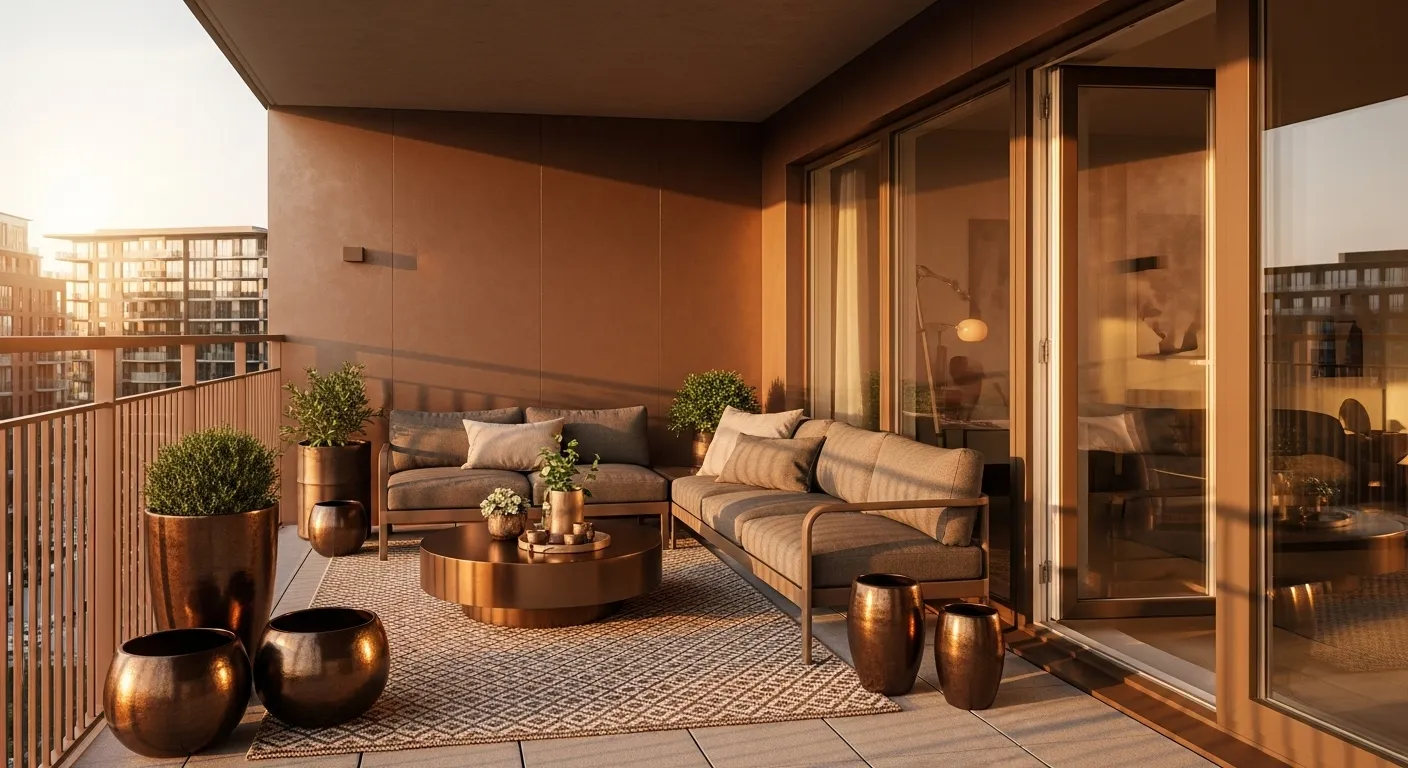
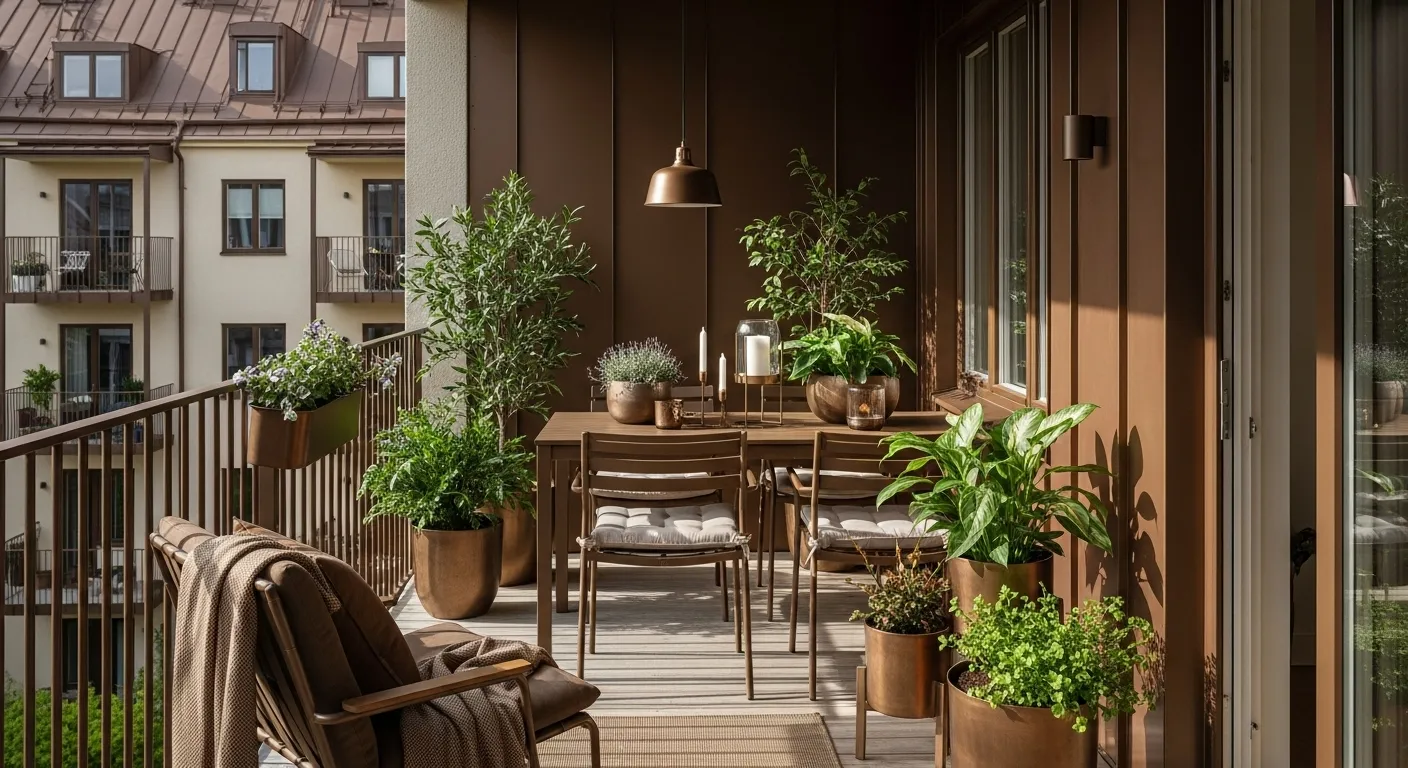
In the wide shot above, notice how the bronze accents don’t shout—they collect the light. That’s the magic: bronze reads as a quiet luxury, especially when you keep the surrounding shapes simple and Scandinavian.
What bronze changes in a small outdoor space
Balconies are visually “busy” by nature (railings, neighboring buildings, sky, plants). Bronze reduces visual noise because it’s a medium-value tone—darker than beige, softer than black. It creates contrast without harsh edges. This is why a Bronze Outdoor Balcony can feel calmer than an all-black-and-white setup.
How much bronze is enough?
I usually recommend one “hero” bronze moment (like a large planter or a lantern cluster), plus two supporting accents (a tray, small side table, candle holders). If you add bronze to every piece of furniture, the look turns more industrial than Scandi.
The best textures to pair with bronze
To keep it Scandinavian, balance bronze with matte, tactile finishes: oiled light wood, boucle-like outdoor weaves, linen-look cushions, and soft throws. Shiny bronze can work, but I prefer a brushed or aged finish outdoors—it looks better longer and hides weathering.
Scandi Outdoor Balcony ideas: Essential Furniture & Decor (The Core Pieces)
When I design a Scandi balcony, I start with comfort, then scale, then materials. The most common mistake I see is buying a cute bistro set that looks good in photos but doesn’t support how people actually live. If you want the balcony to become your everyday coffee, reading, or decompression spot, prioritize lounge seating first—even if it’s just a compact loveseat and a small round table.
For a Scandinavian look, choose furniture with light visual weight: slim frames, open bases, rounded corners, and pale wood or warm neutral upholstery. Then, bring bronze in as an accent through planters, a side table base, or a lantern. That mix—soft neutrals plus bronze plus greenery—reads instantly modern and Nordic.
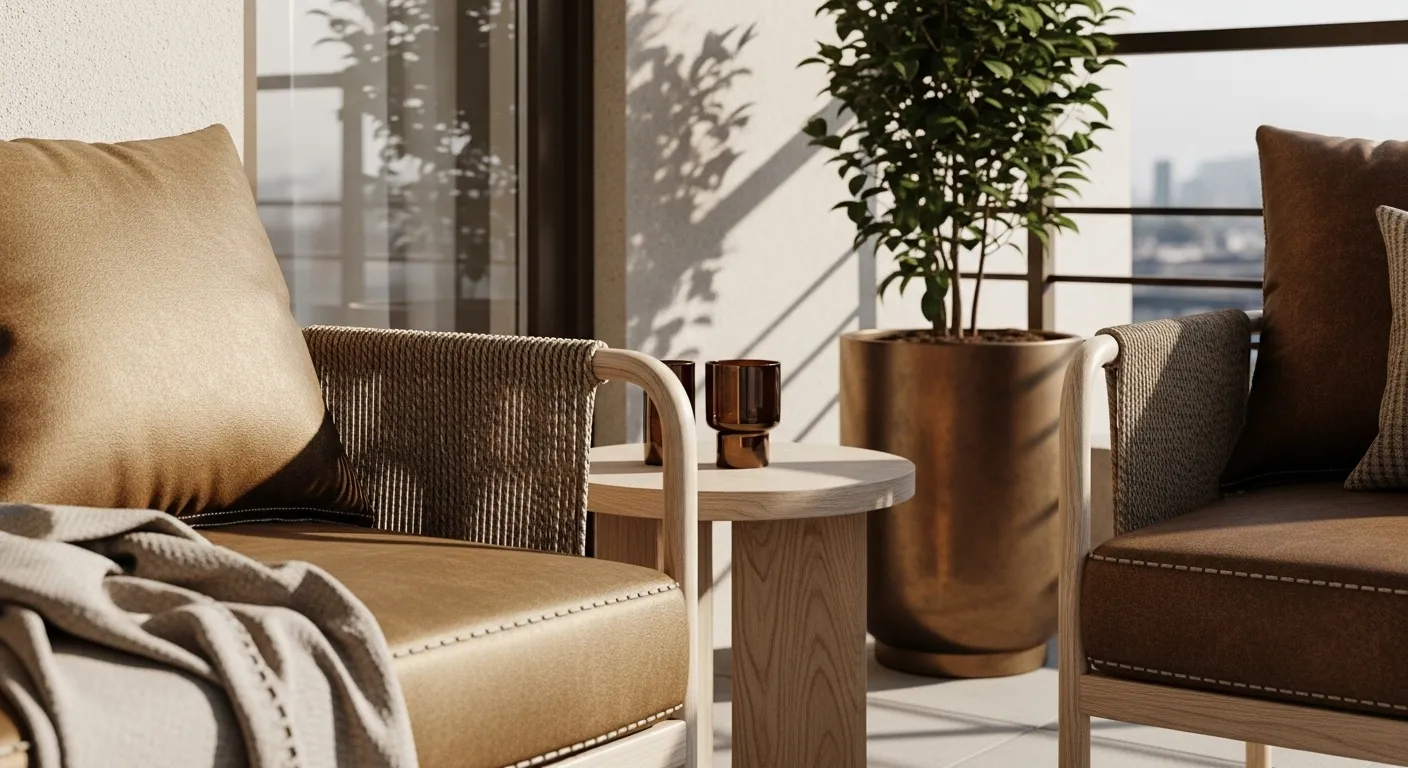
In the detail shot above, you can see the “Scandi formula” I use constantly: one clean-lined seating shape, one warm wood surface, and one bronze planter that quietly elevates the whole corner.
Seating: choose a silhouette, then upgrade the cushion
Look for chairs/sofas with a supportive back angle and space for a lumbar pillow. If your budget is tight, buy the best frame you can afford and allocate $60–$140 for upgraded cushion inserts or outdoor pillow fills. Comfort is what gets you outside.
Tables: why round works best on balconies
Round coffee and side tables are balcony-friendly because they improve circulation (no sharp corners), especially on narrow layouts. A 16–24 inch round table is usually the sweet spot. If you can, pick a wood top for warmth and add bronze through the base or a tray.
Decor that earns its keep
Scandi decor isn’t about lots of objects—it’s about a few pieces that feel honest and functional. My go-tos for a balcony are: a weatherproof lantern, a textured outdoor throw, two pillows in tonal neutrals, and one sculptural planter. Budget-wise, you can pull this together for around $120–$250 if you shop seasonally and keep the palette tight.
Color Combinations & Palette (Bronze + Neutrals + Green)
Color is where Scandinavian style can swing either serene or sterile. The fix is to build your palette like a recipe: one warm neutral, one creamy neutral, one grounded dark, and a living green. Bronze sits right in the warm-neutral lane, and it harmonizes with both pale wood and charcoal accents.
Here’s the combination I use most for a balcony that needs to feel calm every day:
- Bronze / caramel metal (planters, lanterns, small table base)
- Oat/cream textiles (seat cushions, pillows, outdoor rug)
- Light wood (bench, table top, decking tiles)
- Charcoal or soft gray (thin frames, rail details, one pillow)
- Muted green (plants—your “movement” color)
The goal is a gentle contrast. Instead of high-contrast black/white, you’re creating layers that feel sun-warmed and touchable. That’s why this palette translates so well to a Bronze Outdoor Balcony—bronze acts like a bridge between wood and greenery.
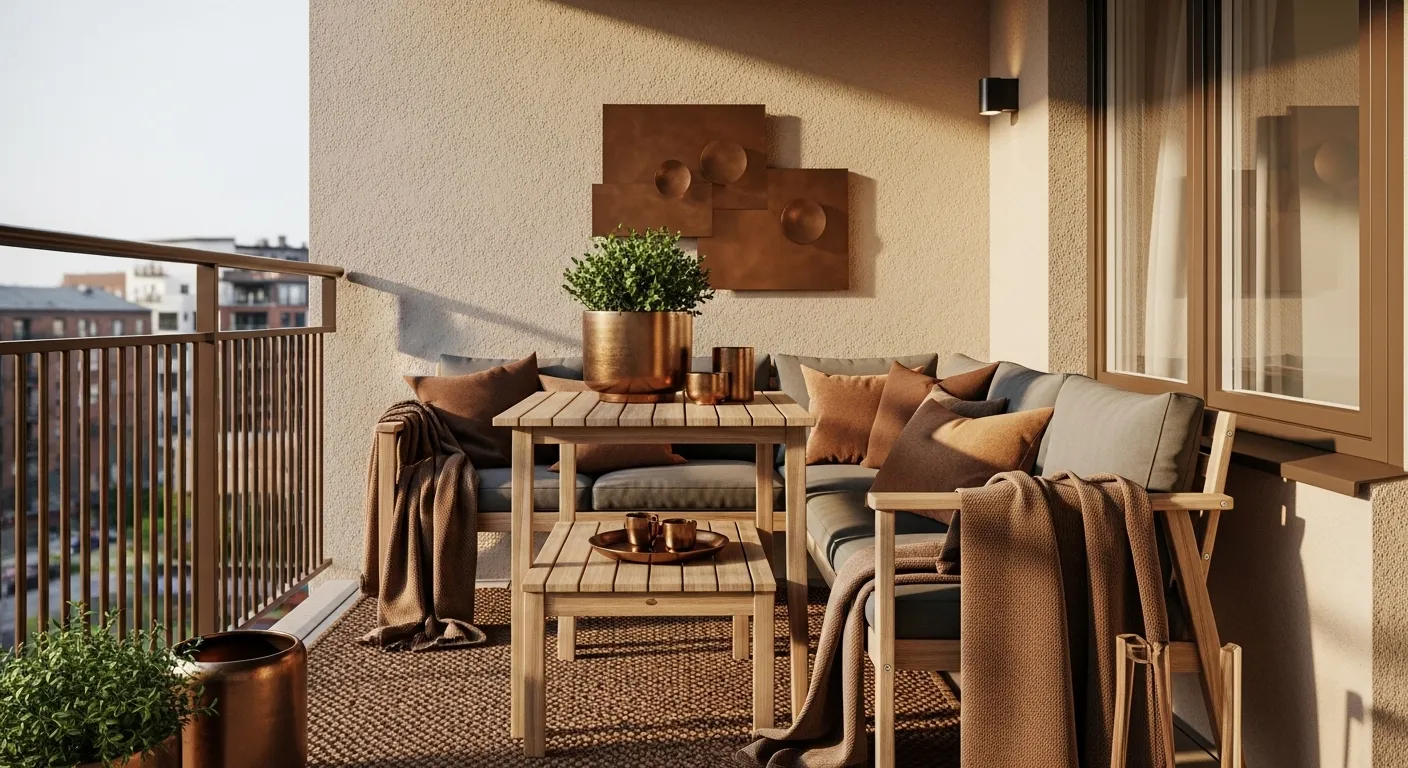
The vignette above is a perfect reference for balancing tones: bronze appears in small hits, gray cushions add a cool counterpoint, and the pale wood keeps everything Scandinavian and light.
Three easy palette “recipes” to copy
Recipe A (Warm & airy): bronze + cream + sand + pale wood + lots of leafy green. Best for shaded balconies that need warmth.
Recipe B (Modern & crisp): bronze + soft gray + cream + black thin frames + structured plants (olive, boxwood). Best for city views.
Recipe C (Cozy & grounded): bronze + caramel wood + taupe + charcoal + grasses. Best for windy balconies—feels sheltered.
Keeping bronze from looking orange
If your bronze leans orange in direct sun, pull it back with cooler neutrals: soft gray cushions, charcoal frames, or an outdoor rug with gray undertones. Creamy whites (not bright white) also help bronze look more sophisticated.
Using pattern the Scandi way
Go tonal and textural rather than busy prints: a subtle stripe, a small grid, or a nubby weave. I typically cap pattern to 10–15% of the soft goods so the balcony still feels quiet.
Layout & Zoning for Small Balconies (Make It Feel Like a Room)
The fastest way to elevate a balcony is to treat it like a tiny open-plan studio: you “zone” it, even if it’s only 3–4 feet deep. Zoning is especially important for Scandinavian spaces because the style relies on negative space. When everything is pushed to the edges without a plan, it reads cluttered—even if you don’t own much.
I like to start by deciding your primary use. Most people want one of these: a lounge zone, a dining nook, or a plant retreat. Pick one main function and one supporting function. For example: lounge + plant wall, or dining + lantern corner.
Then, build the zone with three anchors: a seat, a surface, and a soft boundary. The boundary can be an outdoor rug, deck tiles, or even a line of planters that visually “frames” the area. This is how you get that designed, intentional feeling without adding lots of decor.
Two layout templates that rarely fail
Template 1: The corner lounge. Place a loveseat or two chairs in an L shape, put a small round table in the center, and add a rug under the front legs. Keep planters to the outer edge to preserve the walk line.
Template 2: The bench wall. Add a slim bench along the railing or wall, then bring in two small stools or poufs that tuck underneath. This gives you flexible seating without crowding the floor.
How to use height (without making it busy)
Scandi style loves vertical breathing room. Use just one vertical element: a tall plant, a narrow ladder shelf, or a wall-mounted rail planter system. If you add multiple tall pieces, the balcony starts to feel like storage. A single vertical gesture reads curated.
Wind, sun, and privacy (the unglamorous essentials)
If your balcony is windy, prioritize heavier planters and lower-profile cushions. If it’s full sun, choose fade-resistant textiles and include one shaded seat (umbrella, shade sail, or a simple canopy). For privacy, I prefer natural textures—reed fencing, outdoor curtains, or wood slat panels—because they fit Scandi decor better than shiny screens.
Lighting & Evening Atmosphere (The “Stay Out Longer” Layer)
If you want a balcony that’s used daily, lighting is non-negotiable. Scandinavian spaces are famous for their relationship to light, and outdoors it’s even more important because brightness drops quickly after sunset. The goal is to create pools of warm light—not a single harsh source.
I like to layer lighting in three levels:
- Ambient: string lights or a warm wall sconce (soft glow, not spotlight)
- Task: a small rechargeable lamp near the seating (for reading or dinner)
- Accent: lanterns or candles low to the ground (for coziness)
Bronze is a natural partner here. It reflects warm light beautifully, so even a small bronze lantern can make the entire corner feel intentional. If you’re building a Bronze Outdoor Balcony look, lighting is where that metal tone really earns its place.
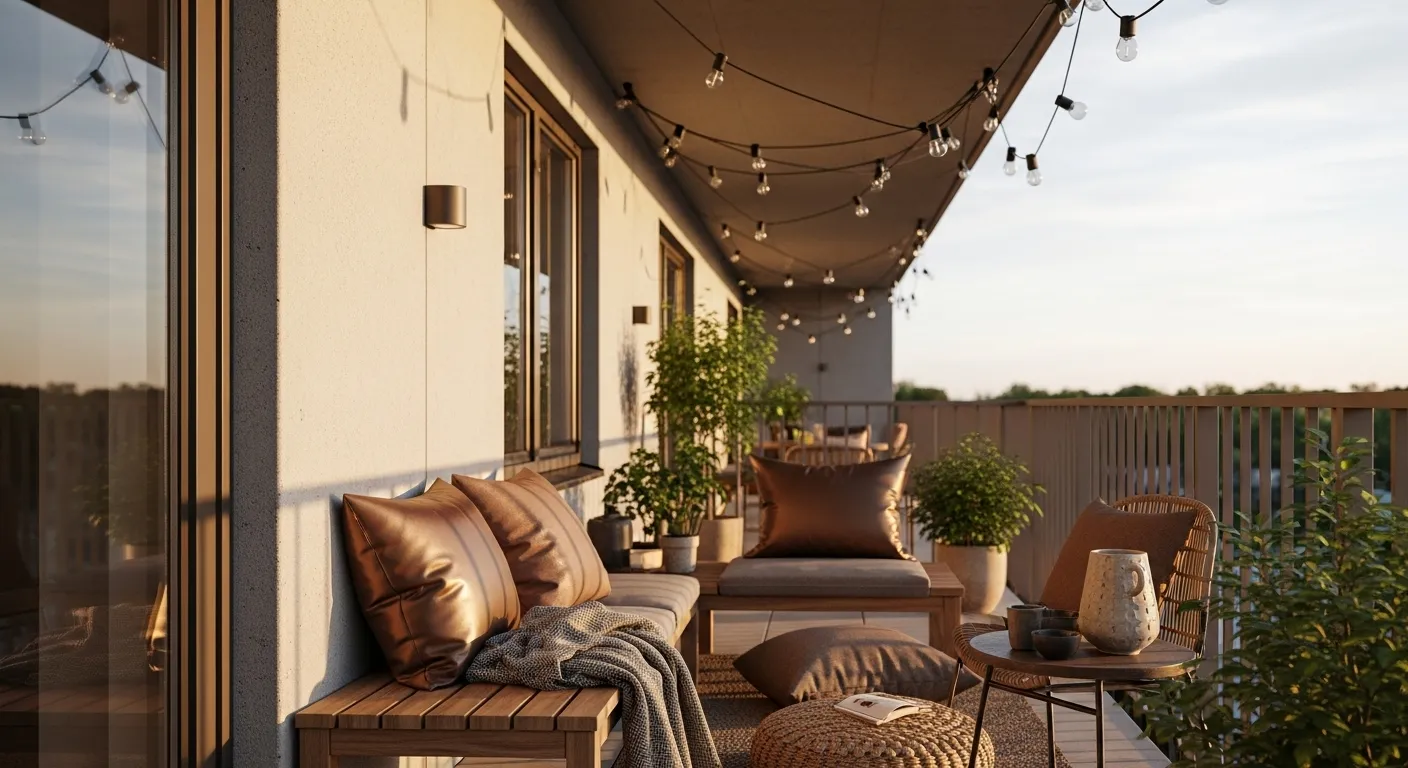
In the sunset scene above, you can see how delicate string lights + warm bronze-toned cushions create that “soft hotel terrace” feeling—without needing a lot of decor.
Pick the right bulb temperature
Aim for 2200K–2700K (warm). Anything cooler will fight the bronze and make creams look gray. Outdoors, warm light also feels more flattering and relaxing.
Keep cords and clips invisible
The quickest way to ruin a clean Scandi look is visible extension cords. Use outdoor-rated cord covers, route cords behind planters, and clip string lights along the top rail line so they read as an intentional border.
Budget lighting moves that look expensive
Add two matching lanterns (even if they’re simple), and place them at different heights—one on the floor, one on a table. This creates depth. You can usually do this for $45–$120 depending on materials.
Styling Tips for Everyday Scandi Calm (Without Overdoing It)
Styling is where people either nail Scandinavian ease—or accidentally create clutter. My rule: every styling item must either add comfort (soft goods), add life (plants), or solve a problem (shade/privacy/storage). If it doesn’t do one of those three things, skip it.
I also like to style in “sets of three” on balconies: a plant, a light source, and a texture. For example: a bronze planter, a lantern, and a folded throw. Repeat that idea once more on the opposite side of the seating area, and you have cohesion without excess.
Textiles: the quickest way to make it livable
Even if you keep furniture minimal, textiles make the balcony feel like a room. Use outdoor pillow covers in cream/taupe and add one subtle darker tone (charcoal or gray). For throws, choose a weave that looks like wool but is outdoor-friendly. Budget: $80–$180 for two pillows + one throw if you buy mid-range.
Greenery: choose plants that match the Scandi vibe
Think simple silhouettes: grasses, trailing ivy, rosemary, olive-style shapes, or structured shrubs. Group plants in odd numbers (3 or 5) but limit planter styles to two finishes max—this is key for Scandi decor. Bronze planters mixed with one matte ceramic neutral is a strong, timeless combo.
Keeping it tidy: tiny storage that doesn’t look like storage
I love a slim storage bench or a lidded outdoor box in a warm neutral. It holds throws, candles, and cushion covers so your balcony stays “ready” instead of requiring a reset every time you step out.
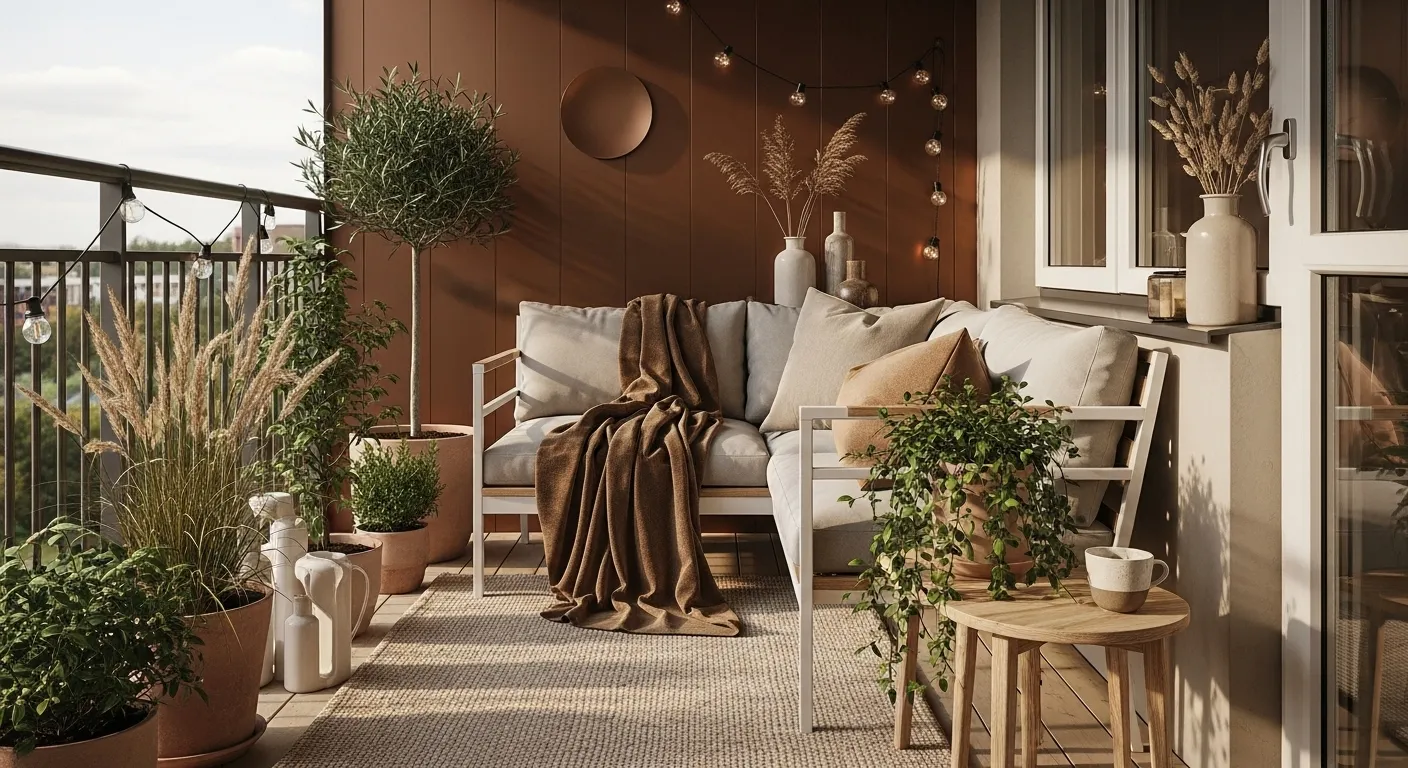
This cozy corner is an achievable blueprint: a soft sofa, layered neutrals, greenery at varying heights, and bronze as a warm backdrop. If you’re styling on a budget, focus on just two upgrades—textiles and plants. You’ll feel the difference immediately.
How to Recreate This Scandi Look
Here’s the step-by-step process I use when I’m building a warm Scandinavian balcony around bronze accents. Follow it in order, and you’ll avoid the most common mistake: buying accessories before the layout works.
- Define your “daily use.” Decide if you want coffee/reading (lounge) or meals (dining) to be the priority. This determines seating depth and table height.
- Measure and map the walk line. Keep at least 24″ clear where you enter and move. Mark it with tape so you don’t crowd the space.
- Choose one main seating piece. A compact loveseat or two lounge chairs. Go neutral on the upholstery so bronze can shine.
- Add one small round table. Aim for 16–24″ wide. Round shapes are the easiest “Scandi fix” for tight balconies.
- Bring in bronze in 3 controlled touches. Example: one bronze planter, one lantern, one small tray or side table accent. (This is where the balcony becomes a deliberate Bronze Outdoor Balcony rather than “random warm stuff.”)
- Layer textiles in tonal neutrals. Two pillows + one throw. Keep pattern subtle and texture rich.
- Add greenery at two heights. One tall plant + one trailing or medium plant. Repeat the same planter finish for cohesion.
- Finish with lighting. String lights for ambiance + one rechargeable lamp for function. Warm bulbs only.
- Edit. Remove one item you added “just because.” Scandinavian styling looks best with restraint.
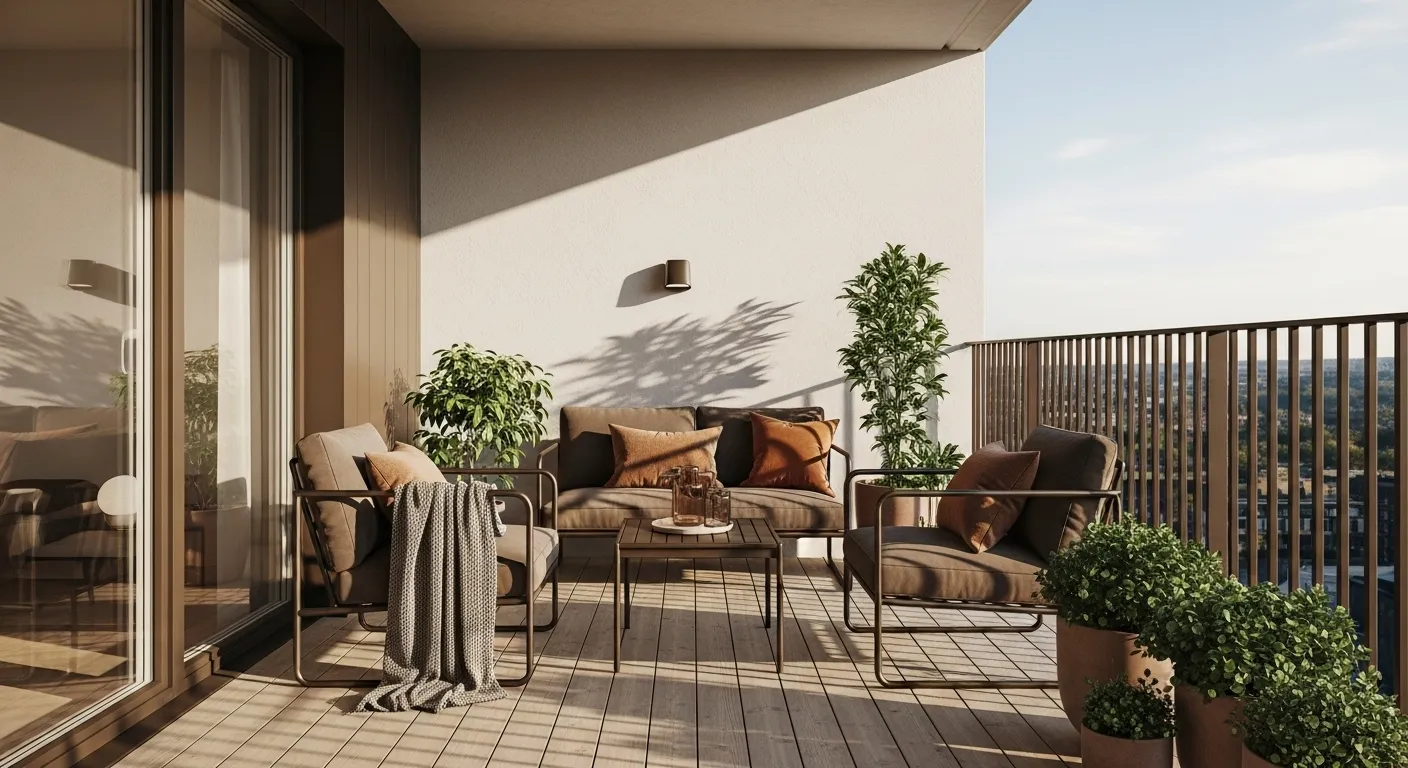
When you follow this sequence, you end up with a balcony that looks like the photo reference above—simple shapes, soft layers, and bronze warmth that reads intentional.
Budget Breakdown
Below are realistic budgets I’ve seen work for clients (and in my own projects) when creating a Scandinavian balcony with bronze accents. Prices vary by size, but these ranges keep expectations grounded.
Low Budget: $350–$700
- Compact bistro or two chairs: $160–$320
- Small round table: $45–$95
- Bronze accent (1–2 planters or lanterns): $40–$110
- Outdoor rug (small): $35–$80
- 2 pillows + throw: $70–$140
- String lights: $20–$55
Best strategy: spend on comfort (seating) and add bronze through one standout planter.
Mid Budget: $900–$1,800
- Lounge loveseat or two deep chairs: $450–$900
- Round coffee table + side table: $160–$350
- 2–3 bronze accents (planters/lanterns/tray): $120–$280
- Outdoor rug (better quality): $120–$250
- Textiles set (pillows/throw upgrades): $140–$260
- Rechargeable lamp + string lights: $90–$190
Best strategy: build the “room” feeling with a rug + lighting layers, then repeat bronze 3 times.
High Budget: $2,200–$4,500
- Premium outdoor lounge set: $1,200–$2,600
- Tables in solid wood/stone top: $450–$950
- Statement bronze planters (2–4): $300–$850
- Privacy screen/shade solution: $300–$900
- Lighting set (sconce + portable + lanterns): $250–$700
Best strategy: invest in fewer, better pieces—Scandi decor looks most premium when it’s edited.
Where to Shop
You don’t need a long list of stores to execute this look—you need the right categories. When you’re shopping for Scandi Outdoor Balcony ideas, focus on materials and silhouettes first, then finish with bronze accents.
Furniture categories to search
- “Outdoor loveseat” or “compact outdoor sofa” (look for slim arms)
- “Round outdoor side table” (16–18″ for tight spaces)
- “Outdoor bench with storage” (for throws and cushion covers)
Bronze accents that look designer (without trying)
- Bronze or aged-metal planters
- Bronze lanterns (battery candles are practical outdoors)
- Bronze-finish trays (helps corral small items on a table)
Soft goods and finishing layers
- Outdoor rug in cream/taupe/gray (low pattern, high texture)
- Outdoor pillow covers (tone-on-tone, subtle weave)
- Rechargeable outdoor table lamp (warm light)
- String lights with outdoor rating (warm, not cool)
If you keep your shopping list this focused, it’s much easier to maintain a clean Scandinavian look—especially on a small balcony where every item is visible.
FAQ
1) How do I keep a Scandi balcony from feeling cold?
Use warm neutrals (oat, sand, cream) and add one warm metal—bronze is ideal. Texture matters as much as color: a woven rug, nubby pillows, and a throw instantly soften the space.
2) Is bronze too bold for Scandinavian style?
No—bronze behaves like an earthy neutral. Keep it to 3–5 accents so it reads intentional and doesn’t overwhelm the lightness of Scandi decor.
3) What’s the best plant style for a Scandinavian balcony?
Simple silhouettes: grasses, trailing greens, rosemary, or structured shrubs. Avoid mixing too many planter colors; repeating bronze planters makes the space feel cohesive.
4) My balcony is tiny. What furniture should I buy first?
Start with seating you’ll actually use (one loveseat or two chairs), then add a small round table. Everything else—rug, lighting, planters—supports those core pieces.
5) How can I get privacy without ruining the look?
Choose natural textures: reed fencing, outdoor curtains, or wood slats. They blend with Scandinavian materials better than glossy screens and keep the space airy.
6) What lighting makes a balcony feel cozy at night?
Layer warm lighting: string lights for ambient glow, a rechargeable lamp for function, and lanterns/candles for accent. Aim for 2200K–2700K bulbs so bronze and creams look rich.
Final Thoughts
The most livable balconies I’ve designed are the ones that feel calm in the daytime and magnetic at night—without needing constant styling. With Scandi Outdoor Balcony ideas, that comes down to a clean layout, a restrained palette, and comfort-first layers. Bronze is the perfect “warm anchor” for Scandinavian simplicity: it softens neutrals, flatters greenery, and makes even basic furniture feel considered. If you build slowly—seat, table, textiles, plants, light—you’ll end up with a balcony you’ll genuinely use every day, not just photograph.