
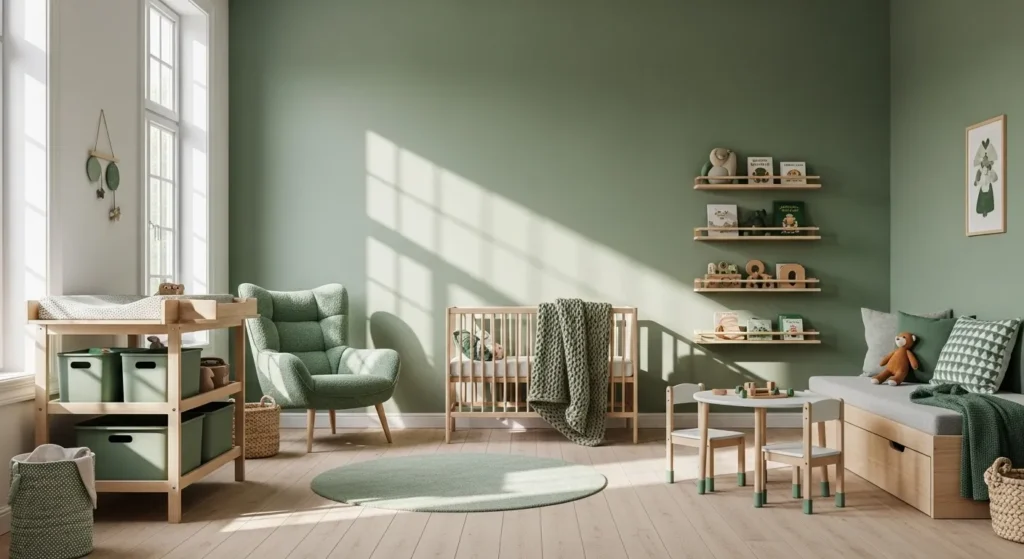
If you’re searching for Scandi Nursery & Kids Room ideas that feel calm, cozy, and genuinely livable, start with sage green. In my design work, I keep coming back to this hue because it reads “nature” without feeling themed, and it plays beautifully with pale wood and creamy textiles. This guide walks you through creating a Sage Green Nursery & Kids Room that works for newborn days and still makes sense when your child turns five—without constant redoing.
Color Palette
Forest Sage#6B7757
Warm Ivory#E8E4D7
Mushroom Beige#C6C0AF
Olive Mist#66765A
Soft Sage Tint#AABBA9
Oat Latte#D3C4B2
Scandi Nursery & Kids Room ideas: Sage Green Calm with Warm Wood
The Psychology of Sage Green in Your Nursery & Kids Room
Sage green is one of my most-used “bridge” colors for nurseries because it sits right between a neutral and a statement. It has enough pigment to feel intentional, but it won’t overstimulate the way high-chroma brights can—especially important in a room where you’re trying to support sleep, quiet play, and a gentle wind-down routine. If you’ve been collecting Scandi Nursery & Kids Room ideas, you’ll notice this is a common thread: nature-based color, simple lines, and a lot of breathing room.
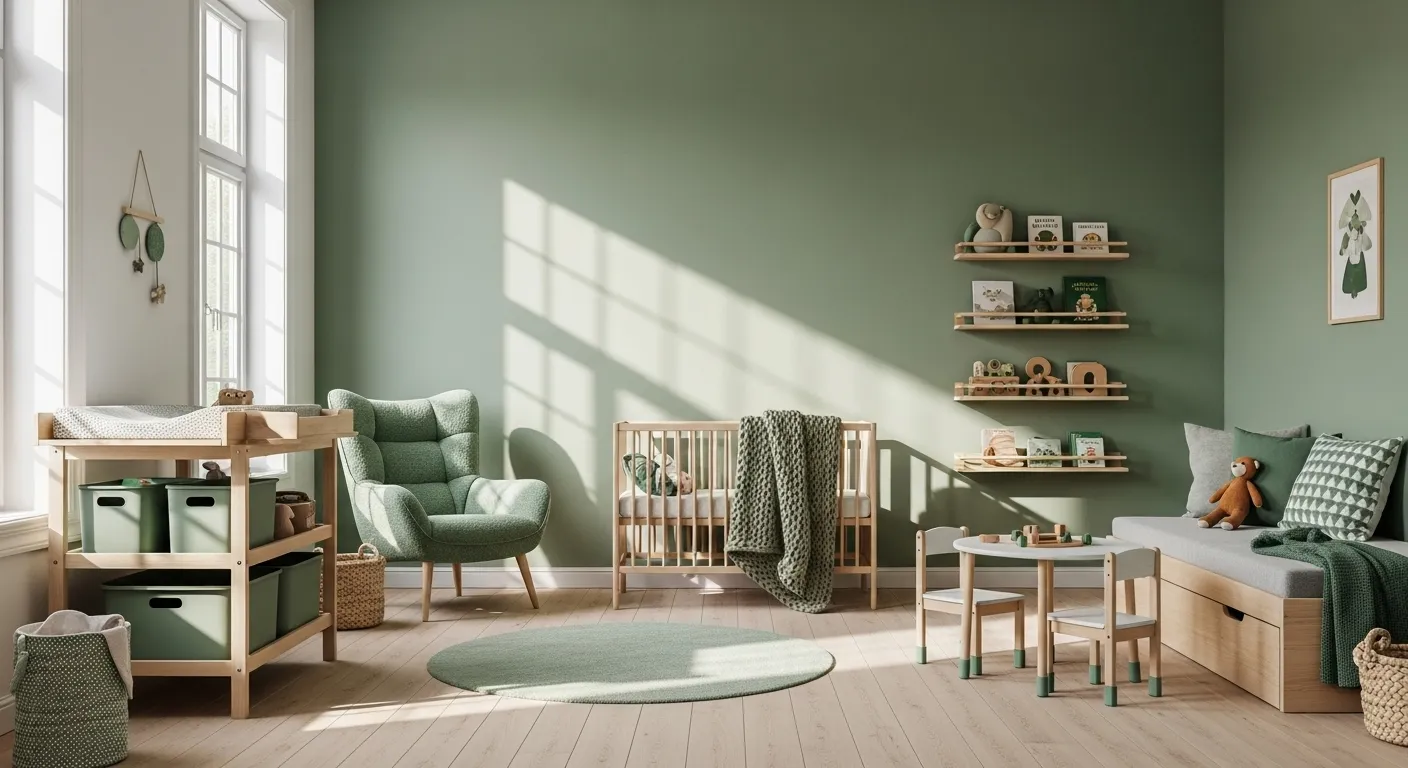
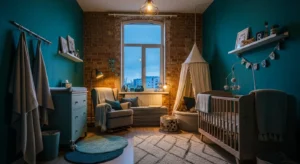
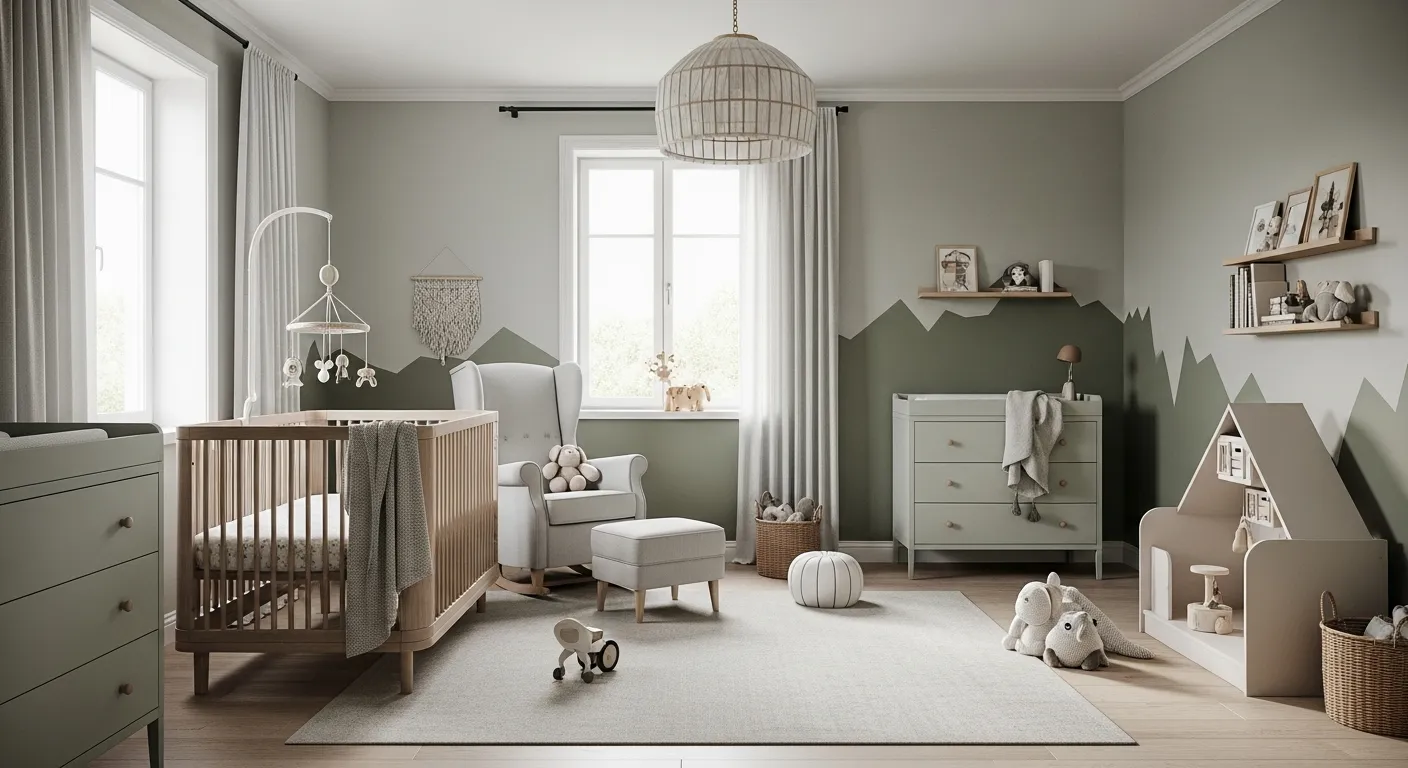
In the wide shot above, notice how the sage reads soft and grounded at the same time. That’s the sweet spot: it makes the room feel “held” without making it dark. I especially like sage in rooms that get strong morning light, because it stays fresh rather than leaning muddy. In low light, I recommend pairing it with warmer whites and pale woods so it doesn’t go flat.
Why sage green works for sleep and play
Sage is associated with growth and calm—basically, it behaves like a visual exhale. For babies, that translates to fewer visual “spikes.” For toddlers and bigger kids, it becomes a soothing backdrop that lets toys and books provide the color.
Where to use it (walls, accents, or both)
If you want a safer commitment, use sage on one feature wall (behind the crib or bed) and keep the other walls warm ivory. If you want the full cocoon effect, do all four walls in sage—but lighten everything else (curtains, rug, bedding) to keep the room airy. Either approach is very aligned with Scandi decor: calm, minimal contrast, and tactile comfort.
Color Combinations & Palette Ideas
The easiest way to make a Sage Green Nursery & Kids Room feel Scandinavian is to build your palette like a landscape: sage as the “trees,” warm ivory as the “sky,” and wood tones as the “ground.” Then you add one small dark note (matte black or deep olive) for definition—think picture frames, a lamp base, or drawer pulls. This approach keeps the room looking designed, not just “painted green.”
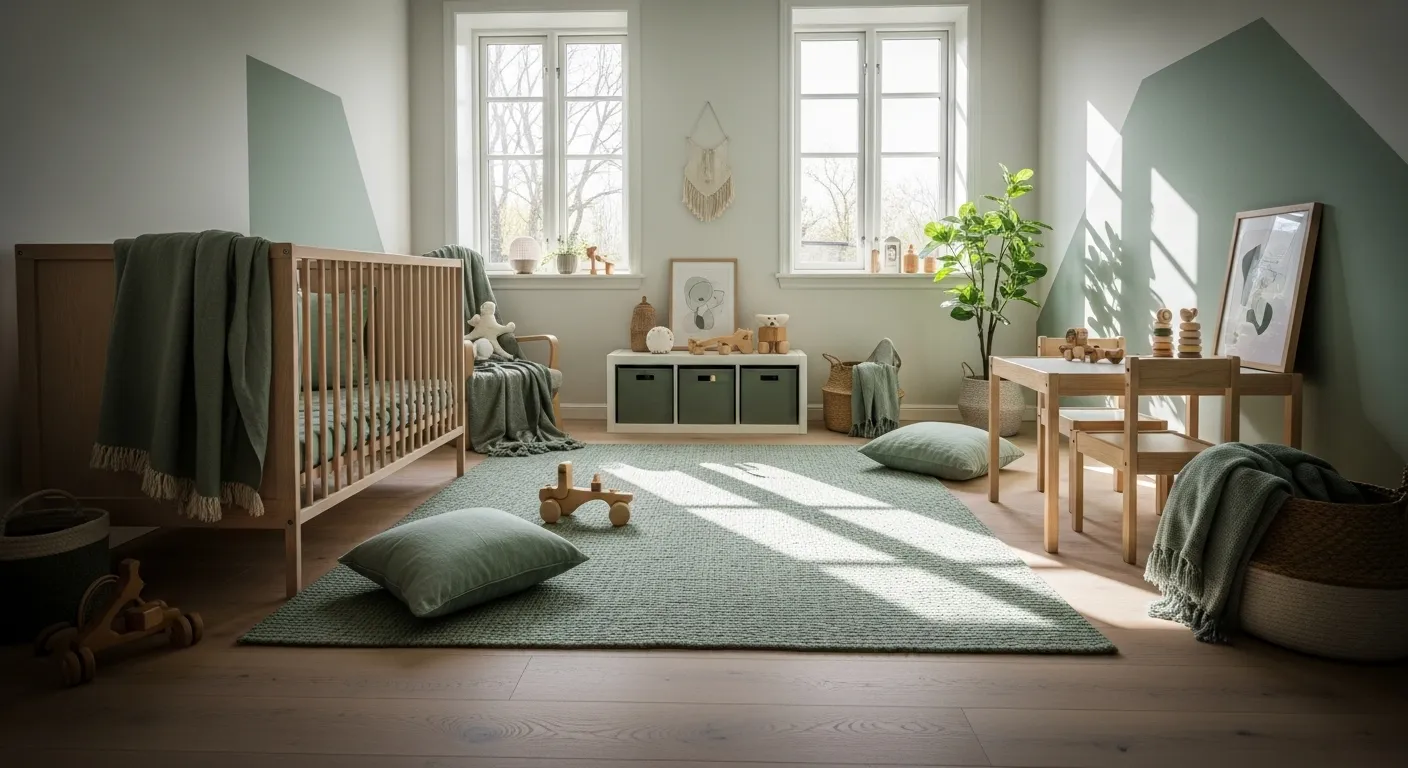
In the vignette above, the magic is in the low-contrast layering: sage + pale oak + a textured rug that sits in the oatmeal/stone family. That’s one of my go-to recipes when clients ask for Scandi Nursery & Kids Room ideas that won’t feel trendy six months from now.
3 reliable Scandi pairings for sage
- Sage + warm ivory + pale oak: the classic, bright, “Nordic daylight” combination.
- Sage + mushroom beige + linen white: warmer and cozier—great for north-facing rooms.
- Sage + soft clay (muted terracotta) accents: use sparingly in art or textiles to add warmth without overpowering.
How to avoid a “hospital green” vibe
The fix is warmth and texture. Choose creamy whites (not stark) and add textiles with visible weave—bouclé, chunky knits, washed linen, or cotton waffle. This is where Scandi decor really shines: simple colors, rich tactility.
Essential Furniture & Decor Elements
The foundation of any nursery that lasts is furniture that can move with your child. I aim for a layout that supports three daily activities: sleep, feeding/comfort, and play. When you’re working with sage walls, keep the furniture finishes simple—light wood, matte white, or a mix of both—so the room stays visually quiet. This is the functional heart of most Scandi Nursery & Kids Room ideas: fewer pieces, better pieces.
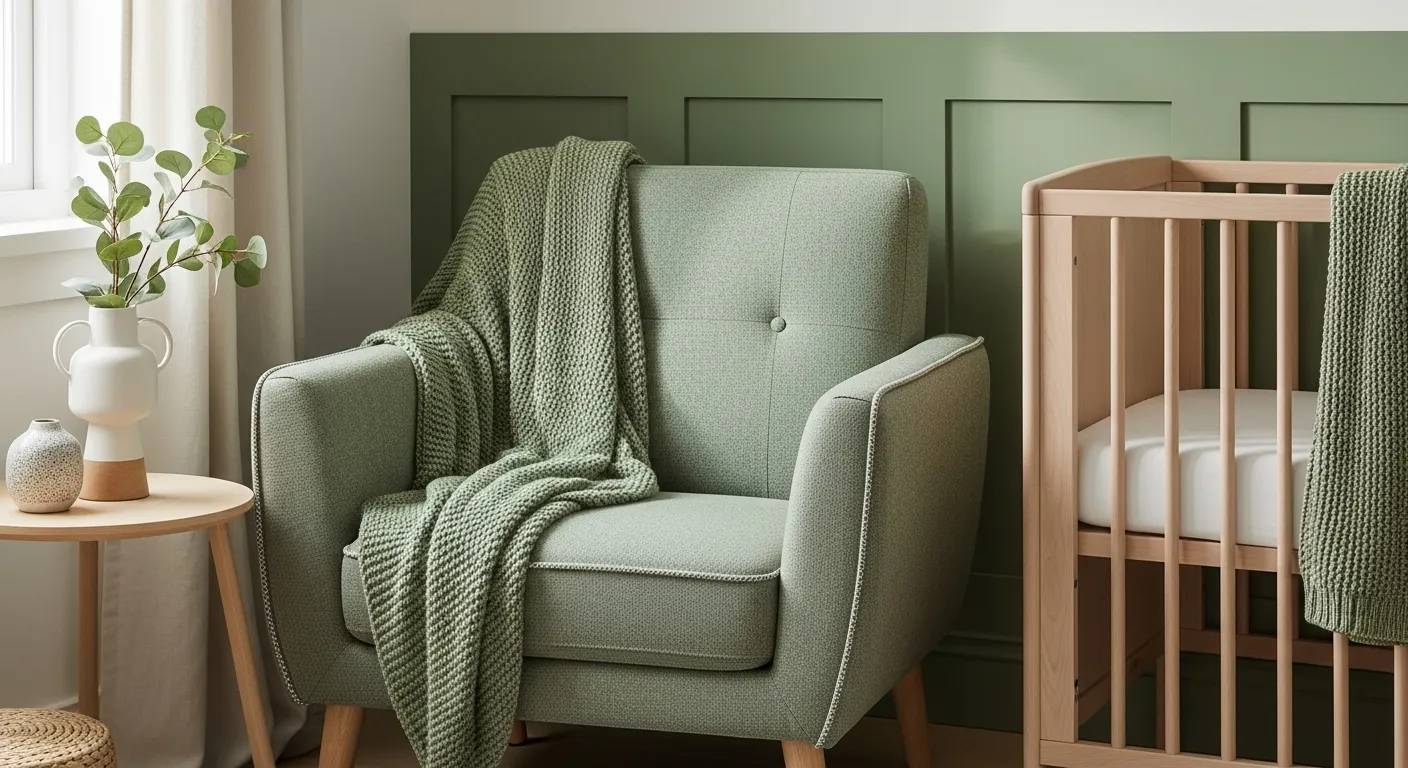
The “big three” pieces (and what to look for)
- Crib (or toddler bed): Look for adjustable mattress heights and a finish that matches other woods in the room. Expect $250–$650 for a solid mid-range option.
- Comfort chair / glider: Prioritize ergonomics. You’ll sit here more than you think. A supportive chair runs $220–$650. Add a washable throw for texture (and spit-up reality).
- Dresser that can act as a changing station: A wide, stable dresser is safer than a dedicated changing table and lasts longer. Budget $300–$900 depending on material.
Scandi decor details that make the room feel finished
- Open shelving (one small zone): Great for rotating books and toys. Use bins in one consistent material (canvas or seagrass) to keep it calm.
- Soft lighting: Layer a warm lamp + dimmable ceiling light. Aim for 2700K bulbs.
- Rug with texture: Go for flatweave or low pile for easier cleanup. Typical cost: $80–$250.
- Wall art: Keep it simple—line drawings, nature prints, or a minimal mural. You want the room to feel like it can “grow up” without a full redo.
One note from experience: in a sage room, avoid too many competing wood tones. Pick one main wood (oak/pine) and repeat it in crib + shelf + toy storage for cohesion.
Styling Tips & Budget Ideas
Styling is where your nursery becomes a home, not a showroom. With sage green as the base, I like to style with a “soft triangle”: one cozy corner (chair + lamp), one functional corner (dresser/changing), and one play area (rug + low shelf). This keeps circulation clear and reduces the visual chaos that can creep into kids’ rooms.
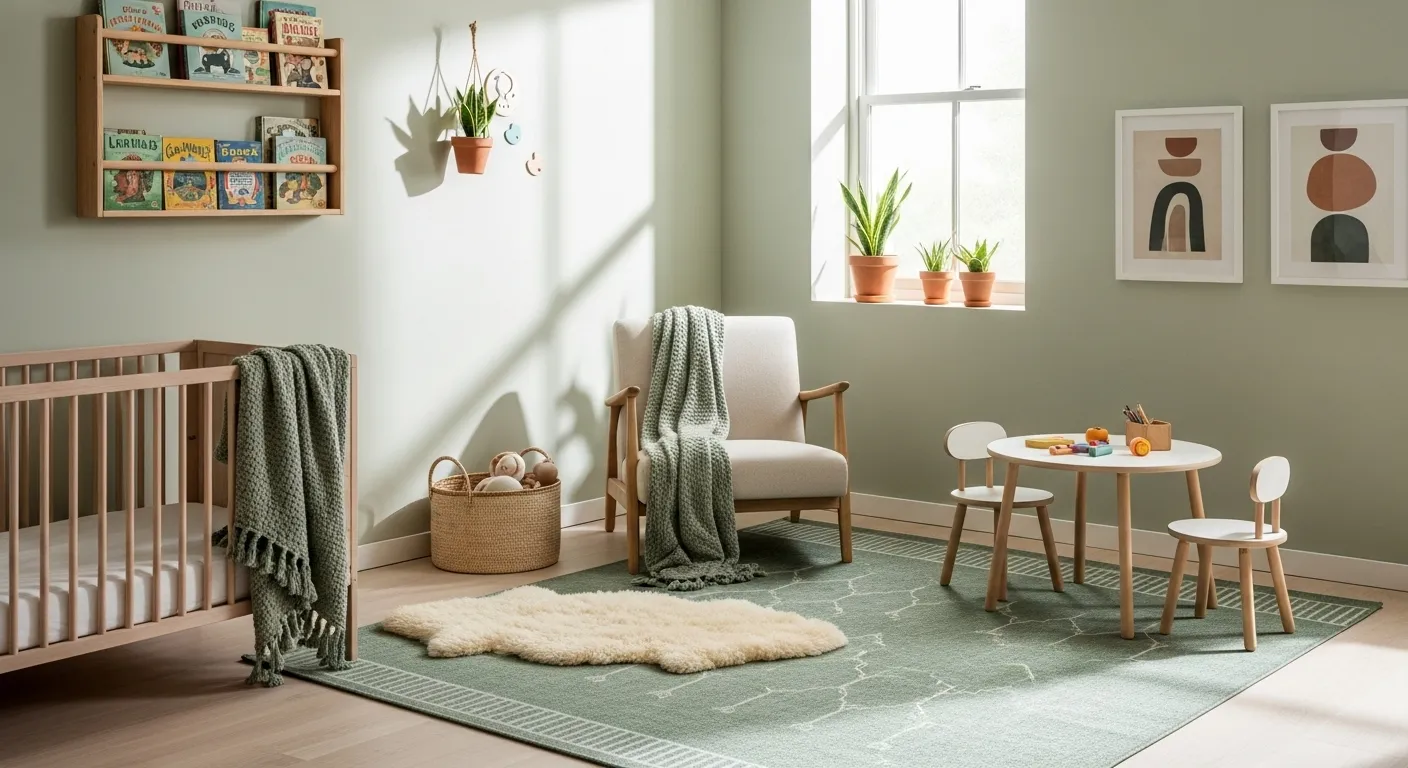
Texture layering (the Scandi shortcut)
When the palette is quiet, texture does the decorating. Add a knit throw, a nubby rug, a linen curtain, and one tactile basket. The room immediately feels intentional, even if you’re keeping accessories minimal.
Budget ideas that still look premium
- Swap expensive art for oversized printable line art in oak frames: $30–$90 total.
- Use IKEA-style basic shelves but upgrade with matching woven bins: shelves $40–$120 + bins $25–$70.
- DIY a simple mural (mountains/arches) using two paint colors: $35–$80 for paint and supplies.
- Choose one “hero” piece (chair or rug) and keep the rest simple. This is the fastest way to achieve elevated Scandi decor without overspending.
Styling rule I swear by: leave 15–20% of surfaces empty. Kids’ rooms accumulate stuff; whitespace makes the room feel calm even on messy days.
How to Recreate This Look
Here’s the exact process I use when building Scandi Nursery & Kids Room ideas around sage green—designed to be practical for real families (and realistic about time).
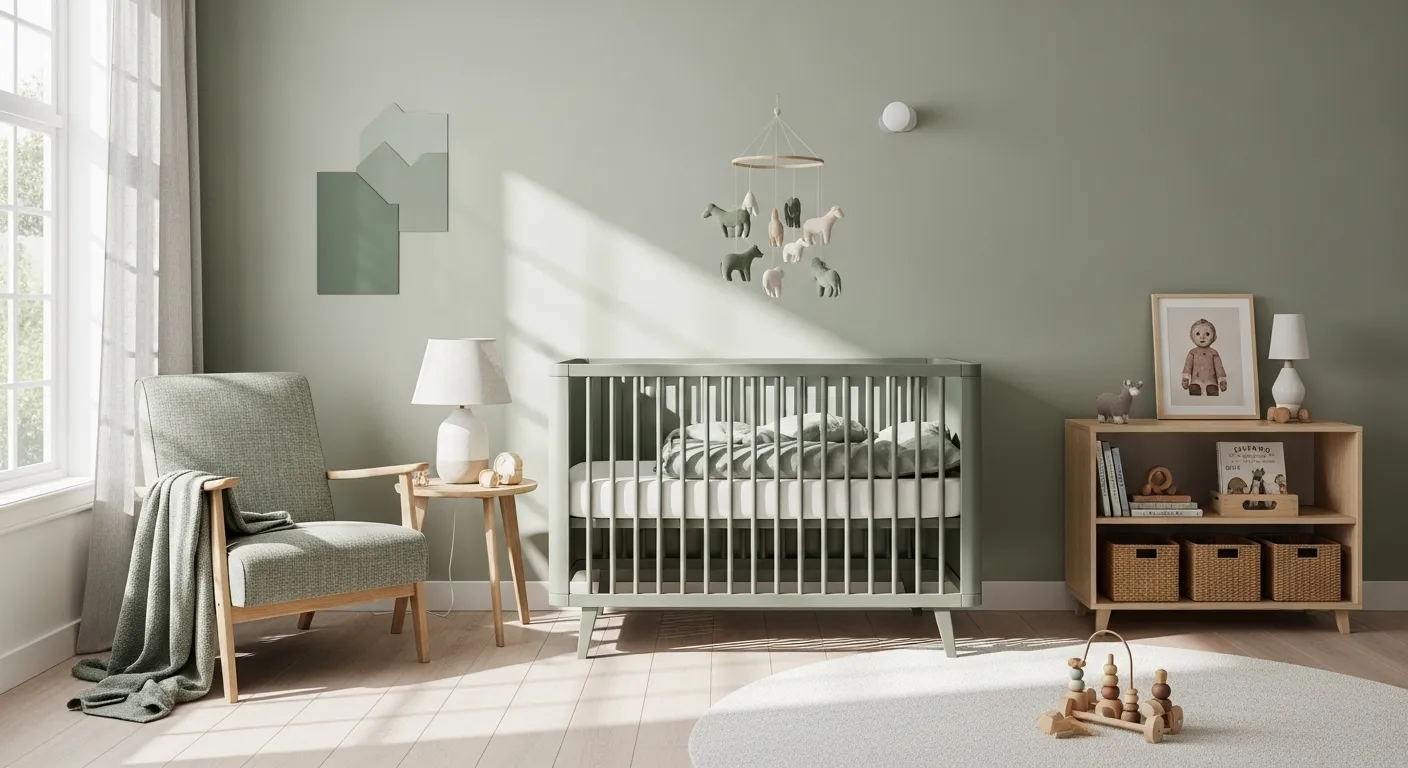
Step-by-step plan
- Pick your sage placement: full room, one wall, or wainscoting/panel detail. If you’re renting, consider peel-and-stick wallpaper in a soft sage tone.
- Lock in your wood tone: choose pale oak/pine for a bright Scandi feel. Match crib + dresser as closely as possible.
- Plan the layout for routines: crib away from drafts, chair near a table (water + book), and a play zone visible from the chair.
- Add soft lighting: one dimmable overhead + one warm lamp for nighttime feeds.
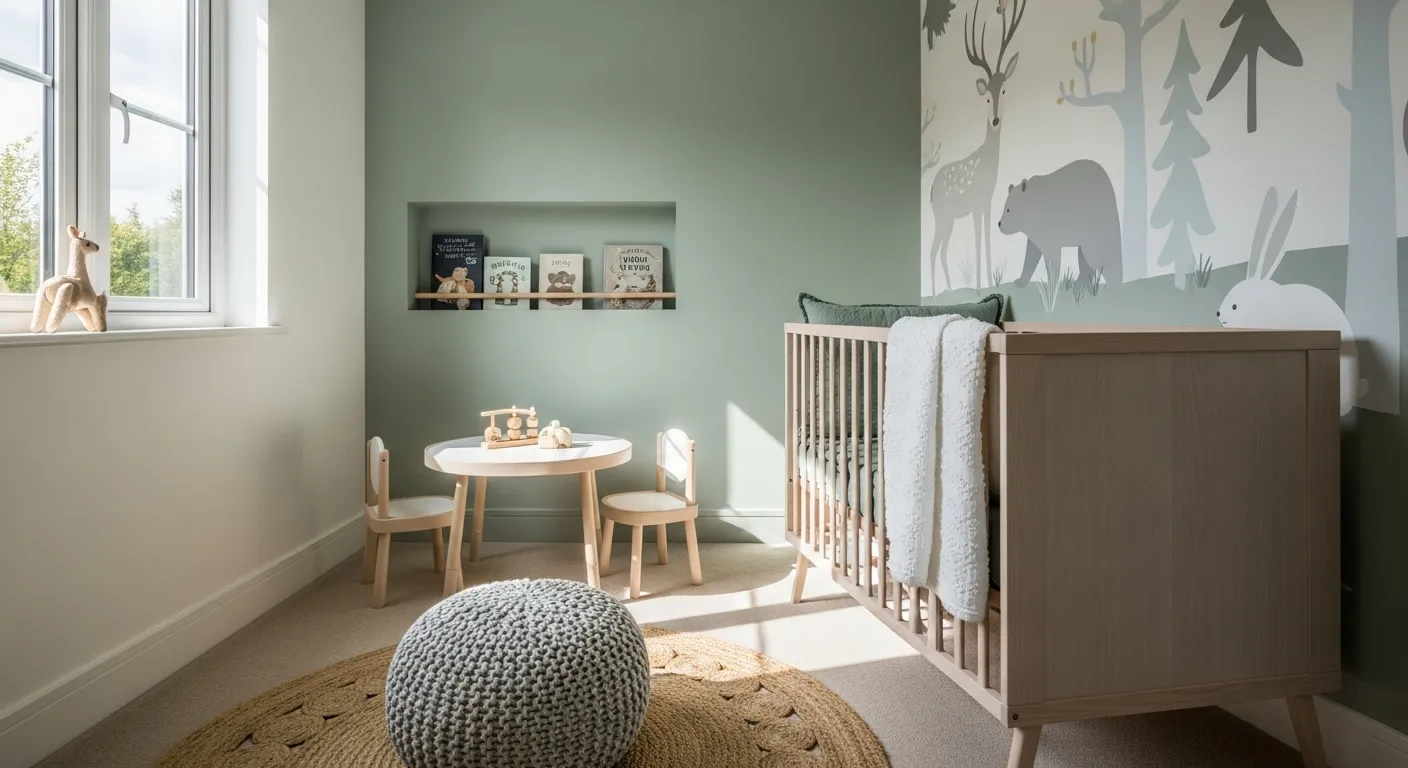
- Bring in one simple motif: woodland, mountains, or abstract shapes—keep it minimal so it ages well.
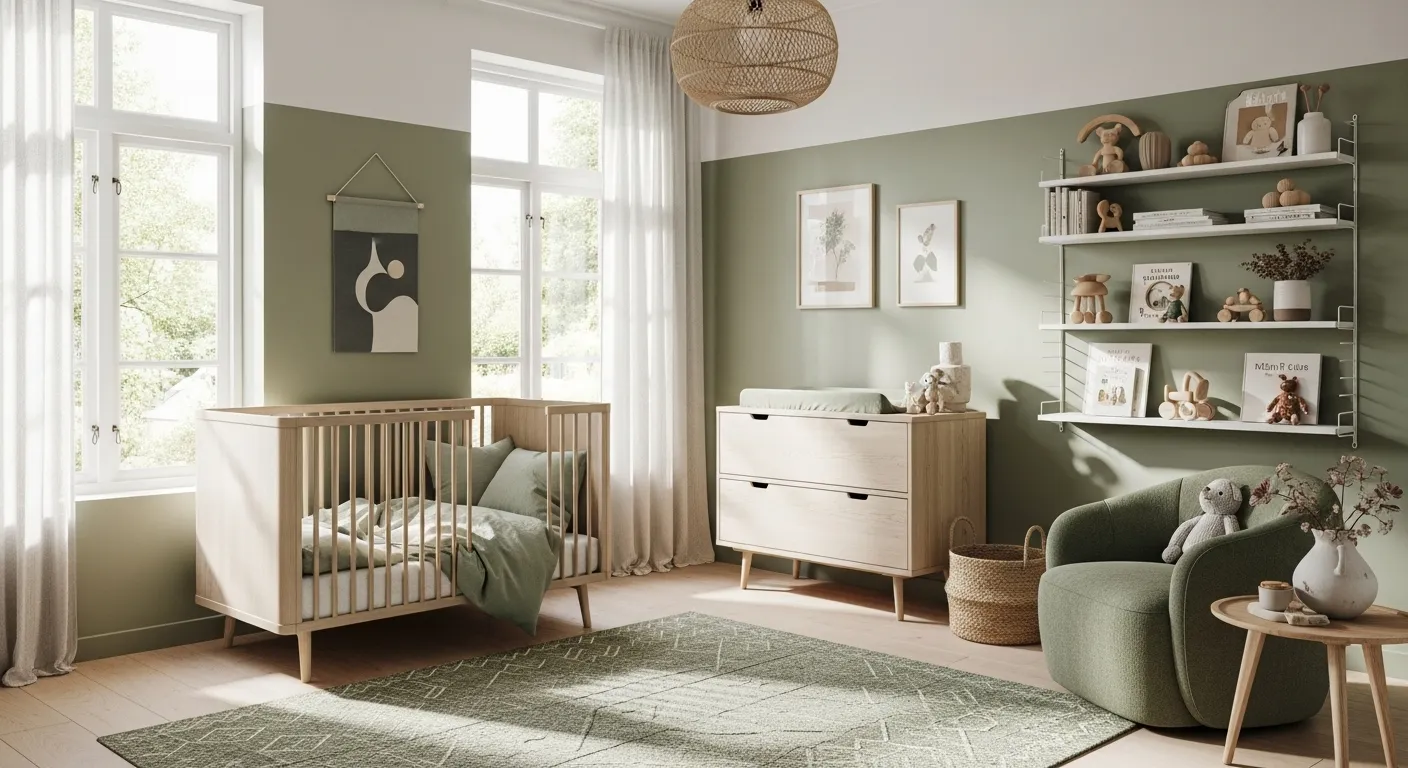
Budget (two tiers only)
Low Budget: $650–$1,250
- Paint + supplies: $60–$140
- Basic crib (or secondhand + new mattress): $180–$350
- Dresser (flat-pack or secondhand): $150–$300
- Rug: $80–$150
- Shelves + bins: $80–$180
- Lighting (bulbs + lamp): $60–$130
Mid Budget: $1,400–$2,600
- Paint + upgraded trim/panel detail: $180–$420
- Crib in solid wood: $350–$650
- Supportive glider/armchair: $350–$750
- Dresser (solid or veneer, wider): $450–$900
- Rug (wool blend or larger size): $180–$350
- Decor + storage (art, bins, curtains): $120–$330
FAQ
- Is sage green too dark for a small nursery? Usually no—if you balance it with warm whites, light wood, and airy curtains. In very low-light rooms, do one sage accent wall instead of all four.
- What finishes look best with sage? Pale oak/pine, warm whites, and matte black accents. Try not to mix more than two wood tones.
- How do I keep it “Scandi” and not “themed”? Use one subtle motif (mountains or woodland) and keep everything else minimal: clean lines, simple art, and lots of texture.
- Can this transition to a toddler/kids room? Yes—swap the crib for a toddler bed, keep the dresser, and shift the play zone into a small desk or reading nook. That’s why this style is one of my favorite Scandi Nursery & Kids Room ideas.
How to Recreate This Look
- Pick your sage placement: full room, one wall, or wainscoting/panel detail.
- Lock in your wood tone: choose pale oak/pine and repeat it across key pieces.
- Plan for routines: sleep zone, comfort/feeding zone, and visible play zone.
- Layer warm lighting: dimmable overhead + warm lamp (2700K).
- Add one minimal motif: mountains/woodland/arches and keep accessories edited.
Budget
Low Budget: $650–$1,250 (paint $60–$140, crib $180–$350, dresser $150–$300, rug $80–$150, shelves/bins $80–$180, lighting $60–$130)
Mid Budget: $1,400–$2,600 (paint/trim $180–$420, crib $350–$650, glider $350–$750, dresser $450–$900, rug $180–$350, decor/storage $120–$330)
FAQ
- Is sage green too dark for a small nursery? Not if balanced with warm whites, pale wood, and airy curtains.
- What finishes look best with sage? Pale oak, warm white, and matte black accents.
- How do I keep it Scandi and not themed? One subtle motif + simple lines + texture layers.
- Will it work as my child grows? Yes—swap crib for bed and convert play area to a desk/reading nook.
Final Thoughts
The reason I keep recommending sage is simple: it’s calming now, flexible later, and it makes light wood look instantly more expensive. If you want Scandi Nursery & Kids Room ideas that feel timeless and functional, build your room around sage green, warm ivory, and tactile layers—then keep the accessories minimal so the space can grow with your child. With the right layout and a few intentional Scandi decor details, your Sage Green Nursery & Kids Room can be both serene and truly practical.