
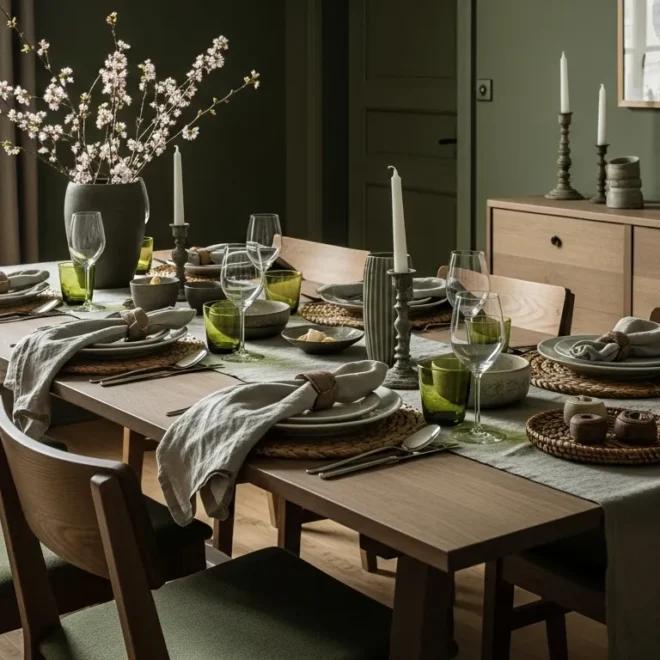
Welcome to the ultimate guide for transforming your dining space this spring! If you are looking to refresh your home with a calming, nature-inspired aesthetic, you’ve arrived at the perfect destination. Combining the functional elegance of Scandinavian design with the timeless minimalism of Japanese interiors, this style is a breath of fresh air. As the seasons change, bringing the outdoors in becomes essential to capturing that rejuvenating spring energy. If you are searching for the best Japandi Dining Room ideas, this article will walk you through exactly how to blend earthy olive green tones with warm natural woods to create an everyday sanctuary that feels both curated and effortlessly lived-in.
#6B705C
#C2A878
#F1EFE7
#5B705B
#E6D5C3
#F5F2EB
The Psychology of Olive Green in Your Dining Room
There is a profound psychological reason why green is currently dominating interior design trends, particularly within minimalist spaces. Olive green, with its muted, earthy undertones, acts as a visual bridge to the natural world. In a dining room—a space inherently dedicated to nourishment and connection—this hue works wonders to lower stress levels and encourage lingering conversations.
Unlike stark whites or moody blacks, olive green strikes a delicate balance. It represents renewal and growth, making it the quintessential color choice for a spring decor refresh. In the context of Japandi design, which heavily emphasizes harmony and the wabi-sabi appreciation of nature’s imperfections, an olive green backdrop provides a soft, organic contrast to the structured, clean lines of modern furniture.
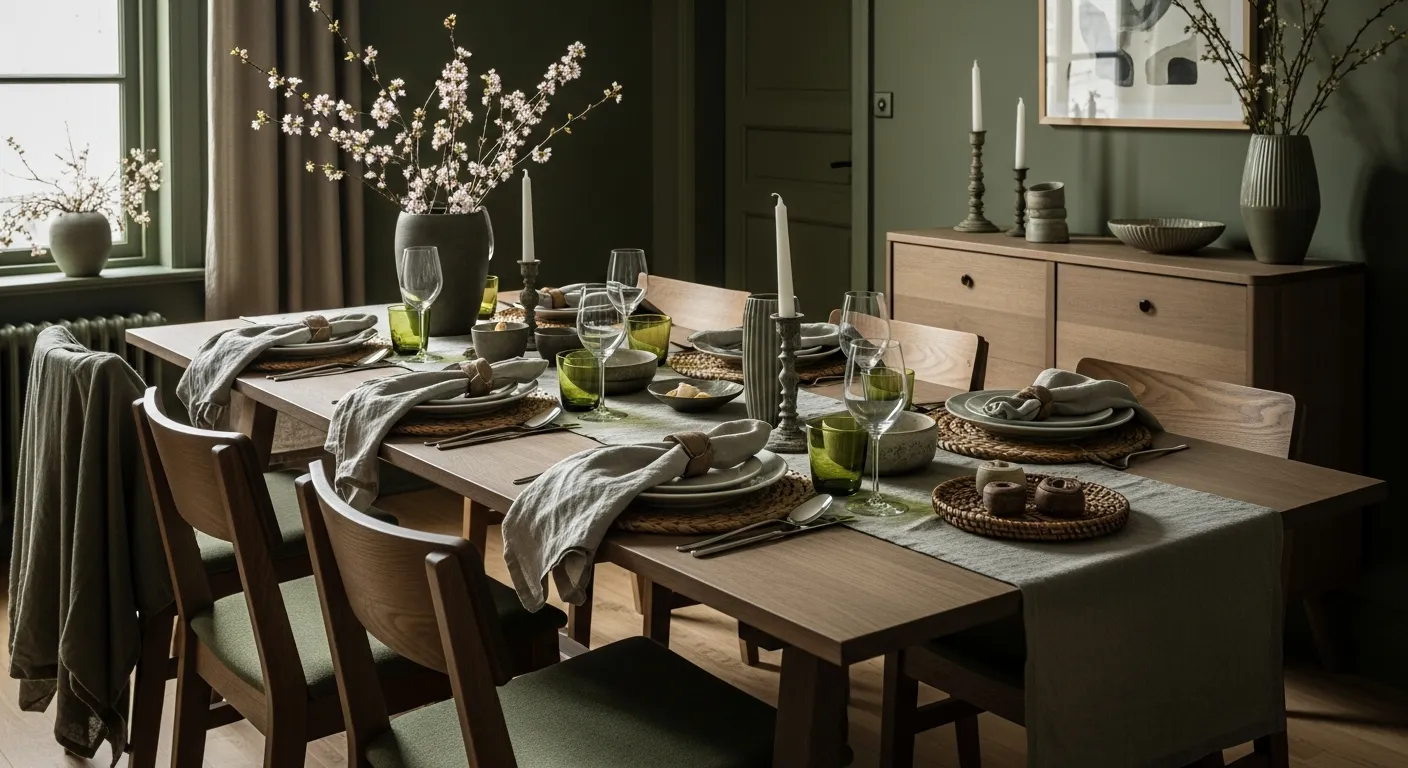
When you wrap a room in this soothing shade, you are actively manipulating the emotional frequency of the space. Studies in color psychology suggest that green promotes restorative energy. By utilizing varying shades of olive—from deep, mossy tones to lighter, sage-infused variations—you create a multifaceted environment that feels simultaneously sophisticated and entirely unpretentious.
Essential Furniture & Decor Elements for Japandi Dining Room Ideas
To successfully execute these Japandi Dining Room ideas, the furniture you select must adhere to a strict philosophy: form follows function, but never at the expense of beauty. Japandi design rejects the concept of “disposable” furniture, favoring instead pieces that showcase incredible craftsmanship, natural materials, and enduring silhouettes.
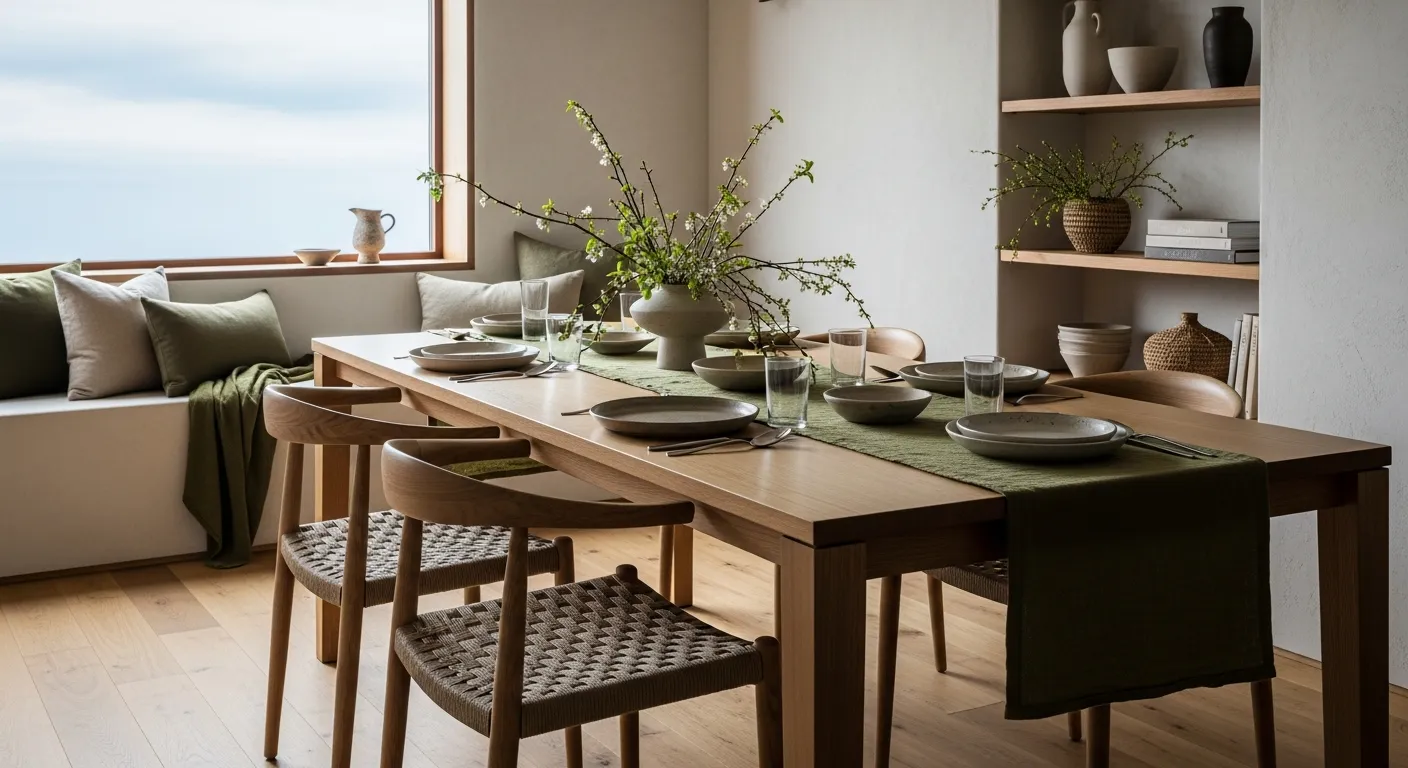
Start with the centerpiece: the dining table. Look for solid wood pieces featuring a matte finish rather than a high-gloss lacquer. The tactile experience of running your hand over natural wood grain is a cornerstone of this aesthetic. Light to medium tone woods—such as white oak, ash, or a muted walnut—are ideal because they pop brilliantly against an olive green backdrop without clashing.
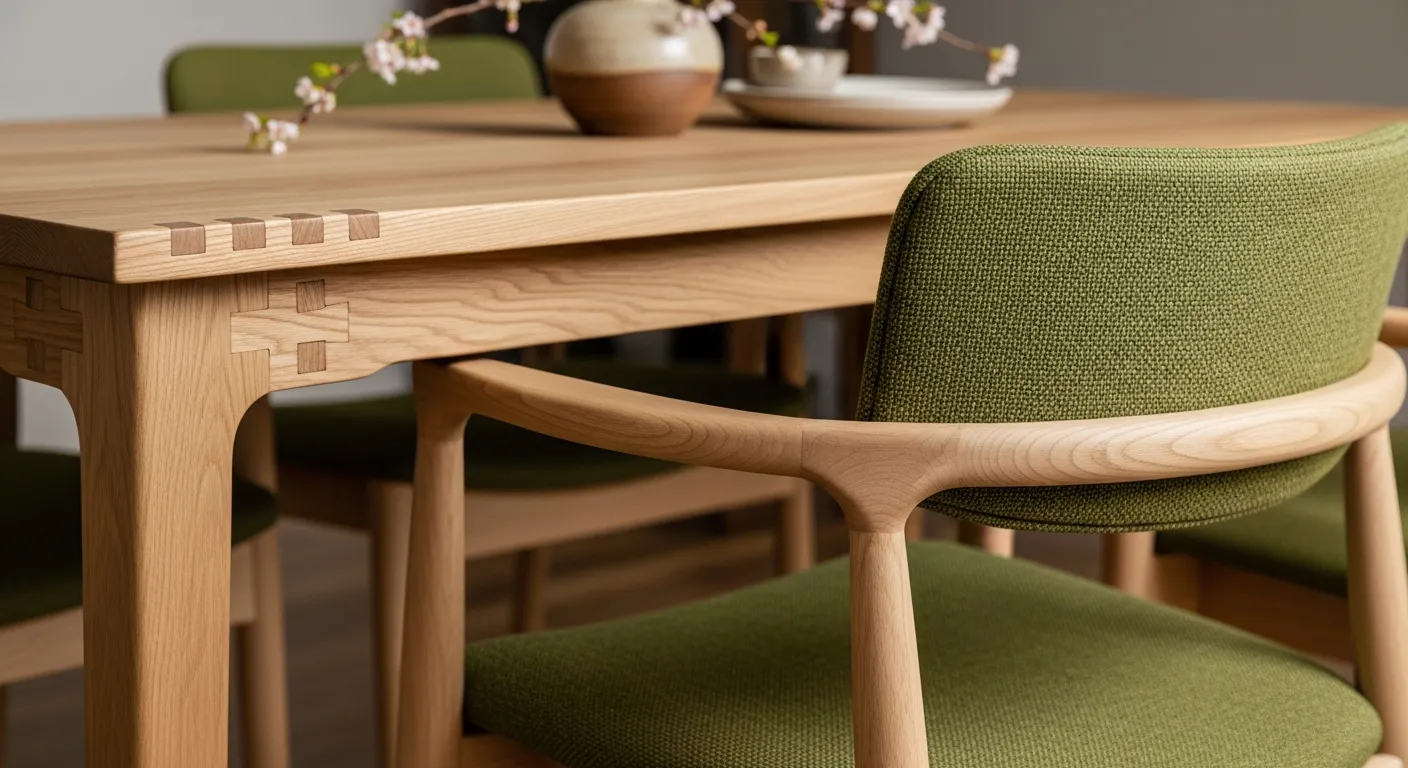
When selecting your seating and supplementary decor, keep the following essential elements in mind:
- Low-Profile Silhouettes: Japanese interiors are historically grounded, often featuring furniture that sits closer to the floor. While standard dining heights are necessary, look for chairs with low-slung, curved backrests.
- Woven Textures: Incorporate paper cord, rattan, or cane detailing in your dining chairs or a nearby sideboard. These materials introduce subtle texture without creating visual clutter.
- Statement Lighting: Replace generic fixtures with a sculptural paper lantern or a matte ceramic pendant light. Lighting in Japandi spaces is often oversized but visually lightweight.
- Minimalist Storage: A floating wooden credenza with sliding slatted doors keeps everyday dining essentials hidden, maintaining the room’s serene, clutter-free vibe.
Color Combinations & Palette Ideas
While olive green is the undisputed star of this spring refresh, the magic of Japandi design lies in its supporting cast of colors. The extracted color palette (featured above) provides a foolproof roadmap for layering tones perfectly. A successful Japandi room utilizes a tight, disciplined color scheme to prevent visual chaos.
Let’s break down how to effectively mix these hues:
- The Base (#F5F2EB & #F1EFE7): Use these soft, creamy off-whites for your ceiling, adjacent walls, or large area rugs. They reflect the spring sunlight and keep the olive green from making the room feel cave-like.
- The Anchor (#6B705C & #5B705B): These are your statement greens. Use the lighter shade for walls or wainscoting, and the darker, forest-infused olive for upholstery, such as velvet dining chair cushions or a table runner.
- The Warmth (#C2A878 & #E6D5C3): These warm oak and light sand tones should be introduced through your wooden furniture, flooring, and unglazed ceramic decor. They bring the necessary Scandinavian coziness (Hygge) into the space.
Styling Tips & Fresh Japandi Dining Room Ideas
Styling a Japandi room for spring is an exercise in restraint. The goal is to curate rather than decorate. Every item placed in the room should serve a purpose, whether functional or purely aesthetic, and must contribute to the overall feeling of tranquility. Here are some of our favorite Japandi Dining Room ideas for seasonal styling on a budget.
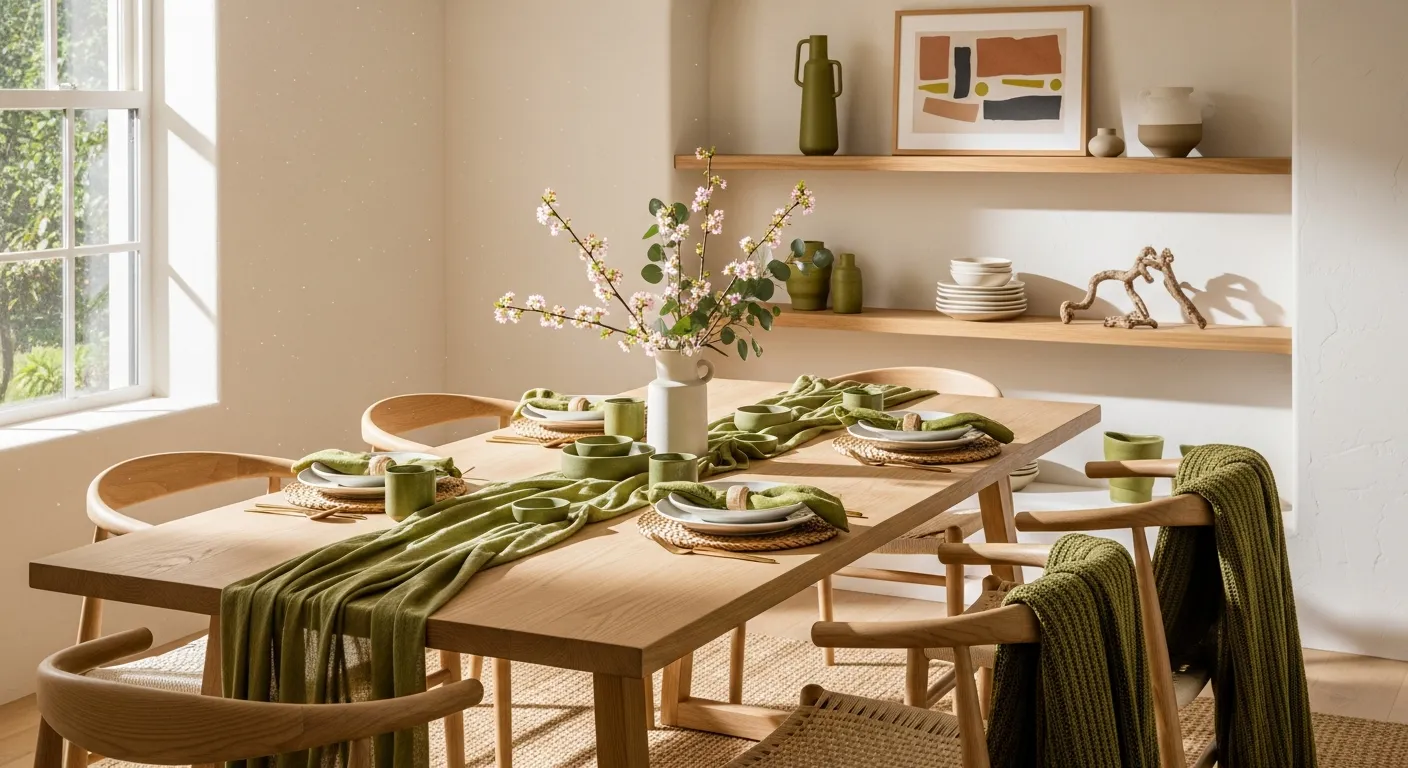
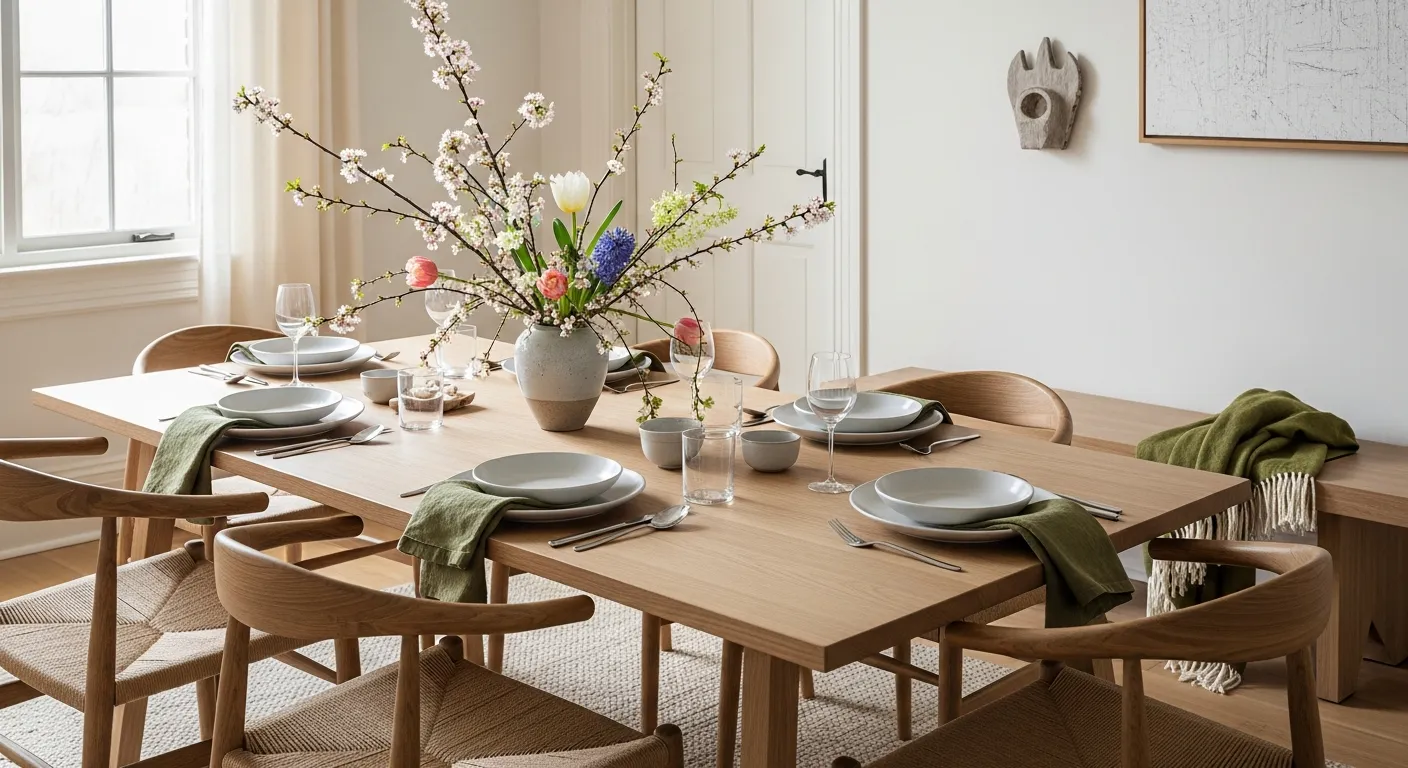
First, look to nature for your tablescape. Spring decor does not require pastel Easter eggs or overwhelming floral patterns. Instead, embrace the wabi-sabi philosophy by displaying a single, asymmetrical branch—like budding cherry blossom, forsythia, or pussy willow—in a beautifully textured, handmade ceramic vase. This simple addition introduces dramatic height and an authentic connection to the shifting seasons.
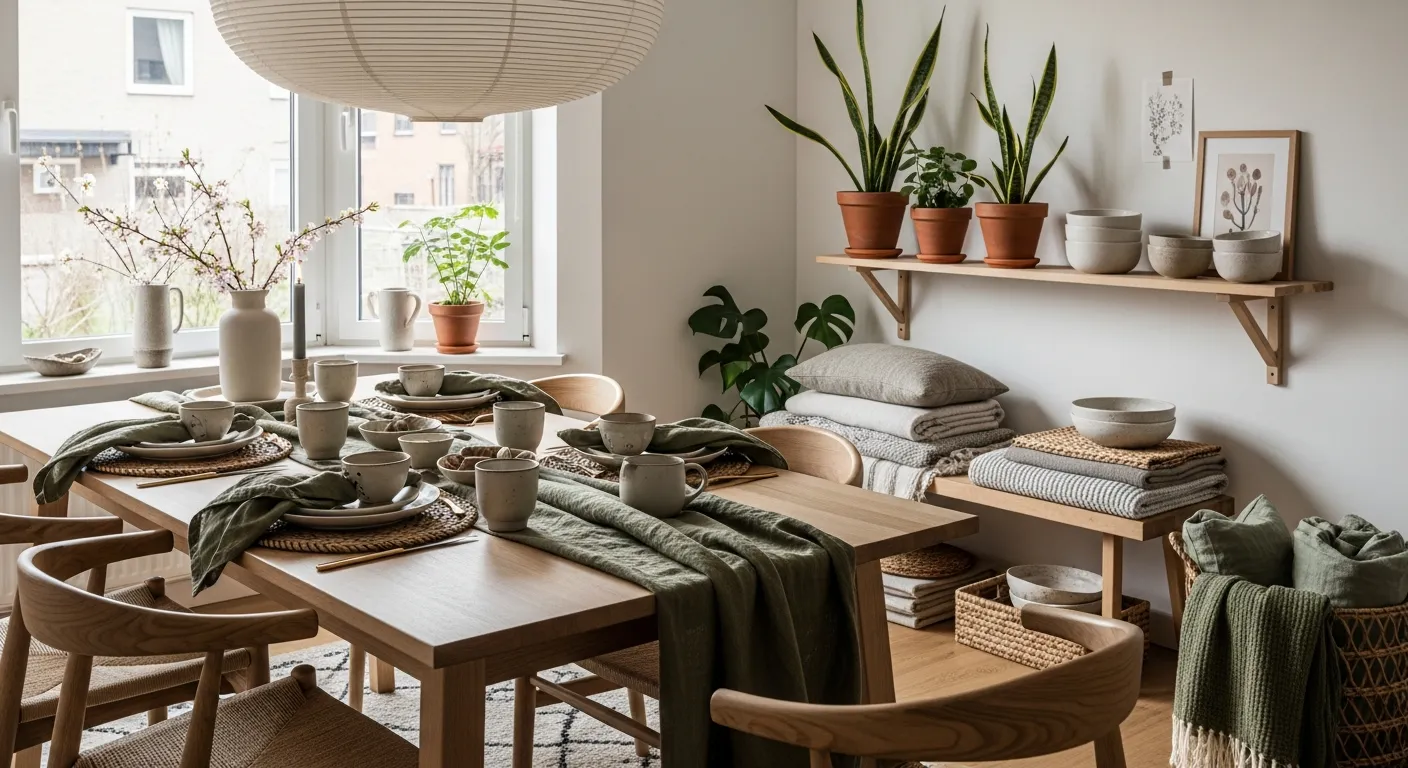
To elevate the styling while remaining budget-conscious, focus on textiles and tableware:
- Linen Over Cotton: Swap out crisp cotton napkins for raw, frayed-edge linen in natural oatmeal or soft olive colors. Linen has a beautifully imperfect crinkle that perfectly suits the Japandi look.
- Artisanal Tableware: You do not need a whole new set of plates. Invest in a few reactive-glaze ceramic bowls or matte stone-colored salad plates to layer over your existing white dinnerware.
- Sensory Details: Incorporate subtle scents with a beeswax candle or an incense holder. The goal is to engage all senses gently.
How to Recreate This Look
Ready to transform your own space? Recreating this gorgeous, spring-ready dining room is highly achievable if you break the process down into intentional steps. It is not about buying an entirely new room of furniture overnight; it is about making thoughtful, phased changes.
Step-by-Step Implementation Guide
- Establish the Canvas: Begin with your walls. If your budget allows for just one change, painting the room or adding an olive green accent wall (#6B705C) provides the most dramatic transformation. Ensure you choose a flat or matte paint finish to diffuse light softly.
- Curate the Wood Tones: Evaluate your existing dining table. If it fits the Japandi aesthetic (clean lines, light/medium wood), keep it! If it’s too dark or ornate, consider sanding it down to its raw state and sealing it with a clear, matte wax.
- Upgrade the Seating: Introduce sculptural wooden chairs. If you are on a tight budget, look for vintage mid-century modern chairs—which heavily influenced Scandi design—on second-hand marketplaces.
- Layer Textures: Add a flat-weave wool or jute rug under the table to define the dining zone, especially in open-concept homes.
- Final Polish: Install a dramatic paper lantern pendant above the center of the table and style the surface with minimal, organic ceramics.
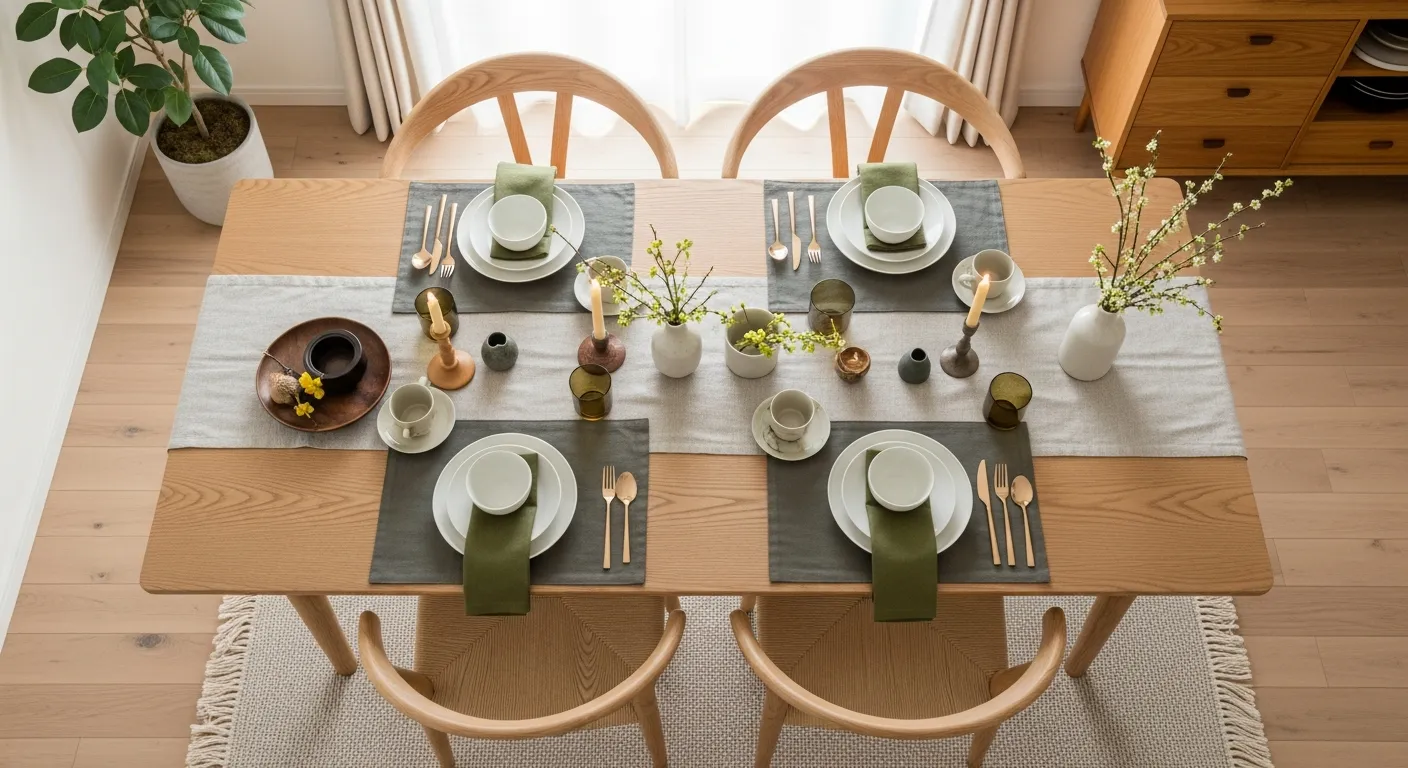
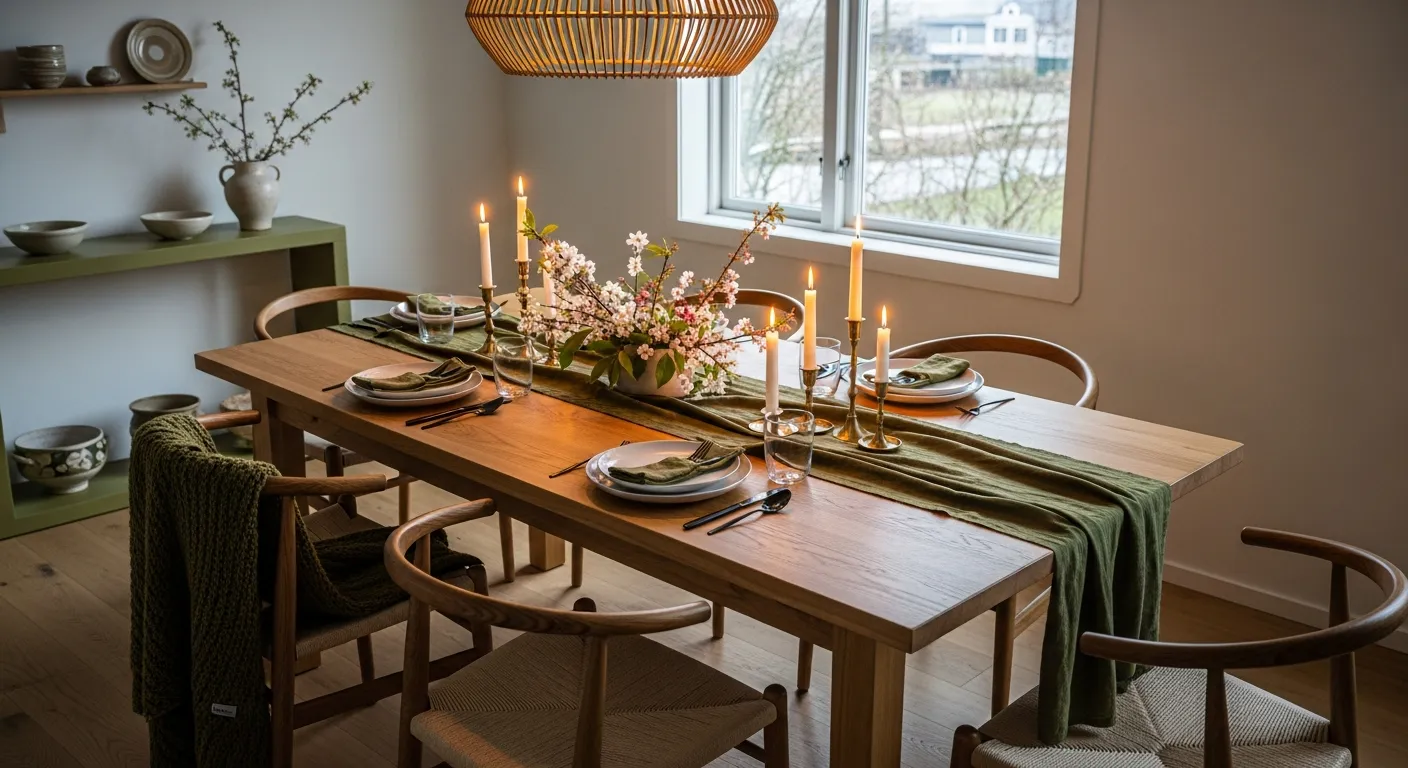
Estimated Budget Breakdown
Whether you want to splurge or save, here is a realistic look at what it costs to achieve this interior style:
- Paint & Supplies: $50 – $100 (Premium matte interior paint in Olive).
- Dining Table: $300 (IKEA or second-hand) to $2,500+ (Custom solid white oak).
- Dining Chairs (Set of 4): $200 (Budget woven/wood replicas) to $1,200+ (Authentic Scandi designer pieces).
- Lighting: $40 (Paper lantern shade) to $400 (Designer ceramic pendant).
- Decor (Ceramics, Linen, Rug): $150 – $500.
- Total Estimated Cost: $740 (Budget DIY) to $4,700+ (Premium Investment).
Frequently Asked Questions
Can I do Japandi style in a small, dark dining room?
Yes! If your space lacks natural spring sunlight, lean heavily into the lighter tones of our palette (#F1EFE7 and #F5F2EB). Use olive green strictly on the lower half of the walls (wainscoting) or through textiles to ensure the room stays airy and bright.
What kind of rug works best for this style?
Avoid high-pile or heavily patterned rugs. Opt for natural materials like jute, sisal, or a low-profile flatweave wool rug in cream, beige, or a subtle earth tone. It grounds the space without demanding attention.
Is Japandi design timeless or just a passing trend?
Because it relies heavily on fundamental design principles—quality craftsmanship, natural materials, and functional minimalism—Japandi is incredibly timeless. While specific accent colors like olive green may ebb and flow with the seasons, the core foundation of the room will look stylish for decades.
Creating a serene, nature-inspired space doesn’t have to be complicated or require an endless budget. By blending warm woods, minimalist principles, and the deeply grounding energy of an earthy olive green, you can effortlessly build a welcoming sanctuary in your home. We hope exploring these Japandi Dining Room ideas has inspired you to clear the clutter, embrace natural textures, and refresh your space for the beautiful spring season ahead. Remember, the true essence of this style is intentionality—choose pieces that bring you genuine joy and foster a peaceful atmosphere for your everyday meals.