
Welcome back, design lovers! Grab your favorite mug of coffee because today we are heading into the heart of the home to talk about a color trend that has absolutely stolen my heart. If you have been scrolling through Pinterest lately, hunting for fresh Farmhouse Kitchen ideas, you might have noticed a shift away from the stark, all-white clinical kitchens of the past decade. We are craving warmth, we are craving character, and most importantly, we are craving a connection to nature.
Enter the star of our show: Olive Green. There is something so effortlessly timeless about an olive green farmhouse kitchen. It manages to feel both vintage and modern, rustic yet sophisticated. It is a shade that works for everyday living—hiding the occasional fingerprint while wrapping you in a cozy embrace while you chop veggies for dinner. Whether you are planning a full gut renovation or just looking to paint your cabinets this weekend, this guide is going to walk you through everything you need to know about mastering this earthy, organic aesthetic. Let’s dive in!
#556B2F
#FAF9F6
#C19A6B
#5E6A53
#8D7861
#F2F0E9
The Psychology of Olive Green in Your Kitchen
Before we pick up a paintbrush, it is essential to understand why olive green resonates so deeply in interior design, particularly within the kitchen. In the world of color psychology, green is the great balancer. It sits right in the center of the color spectrum and represents harmony, renewal, and grounding. When you specifically choose olive—a tone enriched with yellow and brown undertones—you are invoking the essence of the earth.
The kitchen is often called the heart of the home, but it can also be a place of high stress during meal prep or morning rushes. Olive green acts as a subconscious stress reliever. Unlike the urgency of red or the sterility of cool bright white, olive green encourages a slower pace. It connects the indoors with the outdoors, a concept known as biophilic design. This connection is vital for creating a space that feels ‘lived-in’ rather than like a showroom.
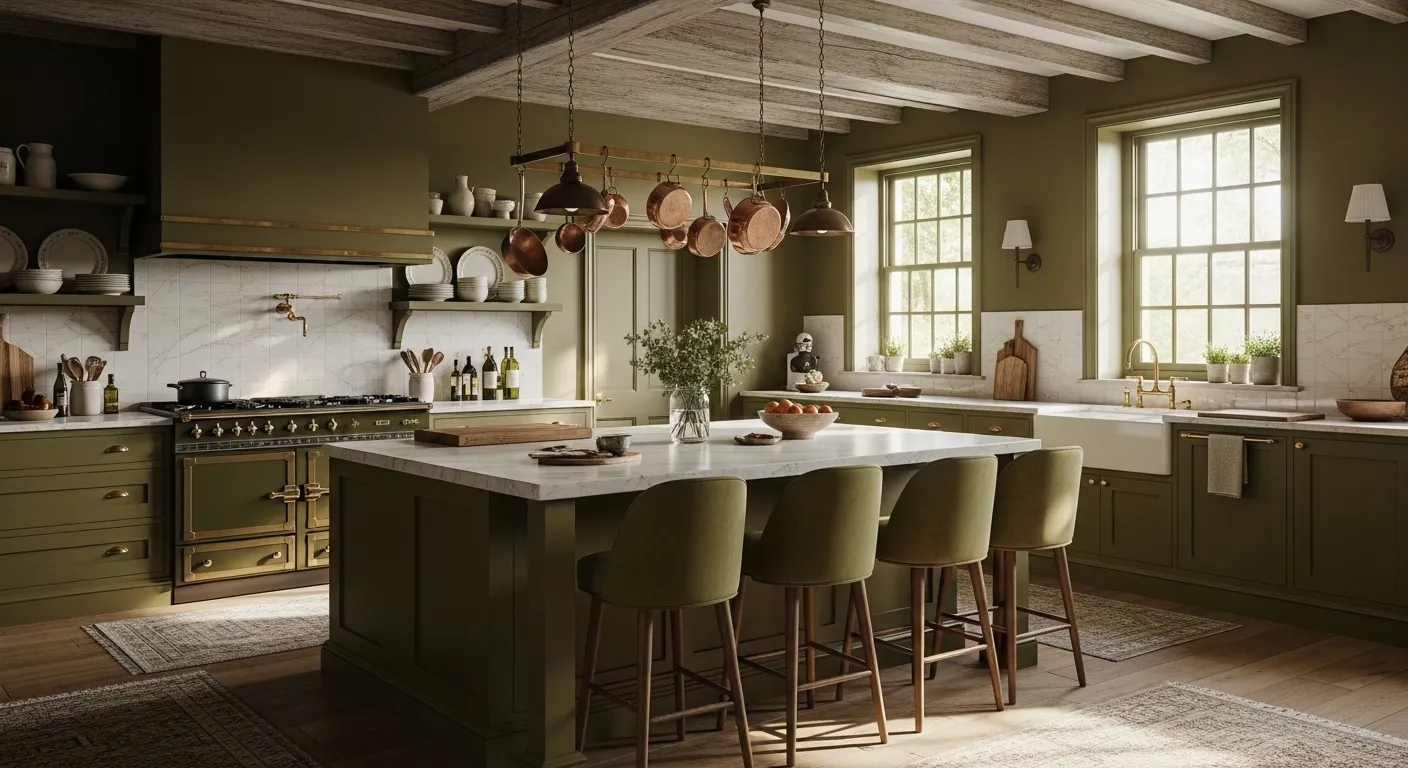
Furthermore, olive green is historically associated with sustenance and abundance. It stimulates the appetite in a way that is natural and wholesome, rather than artificial. When you stand in a kitchen enveloped in these mossy, earthy tones, the food looks better, the space feels warmer, and the atmosphere becomes instantly welcoming. It transforms the kitchen from a utility room into a sanctuary.
Essential Furniture & Decor Elements
To achieve that authentic look, the foundation of your design relies heavily on furniture selection and architectural details. One of the most requested Farmhouse Kitchen ideas involves mixing metals with organic textures to create a space that feels curated over time.
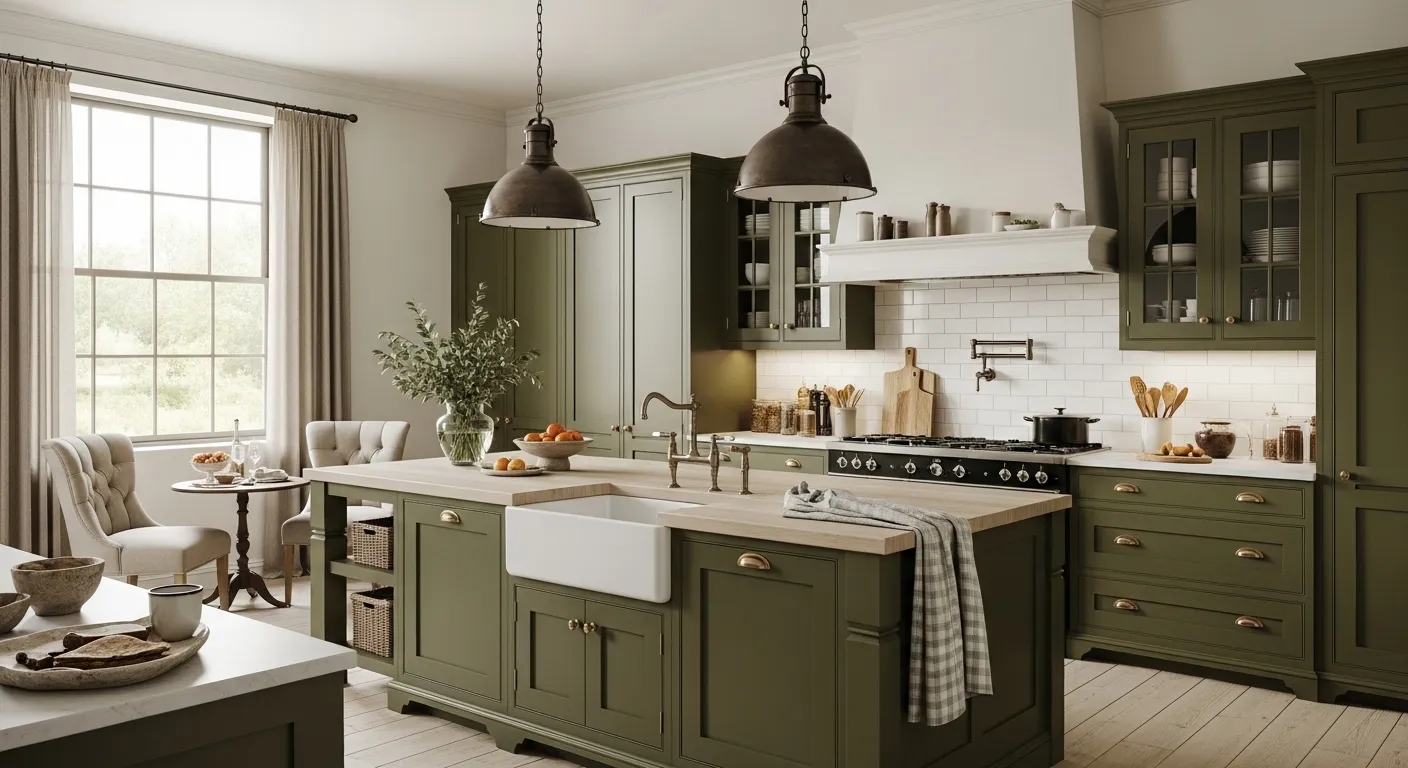
Start with the cabinetry. Shaker-style cabinets are the hallmark of farmhouse design. Their simple, recessed panel doors provide just enough detail without being ornate. When painted in a rich olive, they become the room’s anchor. However, to keep the room from feeling too dark or heavy, consider breaking up a wall of upper cabinets with open shelving made of reclaimed wood. This introduces a texture that contrasts beautifully with the smooth painted finish.
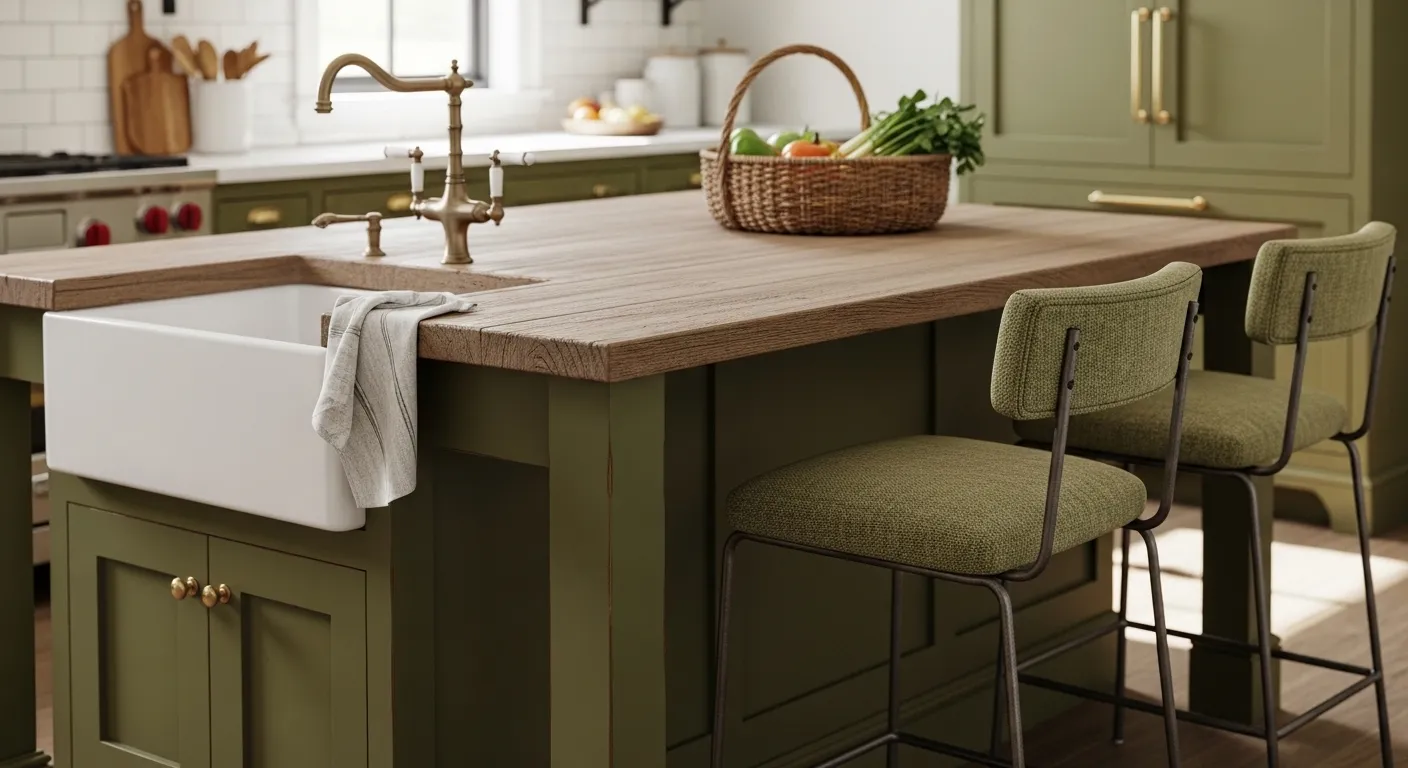
Your choice of hardware is the jewelry of the kitchen. For olive green, you cannot go wrong with unlacquered brass or antique bronze. These warm metals highlight the yellow undertones in the green and develop a beautiful patina over time. Avoid cool chrome, which can look too clinical against such an earthy backdrop.
For the countertops, natural materials reign supreme. Butcher block is the most traditional farmhouse choice and adds immense warmth, but if you need more durability, look for quartz with warm veining (like a creamy Calacatta Gold) or honed soapstone. Soapstone, in particular, has a velvety texture that complements the matte finish often used on farmhouse cabinets.
Color Combinations & Palette Ideas
While olive green is the protagonist, the supporting cast of colors creates the full narrative. The beauty of this shade lies in its versatility—it acts almost like a neutral. However, to maintain that airy farmhouse feel, you need to balance the saturation of the green with lighter, creamy tones.
The “60-30-10” rule is a helpful guide here. Let olive green take up 60% of the visual space (your cabinetry). Your 30% should be a soft, warm neutral. Avoid stark, printer-paper white; instead, opt for colors like ‘Swiss Coffee’ or ‘White Dove’ for your walls, backsplash, and trim. These creamy whites soften the transition between the dark cabinets and the rest of the room.

The final 10% is where you bring in accents. Terracotta, raw leather, and copper are stunning companions to olive. The reddish-orange hues in terracotta pots or a vintage runner rug sit opposite green on the color wheel, creating a complementary vibration that is pleasing to the eye without being loud. Deep charcoal or soft black can also be used for light fixtures or window sashes to add a touch of modern definition.
Styling Tips & Budget Ideas
Styling is where the magic happens—it is what turns a renovation into a home. The best budget-friendly Farmhouse Kitchen ideas often revolve around the art of display. Farmhouse style celebrates utility; everyday items should be beautiful enough to be left out.
Focus on texture over clutter. Instead of buying mass-produced decor, look for functional items made of natural materials. A stoneware crock filled with wooden spoons, a linen tea towel draped over the farmhouse sink, or a large wooden cutting board leaning against the backsplash adds instant character. These items serve a purpose but also contribute to the visual layering of the room.
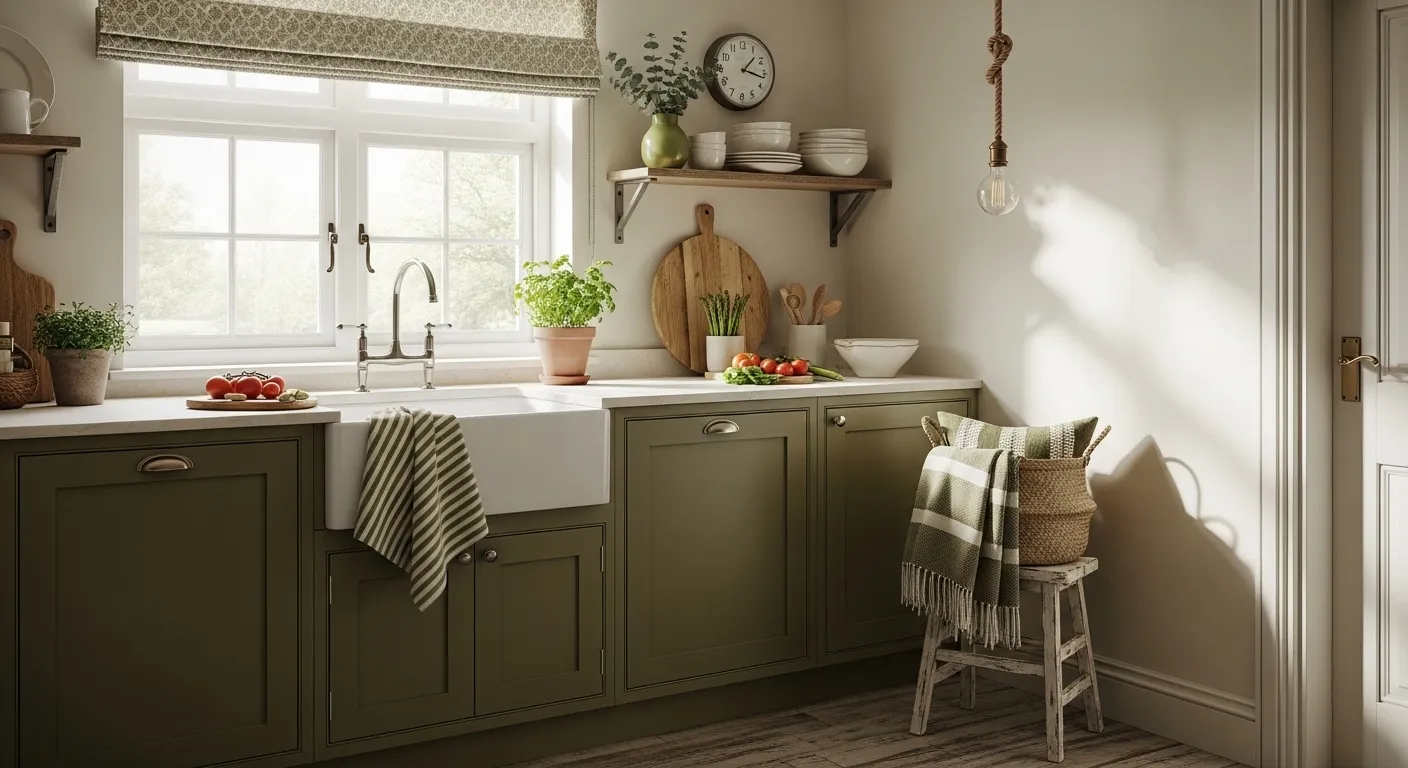
If you are on a tight budget, focus on the “jewelry” and the “textiles.” Swapping out generic knobs for vintage-inspired cup pulls can change the entire vibe of the kitchen for under $100. Similarly, adding a vintage-style runner rug in warm rust and cream tones can hide an outdated floor and tie the olive and wood tones together.
How to Recreate This Look (Steps + Budget + FAQ)
Ready to transform your kitchen? Recreating this high-end farmhouse aesthetic doesn’t always require a contractor. Here is a step-by-step breakdown of how to achieve this look, whether you are doing a weekend refresh or a full renovation.
Step-by-Step Execution
- The Prep Work: If you are painting existing cabinets, 90% of the success is in the prep. Clean heavily with a degreaser, sand lightly, and use a high-bonding primer. Do not skip this!
- The Paint: Choose a satin or semi-gloss finish for durability. Matte looks beautiful but can be a nightmare to clean in a heavy-traffic zone like the kitchen.
- The Warmth Factor: Once the green is on, assess the room. If it feels too cool, introduce wood. This could be floating shelves, wooden barstools, or even woven window shades.
- The Lighting Layer: Swap out cold daylight bulbs (5000K) for warm white (2700K-3000K). Olive green glows under warm light but looks grey under cool light.
Budget Breakdown
Low Budget ($300 – $600):
Focus on paint and hardware. Buy 2 gallons of premium cabinet paint (approx. $150), supplies ($50), and budget-friendly brass hardware from Amazon or IKEA ($100-$200). Styling with thrifted wooden bowls and existing greenery keeps costs down.
Mid Budget ($2,000 – $5,000):
In addition to paint and high-end hardware (like Rejuvenation or heavy solid brass), upgrade the backsplash to a handmade-look subway tile ($500-$800) and replace the faucet with a bridge-style brass fixture ($400). Add new pendant lighting ($600) to center the room.

Frequently Asked Questions
Is olive green just a trend?
While green is currently popular, olive is considered a “neutral” in the design world, much like navy blue. Because it is a color found abundantly in nature, it rarely feels dated compared to synthetic colors like avocado green from the 70s or teal from the 2010s.
What flooring goes best with olive cabinets?
Light to medium oak wide-plank flooring is the gold standard. It provides contrast without being too stark. If you have tile, look for warm tones like travertine or a patterned encaustic tile with beige and charcoal accents.


Creating a space that feels both elegant and cozy is the ultimate goal of the modern farmhouse aesthetic, and olive green is the secret ingredient that makes it effortless. By layering this grounding color with warm woods, unlacquered brass, and personal touches, you create a kitchen that isn’t just for cooking—it’s for living.
I hope these Farmhouse Kitchen ideas inspire your next renovation or weekend project. Whether you go all-in with a full remodel or just add some olive accents, you are building a space that feels organic and welcoming. Happy decorating!