
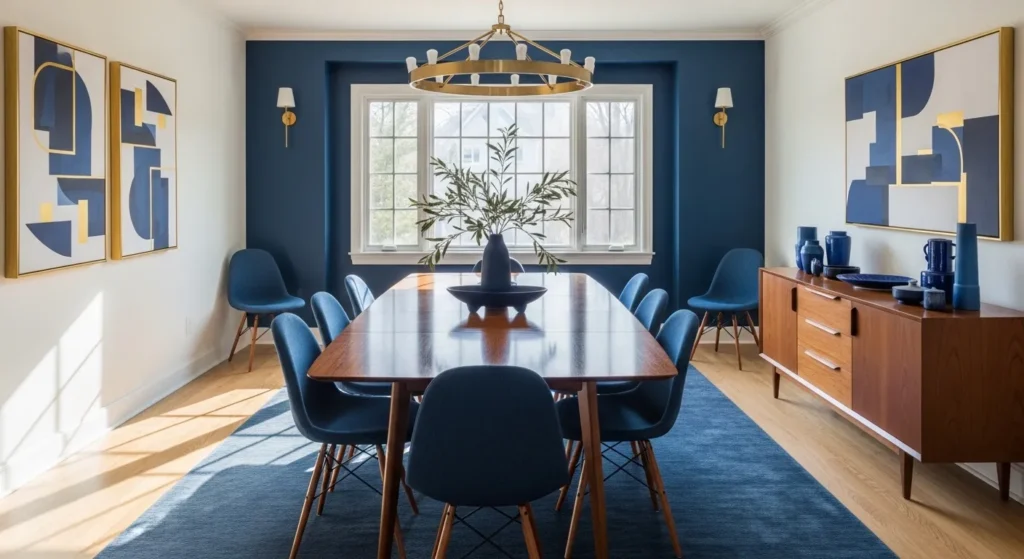
Hey there, design lovers! Welcome back to the blog. Today, we are diving deep into one of my absolute favorite aesthetics. There is something undeniably magnetic about a dining room that isn’t afraid of the dark. While bright and airy whites have had their moment in the sun, we are seeing a massive shift toward moody, grounding colors that hug you the moment you walk through the door.
Specifically, we are talking about the ultimate power couple: Navy Blue and Mid-Century Modern (MCM) style. Imagine the clean, functional lines of 1950s design set against a backdrop of deep, velvety navy (we’re talking a rich #000080). It is sophisticated without being stuffy, and retro without feeling like a time capsule. Whether you are hosting a lively dinner party or enjoying a quiet Tuesday night takeout, this color palette sets the perfect stage. In this guide, we will explore specific Mid-Century Modern Dining Room ideas that balance drama with functionality. Grab your coffee (or a glass of red wine), and let’s talk about how to bring this dramatic yet inviting look into your home!
#1C2E4A
#8D6E63
#EFEBE9
#0F1F38
#8A5A3C
#D4AF37
The Psychology of Navy Blue in Your Dining Space
Before we start buying furniture, let’s talk about the feeling. Why navy? In color psychology, dark blue is often associated with stability, intelligence, and calm. Unlike the frenetic energy of a red kitchen or the clinical sterility of an all-white space, a navy dining room acts as a visual anchor. It creates what interior designers often call a "containing" environment.
When you wrap a room in such a deep, rich hue, the walls seem to recede, but they also wrap around you like a warm blanket. This promotes lingering conversation—the holy grail of any dinner party. The darkness of the walls directs the eye inward toward the center of the room: the table, the food, and the people.
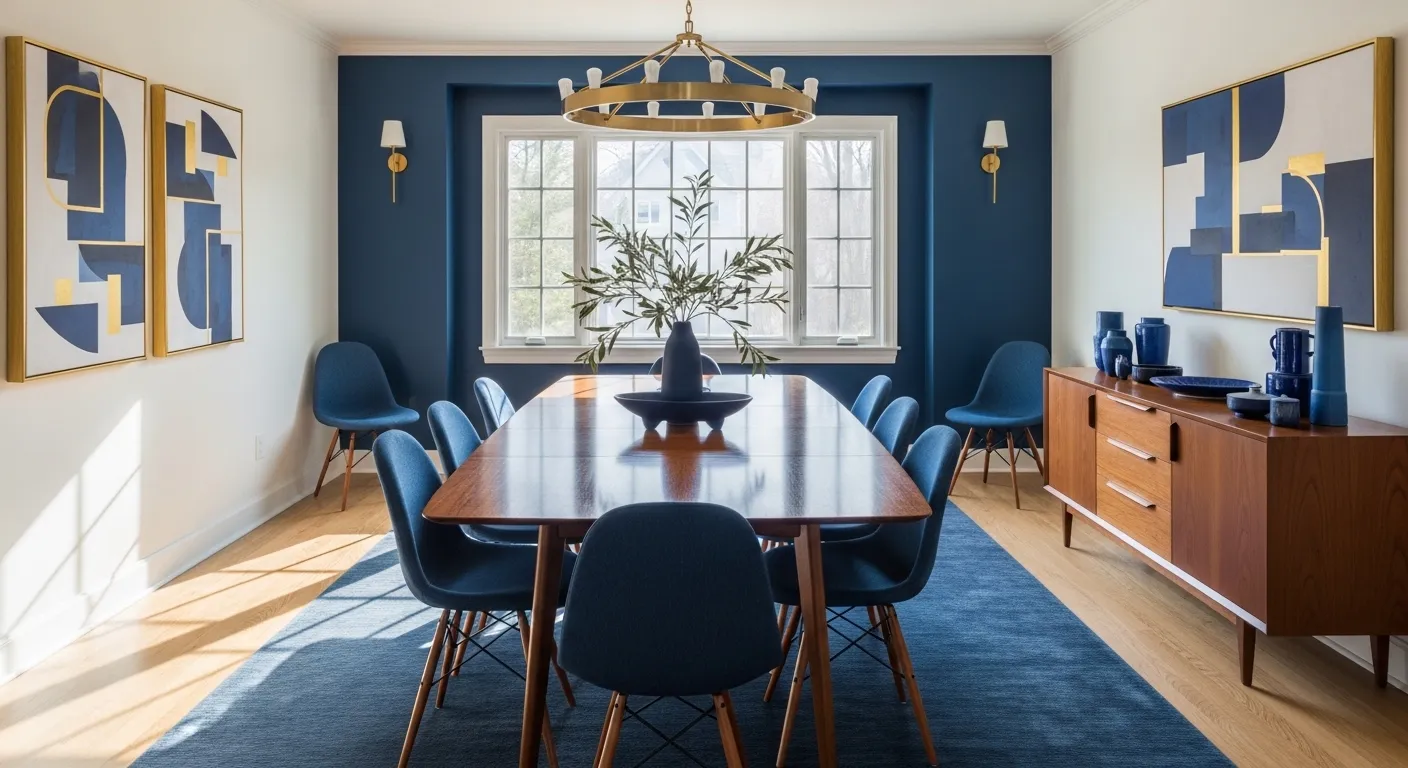
Furthermore, because Mid-Century Modern design relies heavily on natural materials—specifically warm woods like teak, walnut, and rosewood—navy serves as the perfect high-contrast partner. The orange and red undertones in the wood vibrate against the blue, making the furniture pop in a way that beige walls simply cannot achieve. It is a bold move, yes, but one that pays off by creating an atmosphere of sophisticated intimacy.
Essential Furniture for Mid-Century Modern Dining Room Ideas
When curating furniture for this aesthetic, silhouette is everything. Mid-Century Modern design is defined by clean lines, organic curves, and a lack of excessive ornamentation. In a dark room, these silhouettes become even more important because they break up the visual weight of the wall color.
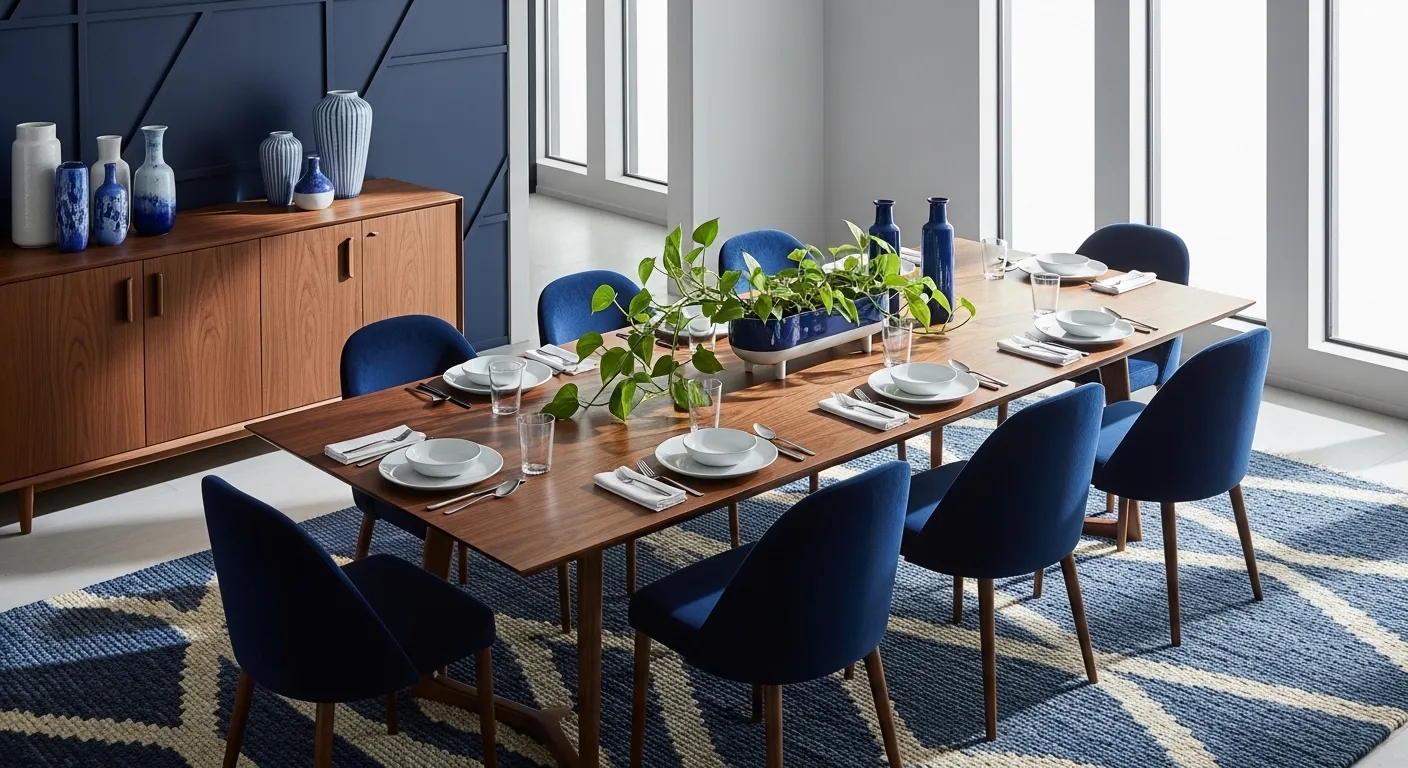
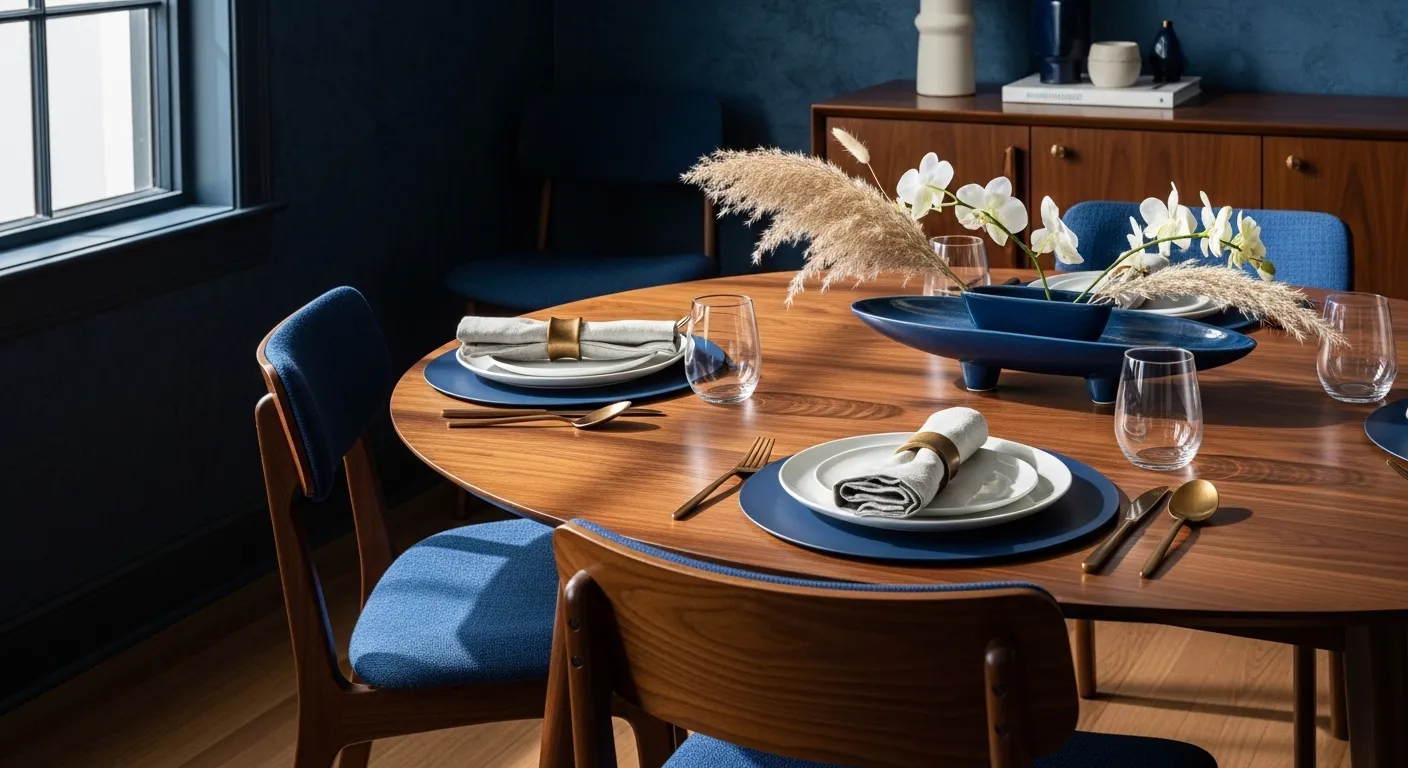
Start with the table. You want a piece that showcases beautiful wood grain. A classic walnut dining table with tapered legs or a sleek oval "surfboard" shape is ideal. The warmth of the walnut prevents the navy room from feeling cold. If you prefer a lighter look to contrast the dark walls, a Saarinen-style Tulip table with a white marble top can act as a stunning centerpiece, reflecting light and adding a touch of 1960s futurism.
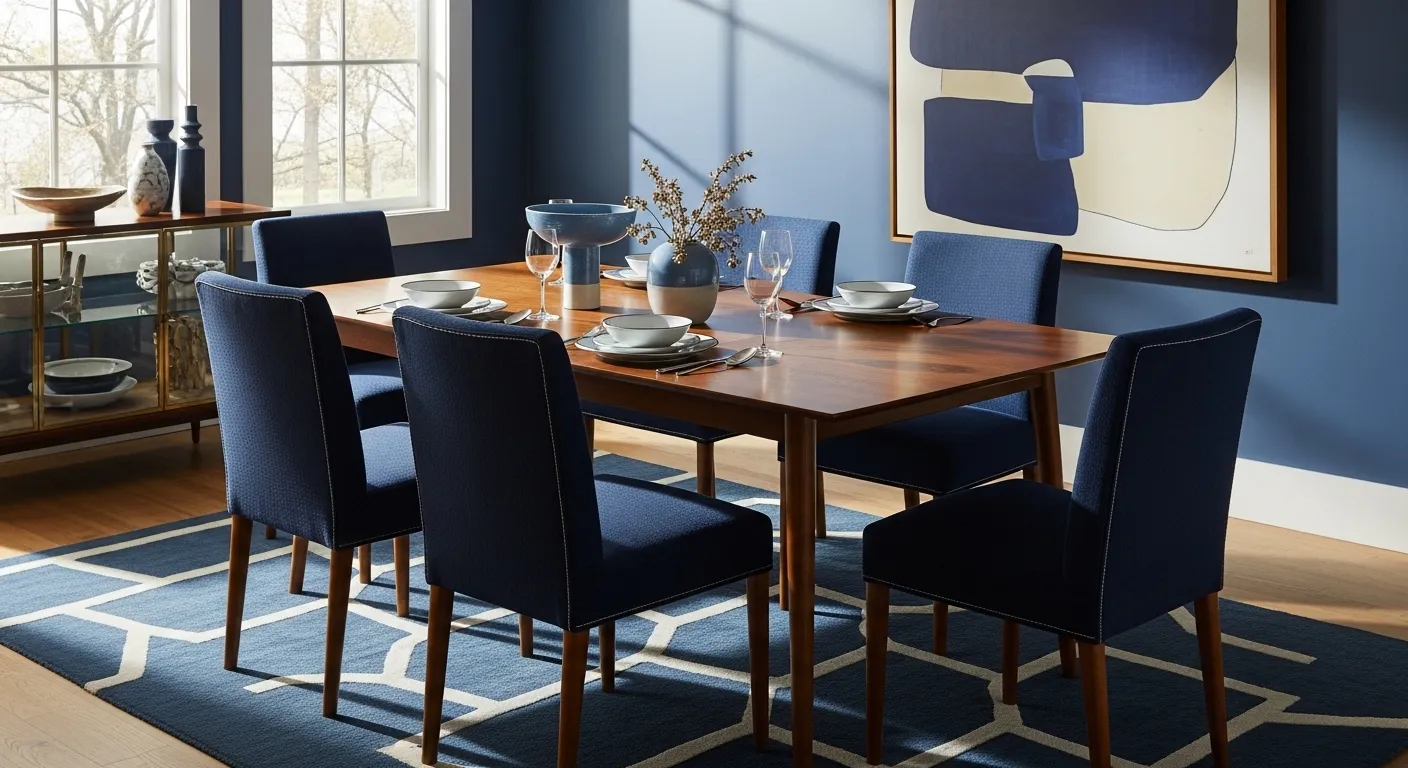
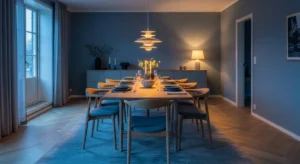
For seating, the options are endless but keep comfort and form in mind. The Wishbone chair (as seen in our inspiration images) is a staple for a reason; its woven seat and curved back add texture and softness. Alternatively, upholstered dining chairs in a bouclé fabric or a contrasting velvet (like burnt orange or mustard) can add a layer of luxury. Don’t forget storage—a low-profile credenza or sideboard is essential for storing linens and serving ware, while providing a surface for bar styling.
Color Combinations & Palette Ideas
While navy is the star of the show, it cannot act alone. To keep the room from feeling like a cave, you need a supporting cast of colors that lift the space. Navy functions almost as a neutral in this context, meaning it plays incredibly well with the earth tones synonymous with the 1950s and 60s.
Metallic Accents: Brass and gold are non-negotiable in a navy dining room. The cool tones of the blue make the warm metallics sing. Use brass for your lighting fixtures, cabinet hardware, or even the tips of chair legs.
Secondary Colors:
- Burnt Orange/Terracotta: This sits opposite blue on the color wheel, providing a complementary contrast that is vibrant and energetic.
- Mustard Yellow: Adds a retro pop that feels authentically vintage.
- Crisp White: Use this for ceilings, trim, or tabletops to maintain a sense of airiness and prevent the room from feeling closed in.
- Olive Green: For a more tone-on-tone, moody naturalist vibe, olive green plants or upholstery blend beautifully with navy.
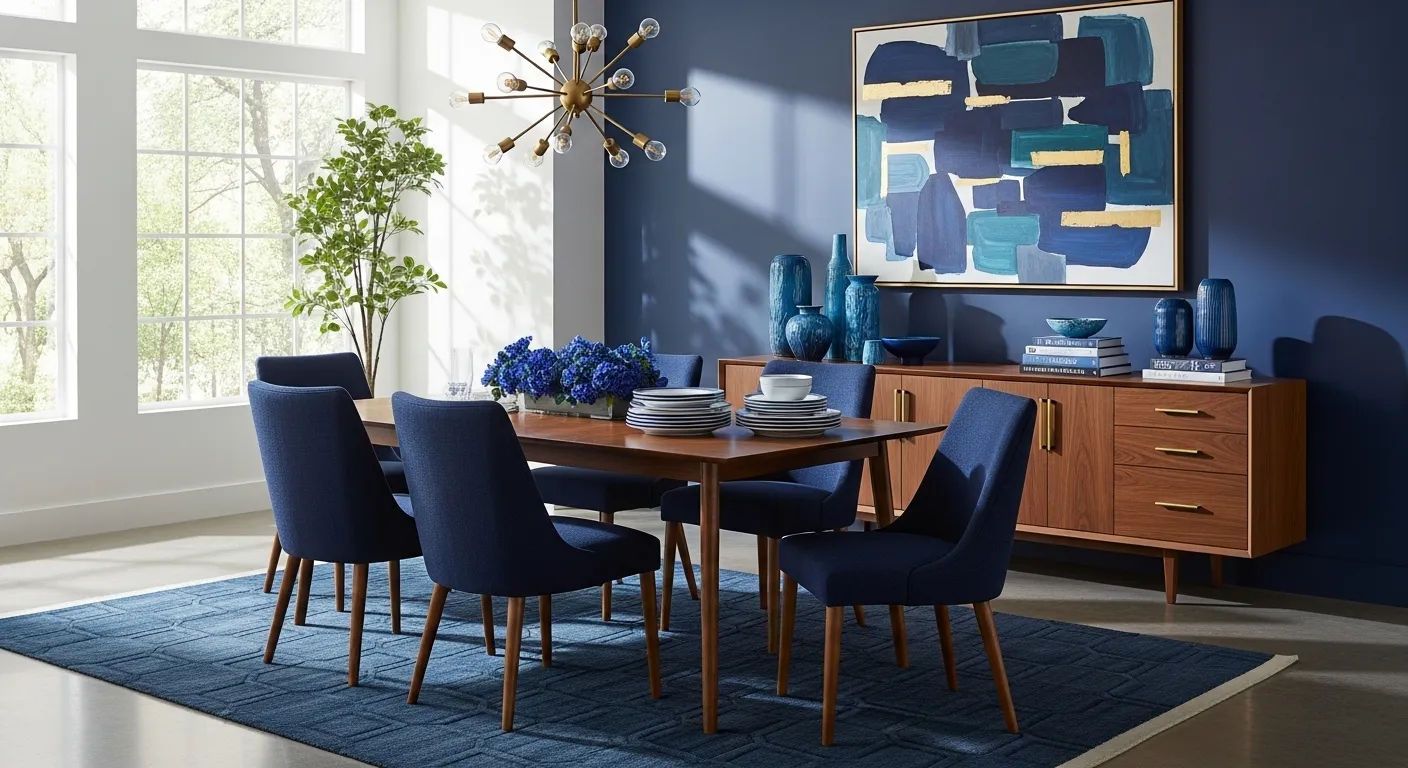
Styling Tips & Decor for Mid-Century Modern Dining Room Ideas
Once the paint is dry and the furniture is placed, the magic happens in the styling. In a dark room, lighting is your most critical tool. You cannot rely solely on recessed cans. You need a statement chandelier—think Sputnik styles, globe pendants, or sculptural brass fixtures—to act as the room’s jewelry. Install a dimmer switch immediately; the ability to control the mood is essential for that intimate dining experience.
For wall decor, you have two strong paths. One is the gallery wall, mixing vintage prints, abstract art, and architectural sketches in mixed frames. The white matting on artwork will pop aggressively against the navy paint. The second path is a large, oversized mirror. One of the best Mid-Century Modern Dining Room ideas for smaller spaces is using a large round or sunburst mirror to bounce light around and double the visual space.
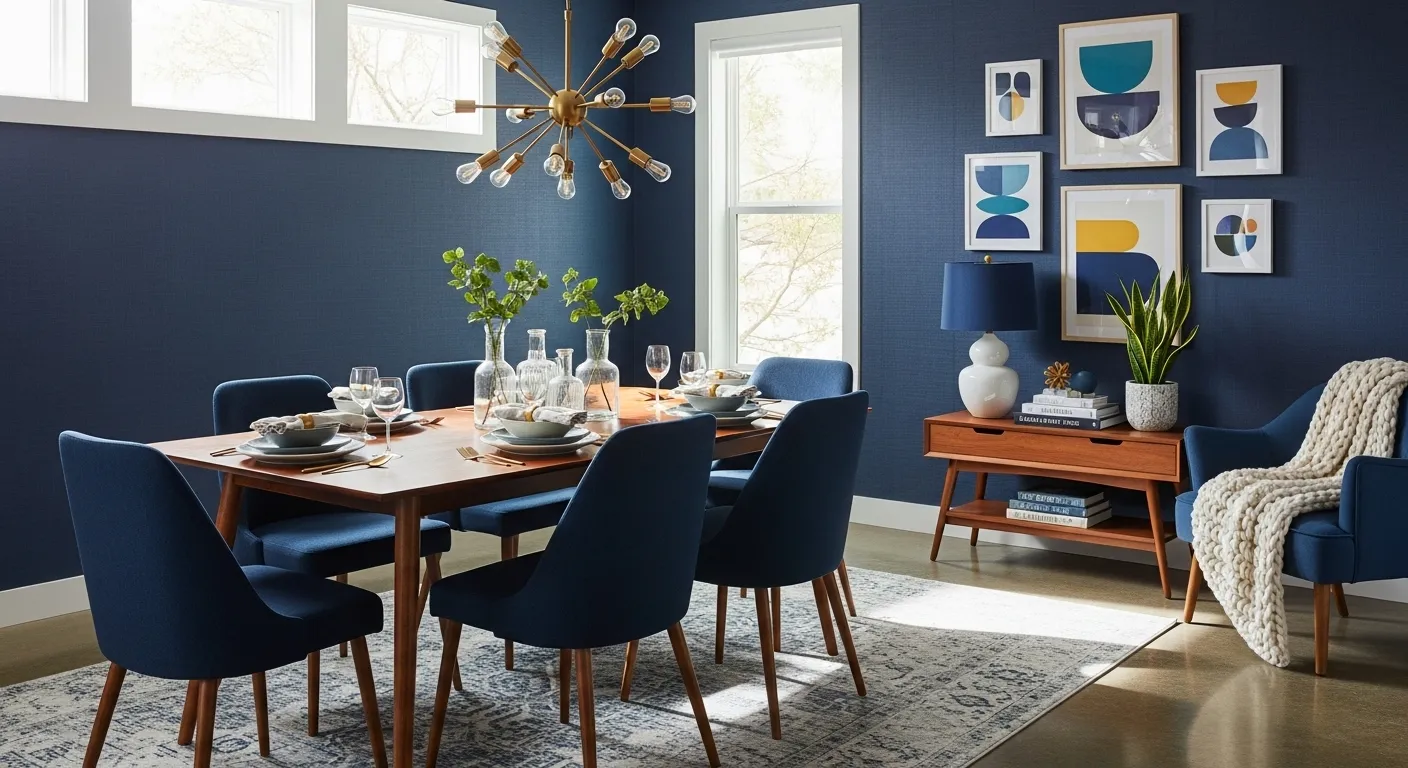
Finally, bring in life. The Mid-Century aesthetic celebrates the indoor-outdoor connection. A tall Fiddle Leaf Fig or a Snake Plant in a mid-century planter stands out beautifully against the dark walls, adding a necessary burst of organic green energy to the disciplined lines of the furniture.
How to Recreate This Look: Steps & Budget
Ready to transform your dining space? Here is a step-by-step roadmap to achieving this sophisticated navy aesthetic without losing your mind.
Step 1: The Canvas
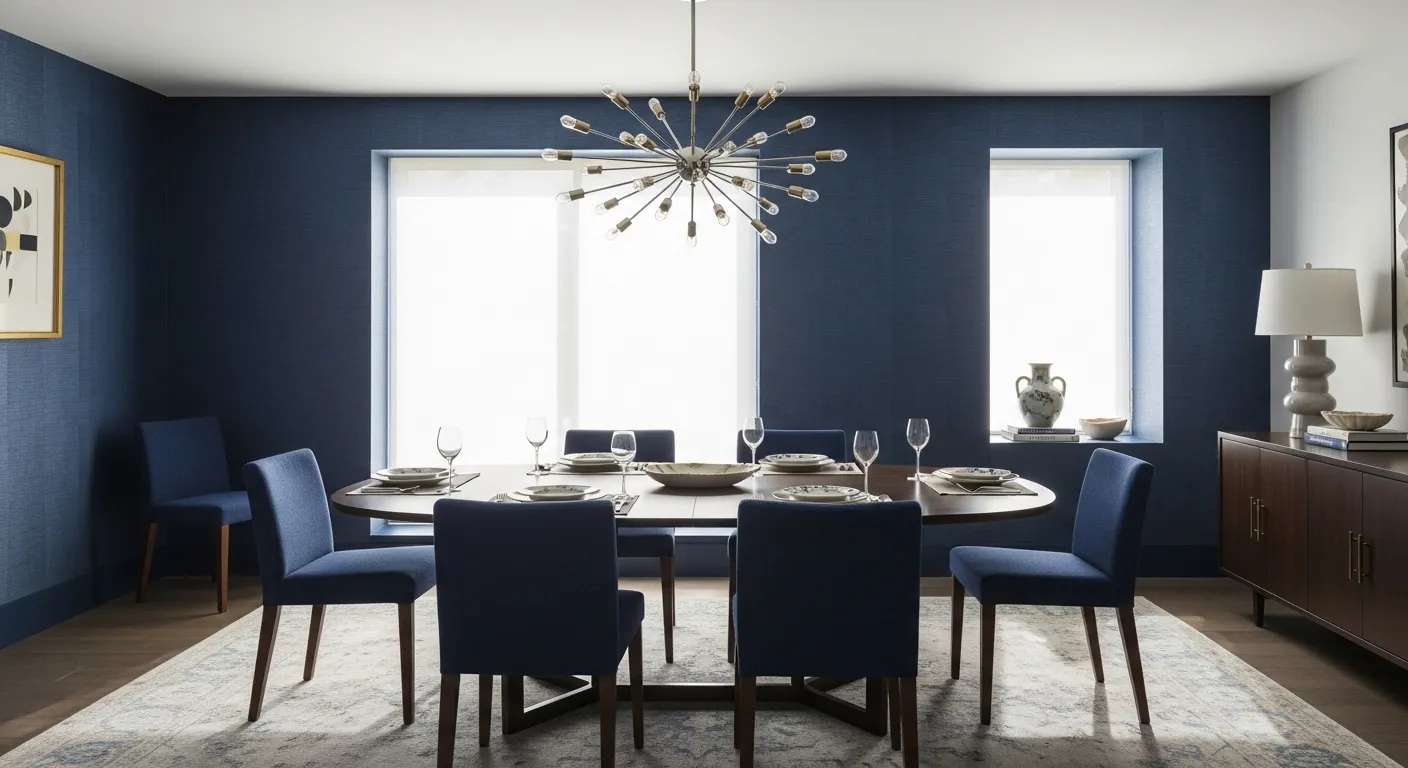
Start by testing paint samples. Navy blue is tricky; some lean purple, others lean grey or black. You want a true, deep navy. Paint not just the walls, but consider the trim for a monochromatic, modern look, or keep the trim crisp white for a traditional architectural pop.
Step 2: The Anchors
Select your rug. In a navy room, a light-colored rug (cream, beige, or a faded vintage pattern) is crucial to separate the dark floor from the dark walls (if you have dark wood floors). If your floors are light oak, you can go with a bolder, geometric pattern rug.
Step 3: The Layers
Bring in your walnut furniture and install your brass lighting fixture. Ensure the chandelier hangs approximately 30-34 inches above the table surface.
Budget Breakdown
Low Budget ($500 – $1,000):
Focus on paint (approx. $100) and second-hand furniture. Scour Facebook Marketplace or thrift stores for vintage 1960s tables—walnut veneer can often be refinished. Use IKEA frames for a gallery wall and spray paint existing light fixtures with a high-heat brass metallic paint.
Mid Budget ($2,000 – $4,000):
Invest in a high-quality solid wood table from retailers like West Elm, Article, or Castlery. Upgrade to designer lighting (approx. $300-$500) and add a high-quality wool rug. Add custom window treatments in a linen fabric to soften the acoustics.
Frequently Asked Questions
Will navy walls make my dining room look smaller?
Dark colors do absorb light, but they also blur the edges of the room, creating an illusion of infinite space. To counter the "small" feeling, ensure you have multiple light sources (overhead, sconces, candles) and use mirrors.
What flooring works best with navy walls?
Warm hardwood (oak, maple, walnut) is the classic choice. If you have cool-toned grey flooring or tile, a large jute or warm-toned area rug is essential to bring back the temperature balance.
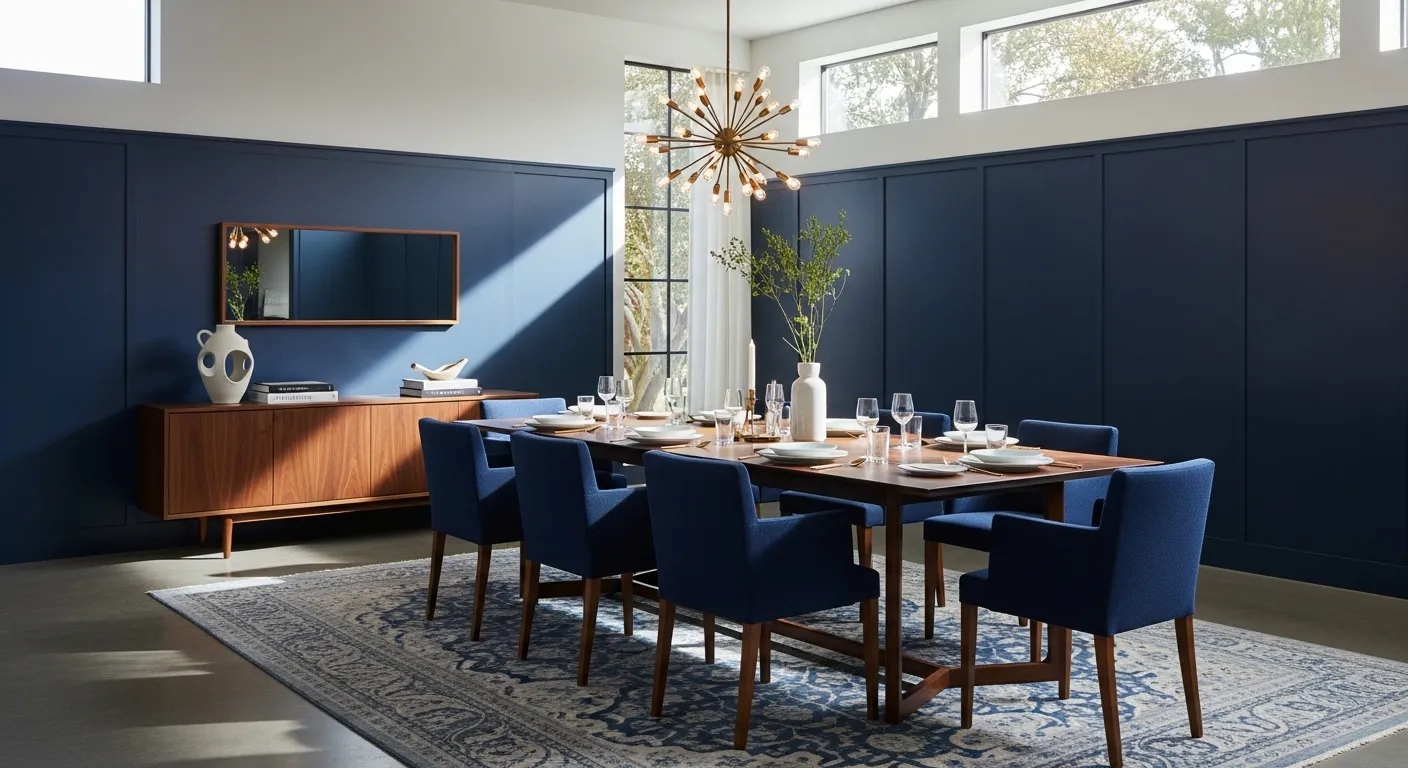
Designing a space with such a bold color palette requires a bit of courage, but the payoff is immense. A navy blue Mid-Century Modern dining room is timeless, elegant, and perfectly suited for creating memories around the table. By balancing the deep, moody walls with warm walnut woods and sparkling brass accents, you create a space that feels both nostalgic and refreshingly modern.
Remember, your home should tell your story. Whether you go all-in with floor-to-ceiling navy or start with accent pieces, implementing these Mid-Century Modern Dining Room ideas will elevate your home’s style factor significantly. So, pick up that paintbrush, hunt down that vintage table, and get ready to host your next dinner party in style.