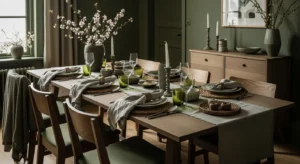

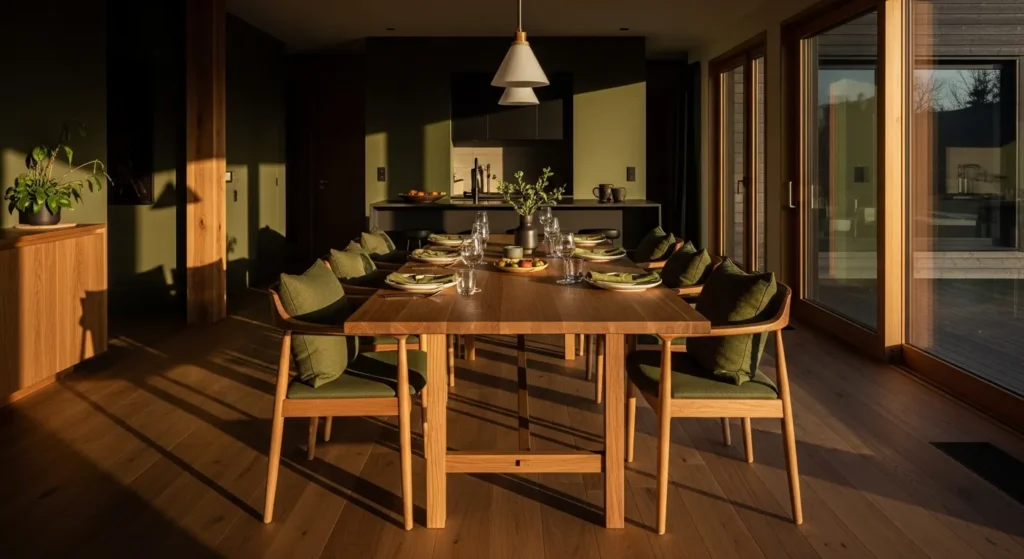
Welcome back, design lovers! If you have been scrolling through Pinterest lately, you have probably noticed that the world is absolutely falling in love with Japandi style—and for good reason. It is that perfect, sweet-spot blend of Japanese rustic minimalism and Scandinavian functionality. But today, I want to take a slight detour from the typical beige-on-beige palette we usually see with this trend. If you are searching for unique Japandi Dining Room ideas that feel fresh yet timeless, we are going to shake things up by introducing a color that is near and dear to my heart: Moss Green.
Why Moss Green? Because our dining rooms are the heartbeat of the home. They are where we nourish our bodies and connect with our families. By infusing this specific shade of earthy green into a clean Japandi framework, we create a space that feels grounded, organic, and incredibly serene. Whether you are doing a full renovation or just looking for a weekend refresh, this guide is going to walk you through exactly how to master this look without losing that airy, minimalist vibe we all crave. Let’s dive into creating your sanctuary!
#6D7E63
#DBCBB8
#F4F1EA
#5C6B50
#D8C8B0
#F2EFE9
The Psychology of Moss Green in Your Dining Room
Before we start buying furniture, let’s talk about feelings. Color psychology plays a massive role in interior design, especially in spaces where we eat and converse. Japandi style is heavily rooted in the concept of creating a sanctuary, and few colors achieve this better than moss green.
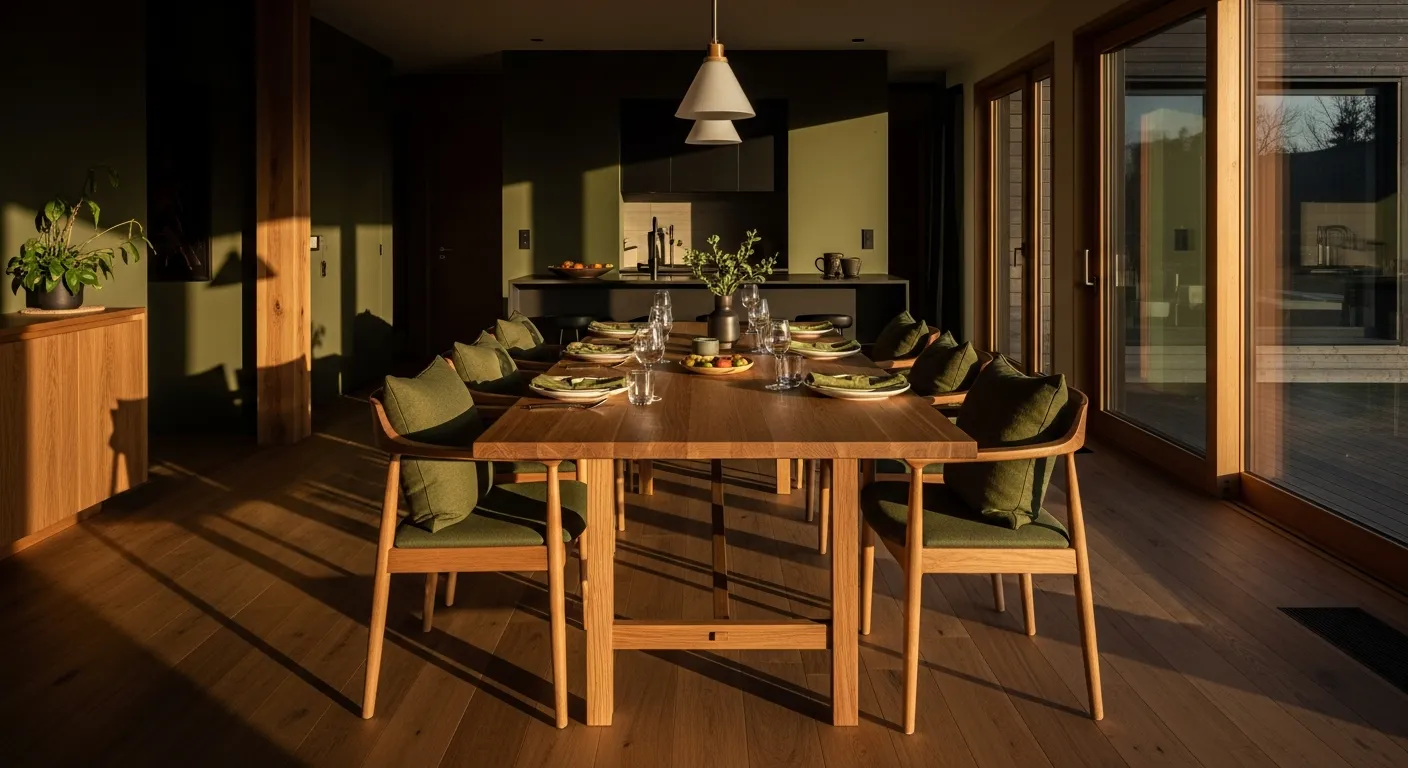
Moss green is inherently biophilic—meaning it connects us to nature. In a dining context, this connection triggers a parasympathetic nervous system response (the “rest and digest” state). Unlike bright reds or yellows which can induce anxiety or rush a meal, moss green encourages lingering. It brings the tranquility of a damp forest floor or a quiet Japanese garden right into your home. When you pair this with the clean lines of Scandinavian design, you are essentially building a stress-free zone for your family meals.
Essential Furniture: Bringing Japandi Dining Room Ideas to Life
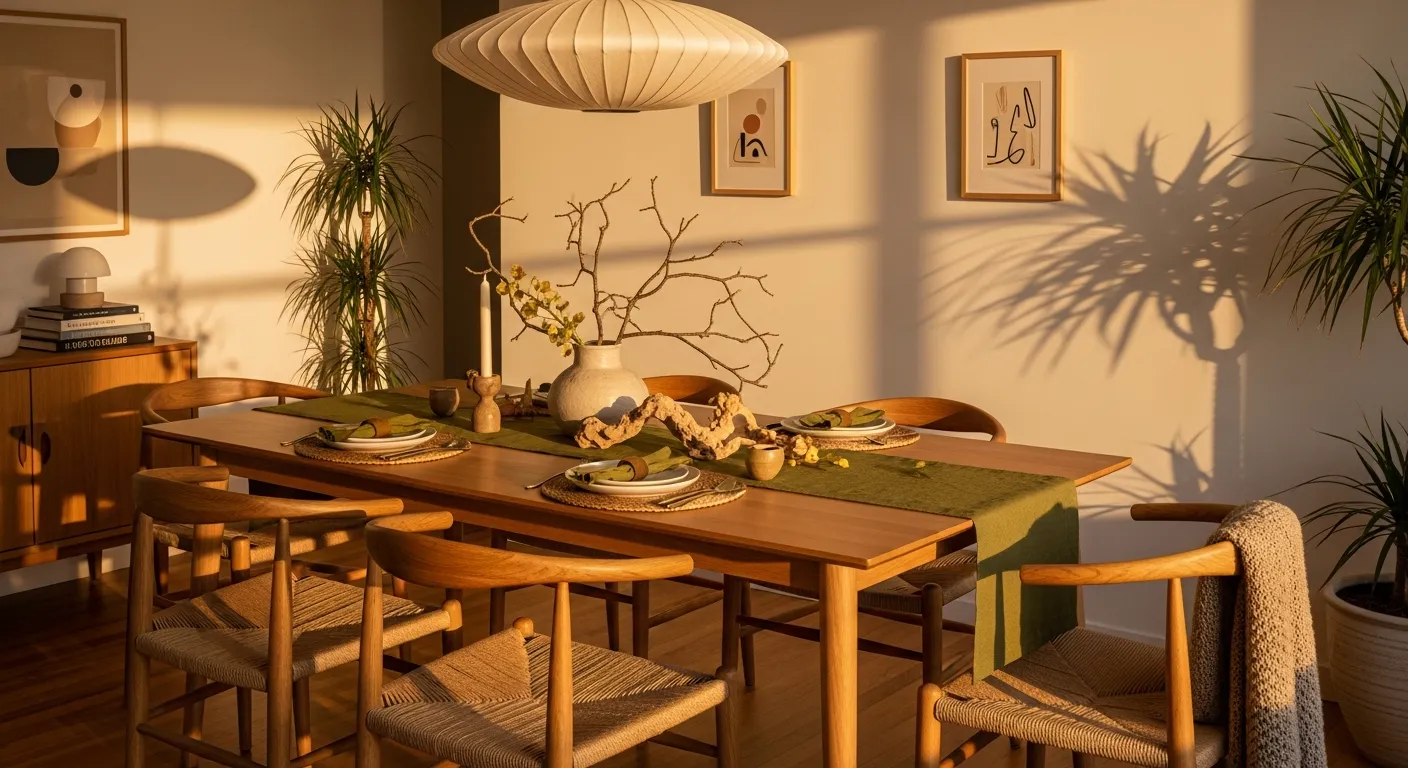
The furniture you choose is the skeleton of your design; the color is the skin. To truly nail these Japandi Dining Room ideas, you need to focus on craftsmanship and silhouette. We are looking for pieces that balance the rustic warmth of wabi-sabi (finding beauty in imperfection) with the sleek functionality of hygge (cozy contentment).
Key Furniture Characteristics:
- Low Profile: Japandi furniture often sits lower to the ground to promote a sense of openness and connection to the earth.
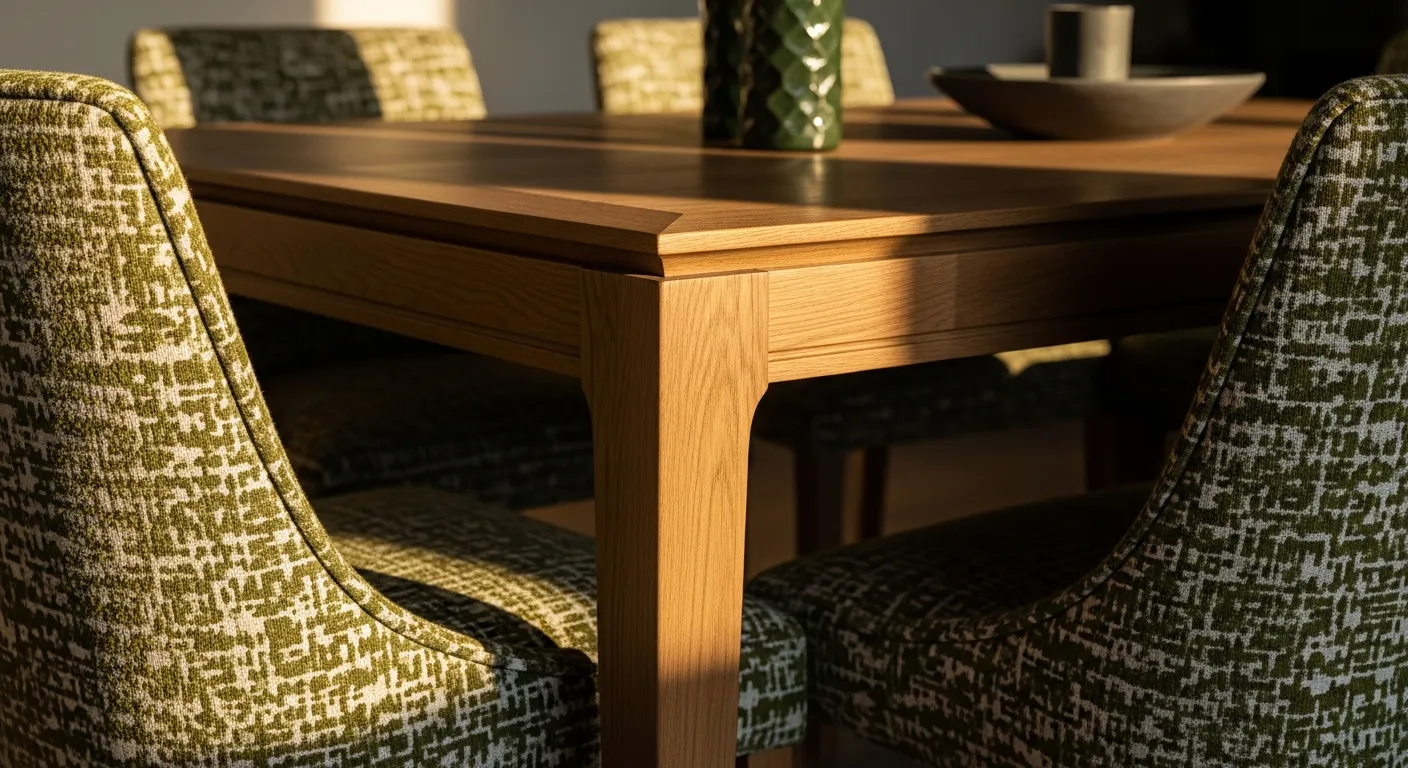
- Light Woods: White oak, ash, or beech are the go-to choices. They provide a beautiful contrast against the darker moss green walls.
- Clean Lines with Soft Curves: Avoid overly ornate detailing. Look for tables with tapered legs or rounded edges that soften the room.
- Tactile Seating: Wishbone chairs are a classic choice, but don’t be afraid of benches or chairs with woven paper cord seats.
Color Combinations & Palette Ideas
While our hero color is Moss Green (#8A9A5B or similar shades like #6D7E63), a room cannot live on one color alone. The magic of Japandi lies in the contrast. You want to avoid the space looking like a dark cave, so balancing the green with light neutrals is non-negotiable.
I recommend following the 60-30-10 Rule tailored for this look:
- 60% Dominant: Light Neutrals (Cream, Oatmeal, Pale Grey, or White Oak). This keeps the room airy.
- 30% Secondary: Moss Green. Use this on a feature wall, lower wainscoting, or upholstered dining chairs.
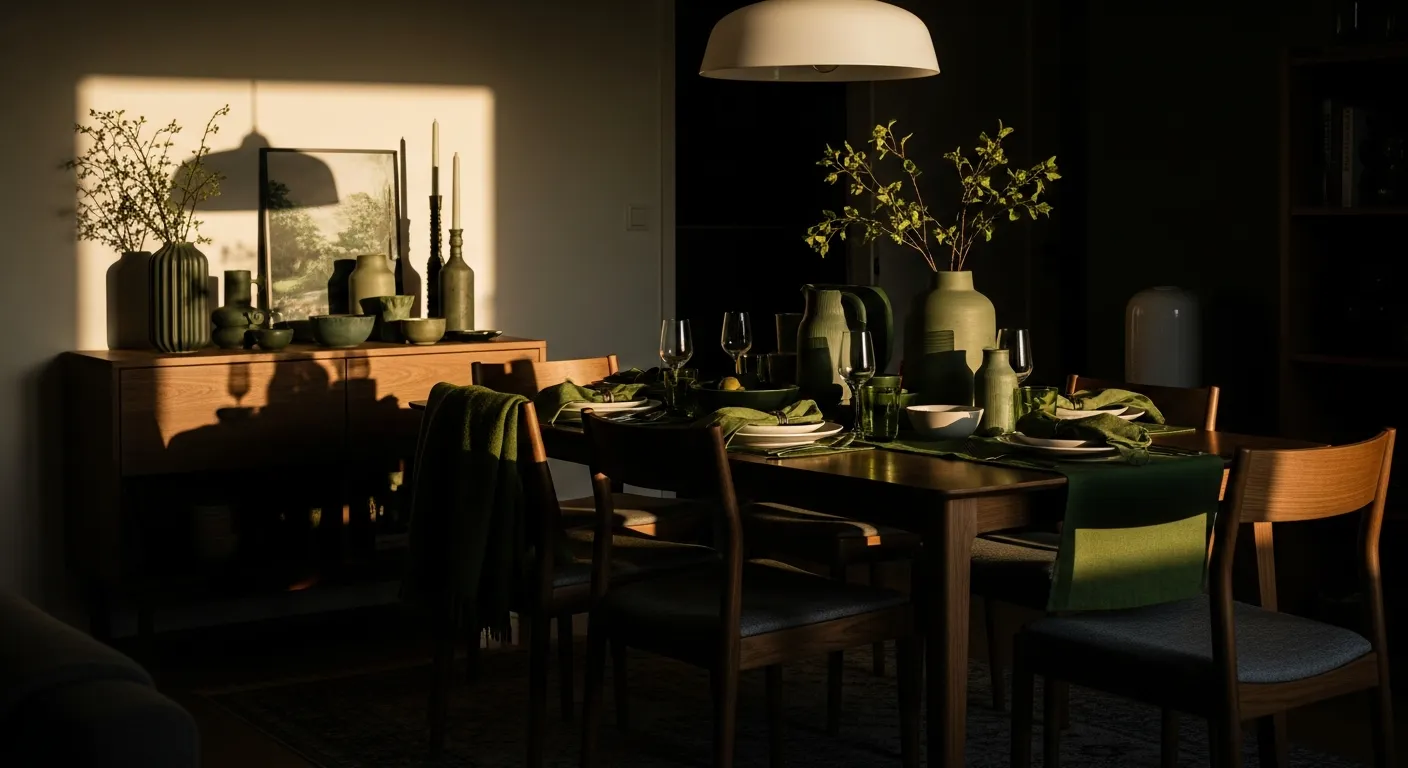
- 10% Accent: Charcoal or Matte Black. This provides the “anchor” that prevents the room from floating away. A black vase, a thin black picture frame, or black metal legs on a sideboard works wonders.
Styling Tips: Elevating Your Japandi Dining Room Ideas
Styling a minimalist space is actually harder than styling a maximalist one because every single object counts. There is no clutter to hide behind. When executing your Japandi Dining Room ideas, focus on “intentionality.”
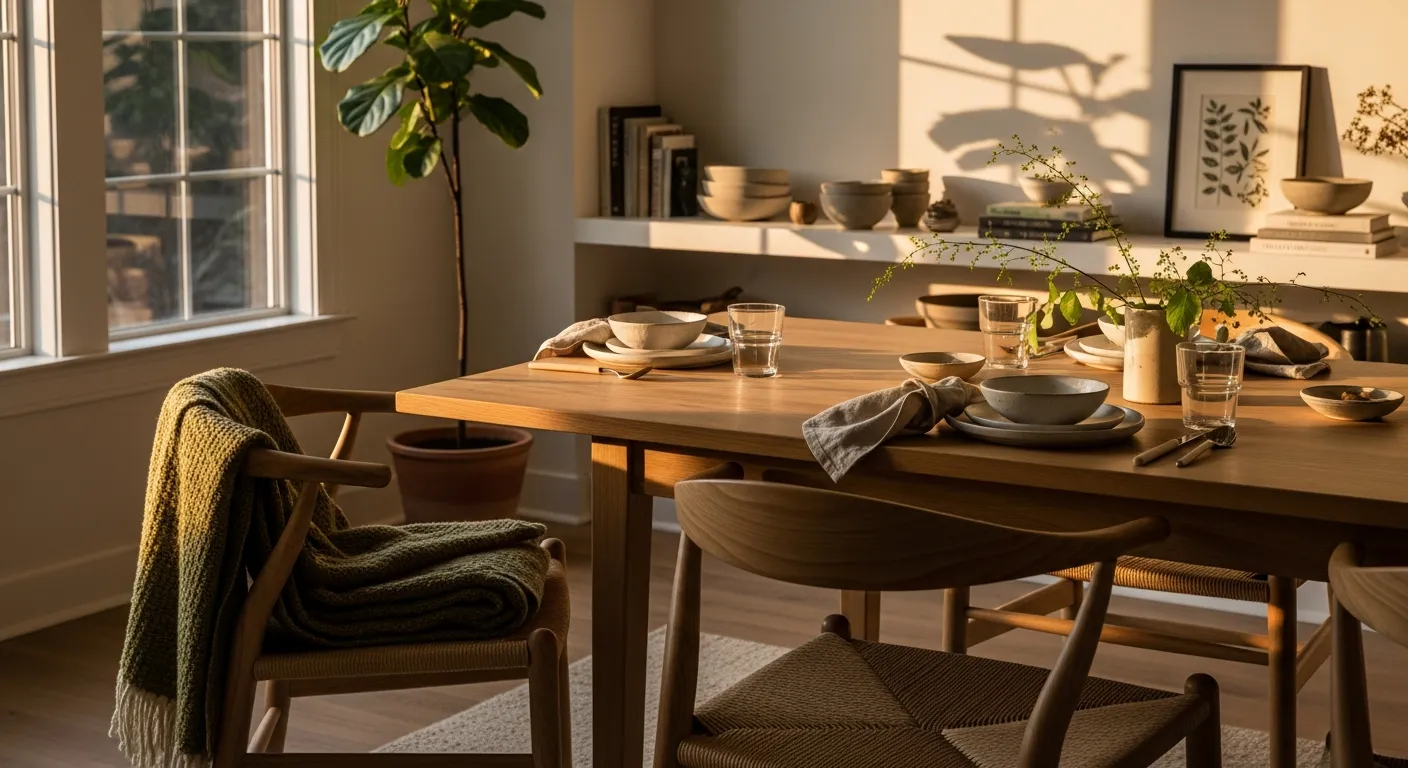
Here are three styling pillars for this aesthetic:
- Bring the Outdoors In: Since we are using moss green, live plants are a must. A simple branch in a tall ceramic vase or a potted Ficus tree adds life without clutter.
- Texture Over Pattern: Avoid busy floral or geometric prints. Instead, add interest through texture—a bouclé rug, a linen table runner, or a ribbed glass pendant light.
- Imperfection is Beauty: display handmade ceramics that might be slightly asymmetrical. These organic shapes break up the rigid lines of the furniture.
How to Recreate This Look (Steps + Budget + FAQ)
Ready to transform your dining room? Here is a practical roadmap to get this look in your own home, regardless of your budget.
Step 1: The Foundation
Start with your walls. If you are hesitant about painting the whole room green, try a color-block technique. Paint the bottom two-thirds of the wall in Moss Green and leave the top third and ceiling a warm off-white (like #F4F1EA). This heightens the room while grounding the dining area.
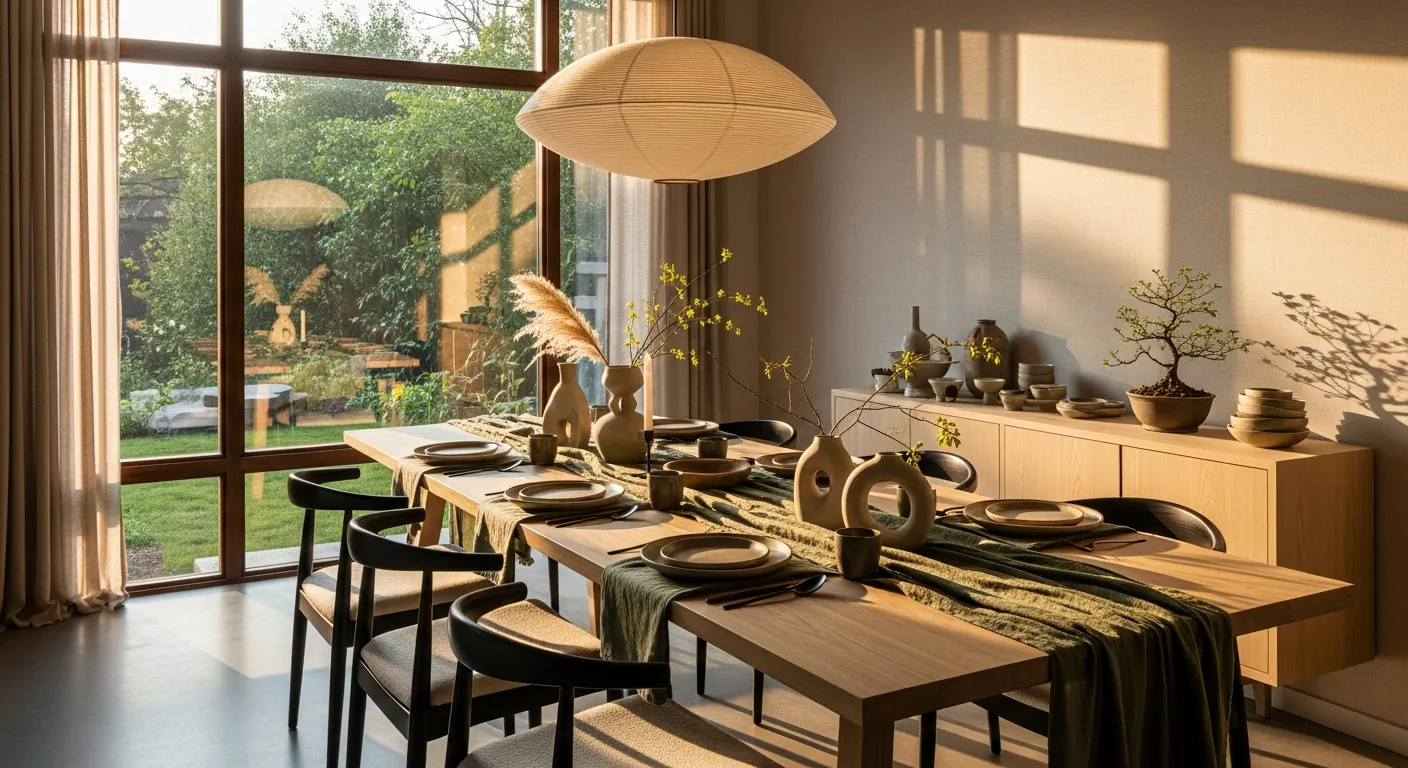
Step 2: The Centerpiece
Select your table. If you have a small space, a round light-oak table improves flow. For larger rooms, a rectangular table with bench seating on one side adds that communal, rustic feel.
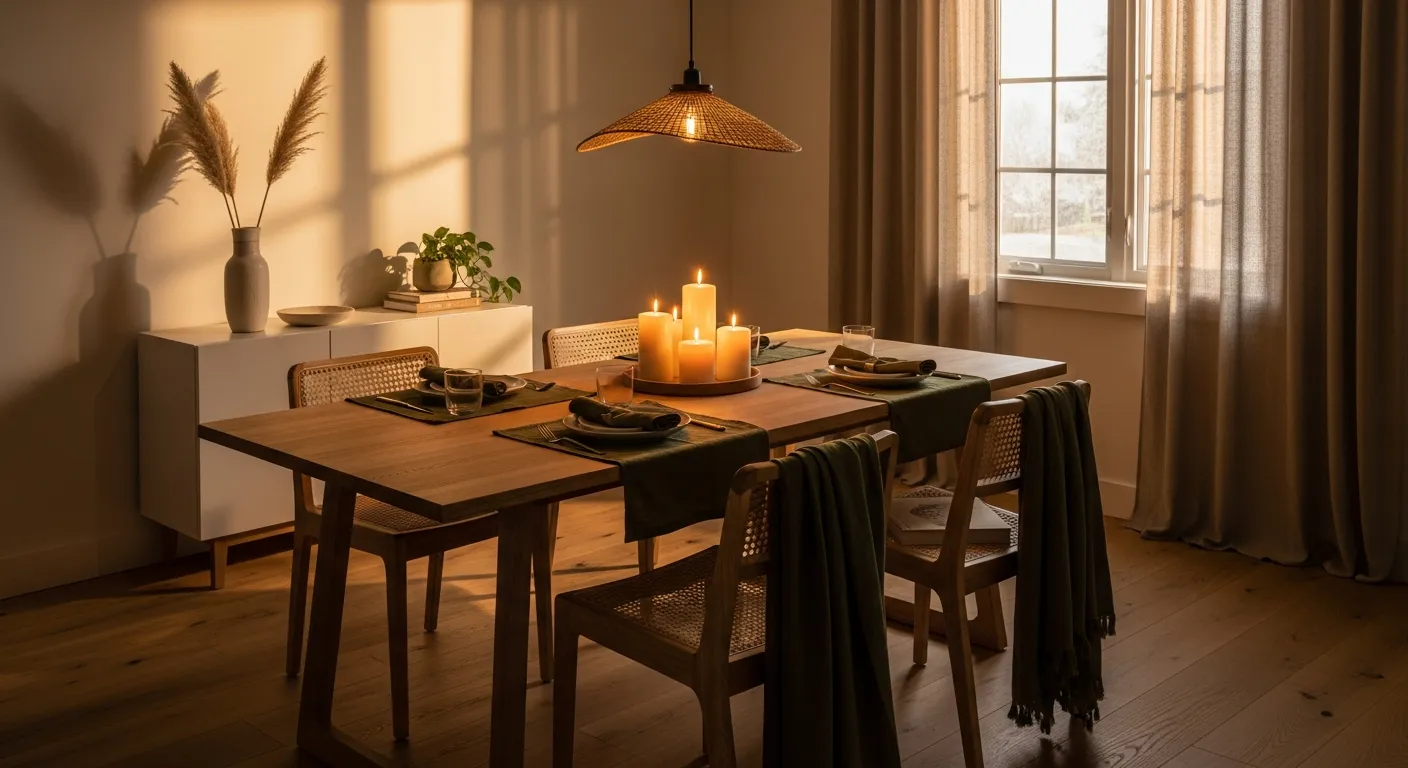
Step 3: Layering
Add a large area rug. Look for natural materials like jute, wool, or sisal in neutral tones. The rug should be large enough that all chair legs remain on it when pulled out.
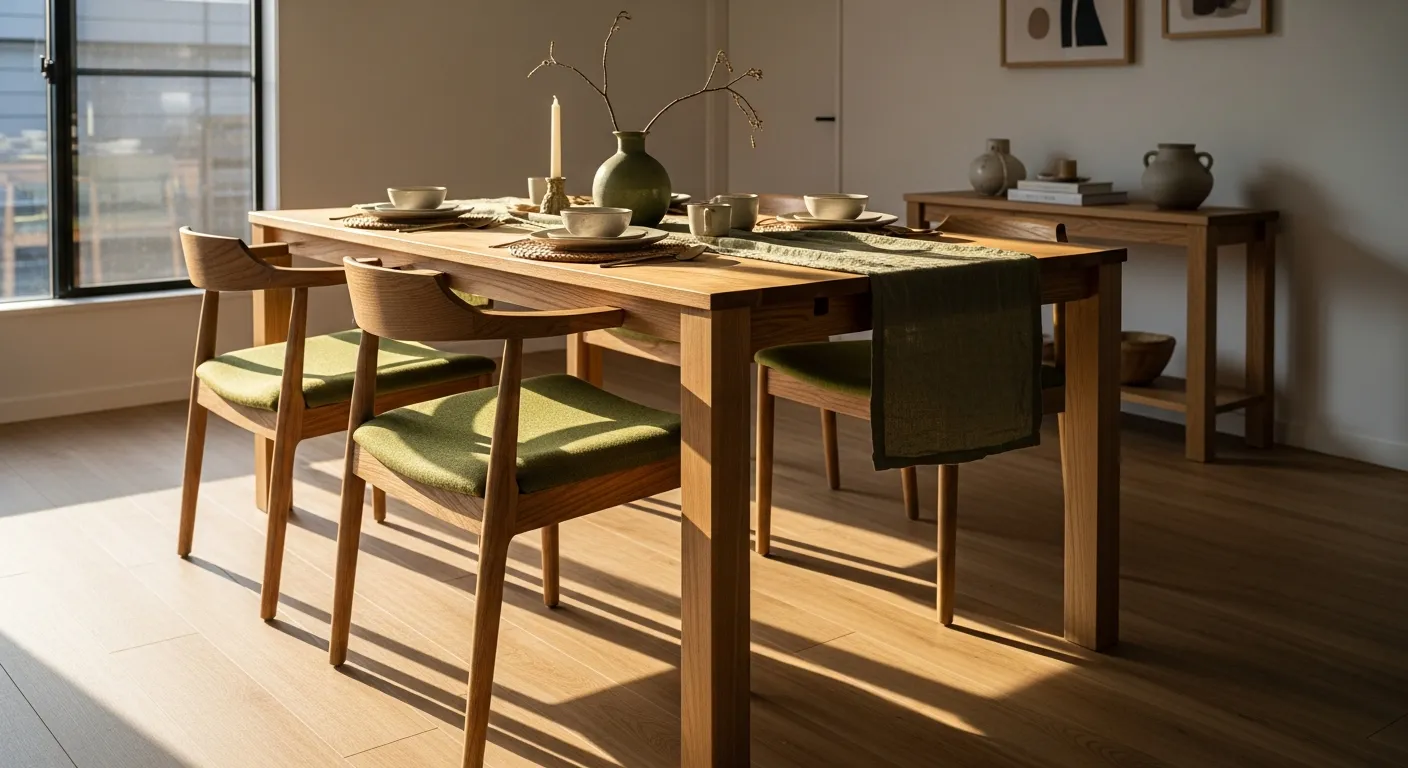
Budget Breakdown Estimates
- The “DIY Update” Budget ($300 – $500): Paint (2 gallons), sanding supplies for existing table, new light fixture, thrifted ceramics.
- The “Refresh” Budget ($1,500 – $2,500): Professional painting, new dining chairs (x4), new area rug, updated lighting, fresh decor.
- The “Full Overhaul” Budget ($5,000+): High-end solid oak dining table, designer wishbone chairs, custom window treatments, artisan lighting, complete structural updates.
Frequently Asked Questions
Can I use dark wood with Japandi?
Yes, strictly speaking, you can! While light oak is traditional for the Scandi side, darker walnut leans more into the traditional Japanese aesthetic. Just ensure your moss green wall isn’t too dark, or the room will feel heavy.
Is this style kid-friendly?
Absolutely. Minimalism often means fewer breakables on low surfaces. Opt for matte, wipeable paint finishes and stain-resistant fabrics for the chairs.
Creating a Moss Green Japandi dining room is about more than just following a trend; it is about curating a feeling. It is about constructing a space that invites you to slow down, breathe deeply, and enjoy the simple pleasure of a meal. By implementing these Japandi Dining Room ideas—from the psychological grounding of green walls to the tactile warmth of natural wood—you are building a backdrop for memories that is both stylish and soul-soothing. So grab that paint roller, embrace the imperfections, and enjoy your new sanctuary.