
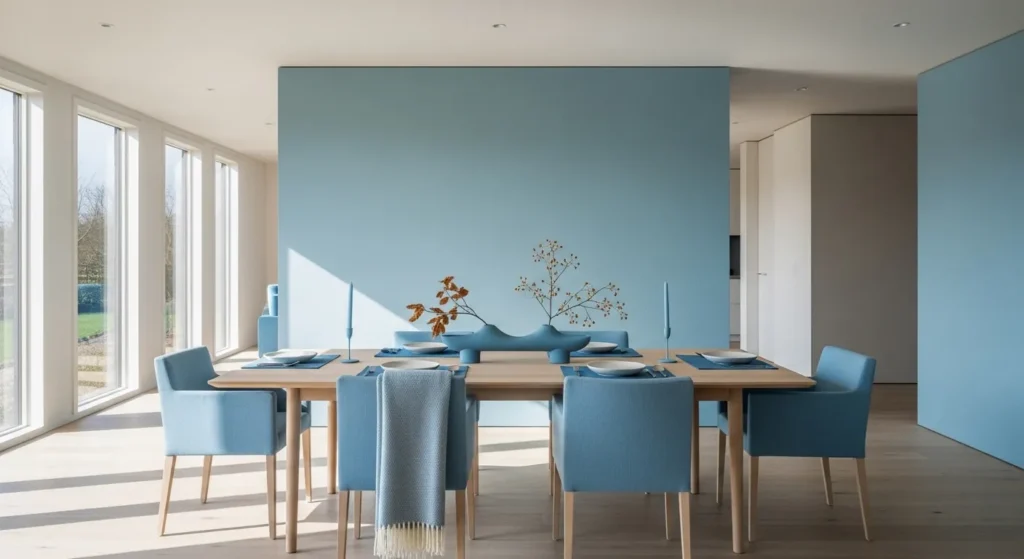
These Minimalist Dining Room ideas are designed for real life: easy to maintain, warm enough for autumn gatherings, and calm enough to make everyday meals feel more intentional. I’m focusing on a Sky Blue Dining Room (hello, #87CEEB energy) because it’s one of the few colors that can feel both airy and cozy—especially when you balance it with light wood, soft neutrals, and one or two fall textures. The goal isn’t “empty”—it’s edited. Think streamlined furniture, layered natural light, and minimalist decor that earns its place on the table.
Color Palette
Misty Blue-Gray#92A4A9
Warm Oat#D0D0C8
Slate Teal#5F7176
Dusty Sky#8BA3A9
Soft Charcoal#2B2A26
Porcelain Cream#EBE8E2
Minimalist Dining Room ideas: Sky Blue Autumn Vibes
The Psychology of Sky Blue in Your Dining Room
A dining room is where mood matters. If a space feels tense, visually noisy, or overly formal, people don’t linger. That’s why a Sky Blue Dining Room is such a smart minimalist move: sky blue reads as clean and open, but it also softens edges—exactly what you want for meals, homework at the table, or a slow Sunday brunch.
In my own projects, I use sky blue when clients want “calm” without going full white-on-white. It reflects daylight beautifully, which makes the room feel bigger, and it keeps fall styling from turning heavy. In autumn, we’re naturally adding warmer elements (wood, brass, pumpkins, amber glass). Sky blue is the counterbalance that keeps everything crisp and uncluttered—key to minimalist decor that still feels seasonal.
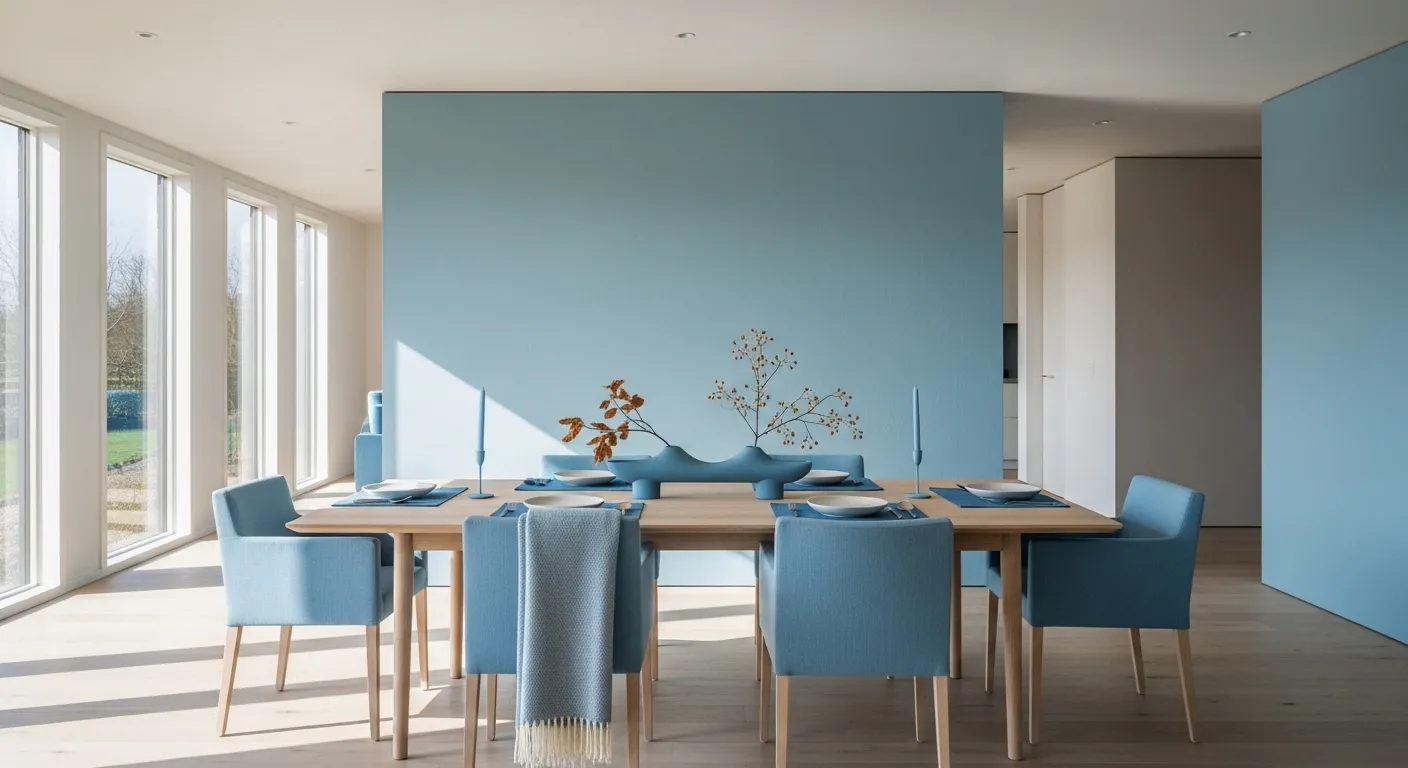
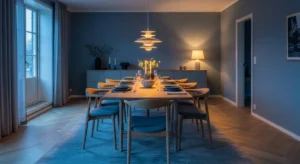
Notice in the wide shot above how the blue wall creates a “quiet backdrop,” letting the wood table carry the warmth. That’s the psychology in action: blue lowers visual temperature while wood brings it back up—balanced, not bland.
For autumn vibes, I also like sky blue because it plays nicely with muted seasonal tones—think wheat, clay, and smoked green—without looking like a “theme.” These Minimalist Dining Room ideas work because the color does emotional heavy lifting while the objects stay simple.
Color Combinations & Palette Ideas
When you’re working with sky blue, the mistake I see most is pairing it with too many competing cool tones—suddenly the room feels icy. The fix is simple: choose one dominant blue (your wall or chairs), then add two neutrals and one dark anchor. That’s the backbone of the cleanest Minimalist Dining Room ideas.
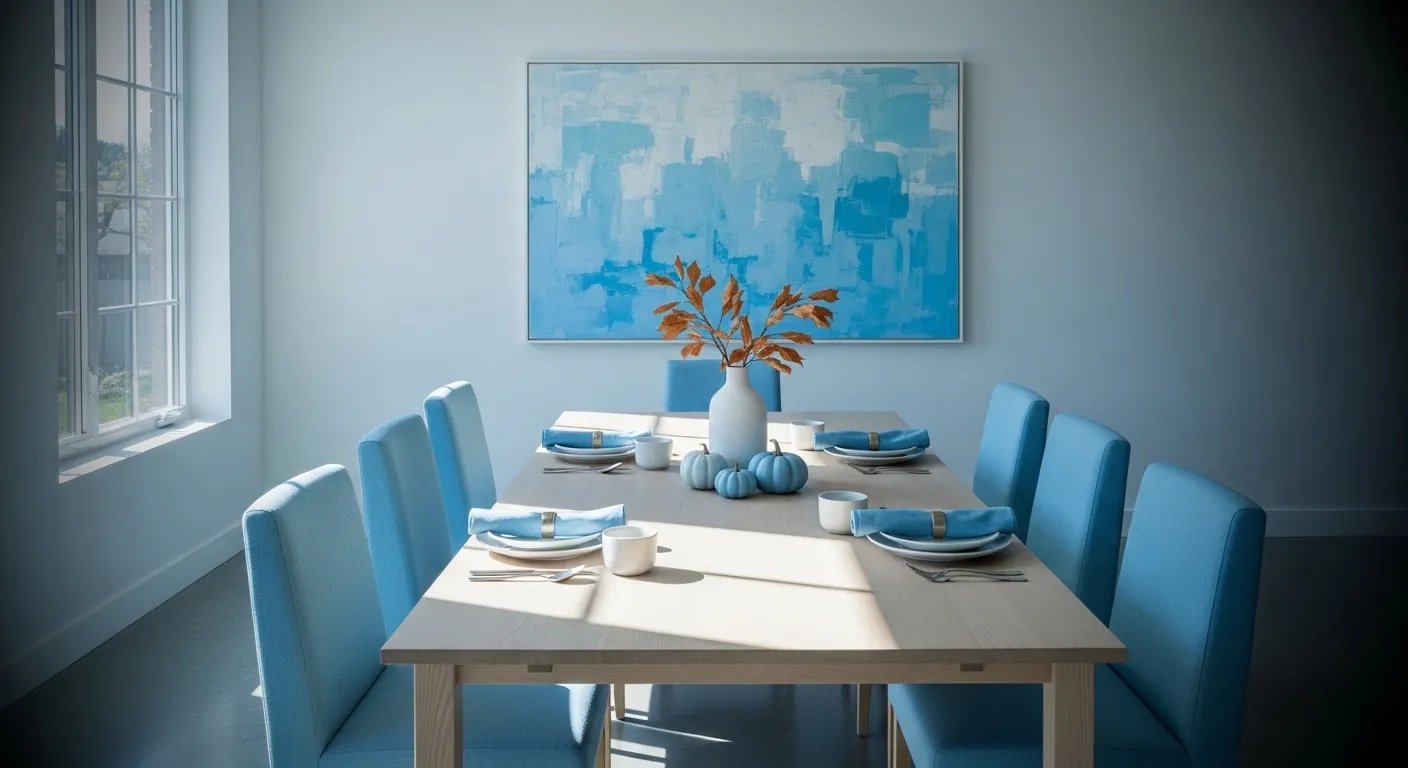
In the vignette above, the pale wood table and soft abstract art keep the blue from dominating. That’s your formula:
3 foolproof color pairings for a Sky Blue Dining Room
- Sky blue + light wood + porcelain white: airy, Scandinavian-leaning minimalism.
- Sky blue + warm oat + soft charcoal: my go-to for autumn because it feels grounded.
- Sky blue + slate teal + brushed brass: slightly moodier, still clean.
Where to place each color (so it looks intentional)
- Blue: walls or upholstered chairs—pick one as the hero.
- Warm neutrals: table, rug, curtains, and dishware.
- Dark anchor: lighting hardware, a single framed piece, or a slim sideboard.
Finally, for autumn vibes, bring in seasonal warmth through materials (linen, walnut, terracotta) rather than loud colors. That way, your palette stays minimalist year-round, and you just swap accents as the seasons change.
Essential Furniture & Decor Elements
Minimalist dining rooms succeed or fail on proportion. If the table is too small, the room feels temporary; too big, and it feels cramped. For most homes, I aim for a table that leaves 36 inches of clearance behind chairs (30 inches minimum in tighter rooms). That clearance is one of the most practical Minimalist Dining Room ideas because it reduces visual and physical friction.
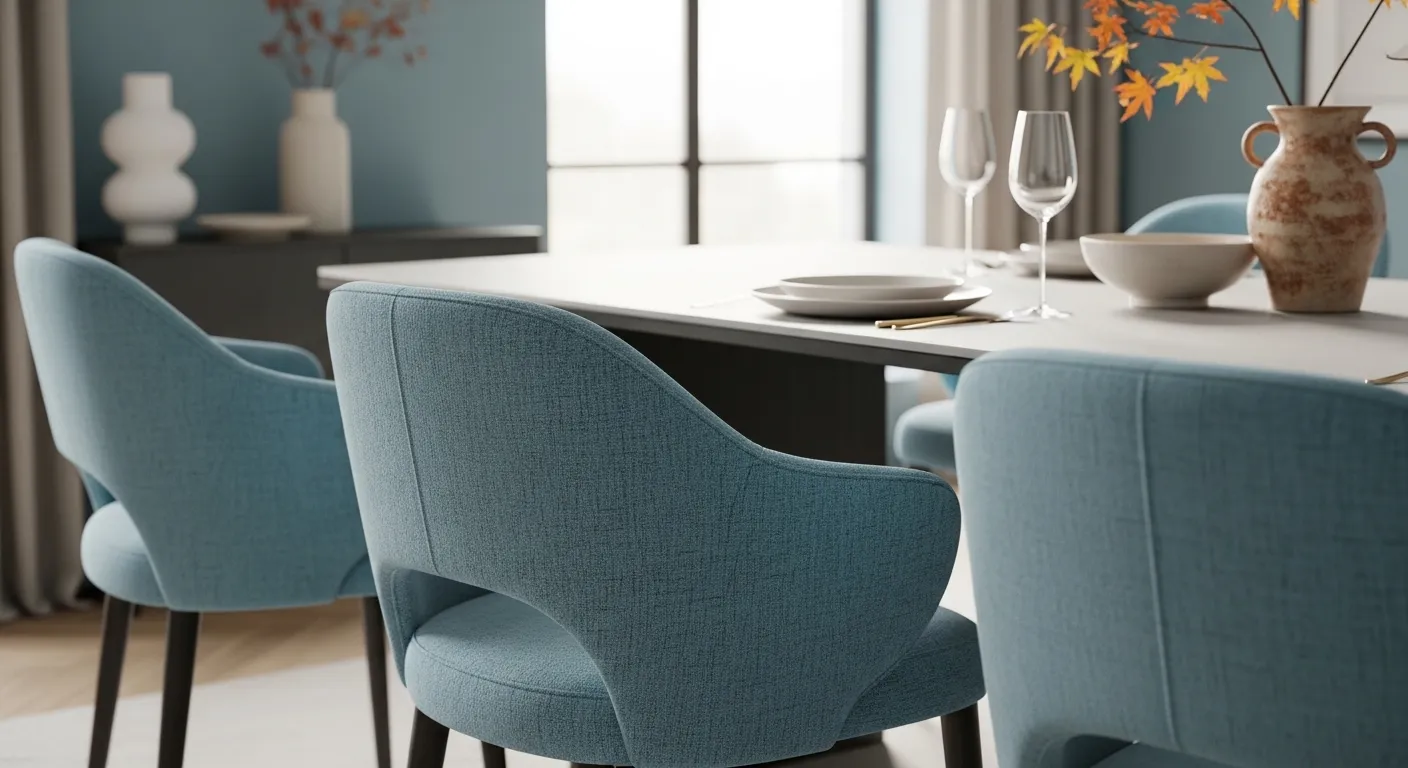
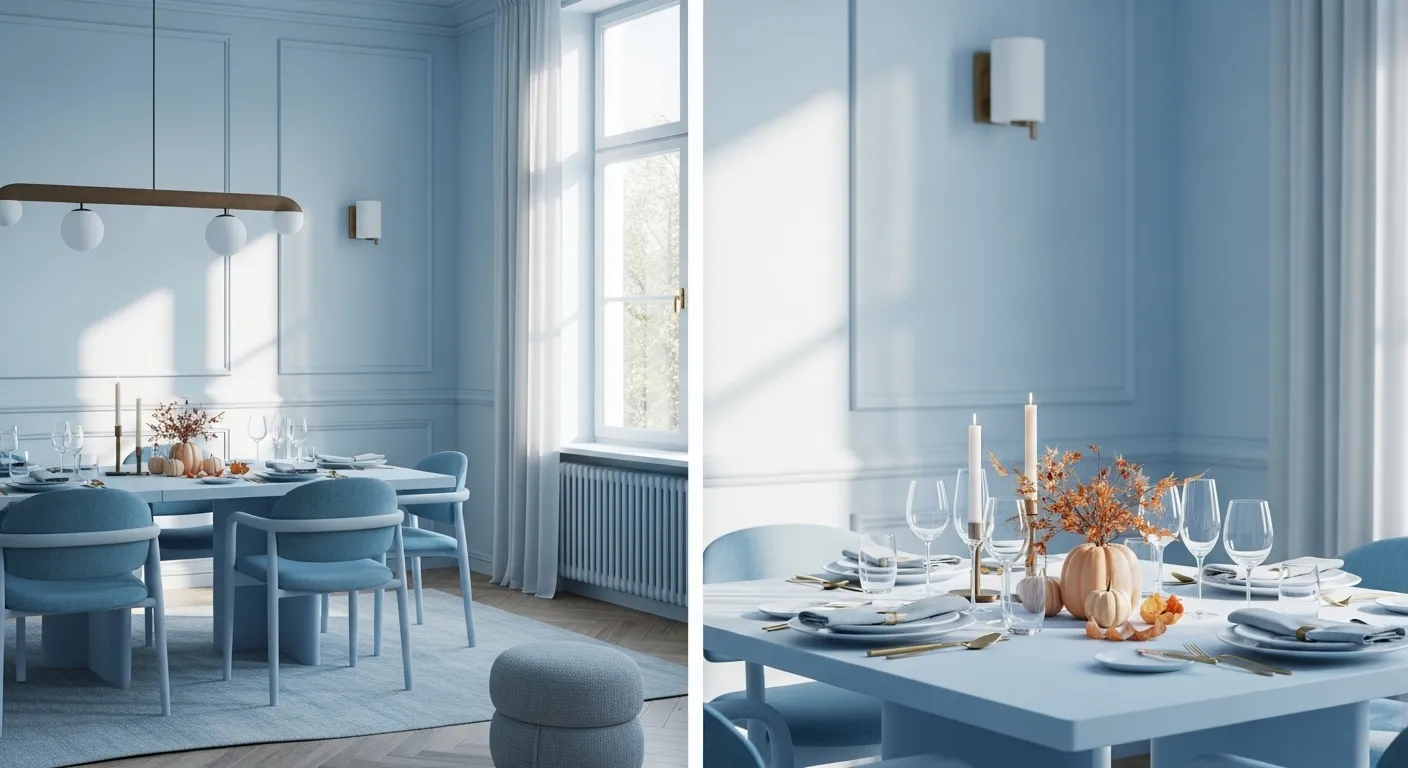
The detail shot above shows a key move: upholstered sky-blue chairs. In a Sky Blue Dining Room, upholstery adds quiet comfort and keeps the space from feeling sterile. Here’s what I’d prioritize, in order:
1) The table: the “architecture” of the room
- Shape: rectangular for long rooms, round for square rooms or tight pathways.
- Finish: light oak/ash for airy minimalism; walnut for warmer autumn depth.
- Budget range: $350–$1,200 depending on size and wood type.
2) Chairs: choose one comfort upgrade
- Upholstery (recommended): a textured weave hides wear and feels inviting.
- Or sculptural silhouettes: if you prefer no fabric, choose one statement shape and keep everything else simple.
- Budget range: $90–$250 per chair.
3) Minimalist decor that earns its spot
- Centerpiece: one low vessel (stoneware, matte glass) + seasonal stems.
- Lighting: one pendant or linear fixture that’s visually light but warm in tone (2700K bulbs).
- Storage: a slim sideboard to hide clutter—minimalism depends on having a “home” for things.
When clients ask how to make minimalism feel “livable,” the answer is always the same: fewer objects, better textures. Sky blue + wood + woven upholstery is a simple trio that reads premium without being fussy.
Styling Tips & Budget Ideas
Styling a minimalist space is about editing, not adding. I style dining rooms in “zones”: tabletop, lighting, and one background moment (art or a sideboard). If each zone has one clear focal point, the room feels designed—even with very little in it.
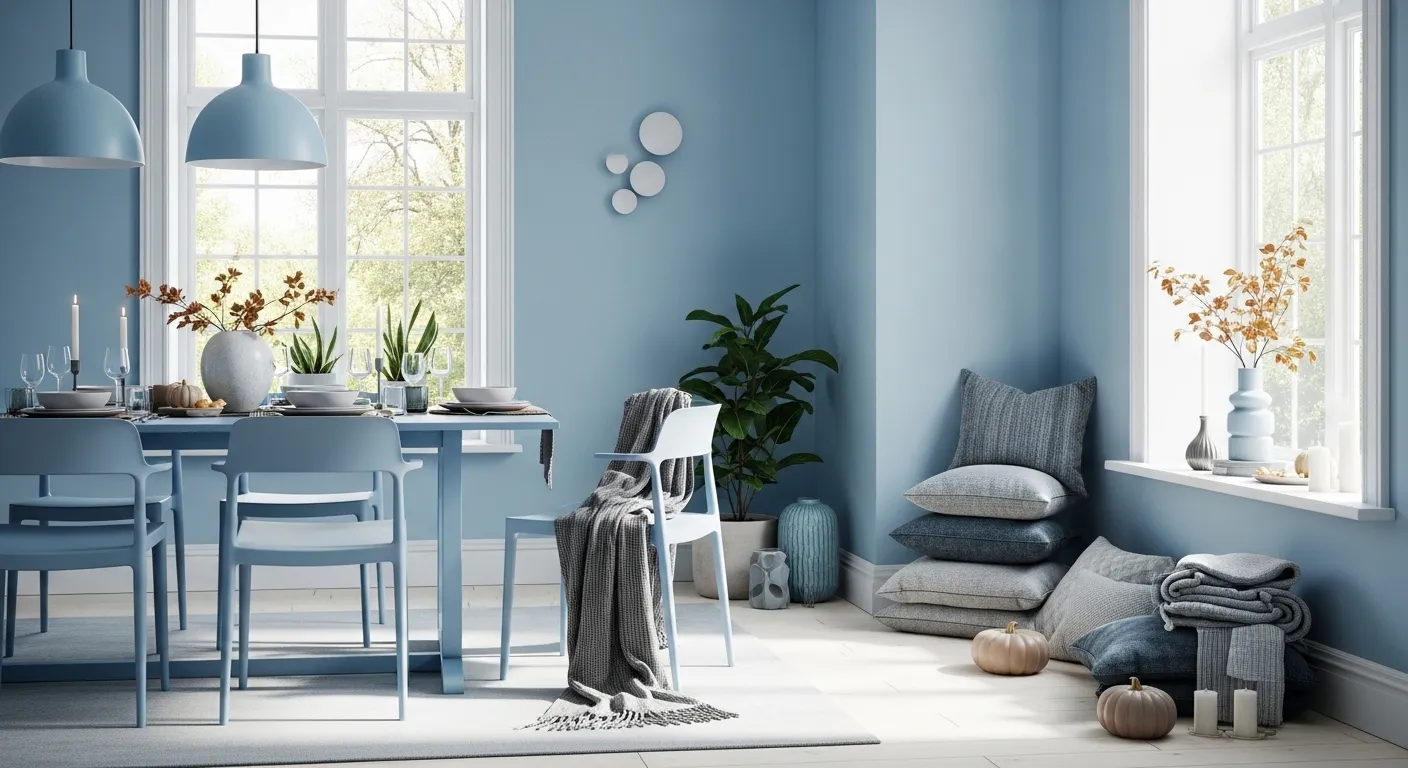
That cozy corner image captures the vibe I aim for in autumn: soft textiles, clean lines, and lots of breathing room. Use these quick wins:
Tabletop styling (autumn, but minimalist)
- Runner vs. placemats: choose one. I prefer placemats in natural fiber to keep the table surface visible.
- Centerpiece rule: keep it low enough to talk over. Try a shallow bowl with 3–5 mini pumpkins in muted tones.
- Dishware: matte white or porcelain cream for calm contrast against blue.
Lighting + textiles that don’t clutter
- Bulbs: 2700K for warm fall glow; avoid daylight bulbs (they fight the cozy vibe).
- Curtains: sheer or light linen panels to soften windows without heavy folds.
- Rug: if you need one, go flatweave so chairs slide easily.
Budget note: You can get a big visual upgrade by swapping (1) bulbs, (2) one pendant, and (3) one textile (runner or curtains). Those are high-impact, low-clutter changes that support minimalist decor.
How to Recreate This Look
If you want a calm, autumn-ready space without redesigning your whole home, follow these steps. This is the exact sequence I use to build Minimalist Dining Room ideas that feel polished fast.
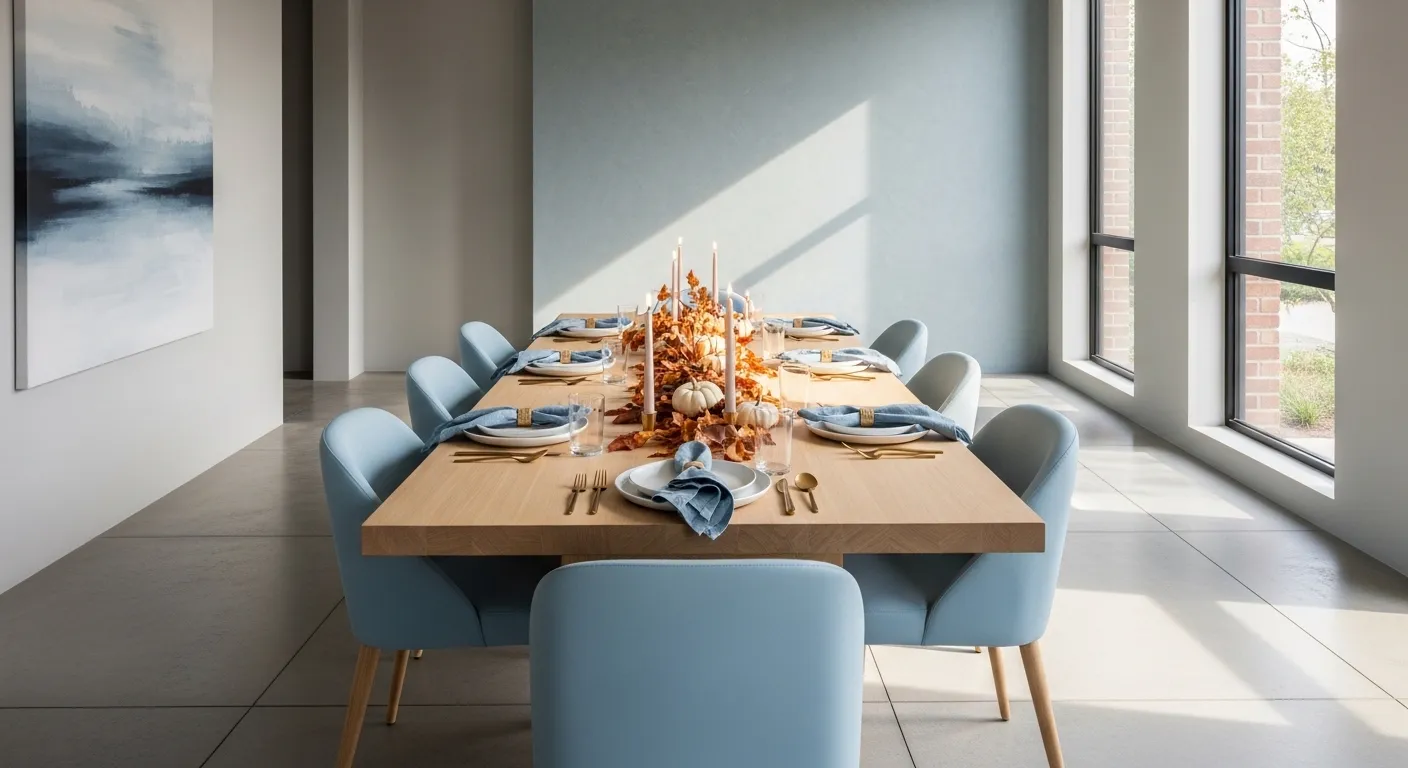
- Pick your “blue hero.” Decide: sky-blue wall or sky-blue chairs. One hero keeps the look minimalist. If you’re painting, sample first—sky blue shifts with daylight.
- Lock in the wood tone. Choose light wood for airy contrast (like the long-table look above) or medium wood for a warmer autumn feel. Keep wood consistent across table + any sideboard.
- Choose one statement light. Go simple but warm—brass, matte black, or soft white. Hang it centered on the table, about 30–34 inches above the tabletop.
- Set the “daily table.” Use 2–3 core pieces: neutral plates, simple glasses, and linen napkins. Make it easy to reset so the room always looks finished.
- Add autumn in small, repeatable accents. Mini pumpkins, dried stems, or a single amber vase. Keep the color muted so the blue still feels fresh.
Budget (2 tiers)
Low Budget: $350–$850 (best if you keep your table/chairs)
- Paint + supplies for one feature wall: $60–$140
- Textiles (linen runner or 4 placemats + napkins): $50–$140
- Table setting refresh (plates or glasses): $60–$180
- Centerpiece + seasonal accents (vessel + pumpkins/stems): $30–$90
- Lighting update (swap fixture or upgrade bulbs): $150–$300
Mid Budget: $1,200–$2,600 (best if you’re upgrading seating + lighting)
- Dining table (light wood): $500–$1,200
- 4–6 upholstered chairs in sky blue: $360–$1,500
- Pendant/chandelier: $200–$600
- Rug (flatweave): $140–$300
- Art + frame or large-scale print: $60–$250
FAQ
- Will sky blue feel too cold in autumn?
Not if you pair it with warm wood and warm lighting (2700K). Add one cozy texture—linen, wool, or a woven shade—to keep it inviting. - What’s the easiest minimalist centerpiece for fall?
A low bowl with 3–5 small pumpkins in muted tones, or a single matte vase with dried stems. Keep it low and repeat the same material (stoneware or glass). - How do I keep a minimalist dining room from feeling empty?
Use fewer items, but increase texture: upholstery, linen, wood grain, and one large art piece. Minimalism feels finished when the scale is right. - Should I match the chairs to the wall?
Not exactly. I like them in the same family but not identical—slightly dustier chairs against a clearer sky-blue wall looks more layered and designer-like.
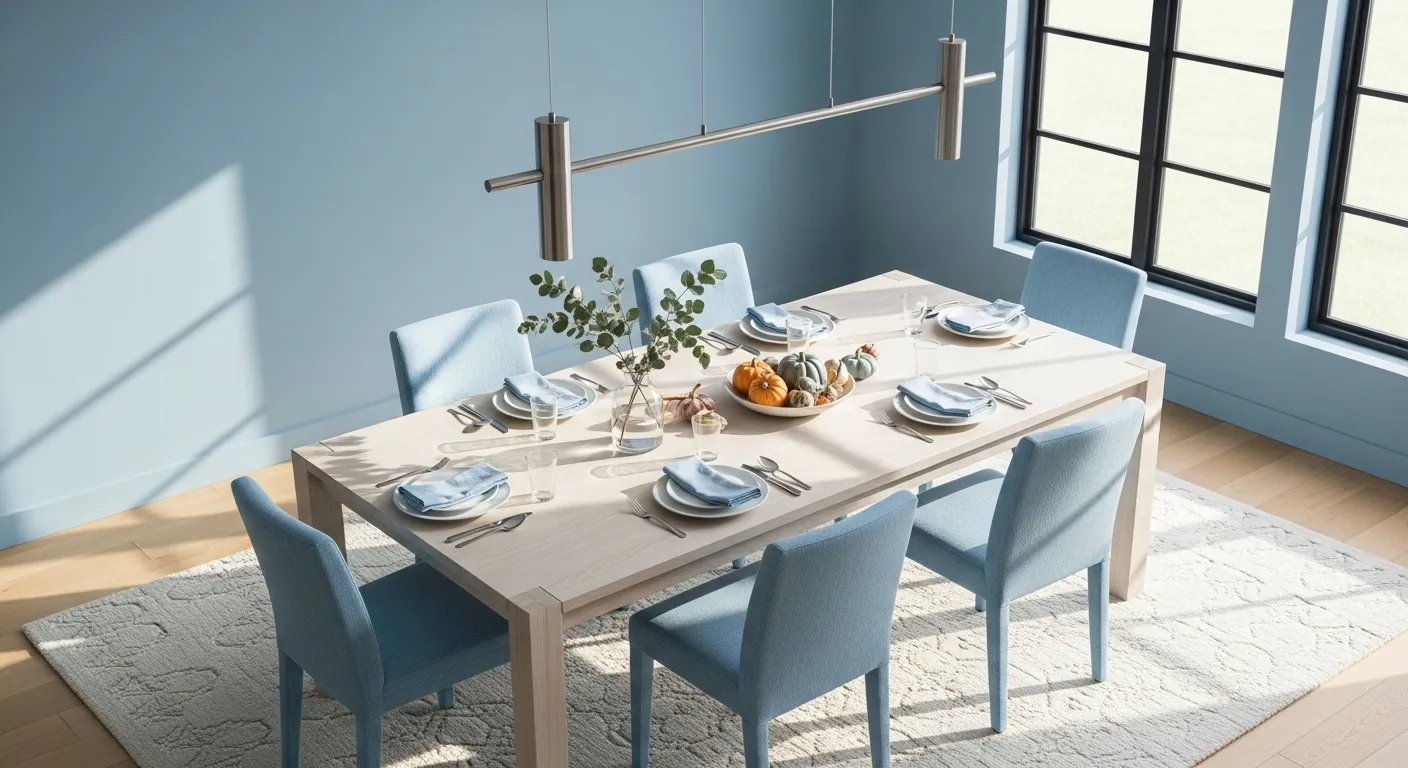
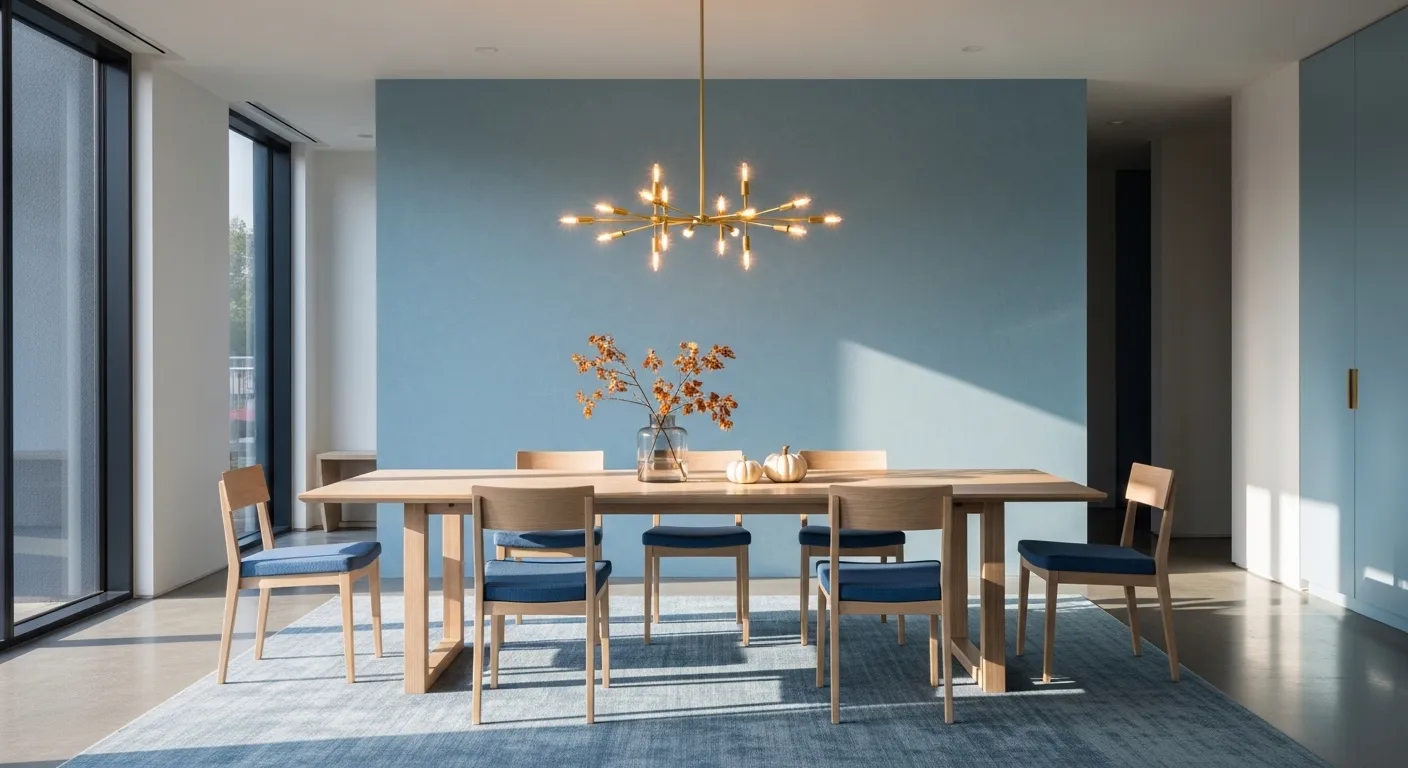
That final sunlit look is the end goal: calm blue, warm wood, and just enough seasonal styling to feel like autumn—without overwhelming the room.
How to Recreate This Look
- Pick your “blue hero.” Choose sky-blue walls or sky-blue chairs (not both as the main statement).
- Choose a wood tone and repeat it. Keep table + any storage in the same family for a cleaner minimalist read.
- Install one warm statement light. Center it over the table and use 2700K bulbs for autumn glow.
- Create a 3-piece tabletop kit. Neutral plates, simple glassware, linen napkins—easy to reset daily.
- Add one seasonal moment. A low bowl with muted mini pumpkins or dried stems in a matte vessel.
Budget
Low Budget: $350–$850
- Paint + supplies: $60–$140
- Textiles: $50–$140
- Table setting refresh: $60–$180
- Centerpiece + seasonal accents: $30–$90
- Lighting update: $150–$300
Mid Budget: $1,200–$2,600
- Dining table: $500–$1,200
- 4–6 upholstered chairs: $360–$1,500
- Pendant/chandelier: $200–$600
- Rug: $140–$300
- Art: $60–$250
FAQ
- Will sky blue feel too cold in autumn? Pair it with warm wood and 2700K lighting.
- What’s the easiest minimalist fall centerpiece? A low bowl with 3–5 muted mini pumpkins.
- How do I keep it from feeling empty? Use texture + one large-scale art piece.
- Should chairs match the wall? Same family is best—avoid identical matches for a layered look.
Final Thoughts
The best Minimalist Dining Room ideas don’t ask you to live without comfort—they ask you to be intentional. A Sky Blue Dining Room gives you that calm, open feeling year-round, and it’s especially beautiful in autumn when you balance it with warm wood, soft textiles, and just a few seasonal accents. Keep your palette tight, your storage practical, and your minimalist decor purposeful, and you’ll end up with a dining room that feels effortless every day—not just when guests arrive.