

Japandi Entryway ideas work best when they’re not just pretty—they’re practical. The entryway is the one space everyone touches every single day, so I design it like a “reset zone”: a place to drop keys, sit to put on shoes, and breathe for a second before moving on. This Dusty Blue Entryway concept is my go-to when clients want something serene but not sterile, warm but still minimal. Dusty blue has enough pigment to feel intentional, yet it softens the harshness that bright whites or heavy charcoals can create at the front door. Pair it with pale wood, matte black accents, and a few tactile textures, and you’ve got Japandi decor that feels calm from the moment you walk in.
Color Palette
Deep Slate Blue#3C5669
Warm Sage Greige#B4B2A4
Soft Linen#E2E1DA
Mushroom Mist#C9C8C2
Smoky Gray#5E666B
Toasted Taupe#948A78
Japandi Entryway ideas: A Dusty Blue Entryway That Feels Calm and Functional
The Psychology of Dusty Blue in Your Entryway
Why dusty blue reads calm (without feeling cold)
Dusty blue sits in a sweet spot between “color” and “neutral.” In an entryway—where lighting can be inconsistent and traffic is high—that matters. I like it because it visually slows things down. The moment you come in from a bright exterior or a busy street, dusty blue helps your eyes adjust and your body relax. It’s especially case-study-worthy for Japandi decor, because it supports that minimal, grounded feeling while still adding personality.
In practice, dusty blue also hides scuffs better than flat white, which is a designer’s secret weapon for everyday entryways. It’s forgiving around light switches, door frames, and the “drop zone” wall where bags and hands tend to graze.
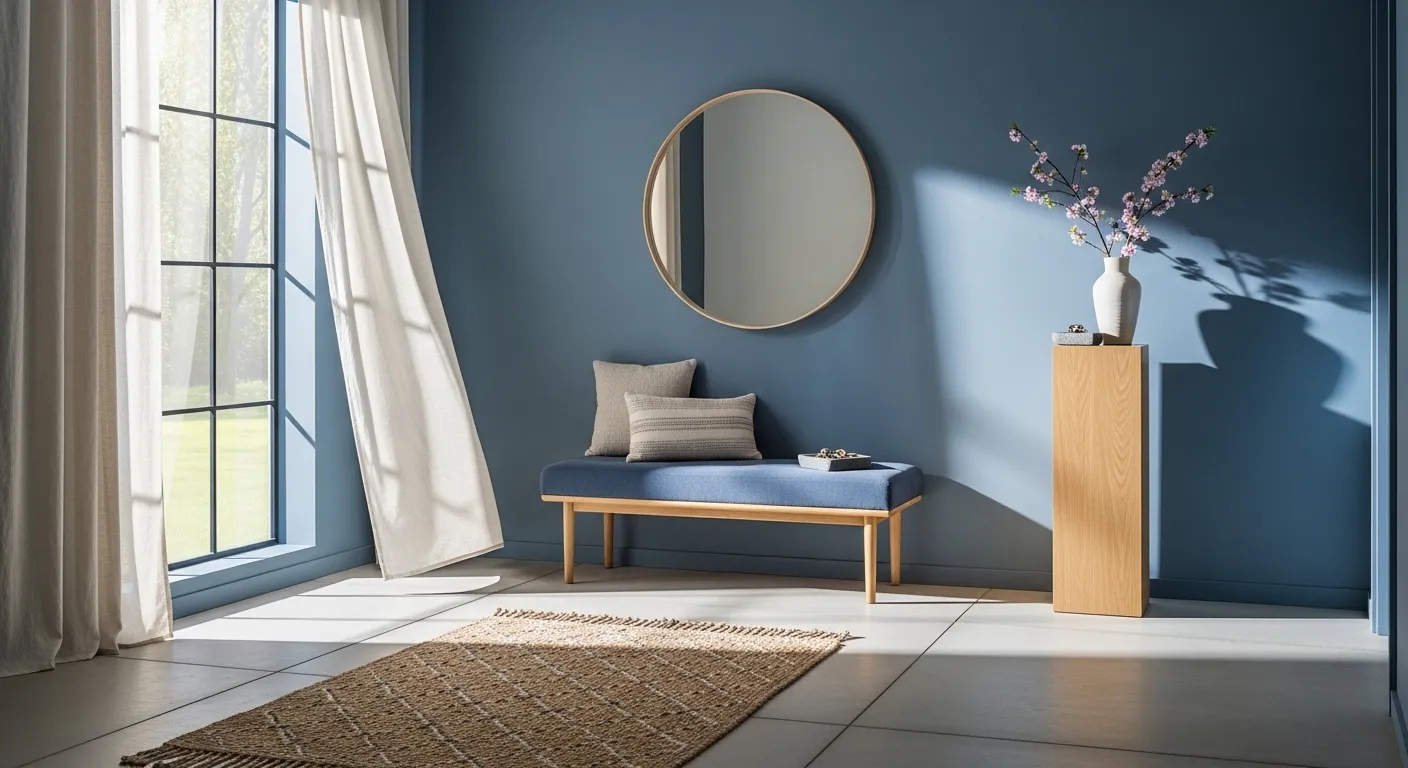
Where to use it: full wall vs. accent moment
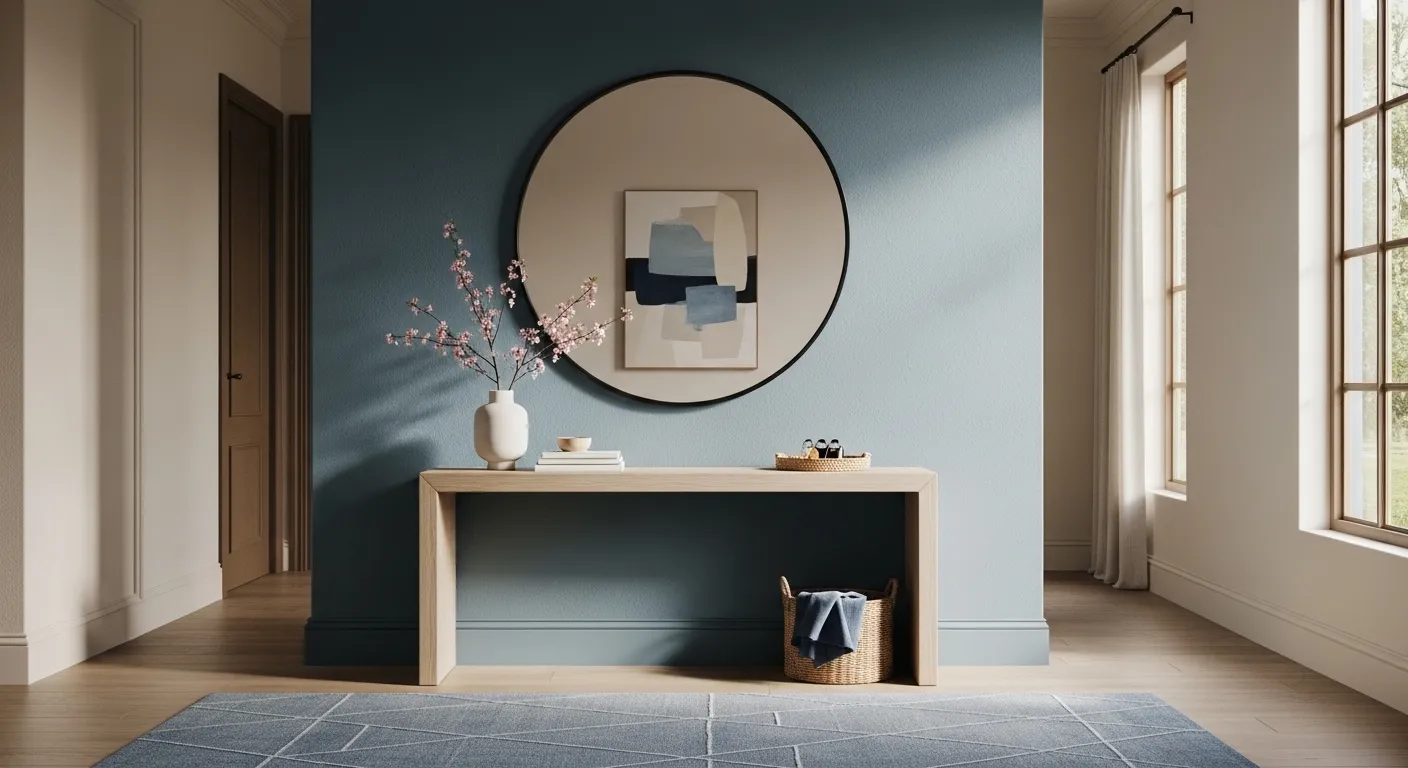
If your entryway is narrow, I usually recommend dusty blue on the longest wall (like the wide shot above) so it reads cohesive, not choppy. If the entry is open to the living space, keep dusty blue as an accent behind a console or bench so the color feels intentional and “framed.”
Color Combinations & Palette Ideas
The Japandi formula: cool + warm + natural texture
The most reliable way I build Japandi Entryway ideas is with a simple equation: one muted color (dusty blue), one warm wood tone, and one soft neutral (linen, greige, or mushroom). That keeps the space calm but not flat. In an entryway, you want contrast that guides function—like a darker mirror frame that helps you “find” the mirror quickly, or a slightly deeper rug to disguise daily grit.
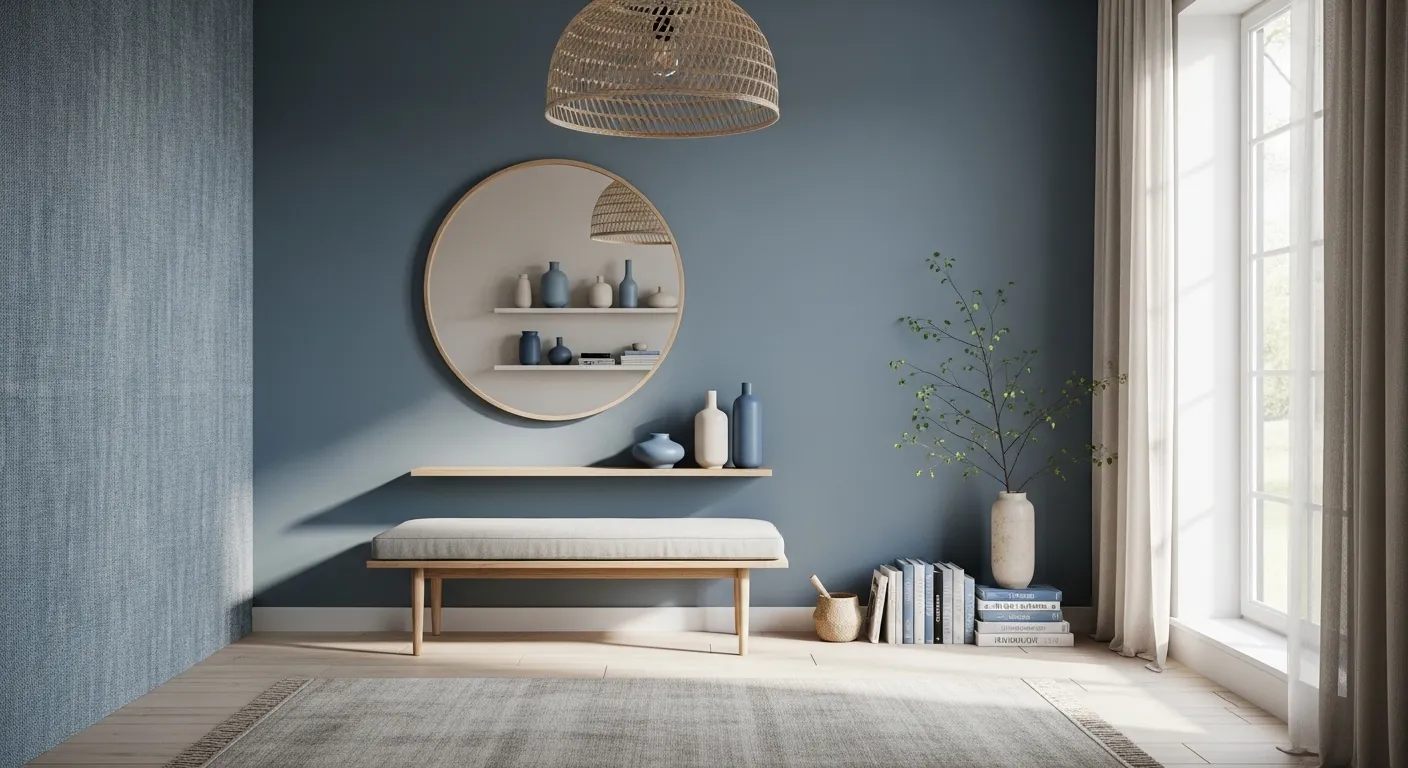
Easy pairings that always look expensive
- Dusty blue + pale oak + linen white: airy, Scandinavian-leaning Japandi.
- Dusty blue + walnut + warm greige: slightly moodier, more Japanese-leaning.
- Dusty blue + black accents + natural fiber: crisp edges that still feel organic.
One detail I repeat often: choose hardware and frames in the same finish (matte black or soft brass), then keep everything else quiet. That restraint is what makes Japandi decor feel premium instead of cluttered.
Essential Furniture & Decor Elements
The non-negotiables: seating, a mirror, and a landing zone
When I design a Dusty Blue Entryway, I start with function: you need a place to sit, a place to check your face, and a place to put the things you’re holding. The goal is to stop the “pile-up” that happens when there’s no clear home for keys, mail, and bags.
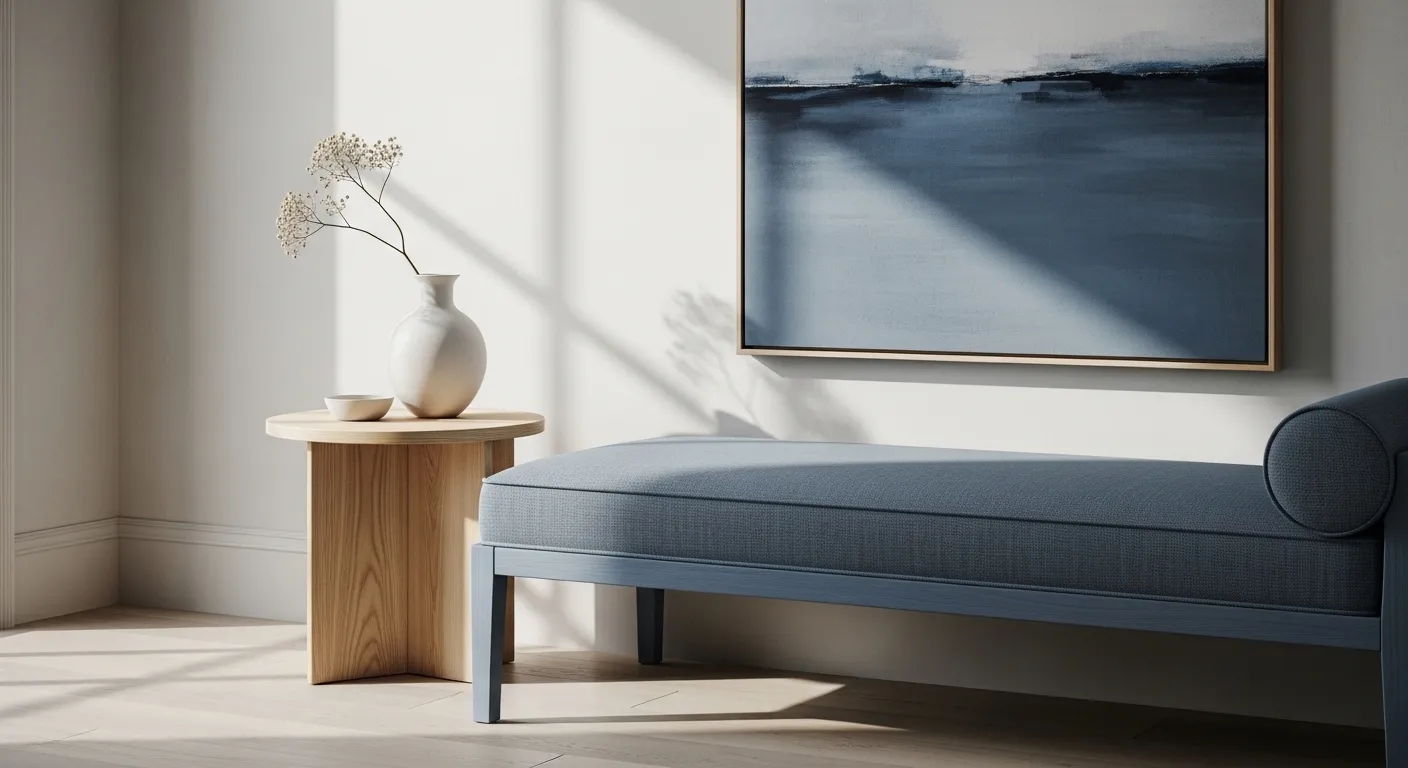
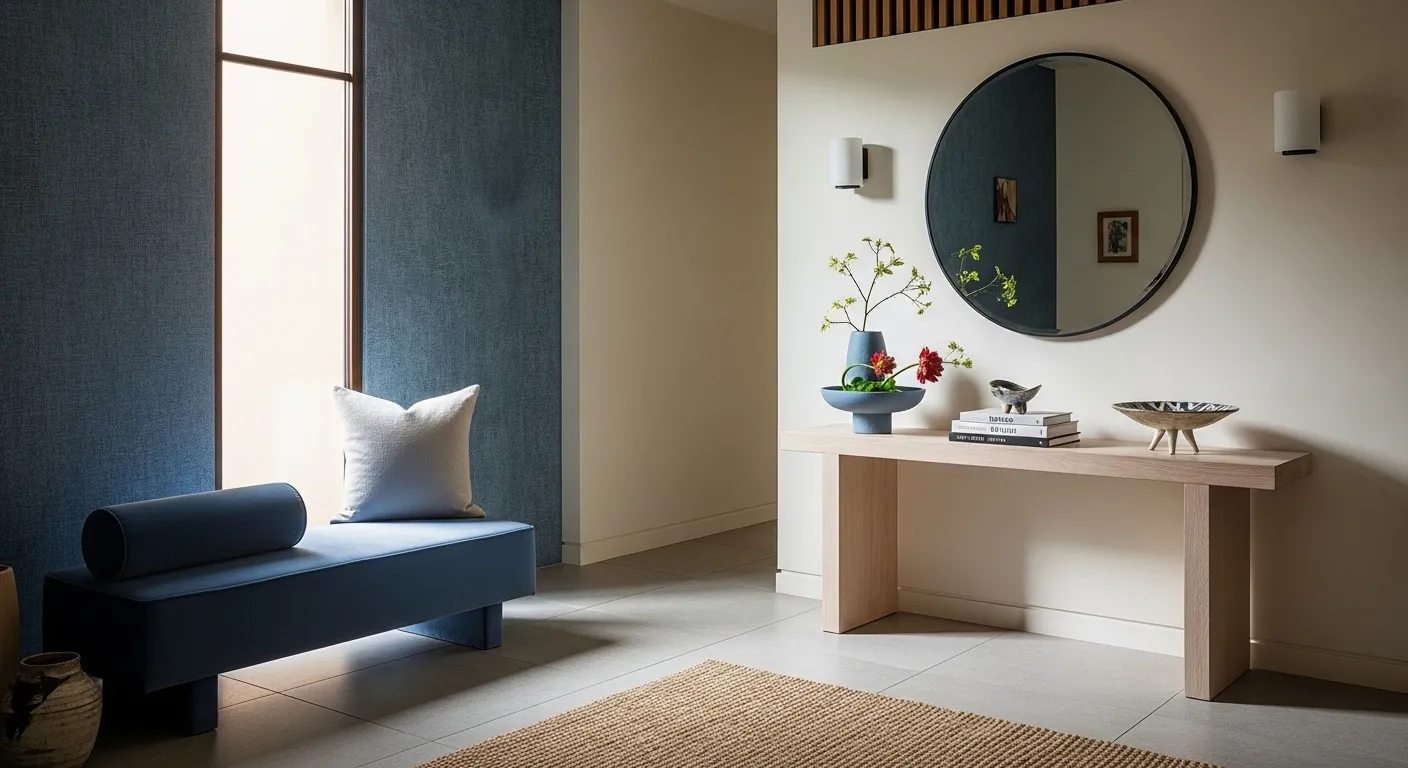
Bench: Look for a slim profile (12–15″ deep) so circulation stays clear. If you can, pick a bench with a lower shelf for shoes or baskets. A dusty blue upholstered bench is beautiful, but I often prefer light wood with a washable cushion—less maintenance, more longevity.
Mirror: Round mirrors are a Japandi classic because they soften all the rectangles (door, runner, console). Hang it so the center is around 57–60″ from the floor. If multiple heights use the mirror, go slightly lower for comfort.
Landing zone: A narrow console, a wall shelf, or even a small round side table works. Add one catchall tray and one lidded container (so visual clutter disappears fast).
The supporting cast: storage, lighting, and one living element
- Closed storage: A cabinet, drawer console, or baskets under a bench keep the “daily chaos” invisible.
- Lighting: A woven pendant or paper lantern adds softness and texture—especially against dusty blue.
- Plant: Snake plant or olive stem = sculptural and low-fuss. Keep it to one statement plant to maintain Japandi restraint.
Styling Tips & Budget Ideas
Make it feel serene (even on busy mornings)
The fastest way to make Japandi Entryway ideas feel real-life friendly is to style for the routine you actually have. If shoes always land by the door, don’t fight it—design for it with a bench, a washable runner, and a basket system that takes seconds to use.
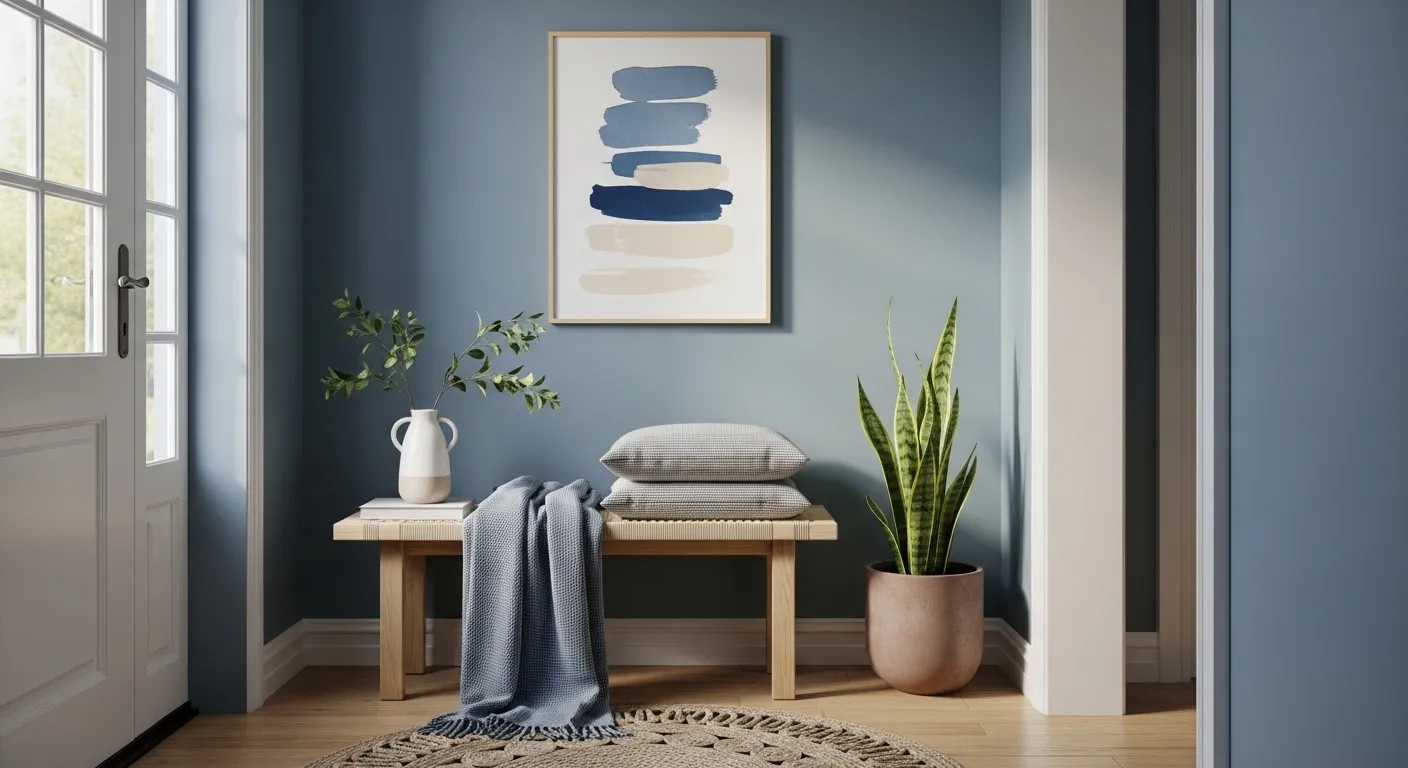
- Textiles: Add one pillow or lumbar on the bench and a simple runner. Stick to solids or subtle texture—bouclé, linen, or flatweave.
- Greenery: One tall plant adds life and also visually “fills” awkward corners.
- Art: Choose a quiet piece (line art or muted landscape). It reinforces the calm the color starts.
- Scent: A subtle diffuser (cedar, hinoki, or clean cotton) instantly elevates the entry.
Small upgrades that look designer
Swap a shiny builder light for a woven pendant, upgrade your door hardware to matte black, and add a larger mirror than you think you need. Those three changes typically deliver the highest “wow” per dollar in a Dusty Blue Entryway.
How to Recreate This Look
Step-by-step plan (with practical measurements)
- Choose your dusty blue placement: Paint the main entry wall or create an accent behind your console/bench. Use a matte or eggshell finish for a soft, modern look.
- Anchor with one wood piece: Add either a pale wood console (10–14″ deep) or a slim bench (12–15″ deep). Keep legs visible to maintain airiness.
- Hang a round mirror: Go oversized (28–36″) so it reads intentional. Center it over the console with 6–8″ of breathing room.
- Add the “drop zone kit”: Tray for keys, small bowl for coins/earbuds, and a lidded box for the messy bits. This is the difference between styled and chaotic.
- Layer texture lightly: One runner, one woven element (pendant or basket), and one plant. Stop there—Japandi decor relies on restraint.
Budget (2 tiers only)
Low Budget: $240–$520
- Paint + supplies: $45–$110
- Secondhand bench or simple wood bench: $80–$180
- Round mirror (budget frame): $55–$120
- Runner (washable flatweave): $40–$90
- Tray + hooks or small catchall: $20–$50
Mid Budget: $780–$1,450
- Premium paint + pro prep items: $90–$180
- Quality wood bench or upholstered bench: $220–$520
- Oversized round mirror: $180–$380
- Console with drawer storage: $250–$650
- Woven pendant or upgraded light fixture: $140–$320
FAQ
1) Will dusty blue make a small entryway feel smaller?
Not if you keep the rest of the palette light (linen walls elsewhere, pale wood, simple shapes) and use a large mirror to bounce light.
2) What’s the easiest way to keep a Japandi entryway from feeling bare?
Add texture, not stuff: a woven pendant, a flatweave runner, and one plant will make it feel layered while staying minimal.
3) How do I make a Dusty Blue Entryway work with black doors or black hardware?
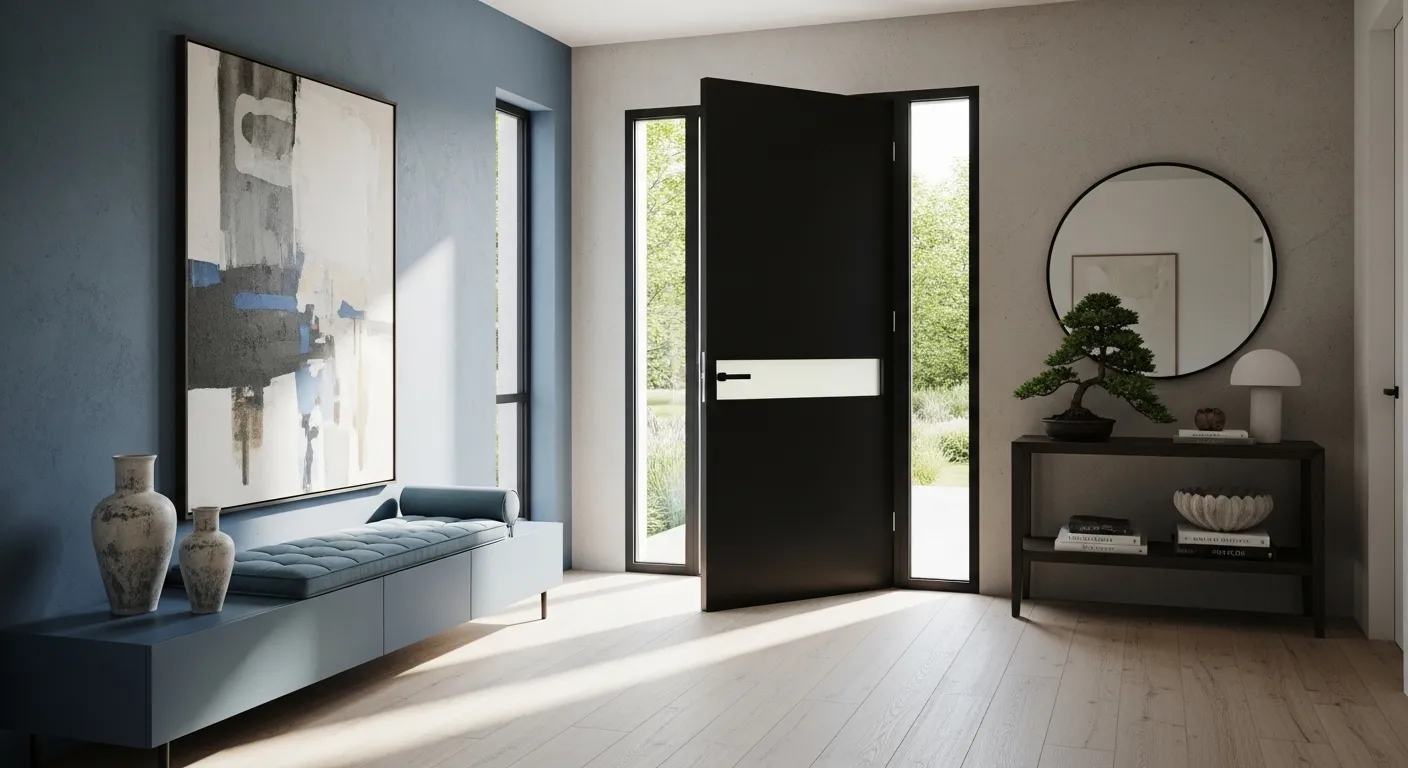
Repeat black twice (mirror frame + door hardware) and keep wood tones warm. That repetition makes the contrast look intentional.
4) What’s the one mistake that ruins Japandi decor in an entry?
Too many small accessories. Swap five tiny items for one larger tray and one sculptural vase—cleaner and more calming.
How to Recreate This Look
- Paint strategy: Apply dusty blue to the wall that will be most visible from the door. Keep trim warm white for a clean transition.
- Pick one anchor piece: Choose either a bench (for shoe-on/shoe-off homes) or a console (for key-and-mail homes). In many spaces, you can layer both if the entry is at least 48″ wide.
- Add a round mirror: 28–36″ diameter reads balanced in most entries. Center it above the anchor piece.
- Create a drop zone: Tray for keys + one lidded box for clutter rememberers (batteries, matches, dog bags).
- Finish with three textures: runner, woven element, and greenery—then stop to keep the Japandi feel.
Budget
Low Budget: $240–$520 (paint $45–$110, bench $80–$180, mirror $55–$120, runner $40–$90, catchall $20–$50)
Mid Budget: $780–$1,450 (premium paint $90–$180, bench $220–$520, mirror $180–$380, console $250–$650, pendant $140–$320)
FAQ
Is dusty blue timeless?
Yes—because it behaves like a neutral. Keep the undertone muted and pair it with natural materials.
What storage works best for families?
Closed drawers + labeled baskets. It’s the fastest way to reset the entry in under 60 seconds.
Can I mix wood tones?
Absolutely—just keep them within two families (light oak + medium walnut, for example) and repeat each at least twice.
What lighting is most Japandi?
Woven, paper, or linen shades that diffuse light softly—avoid harsh exposed bulbs.
Final Thoughts
The best Japandi Entryway ideas feel peaceful and realistic: a spot to sit, a place to drop essentials, and a palette that makes the whole home feel more grounded. A Dusty Blue Entryway is one of my favorite shortcuts to that calm because it’s muted, forgiving, and beautifully compatible with pale woods and soft neutrals. Keep your choices minimal but intentional, lean into texture, and let the space breathe—true Japandi decor is more about what you edit out than what you add.