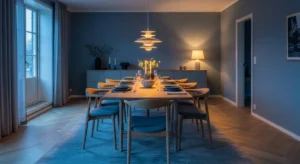

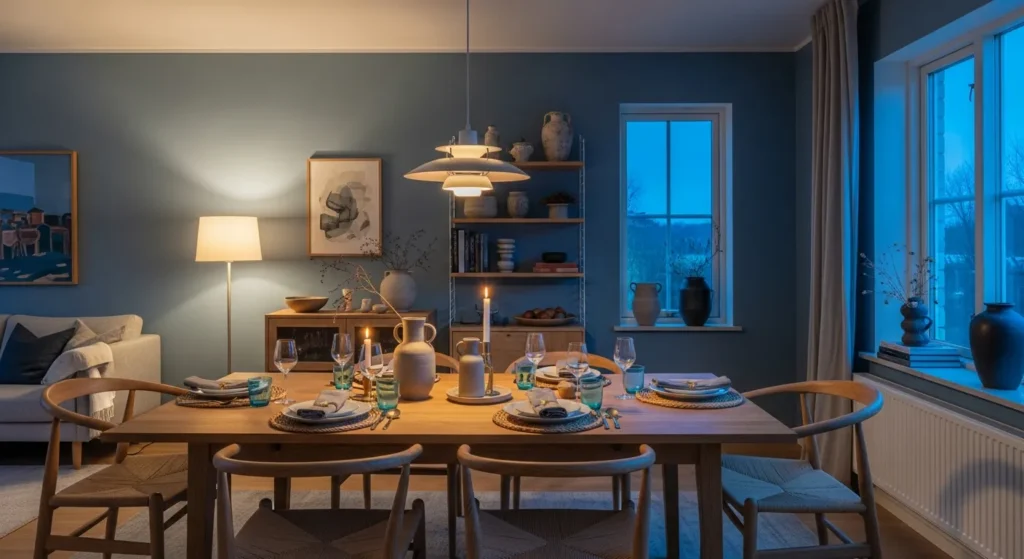
Hey there, design lovers! Welcome back to my little corner of the internet where we turn houses into sanctuaries. Today, I am absolutely buzzing to talk about a design combination that has completely stolen my heart. We all know that life can get a little chaotic—especially around dinner time—so why not turn your eating area into a literal breath of fresh air?
We are diving deep into the world of Japandi (that gorgeous love child of Japanese rustic minimalism and Scandinavian functionality) but with a sophisticated twist. Instead of the usual beige-on-beige, we are introducing a protagonist that brings instant calm: Dusty Blue (Hex: #6B8E9E). This isn’t your bright nautical blue; it’s a muted, gray-infused tone that feels like a foggy morning by the sea. If you’ve been searching for unique Japandi Dining Room ideas that feel curated, expensive, and incredibly Zen without sacrificing comfort, you are in the right place. Grab your matcha latte, and let’s get styling!
#7DA1B0
#D9CBB5
#F4F1EA
#7C909C
#E0D5C1
#F5F3ED
The Psychology of Dusty Blue in Your Dining Sanctuary
When we think about dining, we often focus on the food, but the environment plays a massive role in how we digest and converse. Color psychology suggests that blue is one of the most calming colors on the spectrum, known to lower blood pressure and slow the heart rate. However, in a dining context, you have to be careful—bright blues can suppress appetite.
This is why Dusty Blue is such a powerhouse. Because it is desaturated with gray and earthy undertones, it doesn’t feel cold or sterile. Instead, it evokes the feeling of water or twilight, encouraging mindful eating and deeper, more relaxed conversation. In a Japandi setting, where the goal is to reduce visual noise, this color acts as a soft blanket for the room.
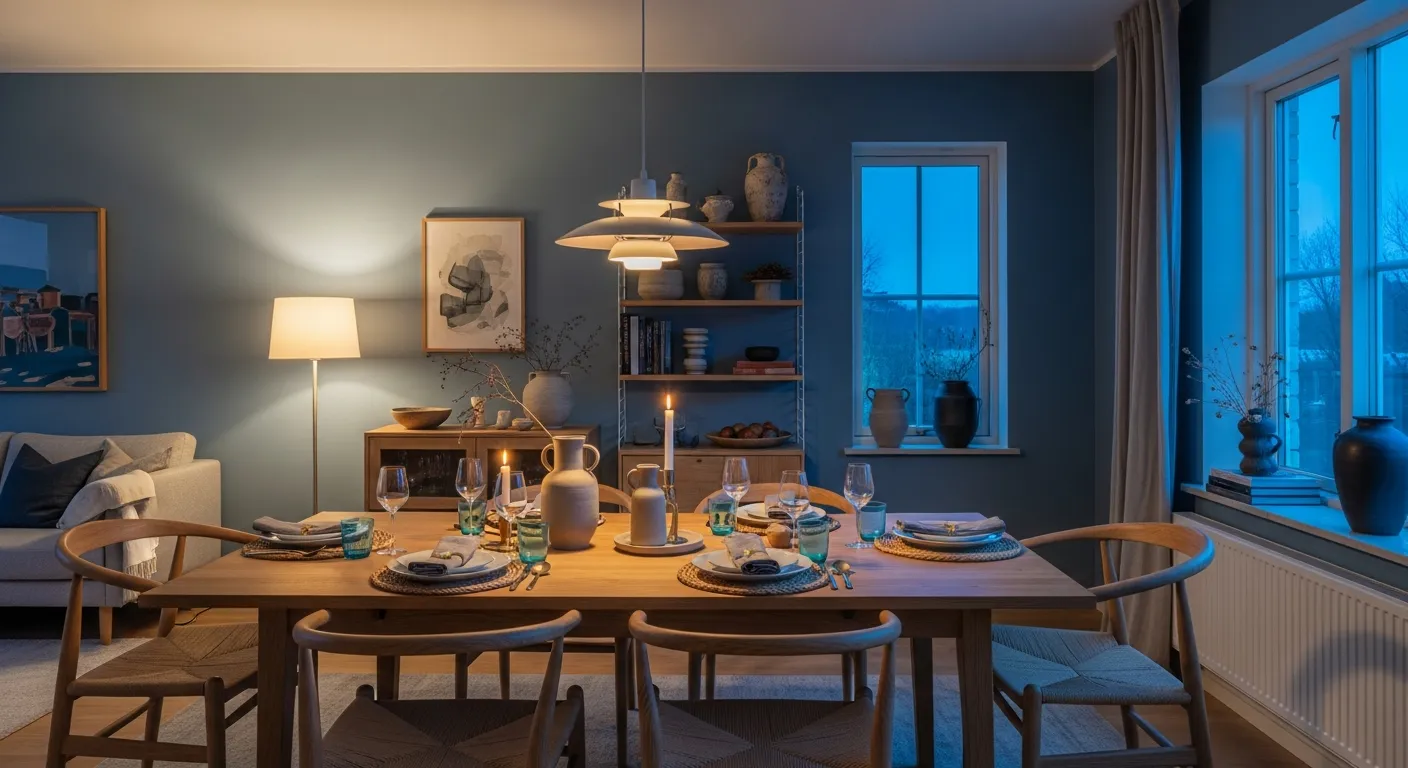
By pairing this hue with the intentionality of Japanese design, you create a space that isn’t just for eating—it’s for recharging.
Essential Furniture for Japandi Dining Room Ideas
To nail this look, the furniture needs to speak the language of both Scandi functionality and Japanese rusticism. We are looking for pieces that are grounded, humble, and beautifully crafted. When scouting for Japandi Dining Room ideas, keep your eyes peeled for low profiles and clean lines.
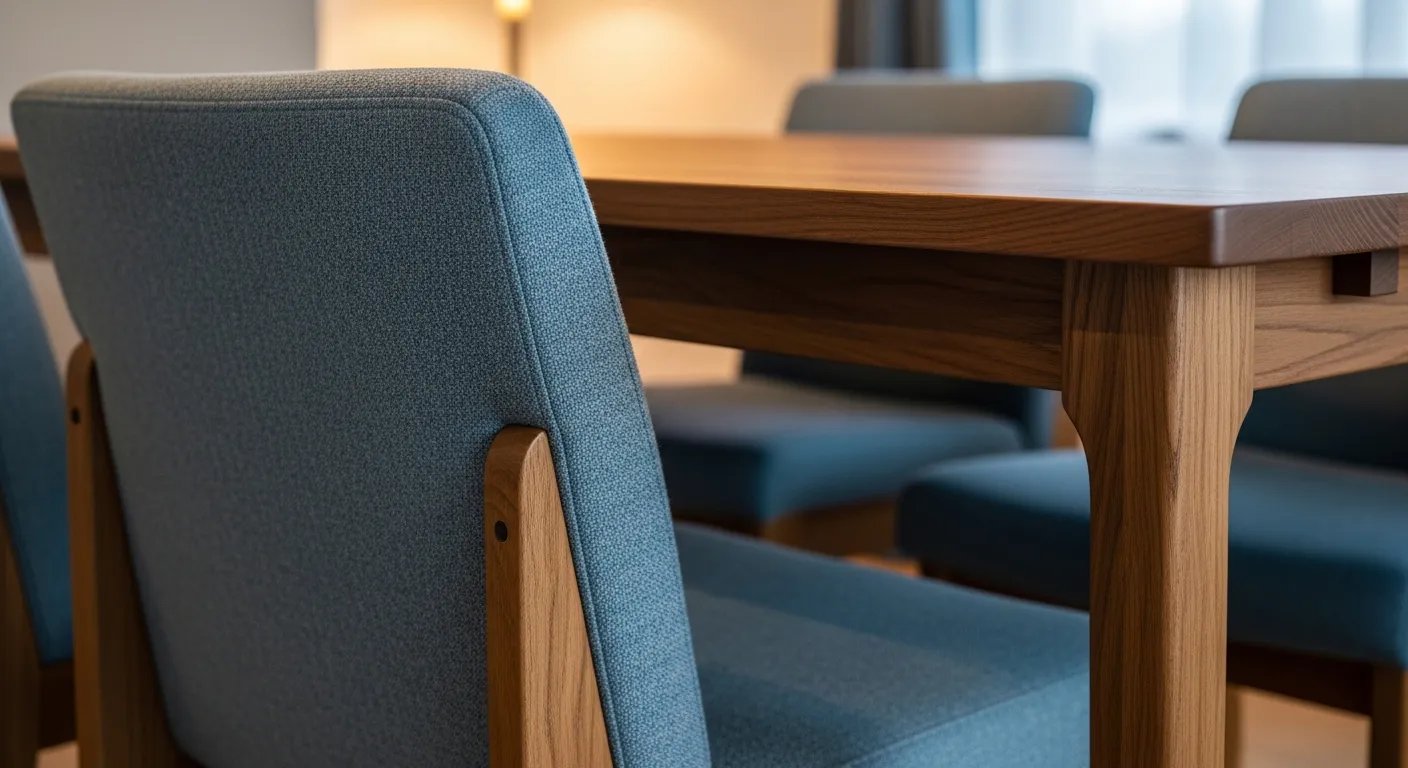
- The Table: Opt for light woods like white oak, ash, or beech. The shape can be rectangular with softened edges or organic round shapes. A matte, oil-rubbed finish is preferable to high-gloss lacquer.
- The Chairs: This is where you can mix materials. Wishbone chairs are a classic staple, but don’t be afraid of woven paper cord seats or chairs with a subtle curve that hugs the back.
- Storage: A low sideboard with slat details (reminiscent of Japanese room dividers) hides clutter while adding texture.
Color Combinations & Palette Ideas
While Dusty Blue is our star, it cannot act alone. The magic of Japandi lies in the contrast between cool and warm tones. Since blue is inherently cool, you must overdose on warm neutrals to prevent the room from feeling icy.
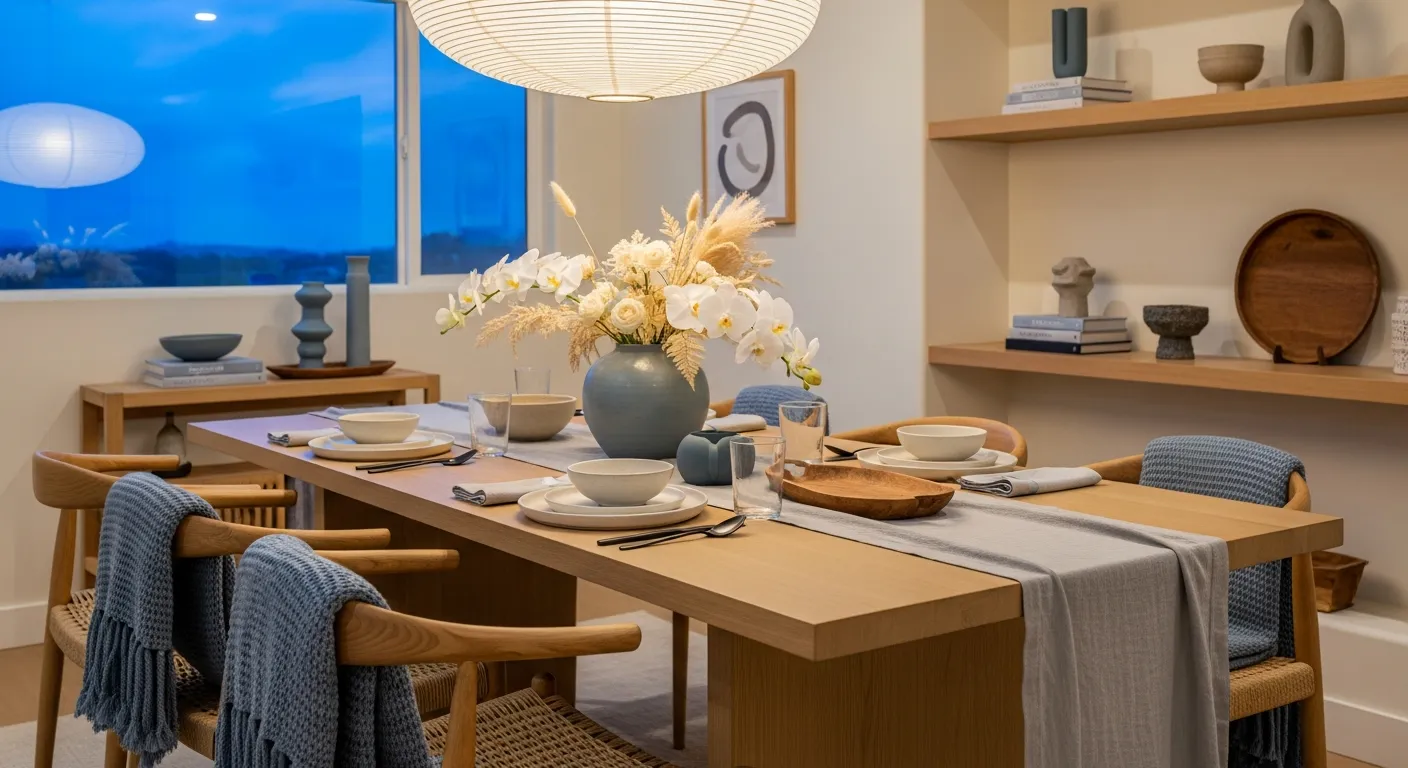
Here are three ways to balance your palette:
- The Sandy Contrast: Pair the dusty blue walls with “oatmeal” and “sand” colored linens. The yellowish undertones in the beige neutralize the blue.
- The Earthy Anchor: Use darker woods (like walnut) for small accents—perhaps a picture frame or a ceramic bowl—to add depth.
- The Crisp Cleanse: ensure your ceiling and trim are a warm off-white (like our palette color #F5F3ED) rather than a stark hospital white.
Styling Tips & Budget Ideas
Styling a minimalist space is actually harder than a maximalist one because every single object counts. In Japandi design, we embrace Wabi-Sabi—finding beauty in imperfection.
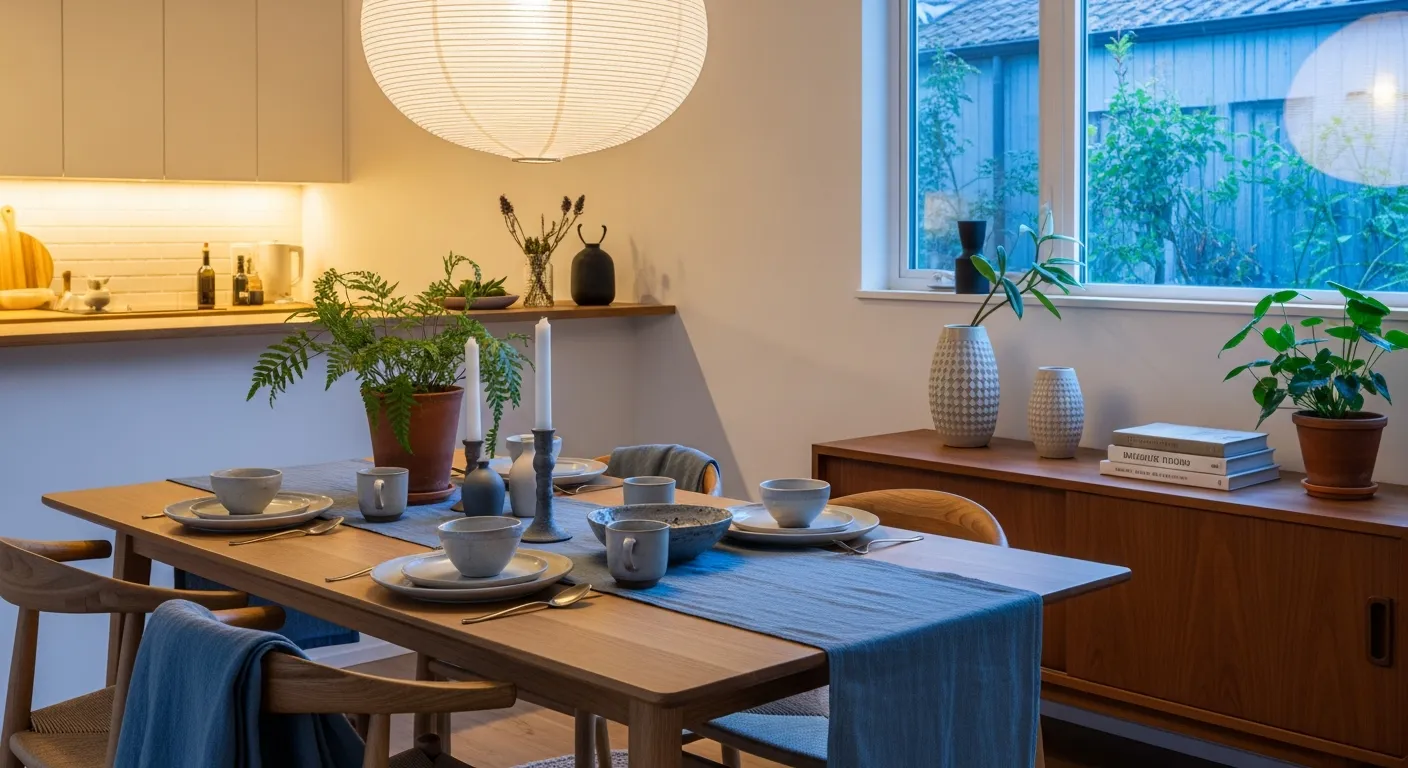
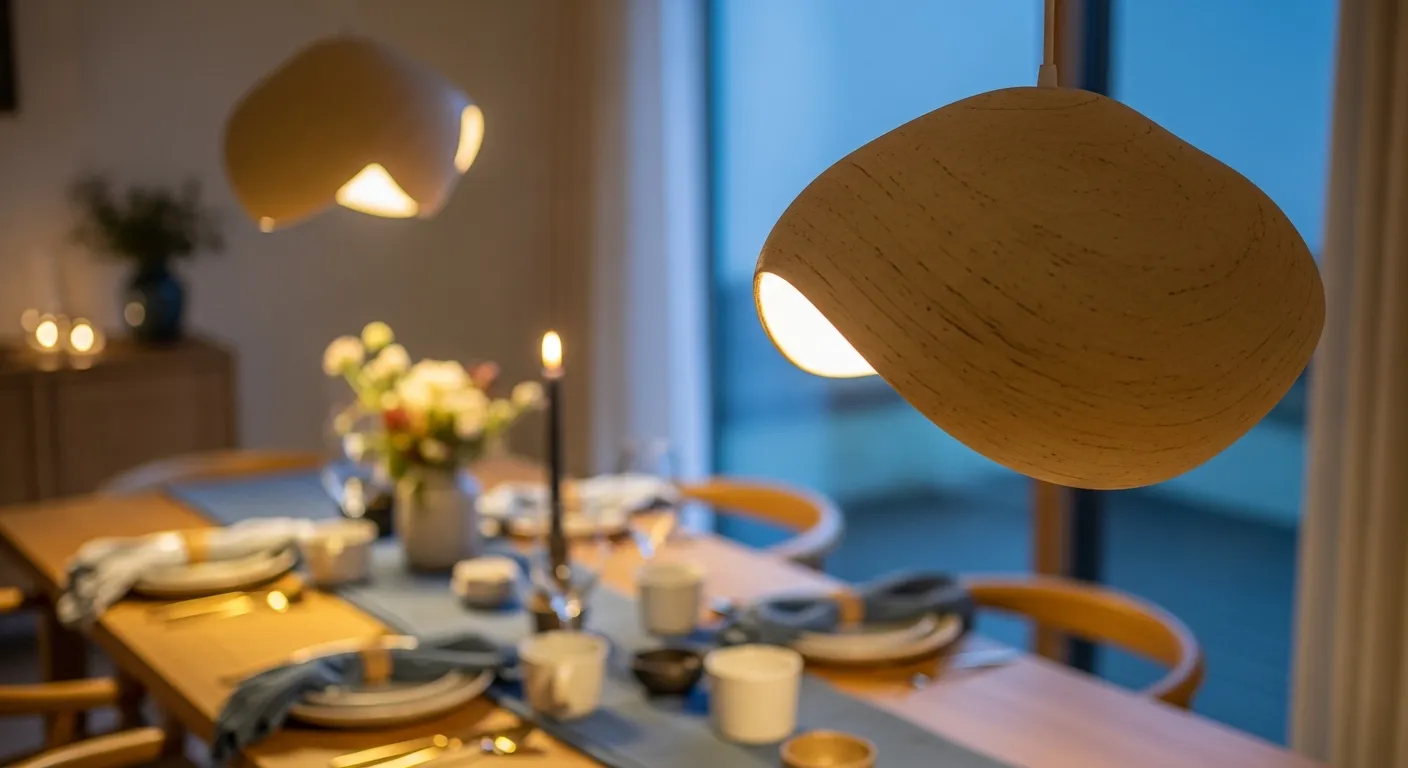
Don’t over-accessorize. Instead of a clustered centerpiece, try a single, large unglazed ceramic vase with a foraged branch. Lighting is crucial here—swap out generic fixtures for a paper lantern pendant (Noguchi style) which diffuses light softly against the blue walls.
How to Recreate These Japandi Dining Room Ideas
Ready to transform your space? You don’t need a total renovation to achieve this look. Here is a step-by-step guide to bringing these Japandi Dining Room ideas to life in your own home.
Step 1: The Canvas
Start by decluttering. Remove everything that doesn’t spark joy or serve a function. Then, paint your walls in a matte Dusty Blue. Matte paint absorbs light, enhancing the soft, velvety feel of the Japandi aesthetic.
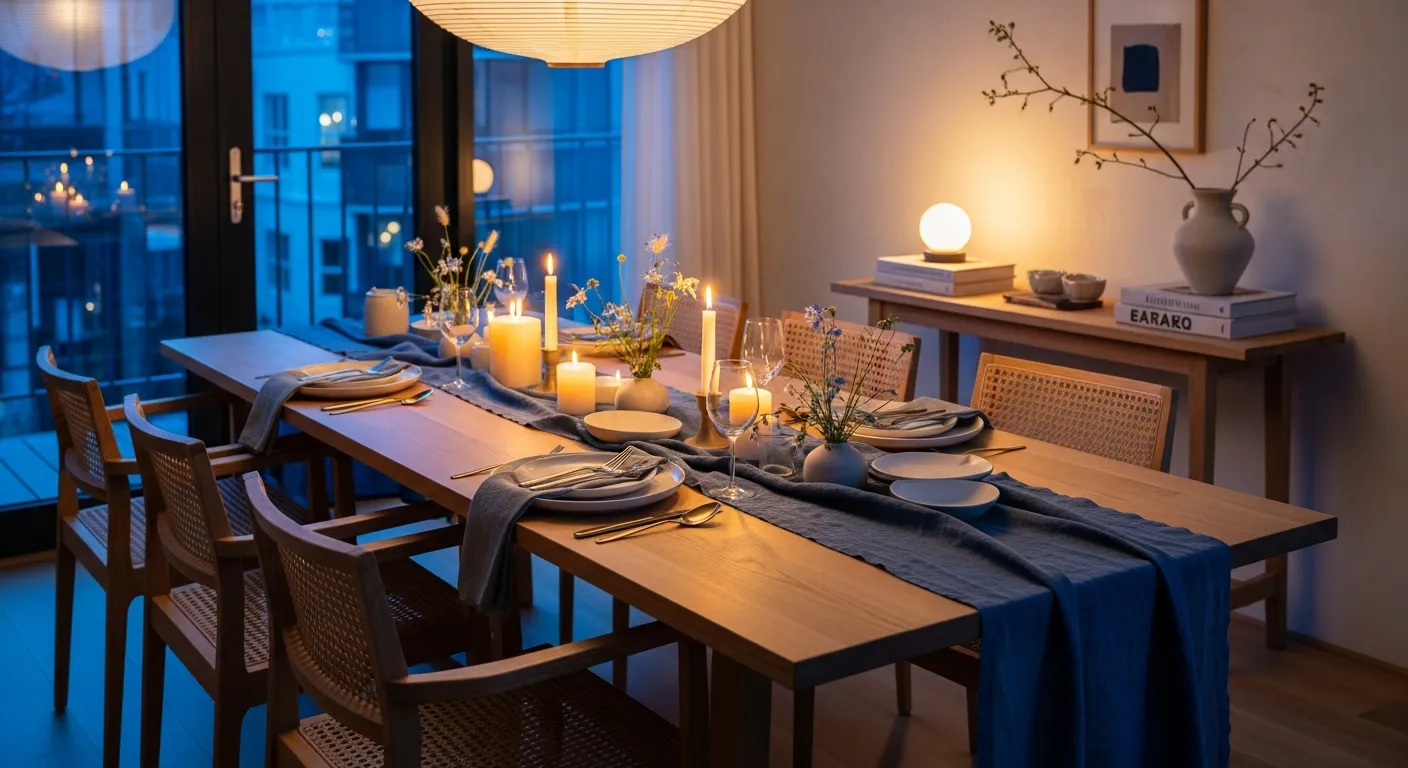
Step 2: The Foundation
Layer a large, neutral rug. It should be large enough that the chairs remain on the rug even when pulled out. This defines the “zone” in an open-plan house.
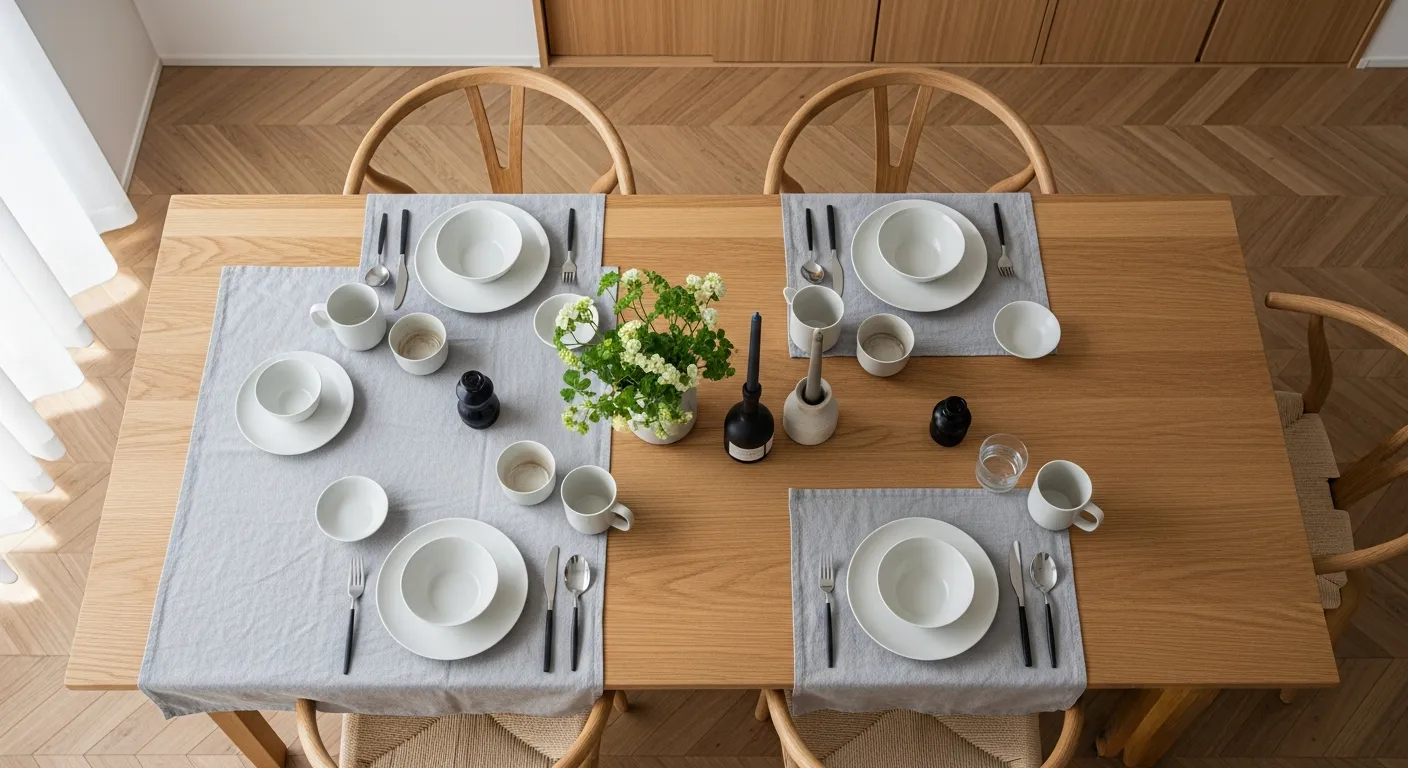
Step 3: The Light & Life
Install a statement pendant light low over the table (about 30-34 inches above the surface). Finally, add life with one significant plant—a Ficus or an Olive tree works beautifully against the blue backdrop.
Estimated Budget Breakdown
- Paint & Supplies: $150 – $250
- Lighting (Paper Pendant): $80 – $400
- Textiles (Rug & Curtains): $300 – $800
- Decor (Ceramics & Plants): $100 – $300
- Total Makeover (Excluding heavy furniture): $630 – $1,750
Frequently Asked Questions
Q: Can I use dark wood with dusty blue?
Absolutely. While light oak is traditional for Scandi styles, Japandi allows for darker woods like walnut. The contrast against the dusty blue is sophisticated and moody.
Q: Is blue too cold for a dining room?
Not if you choose the right shade. Avoid cool, icy blues. Stick to blues with grey or green undertones (like our #6B8E9E) and pair them with warm wood to keep the temperature balanced.
Creating a dining space that feels like a retreat is all about balance. By merging the functional simplicity of Scandinavian design with the rustic warmth of Japanese aesthetics—and wrapping it all in a soothing coat of dusty blue—you create a room that feeds the soul as well as the stomach. These Japandi Dining Room ideas are more than just a trend; they are a lifestyle choice that prioritizes peace, mindfulness, and beauty in the everyday. Now, go paint that wall!