
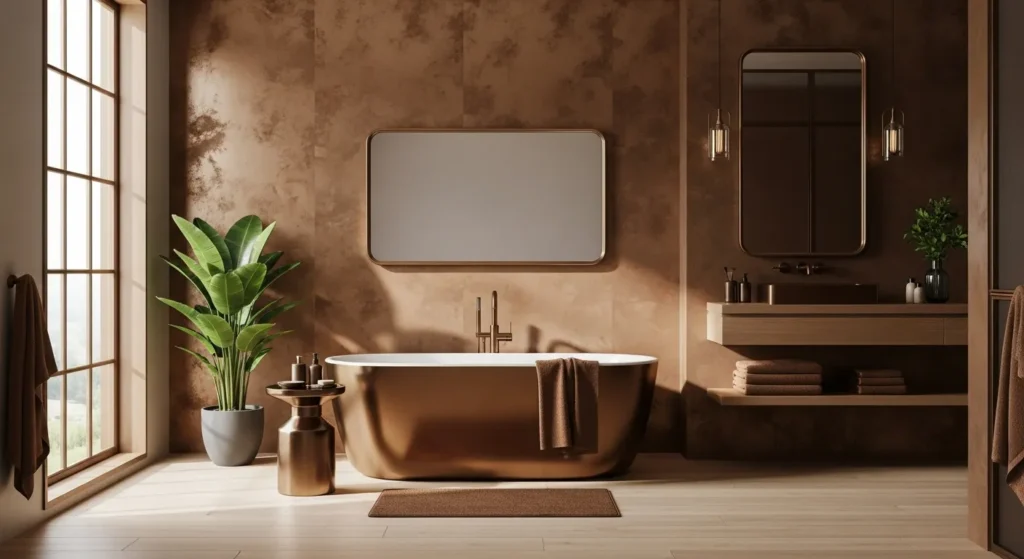
When clients ask me for Japandi Bathroom ideas that feel calm but not cold, I almost always reach for bronze. It has the earthy warmth of traditional Japanese interiors and the understated elegance you see in Scandinavian spaces—without the “too trendy” vibe. In a bathroom (where hard surfaces can feel clinical), bronze brings a soft glow that instantly makes the room feel lived-in, restorative, and spa-like.
In this guide, I’ll walk you through how I use bronze as a primary tone—on walls, fixtures, and accents—while keeping the lines minimal and the styling intentional. You’ll get actionable palette pairings, the essential furniture and decor pieces I’d prioritize first, and two realistic budget tiers so you can plan with confidence.
Color Palette
Warm Taupe#A48E79
Deep Walnut Brown#715240
Soft Porcelain#E6DFD2
Sandstone Beige#C0A582
Cocoa Bronze#70513A
Linen White#E4E0D9
Japandi Bathroom ideas: Bronze Warmth Meets Minimal Calm
The Psychology of Bronze in Your Bathroom
Bronze is one of my favorite “quiet luxury” colors for a bathroom because it reads as warm, grounded, and inherently human. Where chrome can feel sharp and black can feel graphic, bronze lands in the middle—softening hard tile lines and adding depth without shouting. If you’ve been collecting Japandi Bathroom ideas and everything feels a bit too pale or too stark, bronze is the fix that still honors the Japandi principles: restraint, nature, and calm.
From a mood perspective, bronze works like a visual exhale. It sits in the same family as clay, tea, and aged wood—colors our brains associate with warmth and shelter. In everyday bathrooms (not just showpiece spas), that matters: you want a space that feels comforting at 6 a.m. and restorative at 10 p.m. In my projects, I often use bronze as a “glow color” against plaster whites and soft beiges so the room feels lit from within, even on cloudy days.

Notice in the image above how the bronze tub doesn’t compete—it anchors. The textured walls and clean mirrors are simple, but the bronze adds soul. This is the essence of a Bronze Bathroom in a Japandi home: minimal shapes + tactile surfaces + one warm metal that ties it all together.
Color Combinations & Palette Ideas
The fastest way to make bronze feel Japandi (not traditional or glam) is to surround it with soft, natural neutrals. Think of bronze as your “tea-stained” accent: it looks best next to linen whites, sandy beiges, and wood tones with visible grain. I like to keep the palette tight—usually 3–4 main colors—because Japandi decor relies on editing. When everything is calm, your eye relaxes.
One combination I repeatedly specify is: linen-white walls + light oak vanity + bronze accents + a single deep brown for contrast (like a mirror frame or stool). That deeper brown keeps bronze from floating away; it gives the room visual structure. If you want a more modern edge, introduce matte black in small doses (shower trim or a sconce base), but keep it secondary to bronze so the space stays warm rather than graphic.
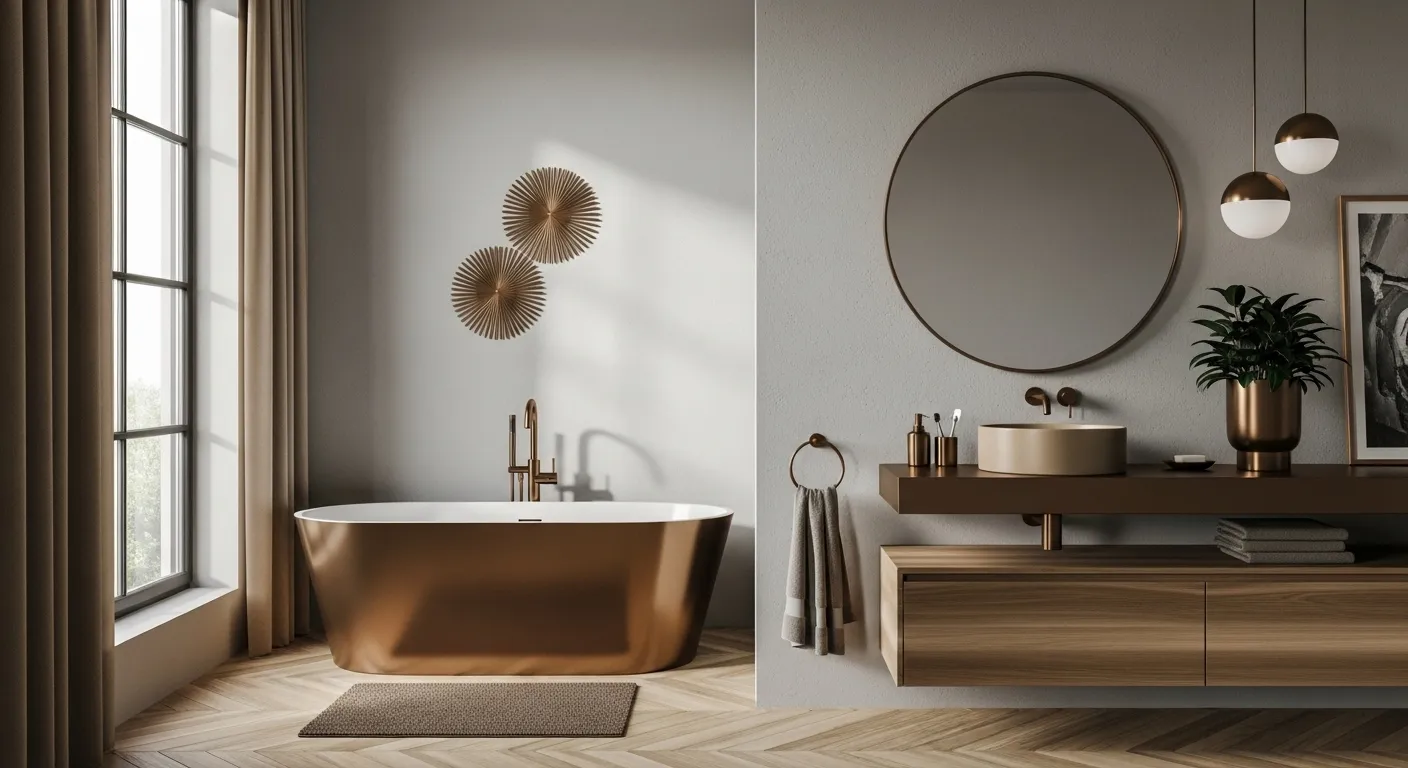
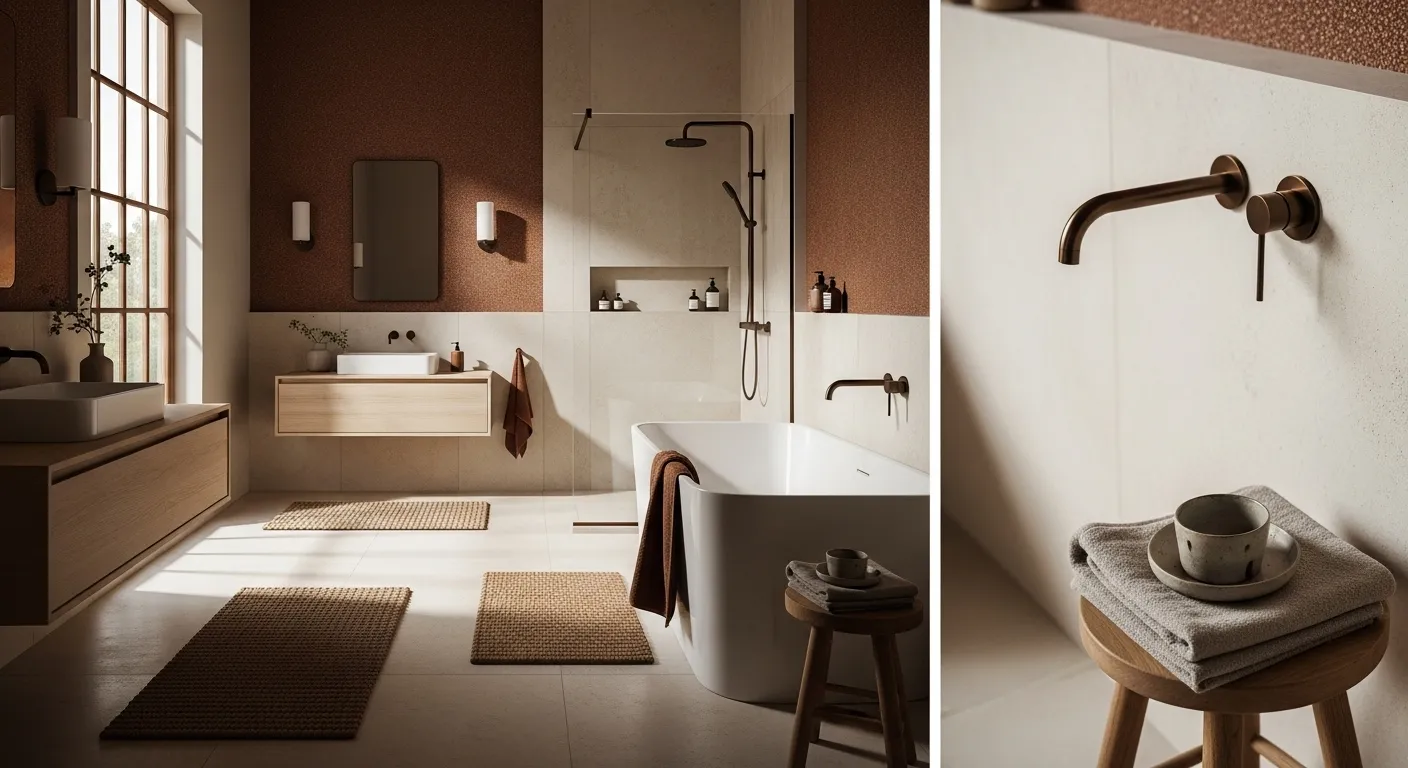
In the vignette above, the floating vanity and round mirror keep the geometry gentle—exactly what you want when using a stronger hue like bronze. If you’re collecting Japandi Bathroom ideas on Pinterest, look for this same balance: rounded forms + light wood + one warm metal + a soft, breathable wall color.
Essential Furniture & Decor Elements
Start with one hero piece (tub or vanity)
If you can only splurge on one item, make it the hero. In a Japandi bathroom, the hero is usually a freestanding tub or a beautifully simple vanity. A bronze tub is a statement, yes—but because the silhouette stays minimal, it still feels aligned with Japandi decor. If a bronze tub isn’t in the cards, a wood vanity with bronze hardware achieves a similar warmth with a smaller price tag.
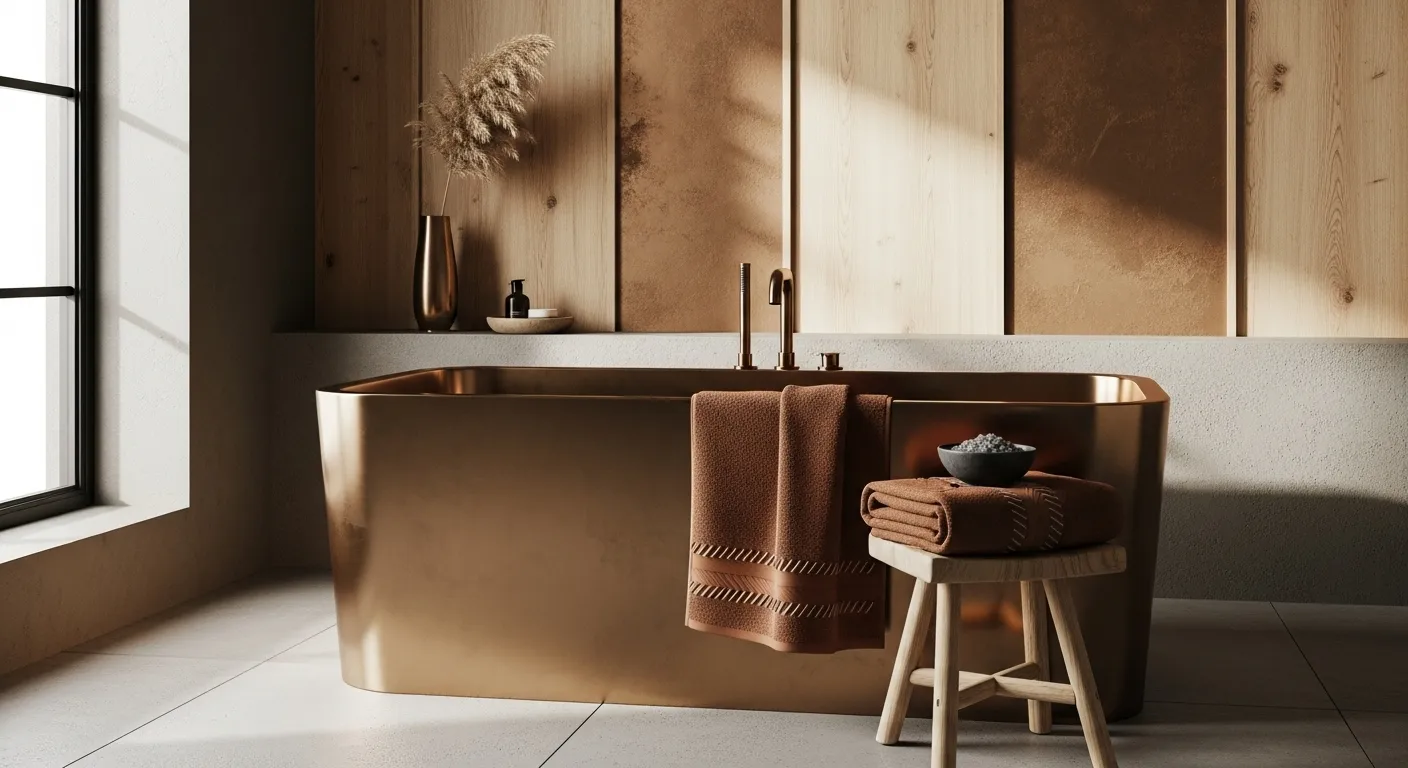
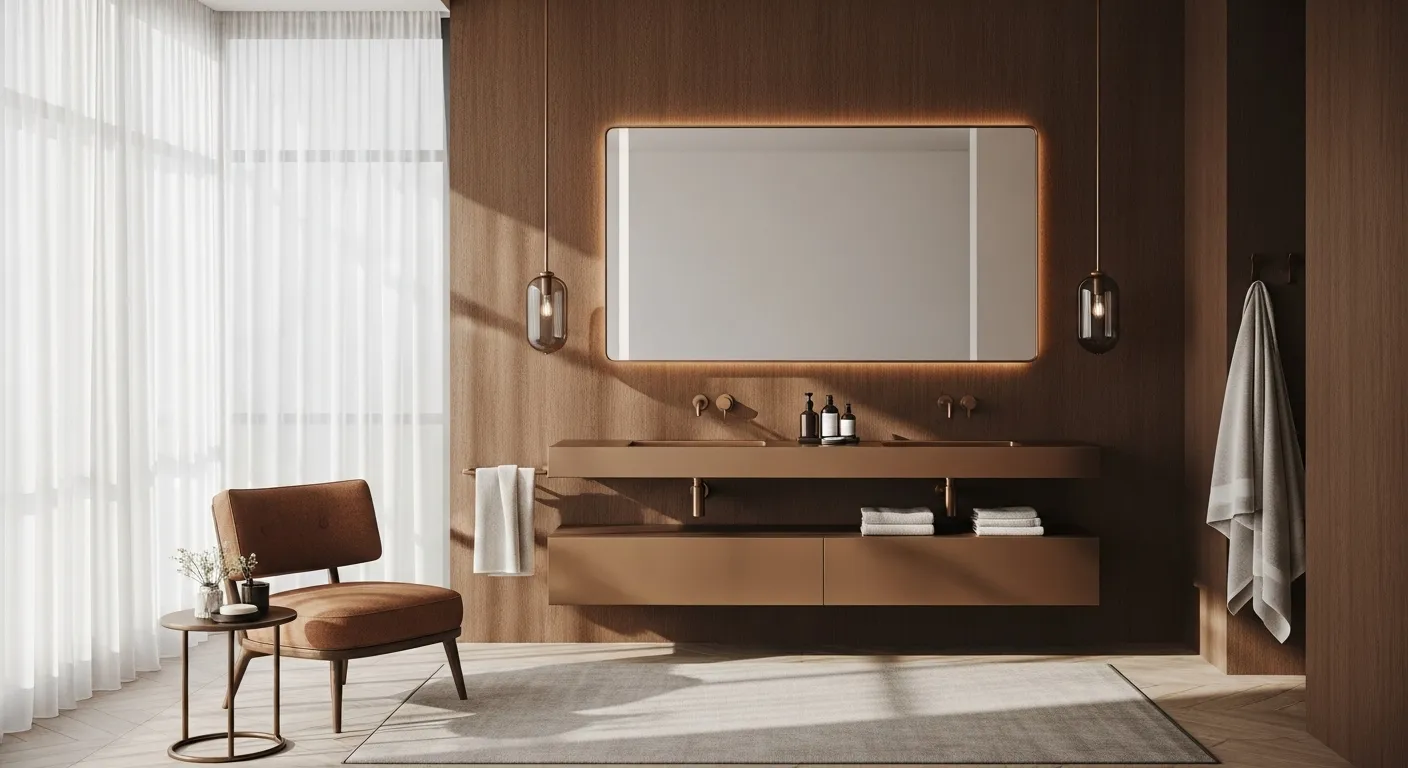
What makes the scene above work is the restraint: pale wood, soft linens, and a single focal material (bronze). When you’re building a Bronze Bathroom, keep the supporting cast quiet so the bronze feels intentional rather than busy.
Choose fixtures and surfaces that feel handmade (but easy-care)
Japandi bathrooms thrive on tactile finishes that still clean up well. My “go-to” spec list:
- Walls: limewash-look paint, microcement, or a plaster-effect tile for subtle movement.
- Floor: matte porcelain in a stone tone (slip-resistant) or large-format warm gray-beige tile.
- Vanity: light oak or ash, preferably floating to keep the floor visually open.
- Hardware: brushed bronze (not shiny), with matching towel bar + hooks so it looks curated.
- Lighting: paper-lantern-inspired pendants or simple sconces with warm bulbs.
- Textiles: thick cotton towels in sand, oatmeal, or muted terracotta—nothing bright.
Styling Tips & Budget Ideas
Style in calm layers: plant, ceramic, textile
Styling is where most bathrooms go off track—too many bottles, too many tiny objects, and suddenly the serenity is gone. My approach is to style in three calm layers: one living element (a plant), one grounding element (a ceramic tray or canister), and one soft element (towels or a bath mat). This creates a spa feel without clutter.
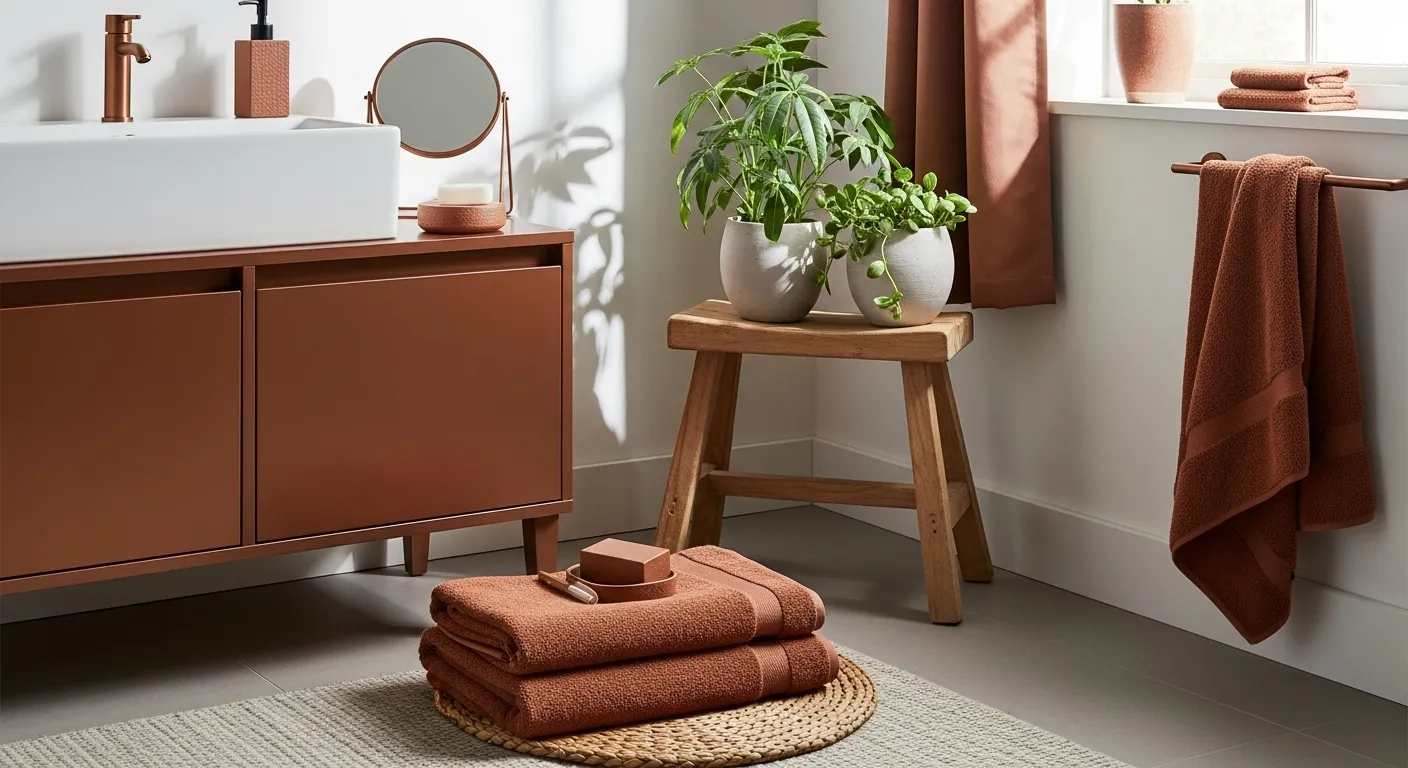
Use the image above as a checklist: warm towels (not stark white), a simple plant, and a clean counter. This is everyday Japandi decor—functional, not precious.
Budget-friendly swaps that still look designer
You don’t need a full renovation to get the vibe. The highest “impact-per-dollar” upgrades I recommend:
- Switch to bronze hardware: cabinet pulls + towel hook set (often $60–$180 total).
- Upgrade lighting: one warm pendant or two simple sconces ($120–$350).
- Add wood: a slatted bath mat, stool, or wall shelf ($40–$160).
- Edit your counter: decant soaps into matching amber bottles ($18–$35).
These changes create cohesion fast—key to most Japandi Bathroom ideas, where the “designed” feeling comes from repetition and restraint.
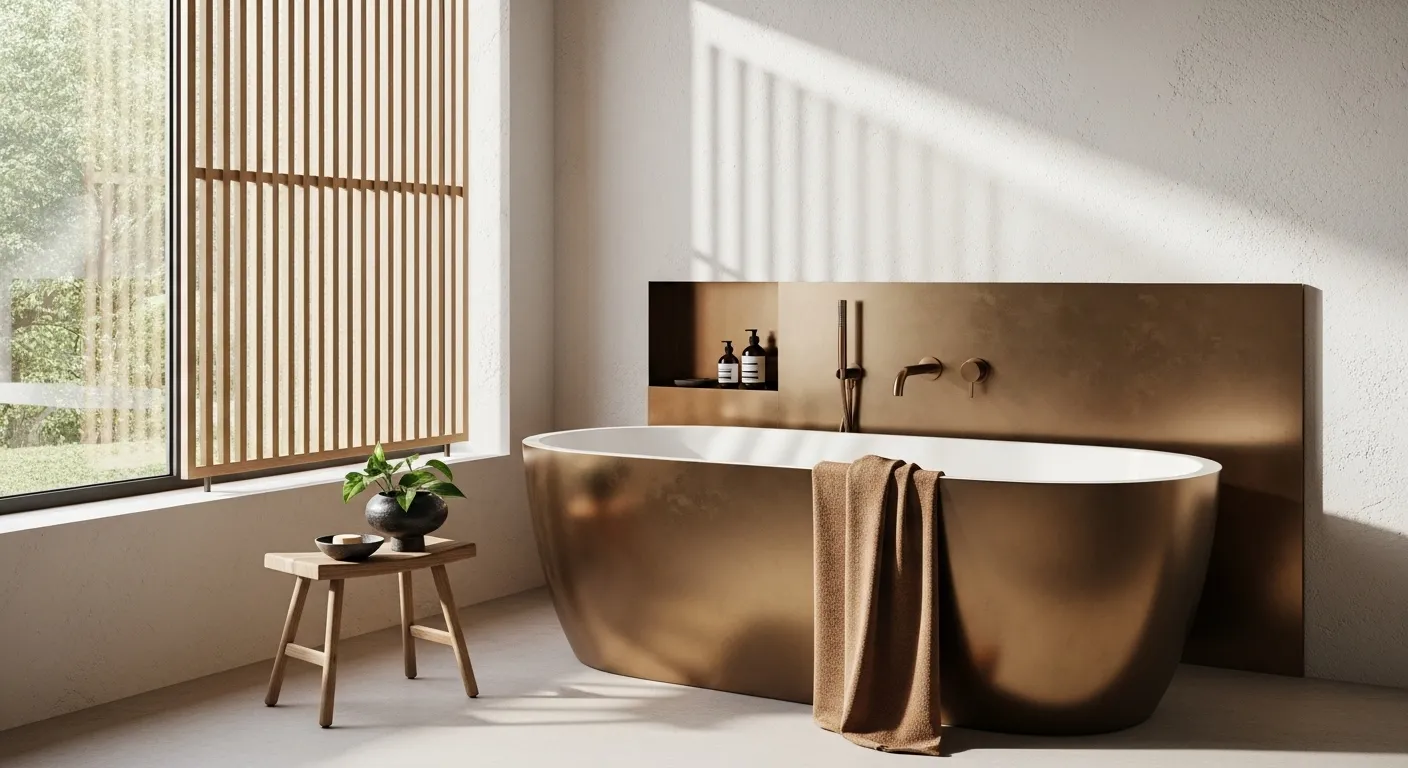
That wooden stool and slatted screen are a perfect example of inexpensive, high-style Japandi moves: natural material, simple silhouette, and a purpose (privacy, storage, or a landing spot for towels).
How to Recreate This Look
If you want a cohesive Japandi bronze bathroom without second-guessing every decision, follow this sequence. It’s the same order I use with clients because it prevents mismatched finishes and impulse buys.
- Set your base neutrals first. Choose a linen-white paint/tile and a warm wood tone (oak/ash). Keep undertones consistent (no icy grays).
- Pick your bronze statement. Decide where bronze lives: tub, vanity finish, fixtures, or an accent wall. One bold placement is better than sprinkling bronze everywhere.
- Lock in plumbing finishes. Select brushed bronze for the main fixtures. If using black (as shown above), limit it to a shower frame or one hardware category.
- Add texture, not pattern. Use plaster, microcement, fluted wood, or matte stone tile for interest. Avoid high-contrast patterns that fight the Japandi calm.
- Layer lighting. One overhead + one task light at the mirror. Aim for 2700K–3000K bulbs and diffused shades.
- Style with intention. Hide daily clutter in drawers, then style one tray, one vessel, and one plant maximum per surface.
Budget
Low Budget: $350–$1,250 (cosmetic refresh)
- Bronze cabinet pulls + towel bar/hooks: $70–$220
- Warm pendant or 2 sconces: $120–$350
- Wood stool or slatted mat + shelf: $60–$220
- Textiles (2–4 towels + bath mat): $60–$180
- Accessories (tray, soap dispensers, plant): $40–$280
Mid Budget: $2,800–$7,500 (partial renovation)
- Floating wood vanity + top/sink: $900–$2,400
- Bronze fixture set (faucet + shower trim): $450–$1,400
- Tile upgrade (floor or shower wall): $800–$2,600
- Lighting + mirror (backlit optional): $350–$1,200
- Paint/plaster finish + labor allowance: $300–$1,200
FAQ
1) Will bronze make a small bathroom feel darker?
Not if you keep walls light (linen-white) and use bronze as an accent or single hero element. Add warm, layered lighting to maintain brightness.
2) What’s the easiest way to start Japandi decor in a bathroom?
Edit clutter, swap to matching dispensers, add a wood stool or shelf, and choose one metal finish (bronze) to repeat.
3) Can I mix bronze with matte black?
Yes—keep bronze dominant and use black sparingly (one zone like the shower frame) so it reads intentional.
4) What towel colors look best in a Bronze Bathroom?
Oatmeal, sand, warm white, muted clay, and soft brown. Avoid bright white if your walls are creamy—it can look harsh.
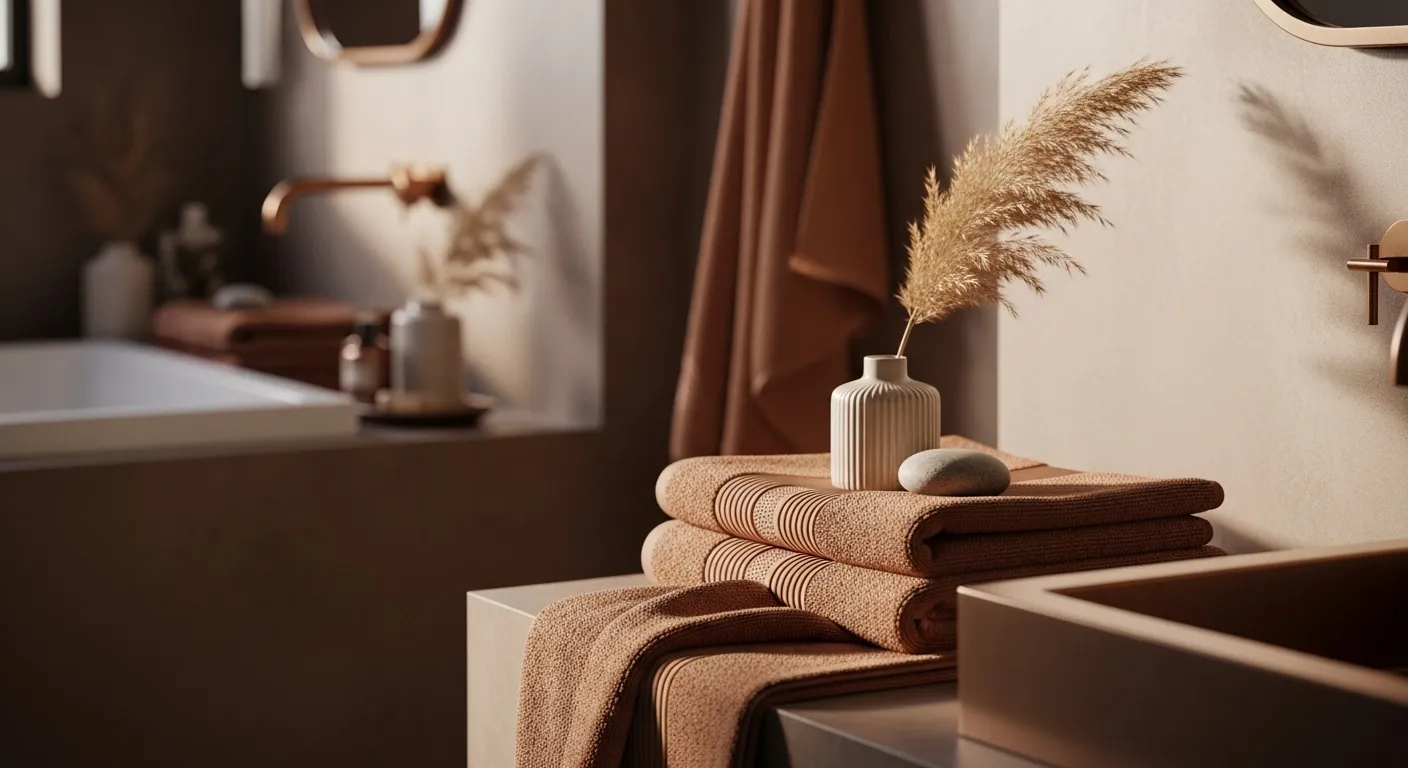
That final styling moment—warm towels, minimal ceramics, and a single dried stem—captures what I want you to remember: the best Japandi bathrooms feel edited, warm, and quietly personal.
How to Recreate This Look
- Set your base neutrals first. Choose a linen-white paint/tile and a warm wood tone (oak/ash). Keep undertones consistent (no icy grays).
- Pick your bronze statement. Decide where bronze lives: tub, vanity finish, fixtures, or an accent wall. One bold placement is better than sprinkling bronze everywhere.
- Lock in plumbing finishes. Select brushed bronze for the main fixtures. If using black, limit it to a shower frame or one hardware category.
- Add texture, not pattern. Use plaster, microcement, fluted wood, or matte stone tile for interest.
- Layer lighting. One overhead + one task light at the mirror. Aim for 2700K–3000K bulbs and diffused shades.
- Style with intention. Hide daily clutter in drawers, then style one tray, one vessel, and one plant maximum per surface.
Budget
Low Budget: $350–$1,250
- Bronze cabinet pulls + towel bar/hooks: $70–$220
- Warm pendant or 2 sconces: $120–$350
- Wood stool or slatted mat + shelf: $60–$220
- Textiles (2–4 towels + bath mat): $60–$180
- Accessories (tray, soap dispensers, plant): $40–$280
Mid Budget: $2,800–$7,500
- Floating wood vanity + top/sink: $900–$2,400
- Bronze fixture set (faucet + shower trim): $450–$1,400
- Tile upgrade (floor or shower wall): $800–$2,600
- Lighting + mirror (backlit optional): $350–$1,200
- Paint/plaster finish + labor allowance: $300–$1,200
FAQ
1) Will bronze make a small bathroom feel darker?
Not if you keep walls light (linen-white) and use bronze as an accent or single hero element. Add warm, layered lighting to maintain brightness.
2) What’s the easiest way to start Japandi decor in a bathroom?
Edit clutter, swap to matching dispensers, add a wood stool or shelf, and choose one metal finish (bronze) to repeat.
3) Can I mix bronze with matte black?
Yes—keep bronze dominant and use black sparingly (one zone like the shower frame) so it reads intentional.
4) What towel colors look best in a Bronze Bathroom?
Oatmeal, sand, warm white, muted clay, and soft brown. Avoid bright white if your walls are creamy—it can look harsh.
Final Thoughts
The best Japandi Bathroom ideas don’t rely on lots of decor—they rely on a calm plan: warm neutrals, honest materials, and a few intentional moments that feel good every day. Bronze is a particularly smart choice because it adds warmth without visual noise, making your bathroom feel softer, quieter, and more restorative.
If you take one thing from this guide, let it be this: choose one bronze “anchor,” repeat it in a couple of small places, and keep everything else simple and tactile. That’s how Japandi decor stays timeless—and how a Bronze Bathroom becomes a true retreat you’ll love living with.