
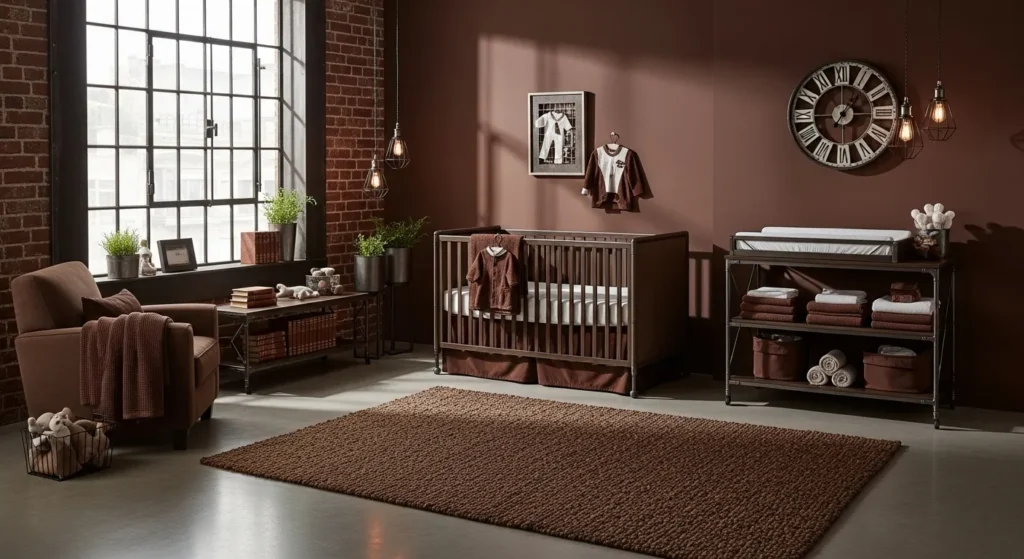
When clients ask me for Industrial Nursery & Kids Room ideas that feel warm (not warehouse-cold), I almost always reach for a rich, grounded brown—especially a Chocolate Brown Nursery & Kids Room palette. Chocolate brown gives you that “cocoon” feeling babies sleep well in, while still playing beautifully with Industrial decor staples like black metal, exposed brick, and Edison-style lighting. In this guide, I’ll walk you through how to make the look cozy, safe, and practical for real life—diaper changes, midnight feeds, and eventually toys and books—without losing the design.
Color Palette
Espresso Bark#3D231B
Cocoa Clay#73483F
Soft Concrete#C7C7C5
Roasted Umber#2D1F17
Mushroom Taupe#6D5A4F
Linen Fog#E6E2DD
Industrial Nursery & Kids Room ideas in Chocolate Brown
The Psychology of Chocolate Brown in Your Nursery & Kids Room
Chocolate brown (like #7B3F00 and the deeper espresso tones in the palette above) is one of my favorite “quiet luxury” colors for a nursery. It reads stable and protective—two feelings you want in a baby’s first room—while also hiding scuffs better than pale neutrals. When you pair it with industrial elements (brick, black steel, aged wood), the space feels curated and grown-up, but still soft enough for a child.
In an industrial space, the risk is that hard surfaces and dark tones can feel heavy. The fix is balance: brown should be the anchor, not the whole story. I like to use chocolate on either one main wall or the lower two-thirds of the room (wainscot height) so the upper portion can stay brighter. Add warm lighting (2700K bulbs), light textiles, and at least one big “breathing” surface like a large window treatment in linen or a pale rug.
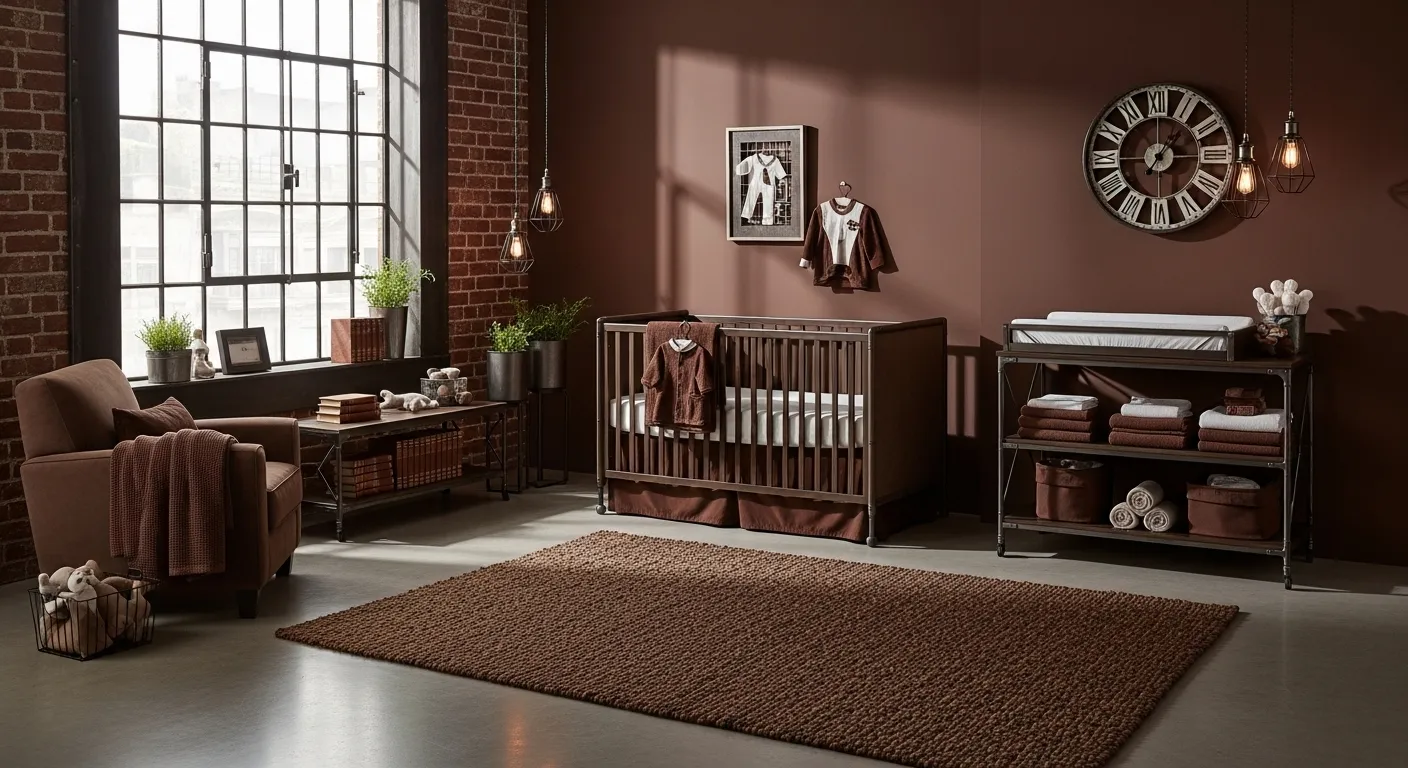
Notice in the image how the brown walls don’t feel flat—they’re warmed up by brick texture, metal shelving, and that generous window. That’s the psychology in action: grounded color + natural light = calm energy.
How brown affects sleep and mood
Brown is visually “low stimulation,” which matters for sleep routines. Babies and toddlers can be sensitive to high-contrast, bright color everywhere; chocolate brown behaves like a comforting background tone. For older kids, it also reads sophisticated—so you’re building a room that won’t feel babyish in two years.
Best finishes for an industrial look
For Industrial decor, choose a matte or eggshell finish for walls (matte hides texture issues; eggshell wipes easier). If you’re using chocolate brown on trim or doors, a satin finish looks intentional and cleans up quickly.
Color Combinations & Palette Ideas
The secret to a successful Chocolate Brown Nursery & Kids Room is pairing brown with “industrial neutrals” that bring light and edge: concrete gray, blackened metal, and warm off-white. The palette above already does the heavy lifting—espresso bark, cocoa clay, soft concrete, roasted umber, mushroom taupe, and linen fog. Think of it as layered earth + workshop materials.
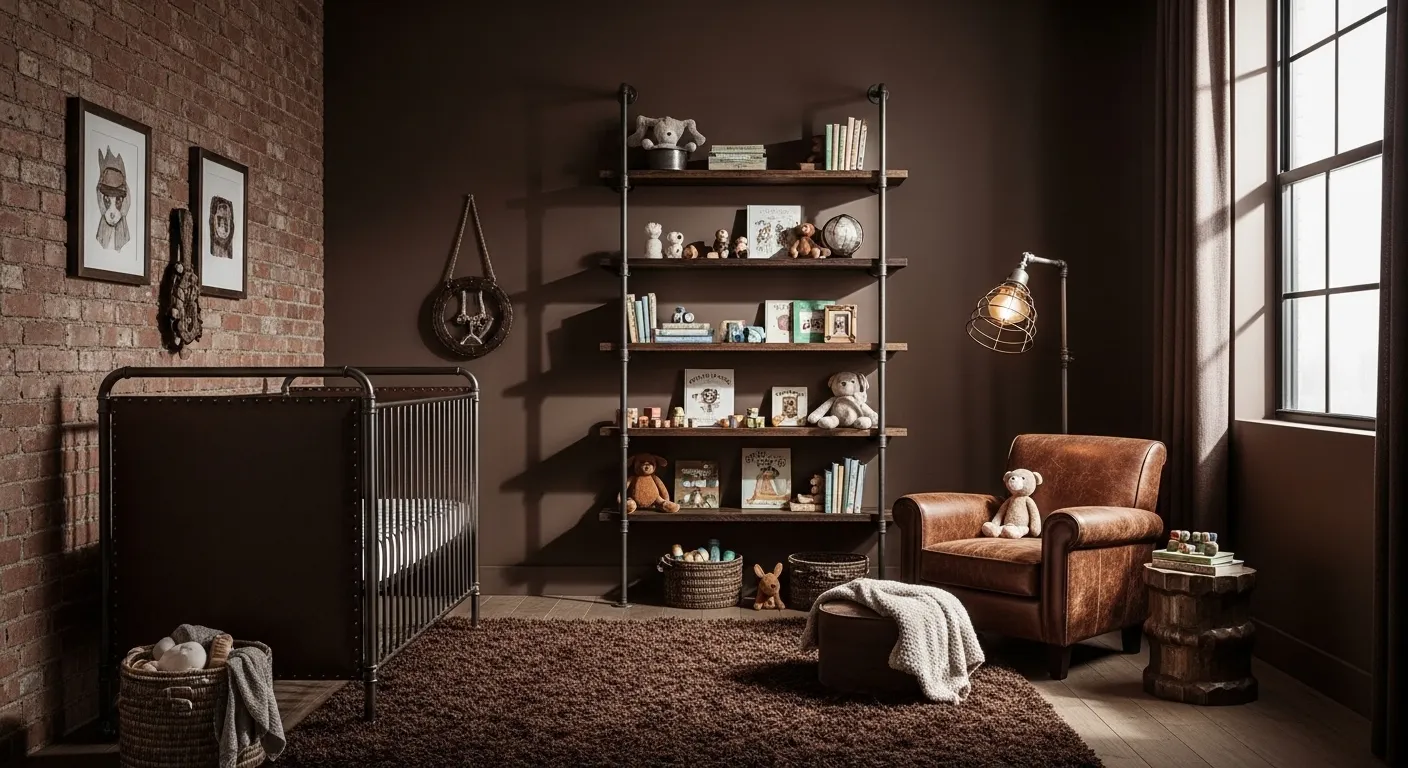
This vignette shows my go-to combination: chocolate walls + black metal + cognac leather. It reads industrial, but the leather and wood keep it warm. If you want to lighten the room further, swap some black accents for oil-rubbed bronze or warm brushed brass (especially in lighting and hardware).
Three foolproof color formulas
- Classic Industrial Warmth: Chocolate brown + soft concrete gray + black metal + linen white textiles.
- Vintage Workshop: Chocolate brown + mushroom taupe + aged wood + antique brass accents.
- Moody Modern: Roasted umber + espresso bark + matte black + crisp off-white (keep the off-white on large surfaces like curtains and rugs).
Where to place contrast so it feels intentional
Use the highest contrast around functional zones: a black sconce over a changing station, a dark shelf bracket against a lighter wall, or a pale rug under the crib. That helps the room feel designed—not randomly mixed.
Essential Furniture & Decor Elements
For Industrial Nursery & Kids Room ideas, I always start with two priorities: safety and flow. Industrial style tends to use metal, reclaimed wood, and open shelving—great visually, but you have to baby-proof from day one and toddler-proof before you think you need to. Choose pieces that look industrial but function like nursery workhorses: a sturdy crib, a comfortable glider, closed storage, and lighting you can dim.
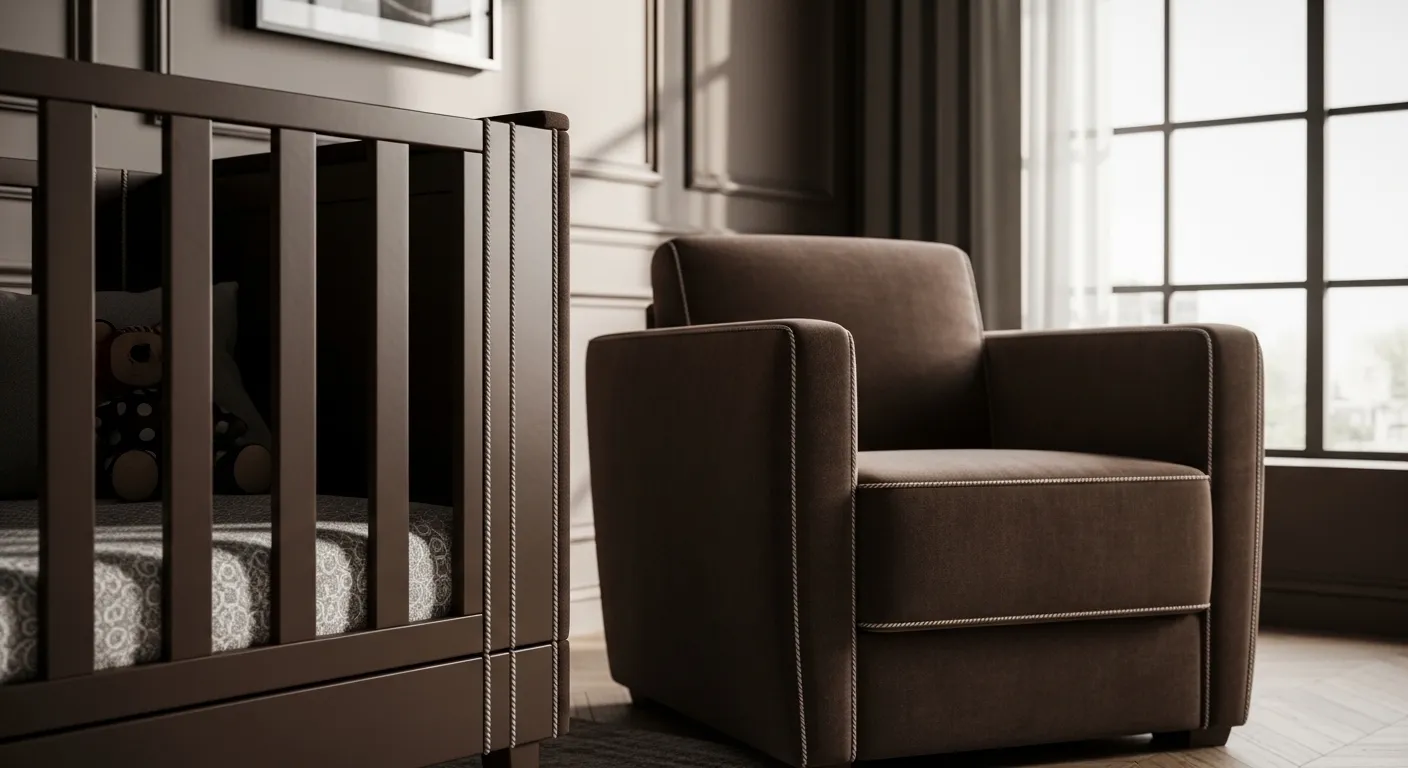
This setup nails the essentials: the crib sits near natural light (great for daytime naps), and the chair is positioned for easy reach of a side table. In my projects, the chair choice can make or break the room—industrial nurseries need softness somewhere, and upholstery does that instantly.
Core furniture checklist (and what to look for)
- Crib (or convertible crib): Look for a matte black or dark bronze finish if you want the industrial vibe. Budget: $250–$650.
- Glider or rocker: Prioritize arm height, lumbar support, and stain-resistant fabric. Budget: $250–$900.
- Dresser + changing top: A rustic dresser reads industrial when paired with metal pulls. Add a secured changing tray. Budget: $350–$1,000.
- Rug: Choose low-pile, easy-clean (washable if possible). Round rugs soften brick-and-metal lines. Budget: $120–$350.
- Lighting: One dimmable overhead + one task light (sconce or lamp). Budget: $60–$250 per fixture.
Decor that feels industrial but kid-friendly
Go for oversized art (simple shapes, vintage-inspired prints), soft baskets, and a few “honest materials” moments—like a wood stool or a leather (or faux leather) pouf. Keep decor minimal around the crib for safety and visual calm.
Styling Tips & Budget Ideas
Styling is where industrial rooms can either become cozy…or feel like a converted loft. My rule: soften every hard element with a soft one. Brick? Add a plush rug. Metal crib? Add breathable linen curtains. Concrete tones? Add warm wood and a textured throw. This approach keeps Industrial decor approachable for kids.
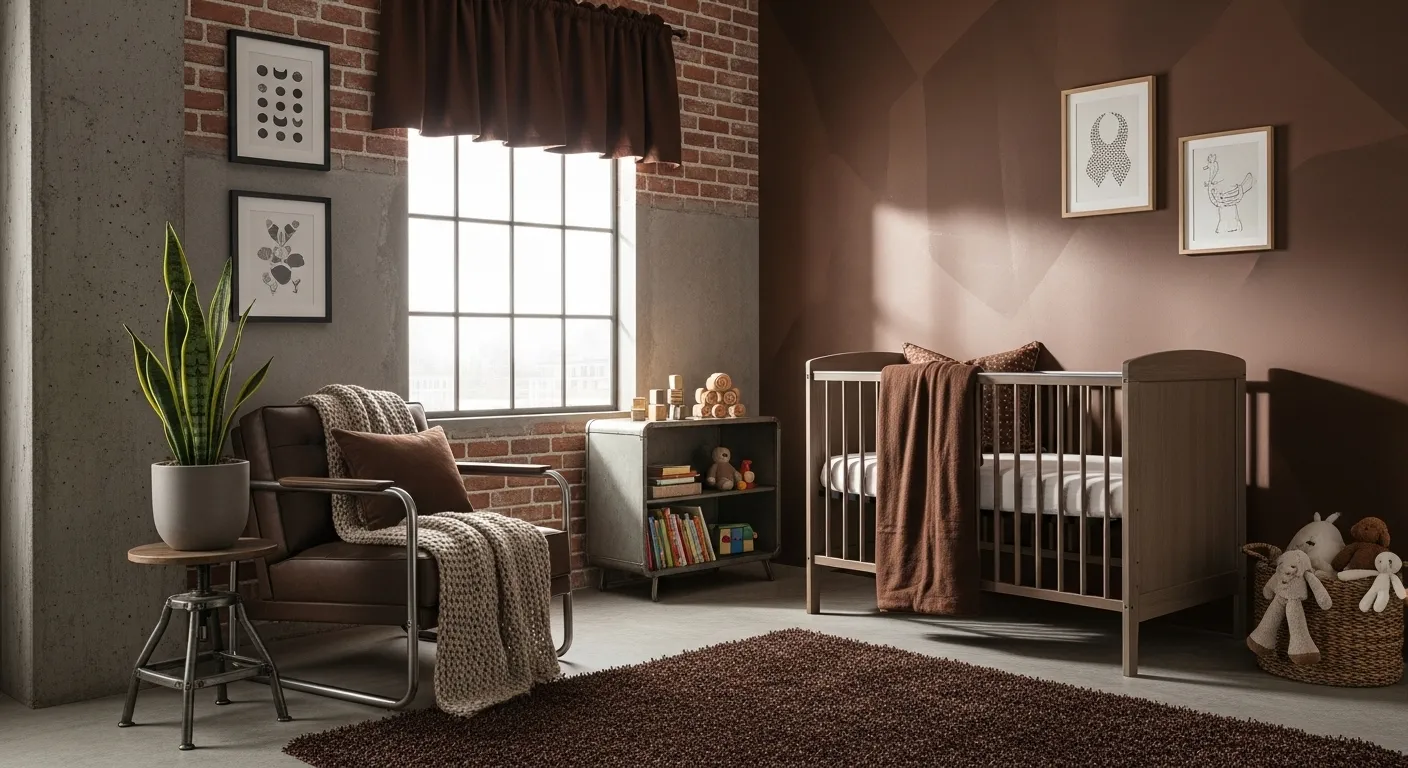
Use this “cozy corner” formula: a chair, a small table, a dimmable light, and one basket for books or blankets. In real life, this becomes your feeding station, story-time seat, and calm-down spot all in one.
Styling moves that make the room feel finished
- Layer textiles: One rug + one curtain + one upholstered piece is usually enough.
- Repeat black metal 2–3 times: crib + sconce + hardware, for example.
- Add one warm “glow” material: brass, amber glass, or wood with a honey finish.
- Keep wall decor large-scale: fewer, bigger pieces read calmer than lots of tiny frames.
Budget ideas that don’t look cheap
Instead of faux brick panels everywhere, do one high-impact area: a removable brick wallpaper behind the crib. Swap basic knobs for matte black pulls. Use plug-in sconces to get that loft look without hiring an electrician. And choose a washable rug—because it will earn its keep.
How to Recreate This Look
If you’re looking for Industrial Nursery & Kids Room ideas you can execute quickly, follow these steps in order. This sequence prevents the common mistake I see: buying cool industrial pieces first, then realizing the room feels dark and cluttered.
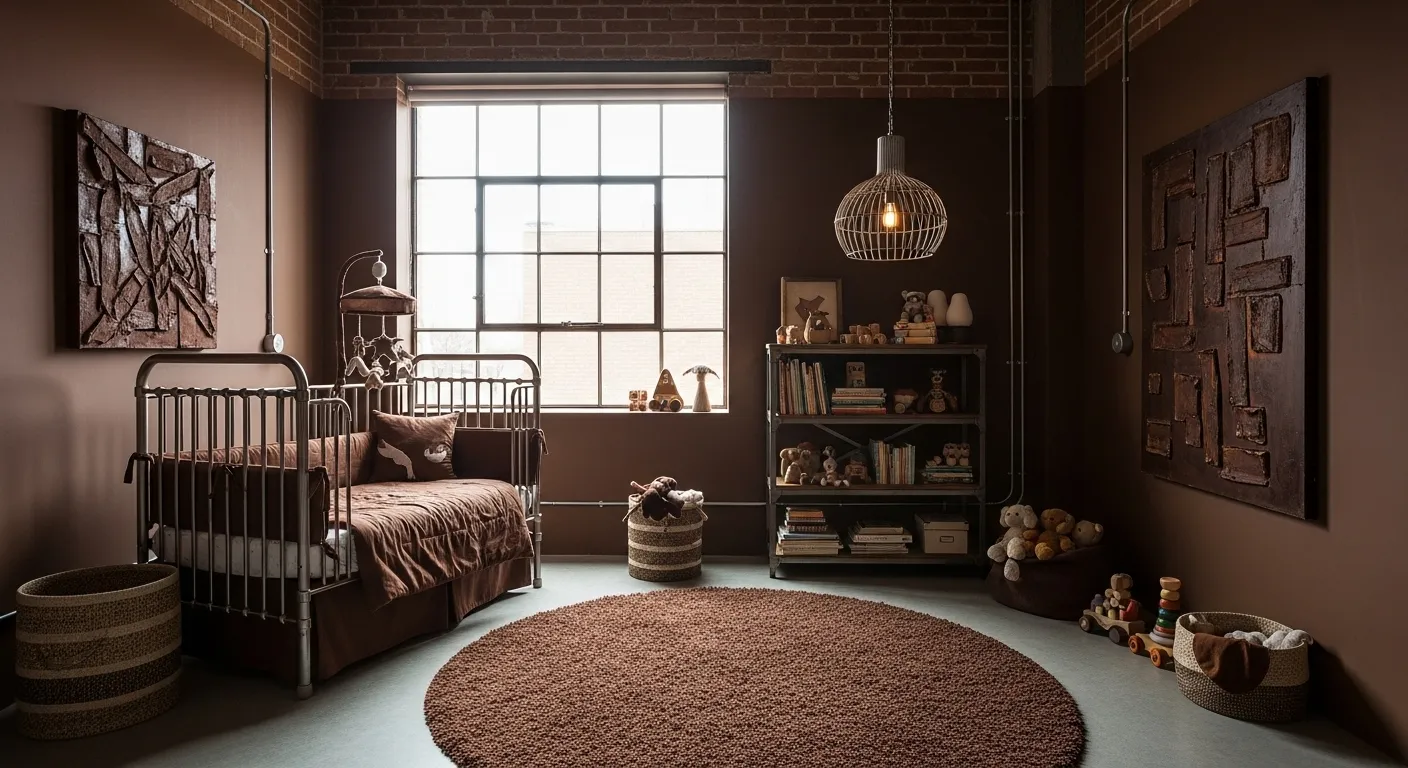
Step-by-step plan (designer order of operations)
- Choose your brown: Test a chocolate brown swatch in morning and evening light. Commit to one accent wall or a full room if you have big windows.
- Set the industrial backbone: Add one “honest material” feature—brick wallpaper, a reclaimed-wood dresser, or pipe-and-wood shelving (anchored properly).
- Place the crib first: Keep it away from cords, windows, and climbing-friendly furniture. Build your layout around safe clearances.
- Add the comfort zone: Position a glider with a small table and a warm task light. This is your most-used spot for the first year.
- Layer softness: Bring in a rug, curtains, and bedding in linen fog (#E6E2DD) and soft concrete (#C7C7C5) to balance the dark tones.
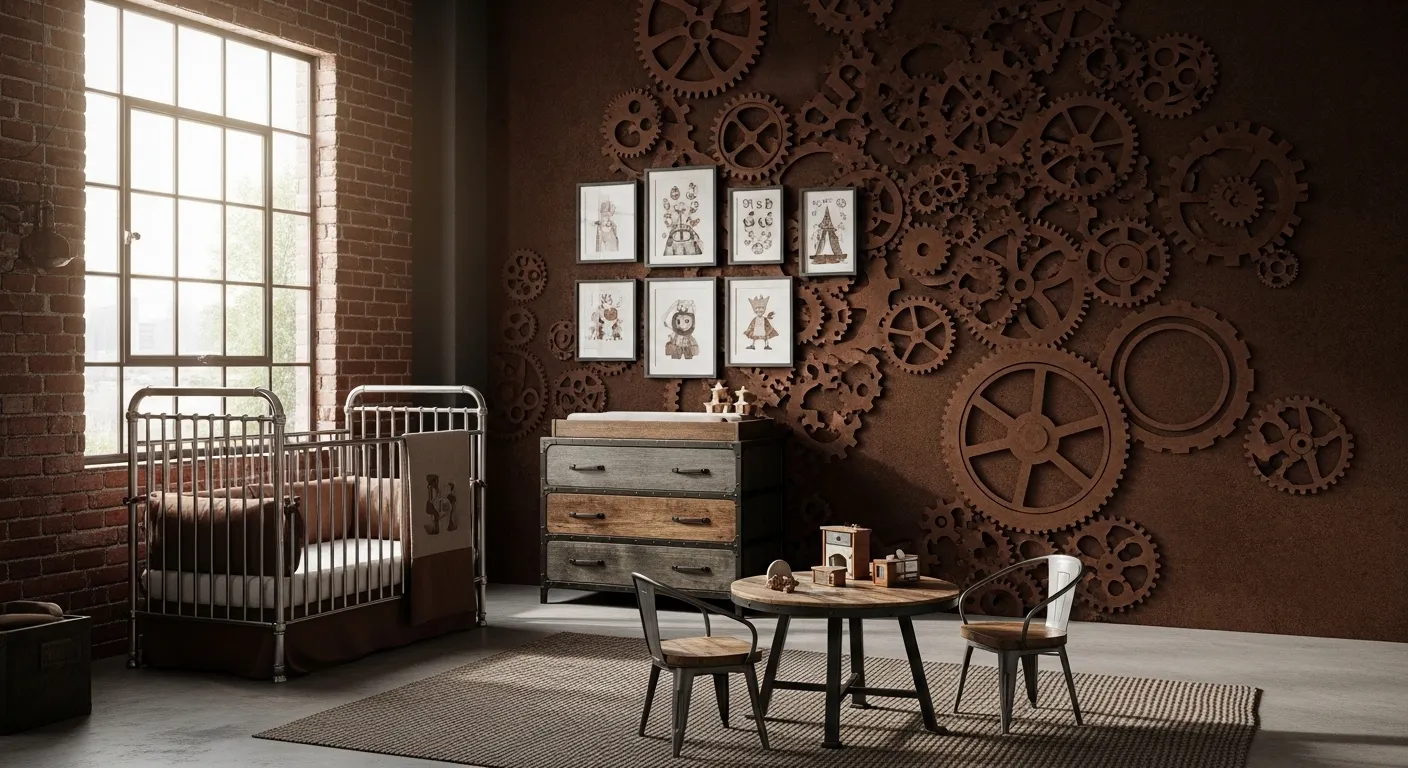
- Finish with character: Hardware, art, and one statement piece (like a gear wall feature) completes the industrial story.
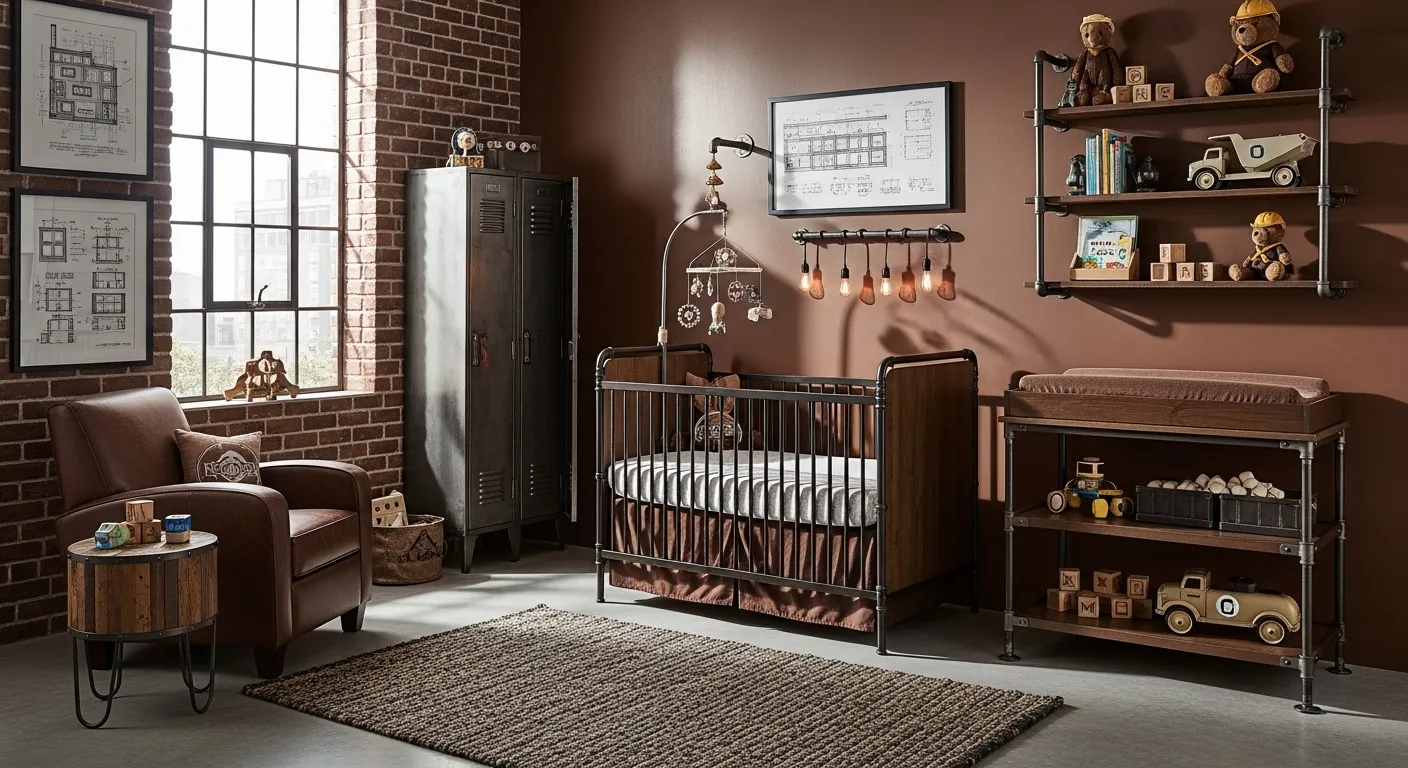
That Edison lighting look is gorgeous, but always put it on a dimmer and choose warm bulbs. The goal is “evening glow,” not interrogation room.
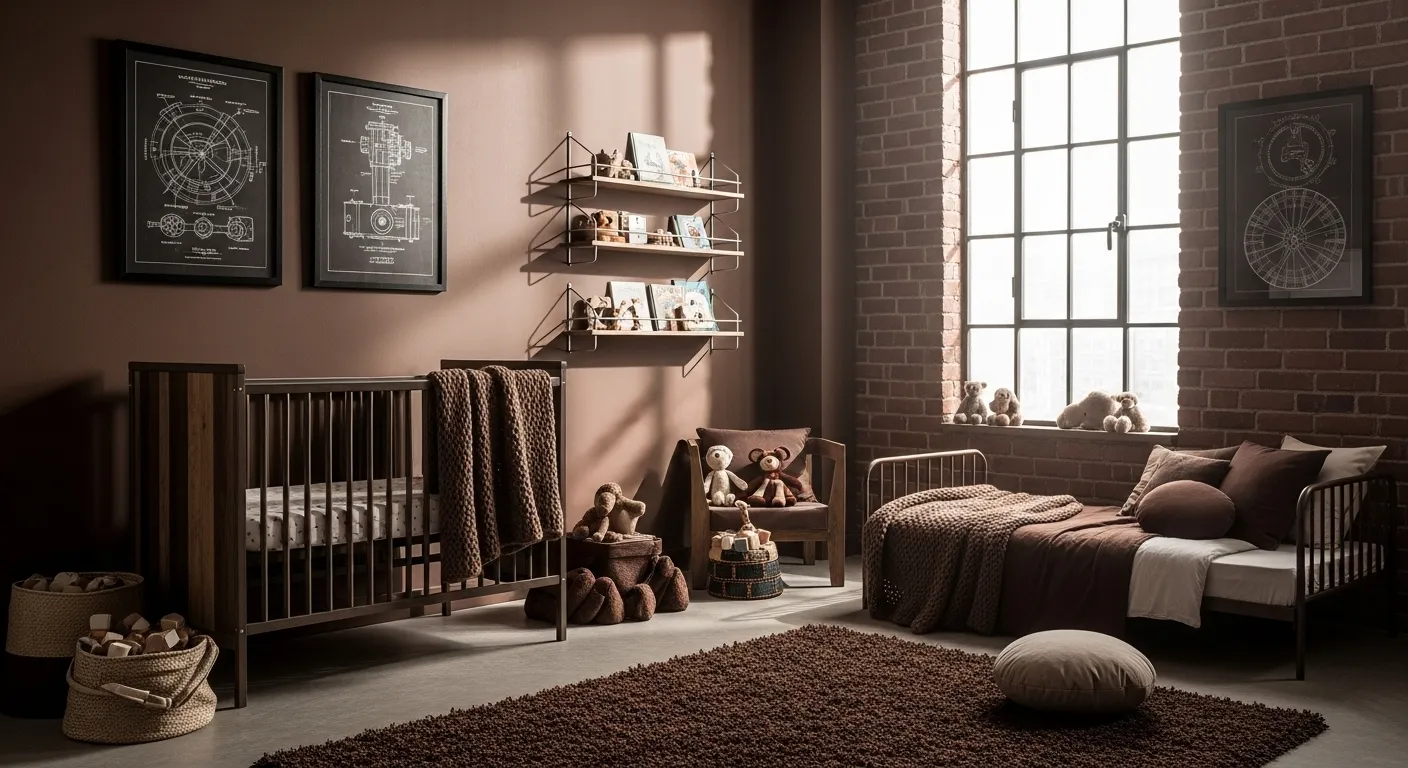
If you have space, a metal daybed (or compact twin) is a smart upgrade: it supports overnight care and transitions into a kids’ room guest perch later. This is one of my favorite “buy once, use for years” moves.
Budget (2 tiers)
Low Budget: $650–$1,250
- Paint + supplies: $60–$140
- Brick peel-and-stick accent: $80–$160
- Crib (simple metal-look or painted wood): $200–$350
- Rug (washable/low pile): $120–$220
- Lighting (plug-in sconce + warm bulb): $60–$140
- Storage (baskets, bins, basic shelf): $80–$240
Mid Budget: $1,300–$2,400
- Premium paint + pro-quality tools: $120–$220
- Crib (higher-end metal or convertible): $400–$750
- Glider/rocker (performance fabric): $500–$900
- Dresser + changing tray + hardware upgrade: $450–$900
- Rug (larger size): $200–$450
- Dimmable overhead or statement pendant: $150–$350
FAQ
1) Will chocolate brown make the nursery feel smaller?
It can, but you can offset it with a light ceiling, linen curtains, and a pale rug. If the room is small, use chocolate brown as an accent wall behind the crib.
2) What metals look best with chocolate brown in industrial rooms?
Matte black is the classic. Oil-rubbed bronze and aged brass also look beautiful and add warmth—especially in lighting and hardware.
3) How do I keep an industrial nursery from feeling too “adult”?
Add kid-friendly softness: an upholstered glider, plush rug, and simple art with gentle shapes. Keep sharp-edged decor out of reach and prioritize closed storage at toddler height.
4) What’s the easiest upgrade when the nursery becomes a kids’ room?
Swap the crib for a toddler bed/daybed, add a book ledge, and introduce one playful accent color through bedding (rust, sage, or denim blue all work with chocolate brown).
How to Recreate This Look
- Pick your chocolate brown anchor (accent wall or full room) and test it in multiple lighting conditions.
- Add one industrial architectural moment (brick wallpaper, pipe shelf, or metal lighting).
- Place the crib safely away from cords/windows and keep surrounding decor minimal.
- Create a comfort station with a glider, side table, and dimmable warm light.
- Balance with light textiles (linen curtains, pale rug, soft bedding) to avoid a heavy feel.
- Finish with 2–3 repeating accents (black metal, warm wood, and one statement wall art).
Budget
Low Budget: $650–$1,250 (paint $60–$140, accent brick $80–$160, crib $200–$350, rug $120–$220, lighting $60–$140, storage $80–$240)
Mid Budget: $1,300–$2,400 (paint $120–$220, crib $400–$750, glider $500–$900, dresser + tray + hardware $450–$900, rug $200–$450, lighting $150–$350)
FAQ
1) Will chocolate brown make the nursery feel smaller? Use it as an accent wall and keep textiles light.
2) What metals work best? Matte black, oil-rubbed bronze, and aged brass.
3) How do I keep it kid-friendly? Prioritize soft textiles, rounded accessories, and closed storage.
4) Best transition tip? Replace the crib with a toddler bed/daybed and add book ledges.
Final Thoughts
The best Industrial Nursery & Kids Room ideas don’t just look good on day one—they function beautifully through growth spurts, toy explosions, and shifting routines. Chocolate brown is an underrated hero for this style: it’s cozy, forgiving, and makes industrial materials feel intentional instead of cold. If you start with a grounded brown base, layer in soft concrete and linen tones, and keep lighting warm and dimmable, you’ll end up with a Chocolate Brown Nursery & Kids Room that feels calm now and still cool later.