
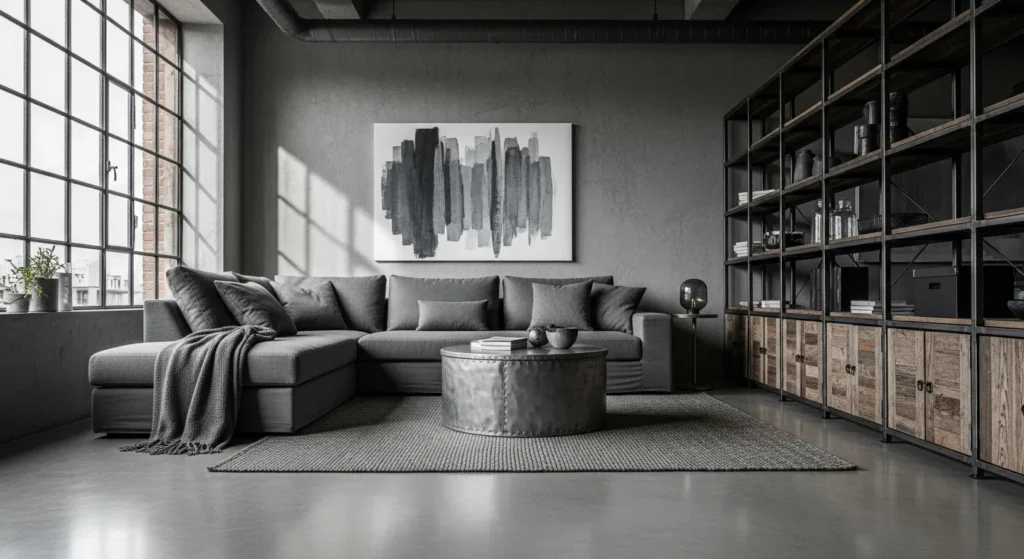
Industrial Living Room ideas don’t have to feel cold or overly “warehouse.” In fact, when you build the look around a steady gray like #808080, the space reads calm, modern, and surprisingly forgiving for real life. I use gray constantly in client homes because it plays nicely with concrete, steel, brick, and black metal—yet it also lets warmer pieces (like leather, wood, and soft textiles) do the emotional heavy lifting.
If you’re aiming for a Gray Living Room with that collected, urban edge, think of gray as your backdrop—not your only note. The wins come from layering: warm lighting, tactile fabrics, and a few intentionally repeated industrial materials. Below, I’ll walk you through how gray behaves psychologically in a living room, the best palette pairings, the furniture + Industrial decor that actually works day-to-day, and a step-by-step plan to recreate the look—without buying a whole new room.
Color Palette
Steel Charcoal#262828
Mid Gray#767676
Soft Concrete#DBDBD7
Matte Black#252525
Weathered Metal#757474
Warm Stone#ABA9A7
Industrial Living Room ideas: Everyday Gray Style That Feels Calm
The Psychology of Gray in Your Living Room
Gray is the “quiet structure” color in design. In a living room—where you decompress, host, and inevitably leave a few life-stuff piles—gray reads as calm and visually organized. That’s why a Gray Living Room can feel restful even when you’re using industrial staples like open shelving, large-scale art, and mixed materials. Gray doesn’t compete with your focal points; it supports them.
In industrial spaces specifically, gray mirrors the architecture we associate with lofts: concrete, steel, stone, and weathered finishes. Done well, it’s not cold—it’s grounded. The key is undertone: a warmer gray (greige-leaning) pairs beautifully with wood and leather; a cooler gray makes black metal and chrome look crisp and intentional. For everyday comfort, I usually choose a mid gray on big surfaces (sofa, rug, or main wall) and reserve the deepest charcoals for accents.
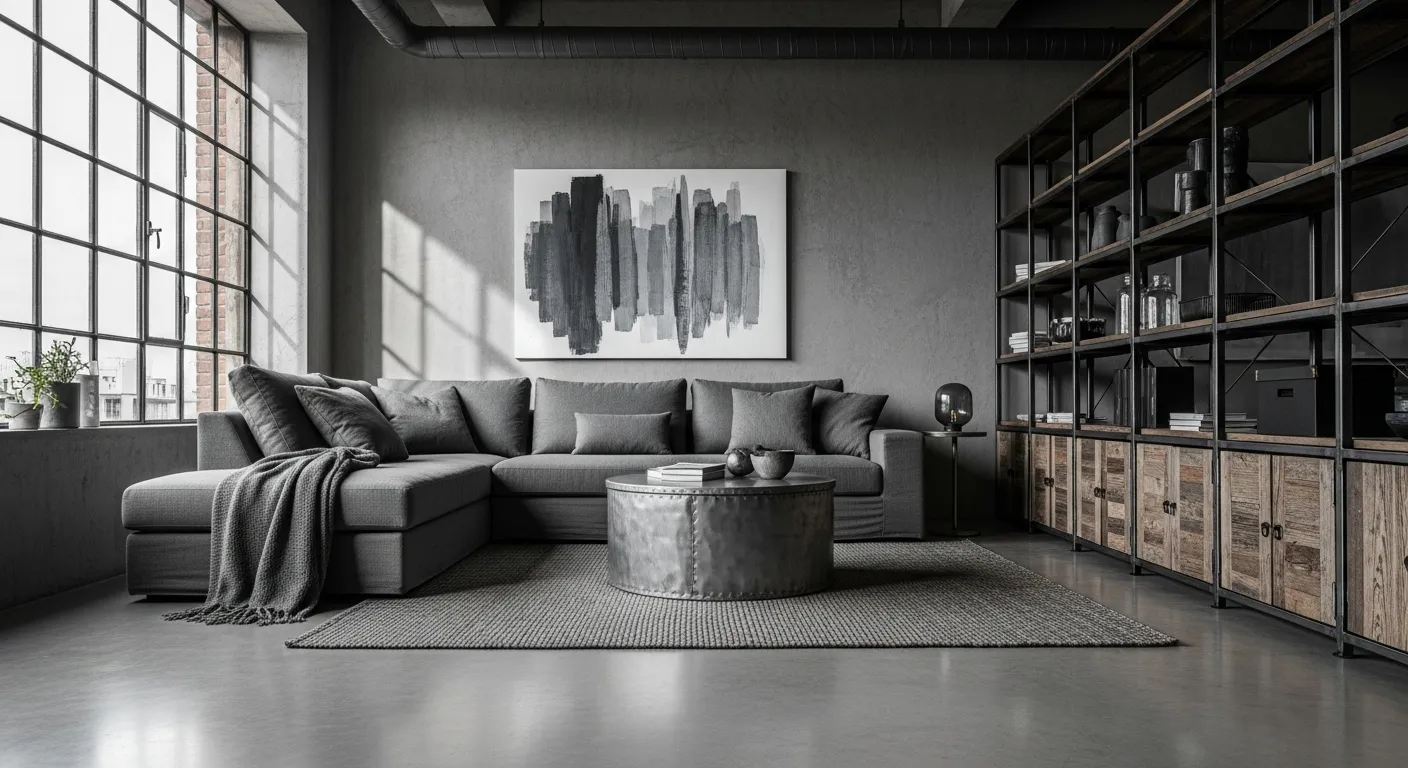
Notice in the image above how the concrete-like backdrop and charcoal seating feel strong—but not harsh—because the light is soft and the tones stay cohesive. That’s the sweet spot: you get the edge of Industrial decor without sacrificing ease.
Color Combinations & Palette Ideas
When clients ask me for Industrial Living Room ideas that feel livable, I steer them toward palettes that include gray plus one warm material and one dark outline. That combination keeps the room from feeling either sterile (too much gray) or chaotic (too many competing finishes).
Four reliable gray-industrial directions
1) Warm Industrial: Mid gray + cognac leather + warm oak + off-white. This is the easiest route to “calm, cool, collected.” Use black metal sparingly for definition.
2) High-Contrast Loft: Gray + crisp black + clean white. This feels graphic and modern. It works best when your room is naturally bright (large windows or strong daytime light).
3) Moody Lounge: Gray + charcoal + matte black with a deep accent (forest green or navy). Great for evening ambiance—just plan layered lighting so it doesn’t feel cave-like.
4) Soft Concrete Chic: Light gray + warm stone + subtle black accents. Think gallery vibes with industrial bones—especially good for smaller living rooms.
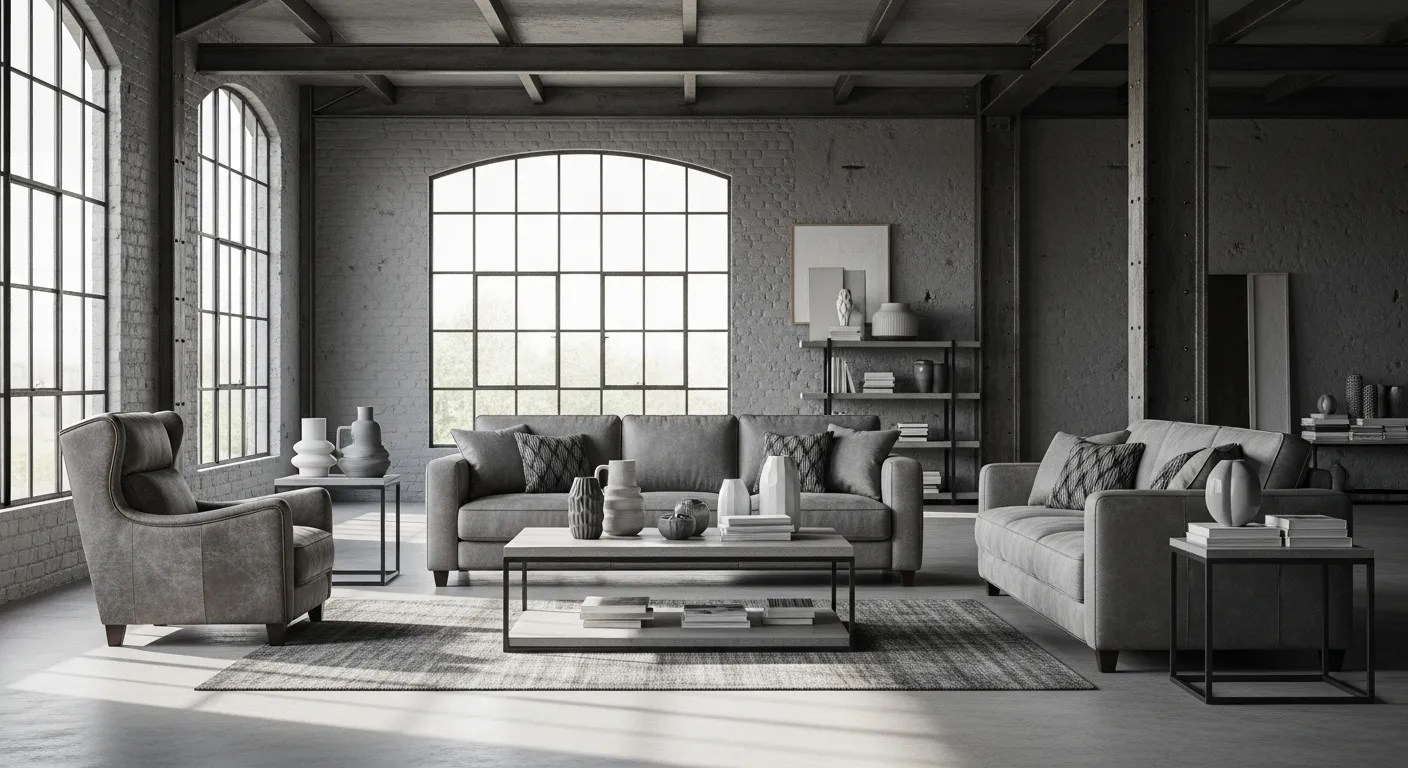
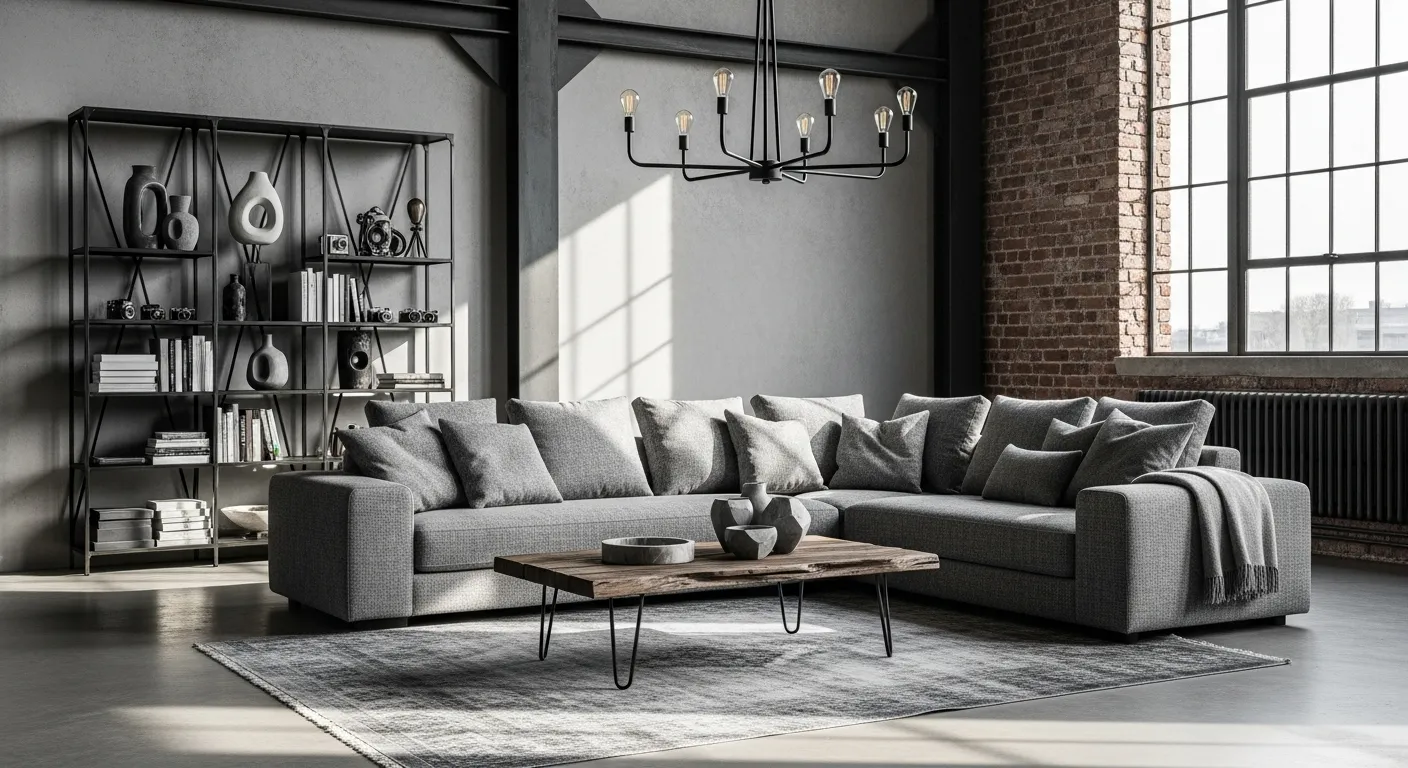
In the loft vignette above, the monochrome grays look intentional because the palette is disciplined and the materials do the work—metal + wood + upholstery. If you want a simple “rule,” use three grays (light/medium/dark), then add one warm element (wood or leather) to keep it human.
Essential Furniture & Decor Elements
The best Industrial Living Room ideas don’t look like a set. They look like you found the right pieces over time—each with a function and a little patina. Here’s what I prioritize when building an industrial-gray living room that works every day.
Start with the “workhorse” pieces
Sofa: Choose a low-profile shape in charcoal, heathered gray, or performance fabric. Budget for durability here—this is your daily landing pad. If you love contrast, a cognac leather chair next to a gray sofa is always a win.
Coffee table: Go for honest materials: reclaimed wood + black steel, concrete + metal, or even a vintage trunk if you want hidden storage. Industrial style loves visible structure (frames, bolts, sturdy legs).
Storage/shelving: A black metal shelving unit with wood shelves adds vertical lines and keeps the room feeling architectural. Mix closed baskets with a few open displays so it doesn’t become visual clutter.
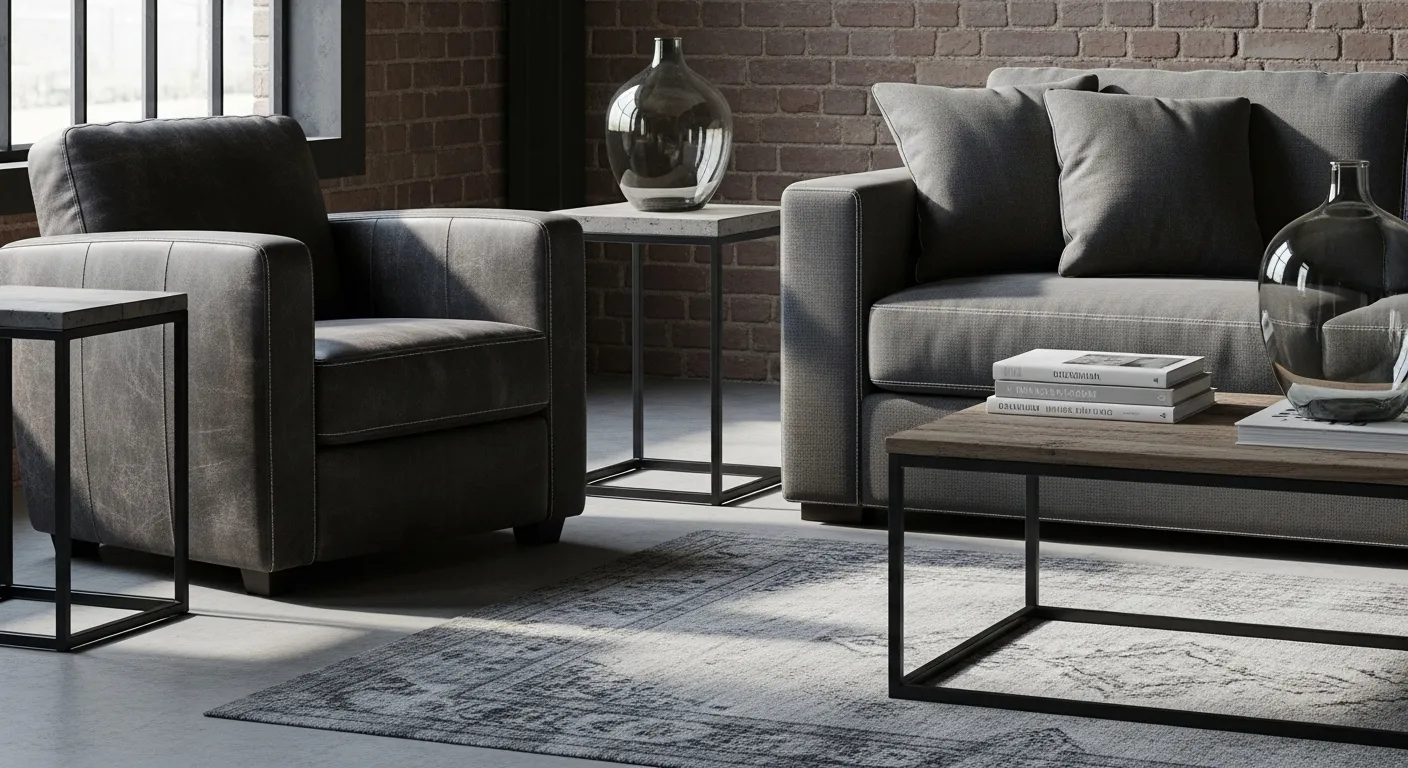
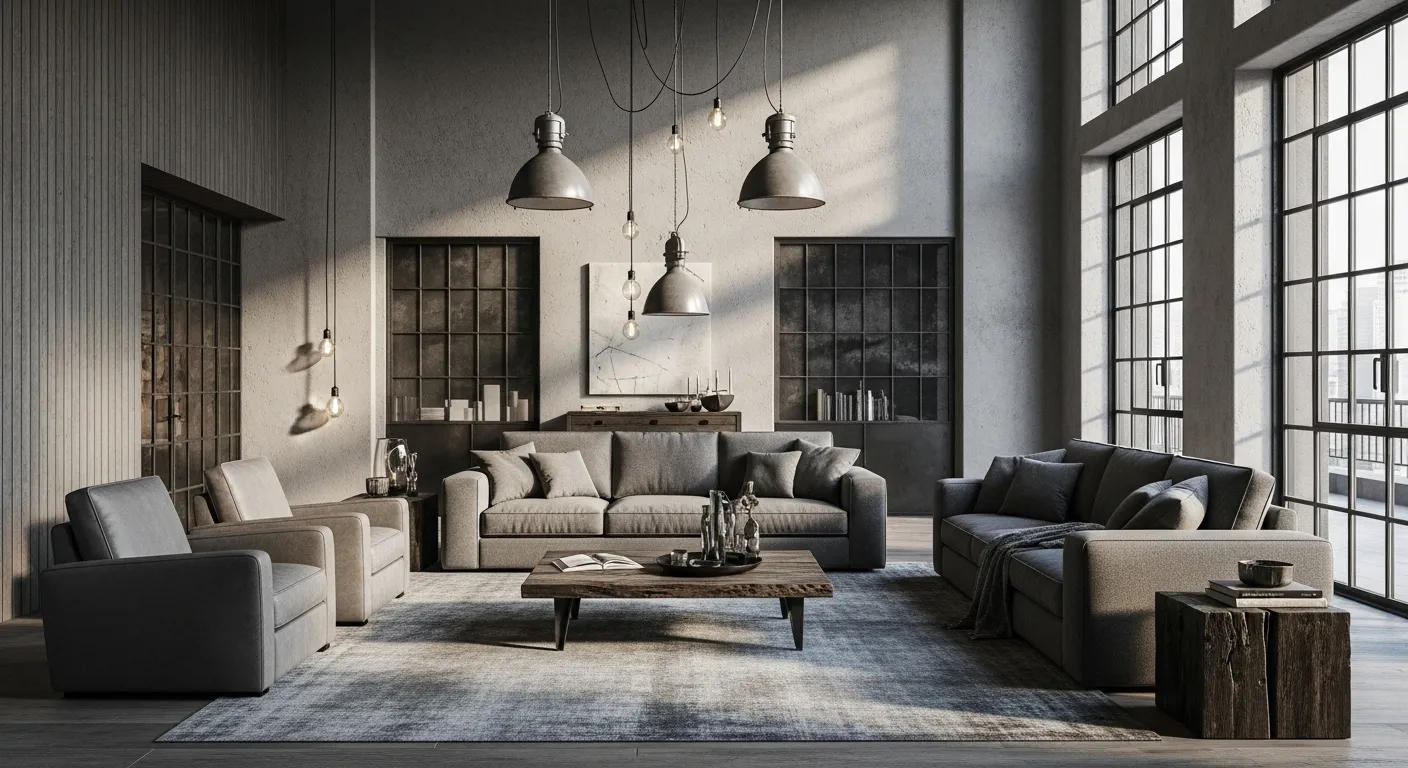
This seating moment shows what I mean: gray upholstery keeps things calm, while leather and black metal sharpen the industrial edge. Brick adds age and warmth—so the space feels collected, not cold.
Don’t treat lighting and textiles as afterthoughts
Lighting: Industrial rooms need warm bulbs (around 2700K). Add at least two sources: a floor lamp and a table lamp, or pendants plus a floor lamp. Harsh white light makes gray feel icy.
Textiles: Rugs and throws are what make industrial feel livable. Think vintage-style rugs, chunky knits, canvas pillows, and one contrasting “soft” texture (boucle or brushed cotton) to balance the metal and concrete cues.
Styling Tips & Budget Ideas
Industrial style is forgiving—in the best way. The goal isn’t perfection; it’s cohesion. When I style gray industrial spaces, I’m always repeating a few materials and then editing hard so the room has breathing space.
Five styling moves that always work
1) Layer hard + soft: Pair metal and concrete vibes with a plush rug and throws that actually get used. Gray looks richer when it’s surrounded by tactile textures.
2) Repeat black metal three times: One black accent can look accidental. Three looks designed. Try: lamp base, picture frames, and table legs.
3) Add one warm “bridge” element: Wood tray, oak side table, or leather pillow—just one warm note can change the temperature of the whole palette.
4) Style surfaces, don’t stuff them: Use the rule of three on a coffee table: books + sculptural object + something organic (plant/branches).
5) Greenery is non-negotiable: Plants soften industrial edges and make gray feel alive. If you can only do one, choose a taller floor plant for height and presence.
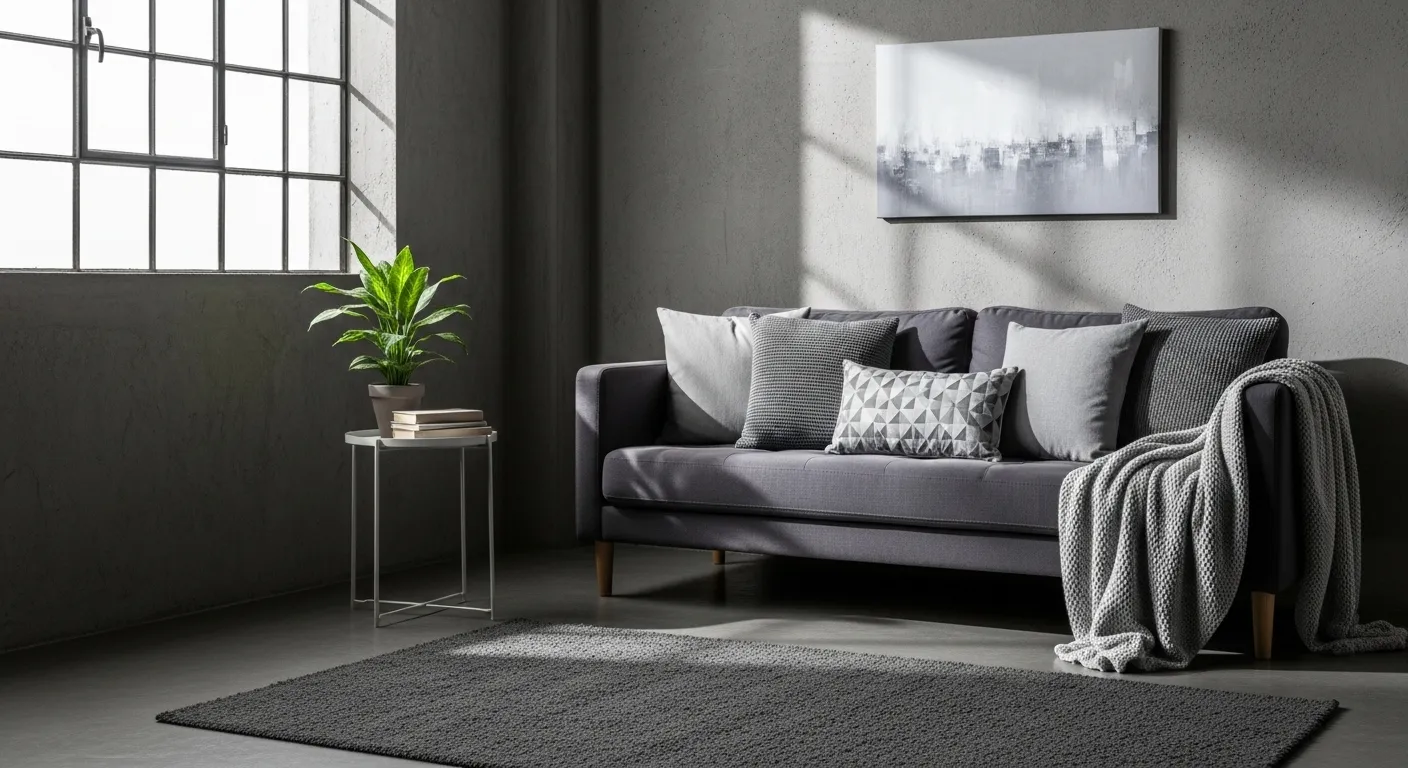
The cozy corner above is a great example of everyday industrial: the concrete wall reads cool, but the throws and plant keep it approachable.
Budget ideas that look high-end
Spray paint: Matte black spray paint can unify mismatched frames, lamp bases, and even small stools ($8–$12 per can).
Thrift for patina: Look for vintage metal carts, stools, toolboxes, or lockers. They often cost less than new “industrial” pieces and look more authentic.
DIY pipe shelf: Wood plank + black pipe brackets creates instant industrial architecture. Expect $35–$85 depending on wood and length.
How to Recreate This Look
If you want Industrial Living Room ideas that translate from inspiration to your actual home, follow this order. It keeps you from overspending on decor before the foundation is right.
- Pick your main gray anchor. Decide what goes gray first: sofa, walls, or rug. For renters, start with a gray rug; for homeowners, paint is often the fastest transformation.
- Choose two industrial materials to repeat. My go-to pair is black metal + warm wood. Repeat them across at least three items (table, shelving, frames) so the room feels intentional.
- Lock in lighting (warm + layered). Add a floor lamp and a table lamp, or pendants plus a lamp. Put at least one light on a dimmer plug for evening softness.
- Soften with textiles. Add a rug with subtle warmth, a throw, and 3–5 pillows in mixed textures (canvas + knit + one “soft” like boucle).
- Finish with art + one organic element. Choose large-scale black-and-white photography or architectural sketches, then add a plant or branches to keep it from feeling too mechanical.
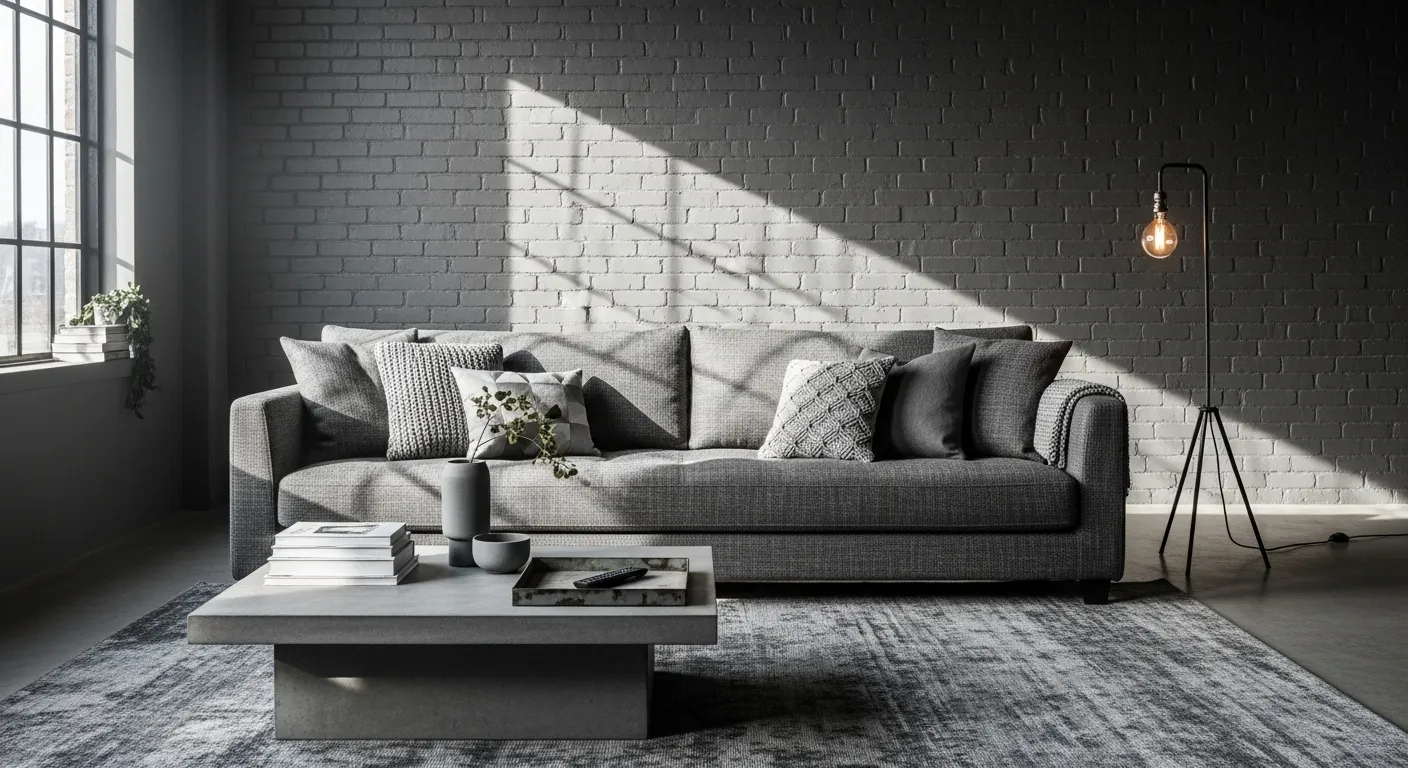
That brick-and-concrete pairing is a classic industrial move: it’s strong, but it needs pillows and warm light to feel inviting. Don’t skip those “softeners.”
Budget
Low Budget: $450–$1,050
- Rug (washable/vintage-style): $120–$250
- Lighting updates (2 lamps + warm bulbs): $90–$220
- DIY/Thrift coffee table or trunk: $80–$220
- Textiles (pillows/throw/curtains): $90–$200
- Spray paint + small hardware/decor: $20–$60
Mid Budget: $1,600–$3,200
- Gray sofa or sectional (performance fabric): $900–$1,800
- Coffee table (wood/metal or concrete): $250–$650
- Rug (8×10 or 9×12): $250–$650
- Lighting (statement pendant + lamp + bulbs): $180–$500
- Shelving/storage (metal + wood): $200–$600
FAQ
Q1: Will a gray industrial living room feel cold?
Not if you layer warm light (2700K bulbs), a warm-toned rug, and at least one wood or leather element. Gray needs “temperature” from materials.
Q2: What’s the easiest industrial upgrade without renovating?
Lighting and hardware. Swap in a matte-black floor lamp or pendant, add black frames, and introduce a wood-and-metal table—instant industrial cues.
Q3: How do I keep industrial style from looking cluttered?
Use fewer, larger decor items (one big art piece, one substantial plant) and keep surfaces edited. Industrial looks best with breathing room.
Q4: Can I mix industrial with cozy style?
Absolutely. That’s often the most livable version. Start with industrial structure (metal/brick/concrete cues) and add cozy textiles and warm wood.
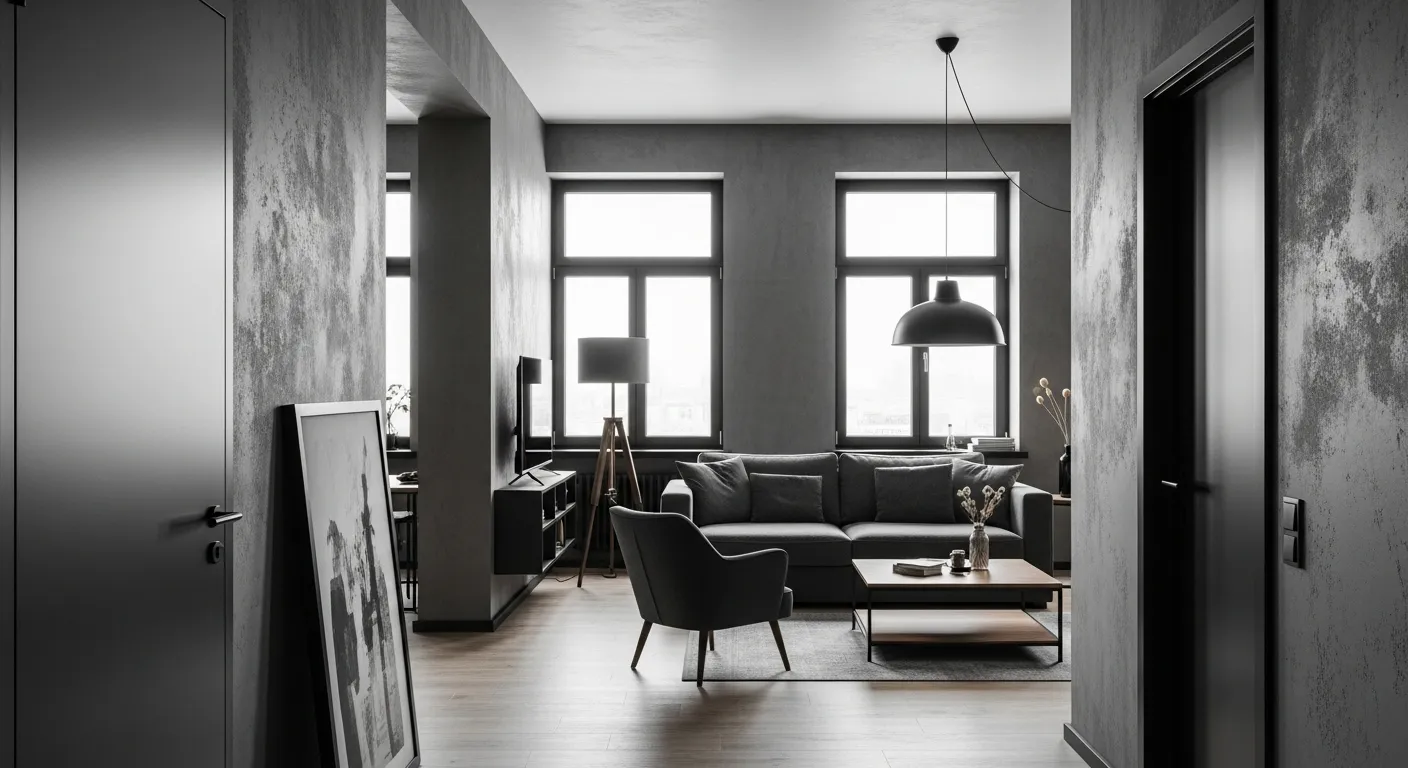
Use that moody look above as your checkpoint: if your room starts to feel too dark, lighten the rug and add one more warm light source—industrial should feel intentional, not heavy.
How to Recreate This Look
- Pick your main gray anchor. Decide what goes gray first: sofa, walls, or rug.
- Repeat two industrial materials. Black metal + warm wood is the easiest pair to repeat across the room.
- Layer warm lighting. Add at least two sources (lamp + lamp, or pendant + lamp) with 2700K bulbs.
- Add textiles for comfort. Rug + throw + mixed-texture pillows keep the gray from feeling flat.
- Finish with art + greenery. Large-scale black-and-white art plus one substantial plant makes the room feel complete.
Budget
Low Budget: $450–$1,050 (rug $120–$250, lighting $90–$220, table $80–$220, textiles $90–$200, paint/spray/decor $20–$60)
Mid Budget: $1,600–$3,200 (sofa $900–$1,800, coffee table $250–$650, rug $250–$650, lighting $180–$500, shelving $200–$600)
FAQ
Is gray too cold for industrial? Not with warm bulbs, wood/leather, and layered textiles.
Best quick industrial update? Matte-black lighting and frames plus one wood-and-metal table.
How do I avoid clutter? Fewer, larger pieces and edited surfaces.
Can industrial still be cozy? Yes—industrial structure + soft textiles is the most livable mix.
Final Thoughts
The reason I keep coming back to gray is simple: it makes industrial style feel easy to live with. With the right undertone, warm lighting, and a few repeated materials, a Gray Living Room can read calm and elevated—never sterile. Use these Industrial Living Room ideas as a checklist: start with one gray anchor, repeat black metal and wood, soften with textiles, and finish with art and greenery. That’s how you get the warehouse-inspired look while still creating a space that feels like home.