
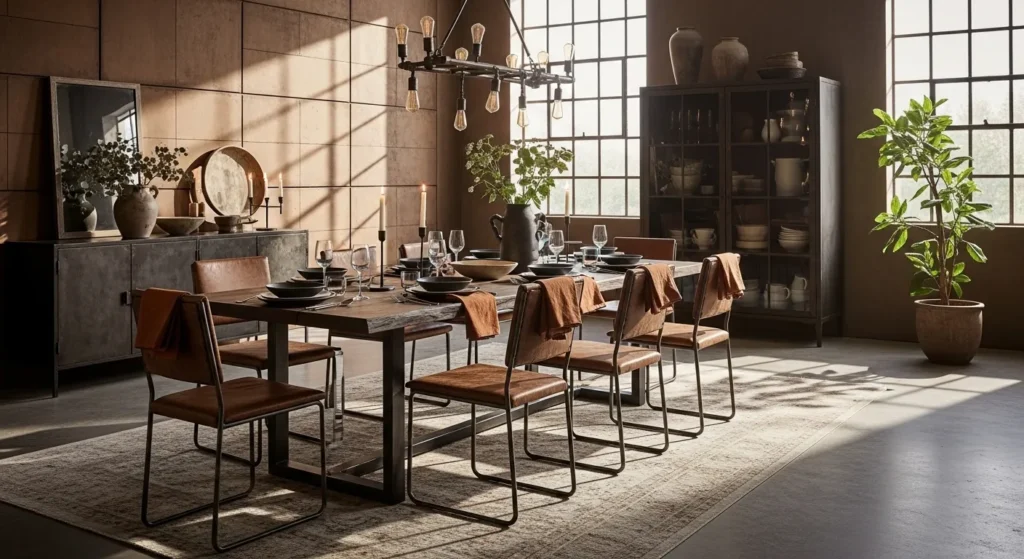
If you love the edge of industrial decor but want it to feel inviting (not cold), warm brown is your secret weapon. In this guide to Industrial Dining Room ideas, I’m sharing the exact design moves I use to soften brick, steel, and factory lighting—so your dining room feels grounded, cozy, and everyday-livable. We’ll talk color psychology, smart palettes, the furniture that matters most, and step-by-step ways to recreate the look without overbuying.
Color Palette
Sandstone Tan#B89B7A
Walnut Brown#5D4A3C
Charcoal Iron#2E2A27
Espresso Bark#42291B
Cocoa Beige#A0846A
Oat Cream#E9D3B8
Industrial Dining Room ideas: Warm Brown Industrial Style Done Right
The Psychology of Warm Brown in Your Dining Room
Warm brown is the reason a tough, urban space can still feel like home. In industrial interiors—where you’re working with brick, black metal, concrete, and oversized windows—brown acts like a “bridge” between hard finishes and human comfort. I use it constantly when a client wants an industrial look but worries it will feel too stark for everyday dinners.
In a Warm Brown Dining Room, the tone reads as grounded and familiar because it’s associated with wood, leather, and earth. It also makes large-scale industrial elements (think: steel pendants and factory-style windows) feel intentional rather than harsh. The key is to keep brown warm—not muddy—by pairing it with creamy neutrals and controlled black accents.
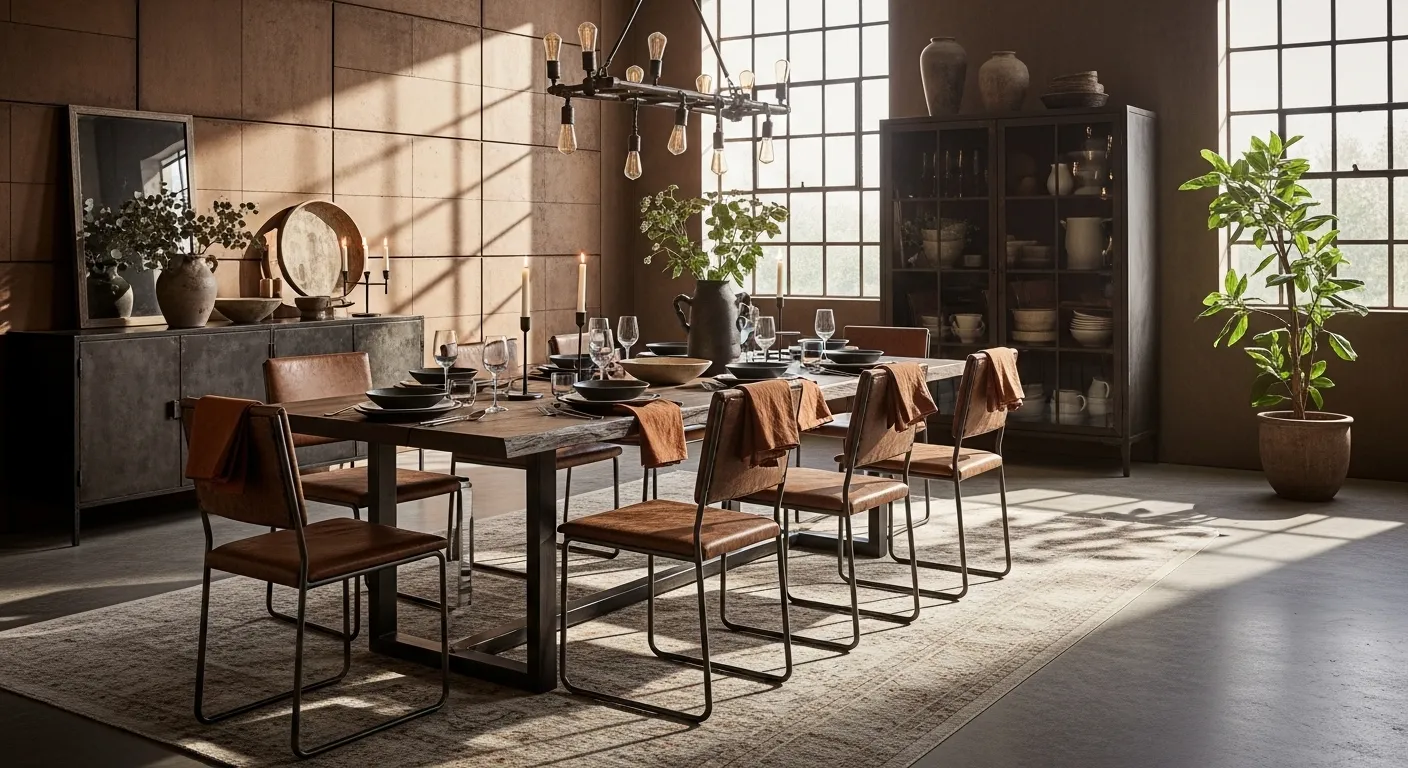
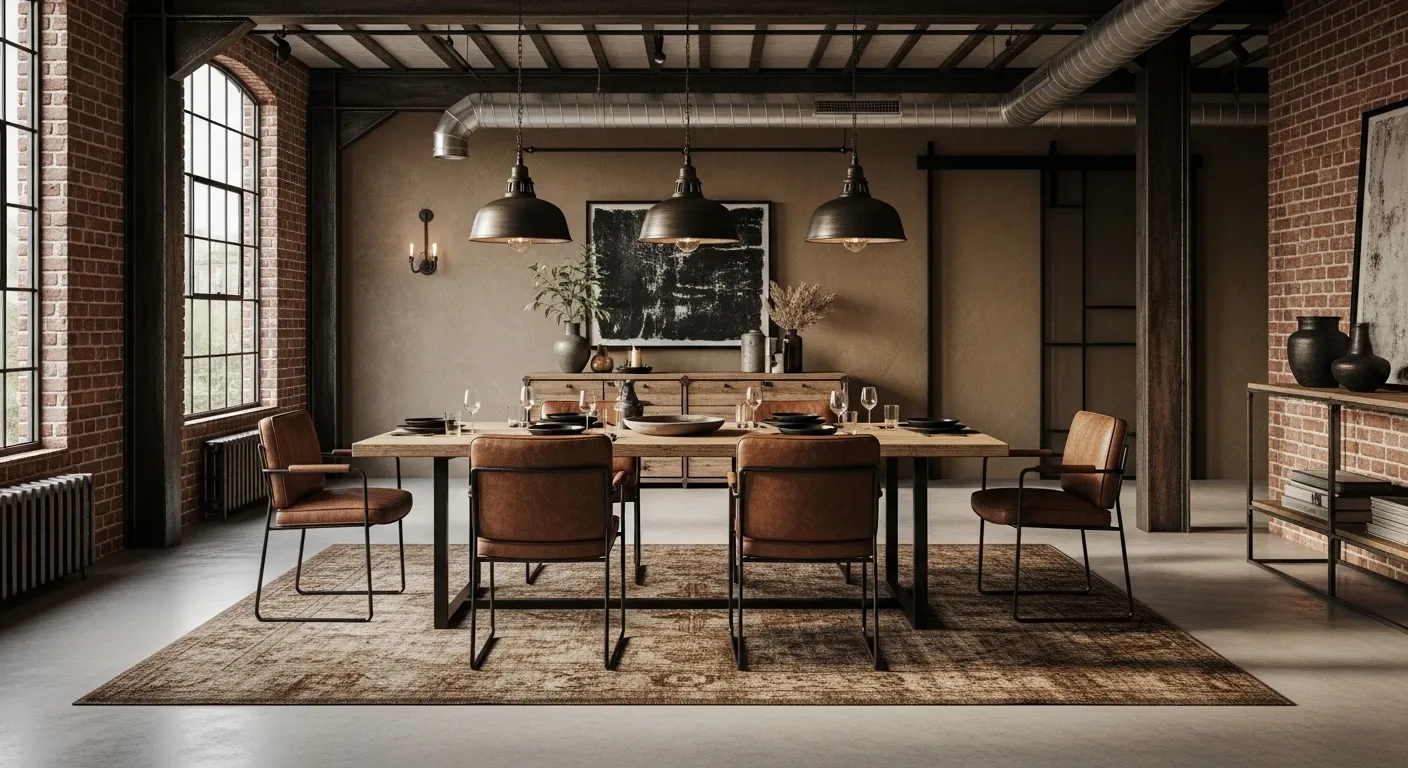
Notice how the long wood table and leather seating visually “warm up” the big window wall in the image above. That’s the psychological win: the room still feels airy and industrial, but the brown creates a welcoming center of gravity—exactly what you want in a dining space.
When warm brown works best
Warm brown is especially effective in open-concept homes and lofts because it helps define the dining area without adding visual clutter. It’s also forgiving: scuffs, crumbs, and daily wear blend in better than with high-contrast white or glossy black finishes.
How to avoid a heavy look
Balance is everything. If your table is dark, keep walls lighter; if your brick is dominant, choose mid-tone wood; if your lighting is black metal, add a soft linen runner or creamy artwork matting to break up the contrast.
Color Combinations & Palette Ideas
Most Industrial Dining Room ideas rely on a simple formula: warm wood + black metal + a neutral buffer. Where people get stuck is either going too gray (cold) or too brown (flat). I prefer a three-layer palette that keeps industrial decor crisp while still feeling warm and livable.
Start with warm brown as the anchor. Use it in your biggest “touch” surfaces: the tabletop, chair seats, or a leather banquette. Next, add charcoal/black in thin strokes—lighting, chair frames, hardware—so it reads industrial without dominating the room. Finally, bring in oat/cream neutrals through linens, rugs, art mats, or even simple ceramic dishes to keep everything bright.
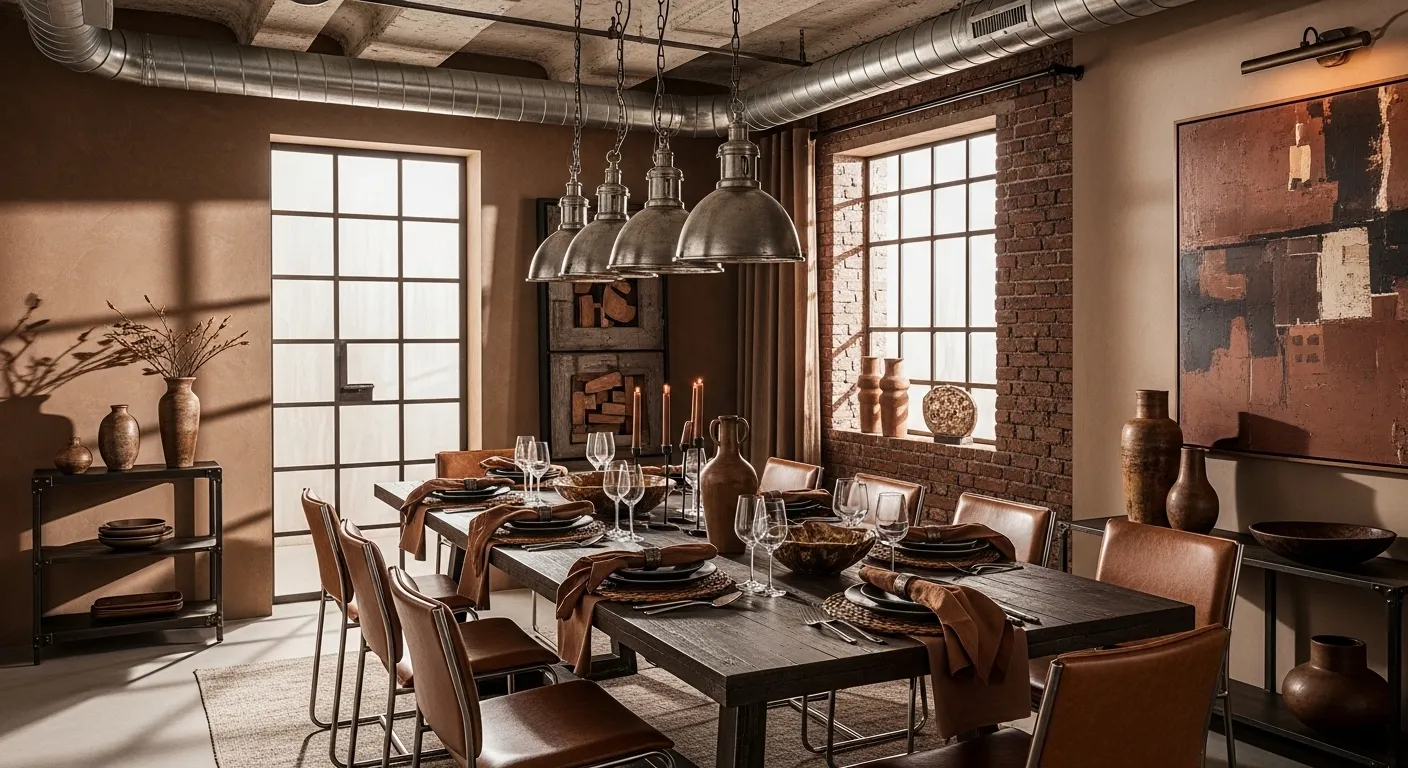
The vignette above is a great example of controlled contrast: warm brown textiles and leather soften the black metal pendants, while brick adds texture without stealing the spotlight.
3 designer-approved combo recipes
- Classic Warm Industrial: walnut + matte black + cream (safe, timeless, works with brick)
- Modern Loft: caramel leather + charcoal + bright white (higher contrast, more contemporary)
- Rustic Factory: espresso wood + aged brass + oat (warmer, slightly vintage)
Where to place each color
Use your warm brown on the table or seating, charcoal on lighting and frames, and creams on rugs/linens/walls. This keeps the eye moving and prevents the “all-brown everything” effect that can make the room feel dim.
Essential Furniture & Decor Elements
If you want Industrial Dining Room ideas that look finished (not thrown together), invest in the pieces that carry the style: the table, the seating, and the lighting. Everything else is supporting cast.
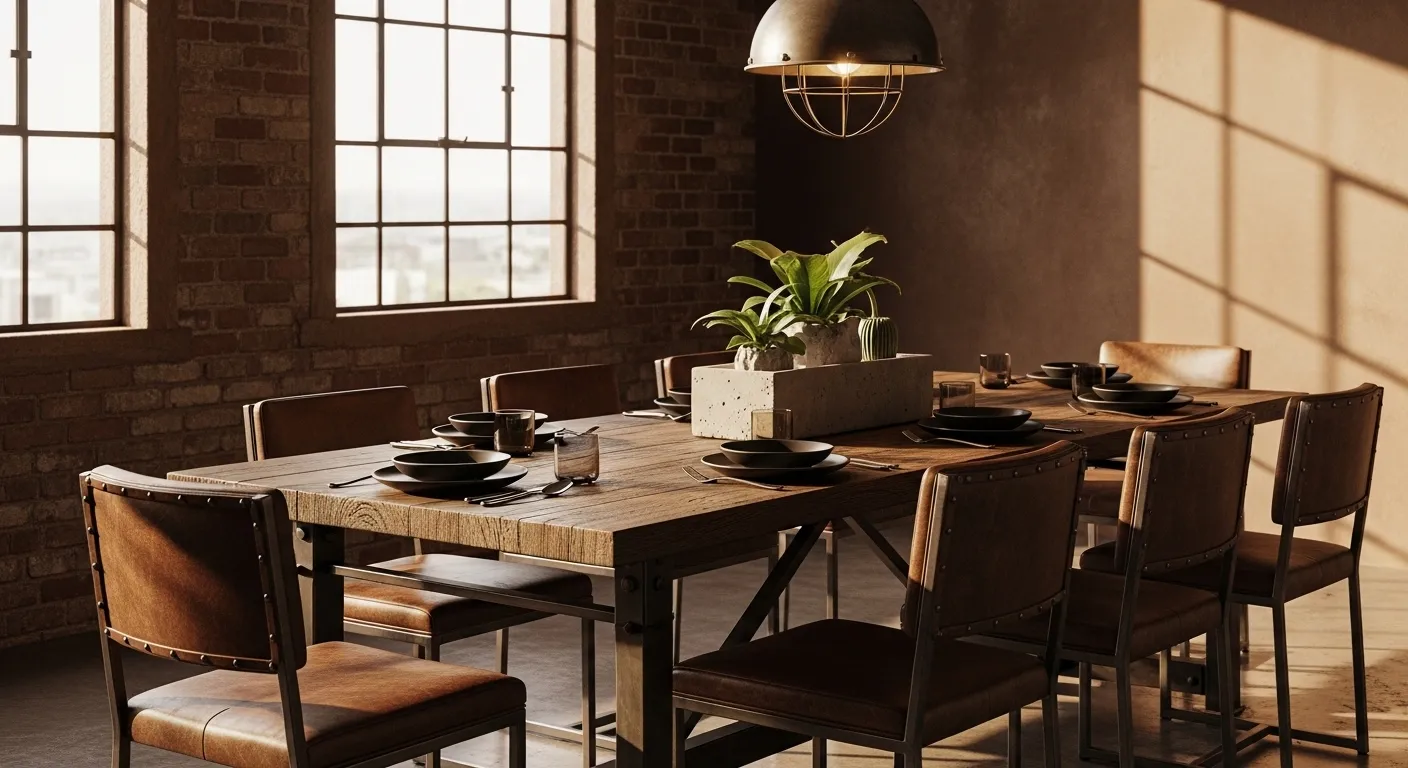
1) The table: your industrial “anchor”
Choose a hefty wood table with visible grain and a matte or satin finish (high gloss can skew modern). I prefer rectangular tables for industrial rooms because they echo the linear feel of beams, brick courses, and factory windows. If you’re tight on space, a narrower top (around 34–36″) still feels substantial if the base is solid.
What to look for: plank-style top, thick apron, sturdy legs or trestle base, and a finish that doesn’t read orange.
2) Seating: leather, metal, or a mix
Leather is the fastest path to warmth. Caramel or saddle tones create that inviting Warm Brown Dining Room feel without adding visual clutter. Mixed seating also works beautifully: leather end chairs + simple black metal side chairs can look collected and intentional.
Comfort detail: If you host longer meals, prioritize a curved back and a seat height around 18″. Industrial style doesn’t have to mean uncomfortable.
3) Lighting: black metal + warm bulbs
Industrial decor practically lives or dies by lighting. A black metal chandelier or a row of pendants instantly signals the style, but the bulb temperature matters. Use warm bulbs (2700K) so brown tones glow rather than dull out.
4) The “texture trio” that makes it feel designed
- Brick or brick-look texture (real, veneer, or wallpaper)
- Wood grain (table, console, or shelves)
- Matte metal (lighting, chair frames, art frames)
Styling Tips & Budget Ideas
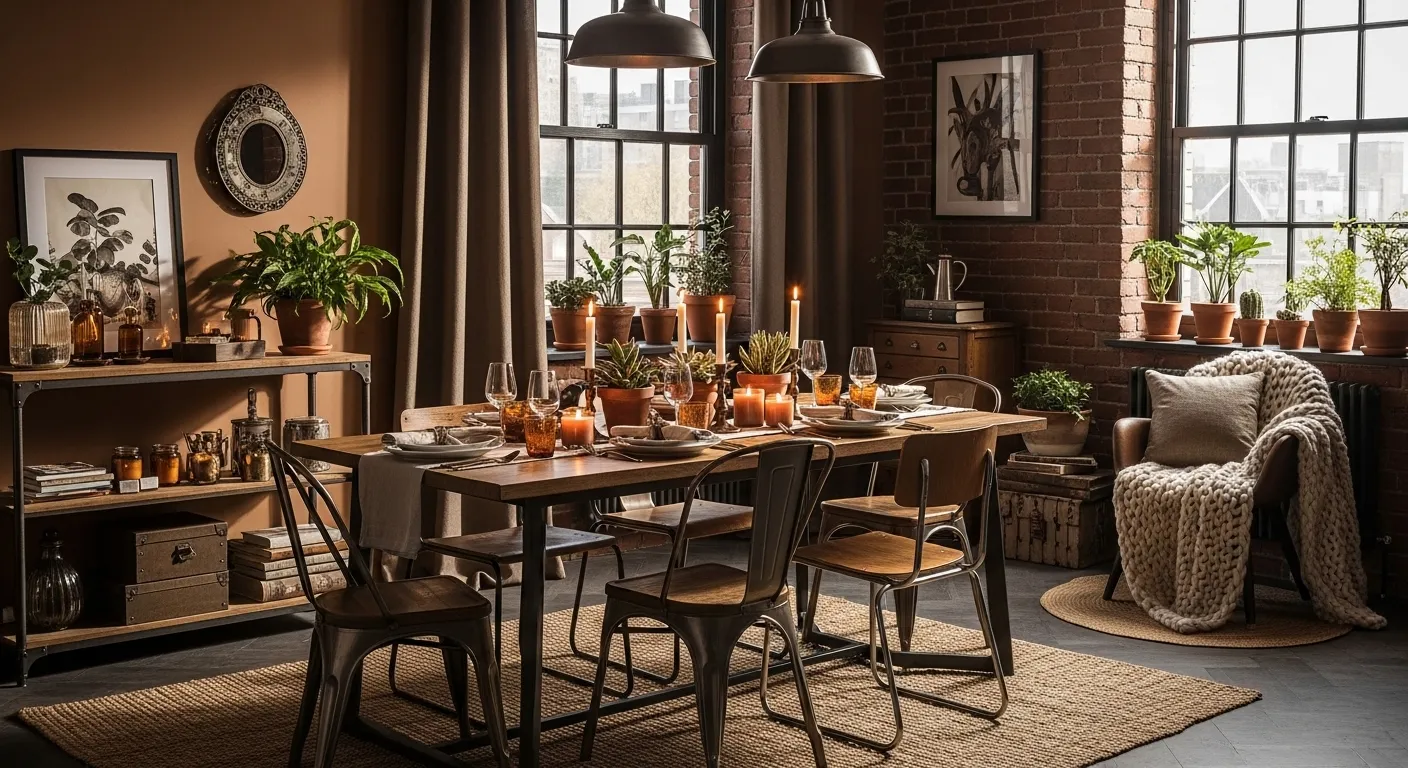
Styling is where industrial rooms become personal. The goal is to keep surfaces edited while adding softness in the right places—linens, greenery, and a few warm-toned accessories. I style industrial dining rooms like a great outfit: structured base, then a couple of cozy layers.
Easy styling moves that always work
- Centerpiece rule of three: one low tray + one natural element (greenery/branches) + one candle cluster
- Runner over placemats: a warm brown or oat runner softens wood and adds polish fast
- Art that matches the “material story”: black frames, cream mats, and photography/abstracts with brick-and-metal tones
- Rug for comfort: use a low-pile vintage-style rug in cocoa/cream to reduce echo and add warmth
Budget ideas (without making it look cheap)
If you need to save, save on the accessories—not the scale pieces. A budget pendant can work if it’s the right size and finish. But a too-small table or flimsy chairs will undercut the whole industrial decor feel.
- Swap in thrifted wood: refinish a solid wood tabletop with a warm stain and matte topcoat
- Go faux on greenery: invest in one high-quality faux stem bundle instead of multiple cheap ones
- Use plug-in sconces: they add factory character without electrical work
How to Recreate This Look
Here’s the exact sequence I follow when building Industrial Dining Room ideas around warm brown. The order matters—when you start with scale and lighting, the room instantly reads “industrial,” and then the warm layers make it livable.
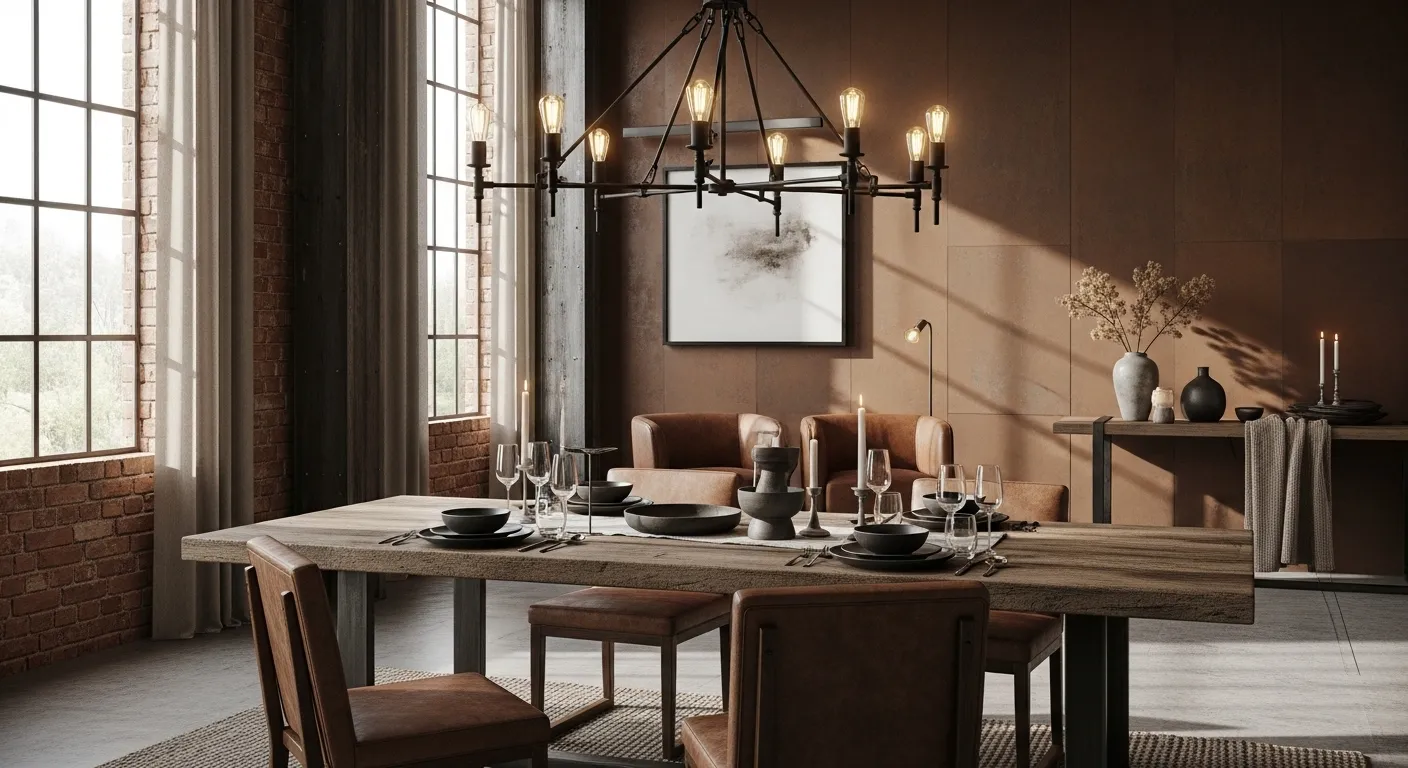
- Choose your anchor wood tone. Pick one warm brown (walnut/caramel/espresso) and repeat it 2–3 times: table + chairs + maybe a sideboard.
- Install statement lighting in matte black. Center it over the table and size it properly (about 1/2 to 2/3 the table width). Use 2700K bulbs.
- Add one major texture. Exposed brick is ideal, but brick veneer, limewash, or concrete-look paint can substitute.
- Balance with creamy neutrals. Add an oat runner, a light rug, or cream wall art mats to keep the room from feeling heavy.
- Layer industrial details. Think: metal chair frames, black picture frames, simple hardware, and minimal decor.
- Finish with “warm life.” Greenery, candles, and a ceramic bowl of fruit make it feel like a real home, not a set.
Budget
Low Budget: $450–$1,200
- Secondhand wood table or DIY refinish: $150–$450
- 4–6 mixed chairs (metal + faux leather): $180–$420
- Matte black pendant/chandelier (budget brand): $60–$180
- Runner + candles + greenery: $40–$150
- Rug (low-pile, sale): $20–$250
Mid Budget: $1,400–$3,200
- Solid wood dining table: $700–$1,600
- 4–8 genuine or high-grade faux leather chairs: $500–$1,200
- Quality black metal lighting + warm bulbs: $180–$650
- Rug (wool blend/vintage style): $250–$650
- Art + frames + styling pieces: $120–$400

FAQ
1) How do I keep industrial decor from feeling cold?
Use warm brown wood/leather in the biggest pieces, warm bulbs (2700K), and at least one soft textile (runner or rug).
2) Do I have to have exposed brick?
No. Choose one “industrial texture” instead: brick-look panel, concrete paint finish, or even a large-scale photo/artwork that mimics masonry.
3) What’s the best table shape for an industrial dining room?
Rectangular tables usually look best because they match the linear architecture. Round can work in small rooms—just keep the base chunky.
4) Can I mix black metal with brass?
Yes—keep brass as a small accent (10% or less), like candlesticks or hardware, so black remains the primary industrial cue.
How to Recreate This Look
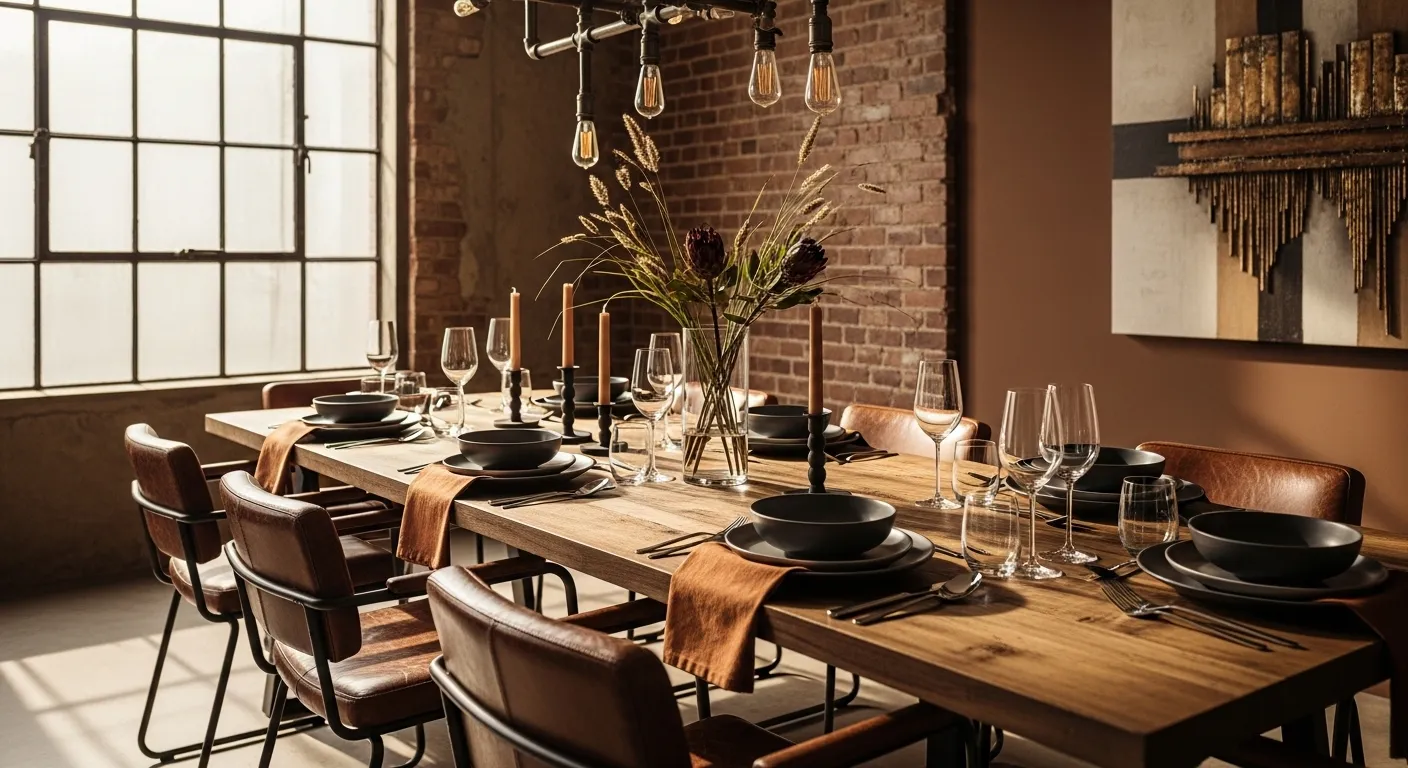
- Choose your anchor wood tone. Pick one warm brown and repeat it 2–3 times (table + seating + sideboard).
- Install statement lighting in matte black. Size it to 1/2–2/3 the table width; use 2700K bulbs.
- Add one major texture. Brick, brick veneer, or a concrete-look finish.
- Balance with creamy neutrals. Runner, rug, and art mats in oat/cream.
- Layer industrial details. Metal frames, simple hardware, minimal accessories.
- Finish with warmth. Greenery + candles + a natural bowl/tray centerpiece.
Budget
Low Budget: $450–$1,200
- Secondhand wood table or DIY refinish: $150–$450
- 4–6 mixed chairs (metal + faux leather): $180–$420
- Matte black pendant/chandelier: $60–$180
- Runner + candles + greenery: $40–$150
- Rug (sale): $20–$250
Mid Budget: $1,400–$3,200
- Solid wood dining table: $700–$1,600
- Leather/high-grade faux leather chairs: $500–$1,200
- Lighting + bulbs: $180–$650
- Rug (better quality): $250–$650
- Art + frames + styling: $120–$400
FAQ
1) How do I keep industrial decor from feeling cold?
Use warm brown wood/leather, warm bulbs, and at least one soft textile.
2) Do I have to have exposed brick?
No—use one industrial texture alternative like veneer or concrete-look paint.
3) What’s the best table shape?
Rectangular is most common; round works if the base is chunky.
4) Can I mix black metal with brass?
Yes—keep brass minimal so black stays dominant.
Final Thoughts
The best Industrial Dining Room ideas don’t just look edgy—they feel comfortable enough for everyday life. When you build the room around warm brown wood and leather, then sharpen it with matte black lighting and brick texture, you get that perfect balance: factory-inspired structure with real-home warmth. If you take only one step from this guide, let it be this: pick your warm brown anchor first, then use industrial decor details as the finishing strokes.