
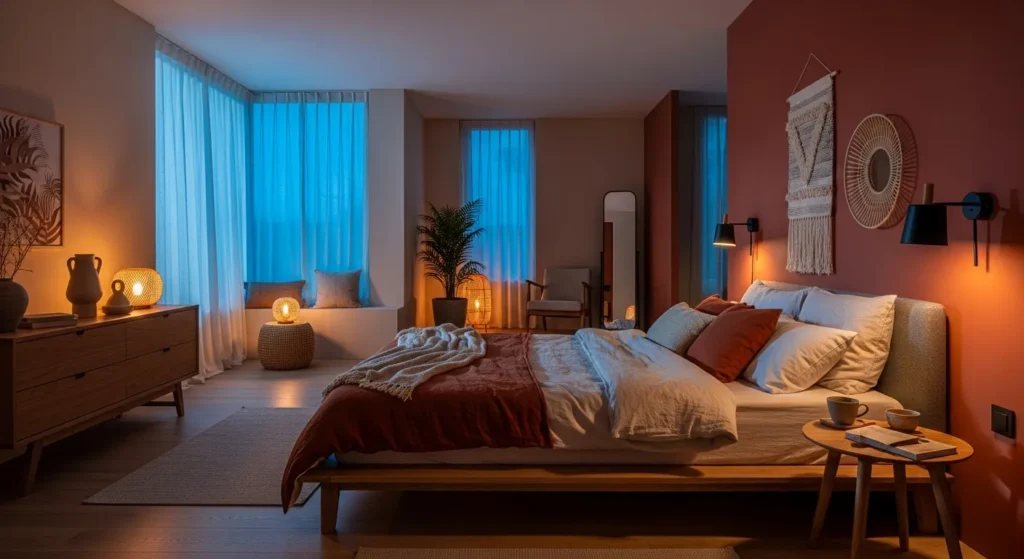

Hello, beautiful friends! Welcome back to the blog. If you’ve been scrolling through Pinterest lately, you’ve probably noticed that we are all collectively obsessed with creating spaces that feel like a giant, warm hug. Well, grab your favorite mug of matcha or cozy up with a cup of coffee, because today we are diving into a design trend that has completely stolen my heart.
When searching for the perfect Japandi Bedroom ideas, we aren’t just talking about any standard, ultra-neutral space. We are spicing things up for everyday living with one of the most soul-soothing, grounding colors on the planet: Rust (specifically, that gorgeous, earthy hex code #B7410E).
Japandi style—a flawless mashup of Japanese minimalism and Scandinavian functionality—usually relies heavily on cool whites and pale woods. By injecting a rich, baked terracotta-rust tone, you transform a potentially sterile room into an everyday sanctuary that feels effortlessly warm, lived-in, and passionately zen. Whether you’re starting from scratch or just looking for a weekend design refresh, I’m going to show you exactly how to weave this stunning shade into your personal oasis.
#9B4A31
#E5D9C5
#F4F1EA
#B75D46
#F4EFEA
#D4C4B7
The Psychology of Rust in Your Bedroom
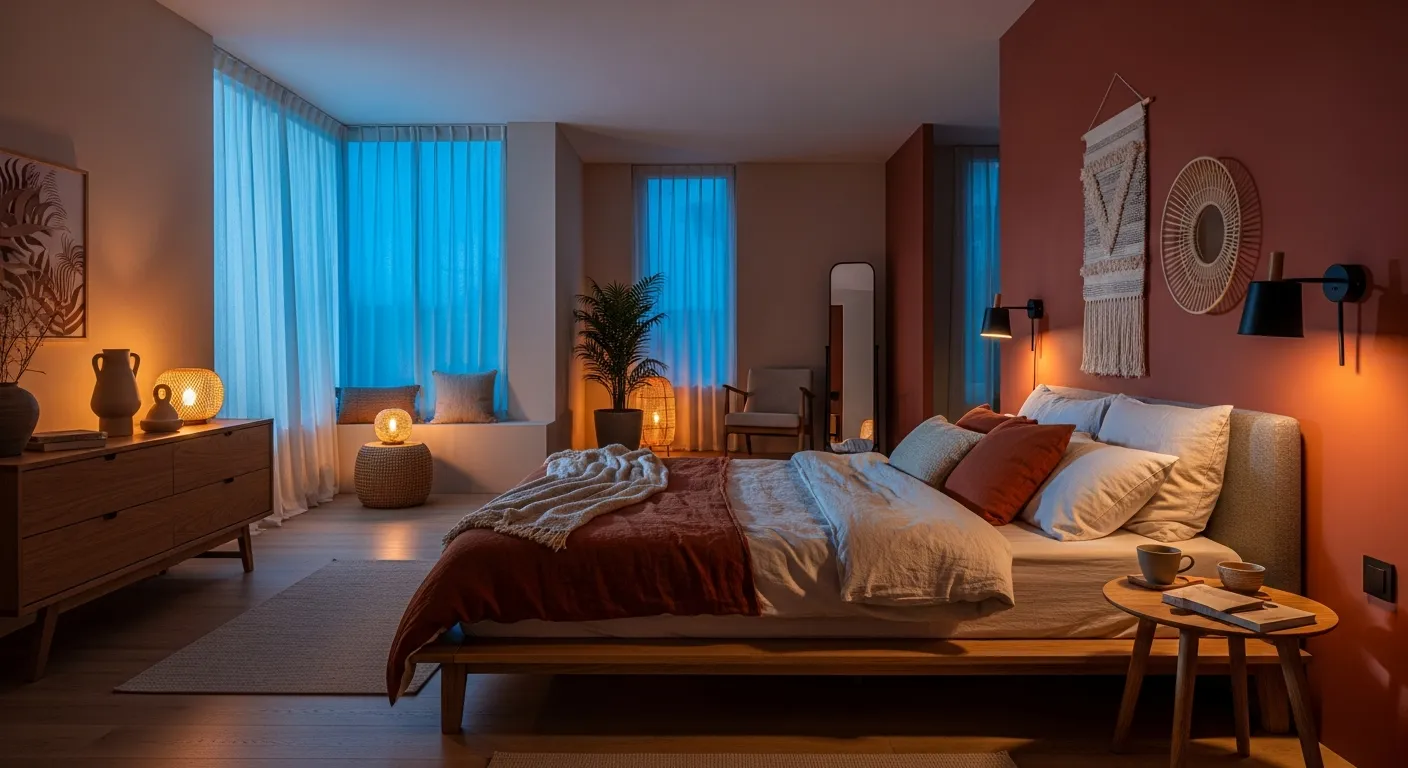
There is a profound psychological reason why we are drawn to earth tones, particularly rich rust and terracotta. In color psychology, rust is inherently stabilizing. It evokes the feeling of natural clay, autumn leaves, and baking earth. When applied to a bedroom setting, rust acts as a visual anchor. It wraps you in a comforting embrace without overwhelming your senses the way a bright, primary red might.
By combining this deep, grounding color with the airy, un-fussy ethos of Japanese and Scandinavian design, you achieve a harmonious balance. The Scandi concept of ‘Hygge’ (coziness) meets the Japanese philosophy of ‘Wabi-Sabi’ (finding beauty in imperfection). Rust serves as the bridge between these two worlds, bringing a subtle, organic energy to a room that otherwise relies heavily on stark whites and pale woods.
Essential Furniture & Decor Elements for Japandi Bedroom Ideas
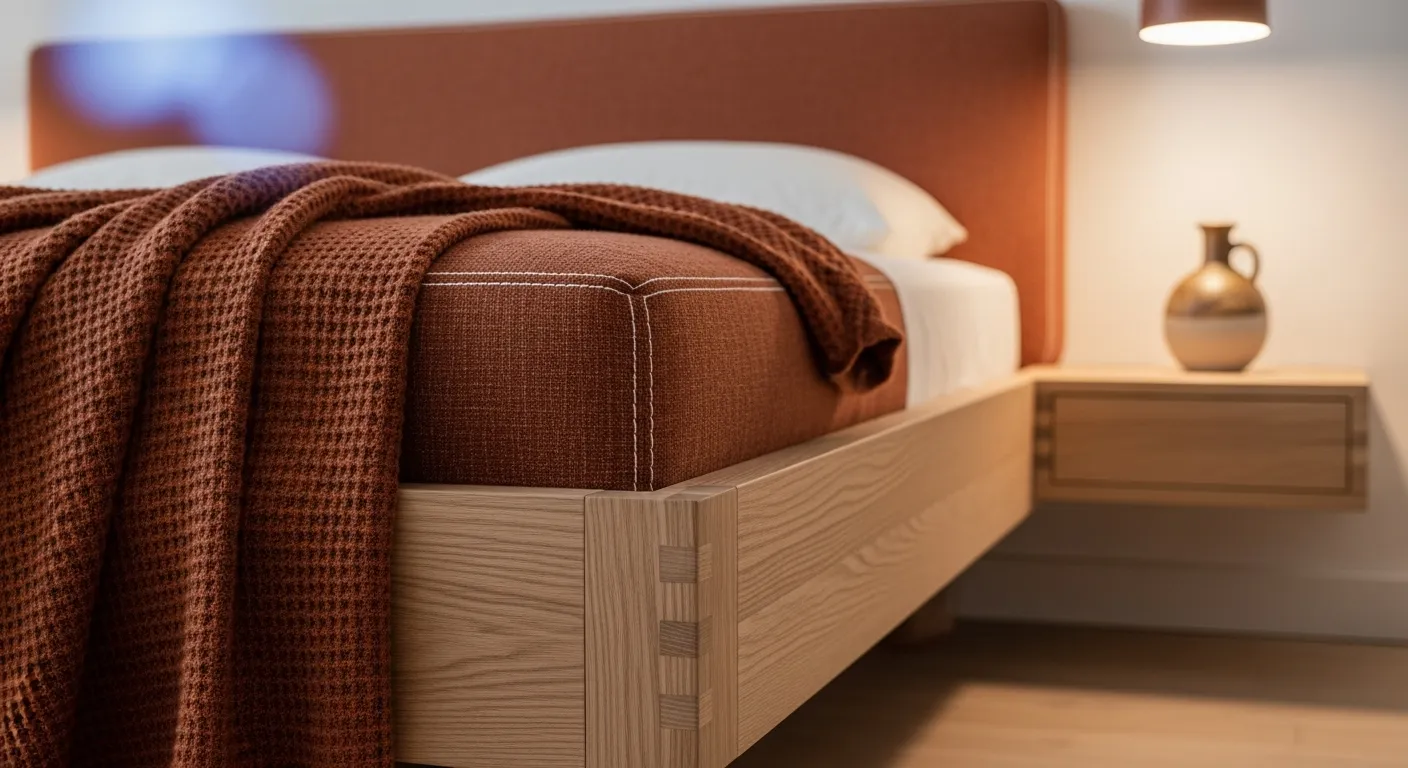
To truly nail this aesthetic, the furniture needs to speak the language of intentional simplicity. Japandi design rejects clutter and ornate detailing in favor of clean lines, high-quality craftsmanship, and purpose. Here are the core furniture and decor elements you need:
- Low-Profile Platform Beds: Drawing directly from traditional Japanese tatami rooms, a bed that sits close to the ground instantly creates a grounded, zen atmosphere.
- Natural Wood Tones: Think light oak, pale ash, or warm walnut. The grain of the wood should be visible, celebrating the material’s natural imperfections.
- Organic Shapes: Break up the straight, modern lines with curved bedside tables, round paper lanterns, or asymmetrical mirrors.
- Tactile Textiles: Crisp cottons, crumpled stonewashed linens, and chunky wool throws are essential for building layers of comfort.
Color Combinations & Palette Ideas
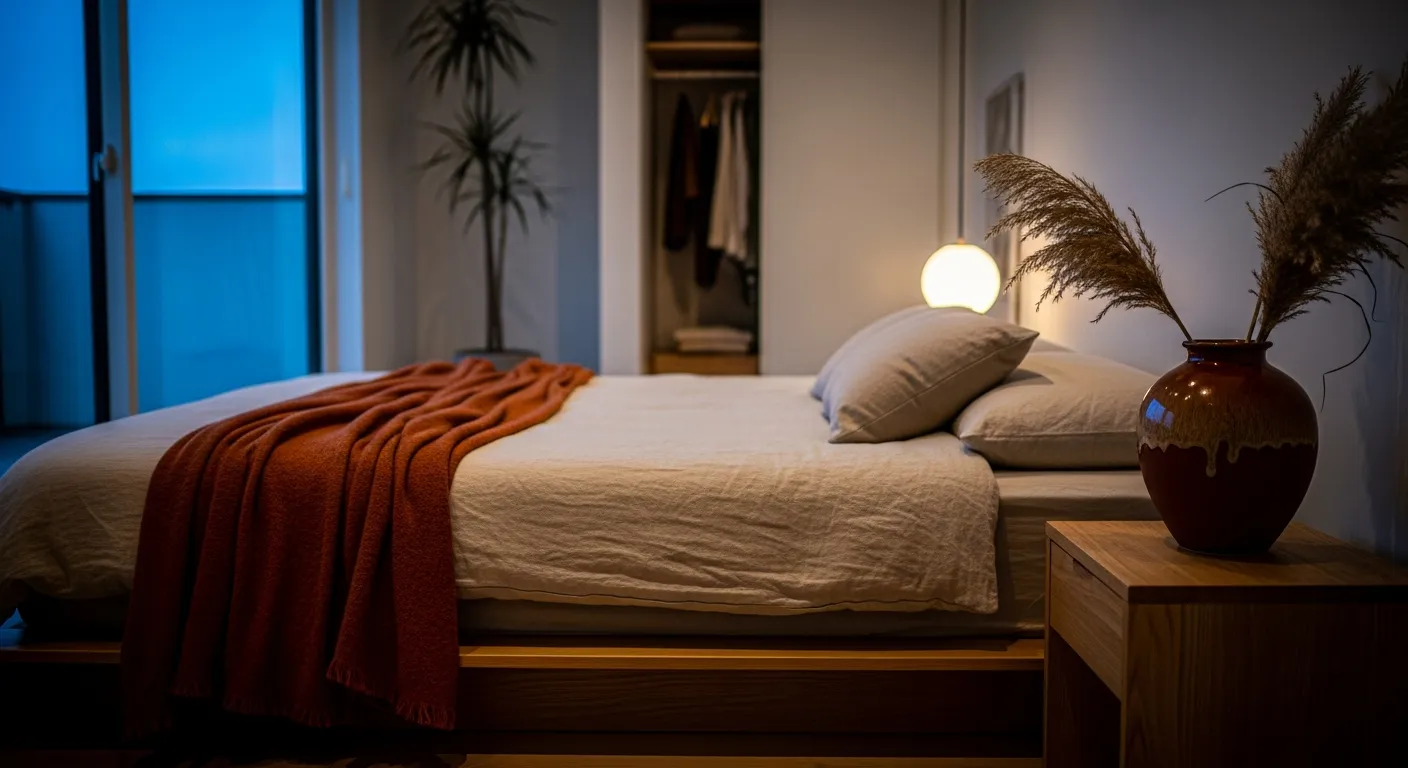
Rust is a team player, but it demands the right supporting cast to truly shine. Because Japandi design is rooted in nature, your supporting palette should mimic the outdoors. The goal is to let the rust color pop without jarring the eye.
Consider pairing your central rust pieces with soft oatmeal (#E5D9C5) and warm alabaster (#F4F1EA) for your walls and large rugs. These creamy neutrals prevent the room from feeling dark or heavy. For subtle contrast, introduce muted, earthy secondary tones like taupe (#D4C4B7) or soft sage green in the form of a small potted plant or ceramic vase. The key here is restraint; stick to a maximum of three to four dominant colors to maintain that signature minimalist serenity.
Styling Tips & Budget Japandi Bedroom Ideas
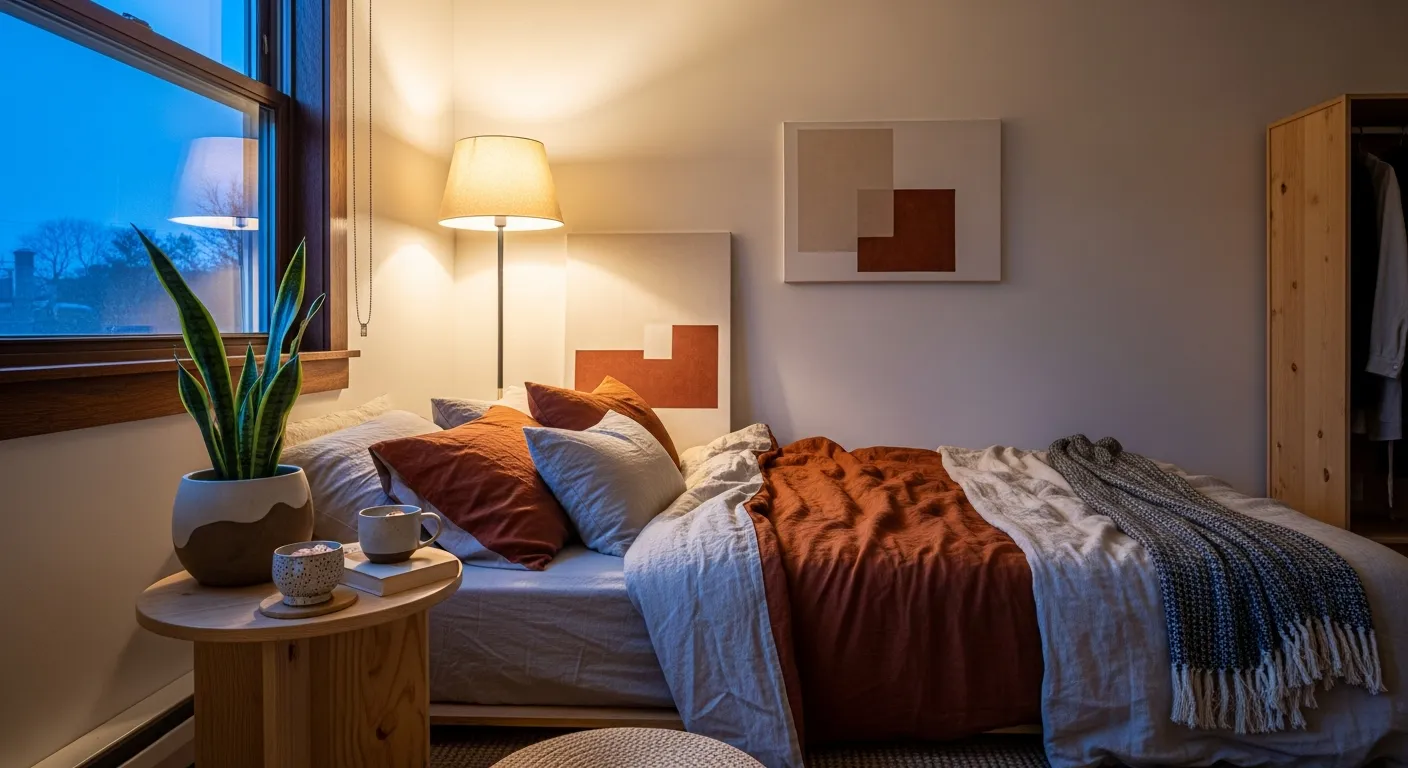
You don’t need a massive budget to achieve an opulent, zen-like feel. The magic of Japandi styling lies in mindful curation rather than endless consumption. Start by adopting a “less is more” philosophy. Clear your nightstands of everyday clutter—use small woven baskets or wooden trays to corral your necessities.
Lighting is another crucial (and affordable) styling tool. Swap out harsh blue-toned LED bulbs for soft, warm white bulbs (around 2700K). Incorporate traditional Japanese lighting concepts by using rice paper shades or Akari-style lanterns. These diffuse the light beautifully, casting a soft, romantic glow across your rust-colored bedding.
How to Recreate This Look (Steps + Budget + FAQ)
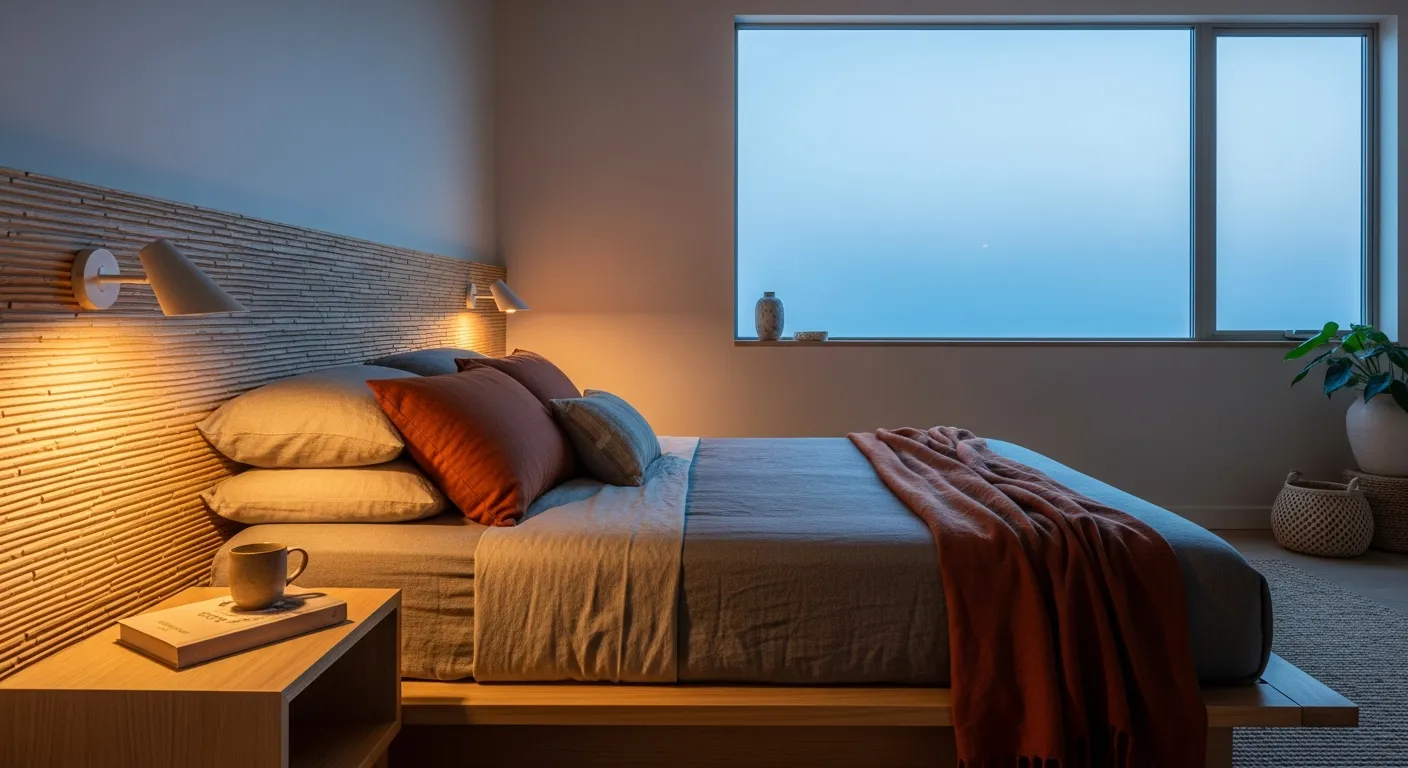
Step-by-Step Guide to Your Makeover
Ready to roll up your sleeves? Recreating this gorgeous, grounded look is easier than you think. Follow these logical steps to transform your sleeping quarters into a breathtaking sanctuary:
- Declutter and Reset: Empty the room of anything that doesn’t serve a functional or deeply aesthetic purpose. Japandi requires negative space to breathe.
- Establish the Base: Paint the walls a soft, warm white or pale beige to maximize light and create a blank canvas.
- Anchor with Furniture: Bring in your low-profile wood bed and matching, minimalist nightstands.
- Layer the Rust: Here is where the magic happens. Dress your bed with a high-quality rust linen duvet cover. Add matching pillowcases or a contrasting oatmeal throw blanket.
- Introduce Texture: Add a plush, neutral rug under the bed and hang simple, unbleached cotton or linen curtains.
- Final Touches: Add a single branch in a ceramic vase, a rice paper floor lamp, and a minimalist piece of abstract wall art.
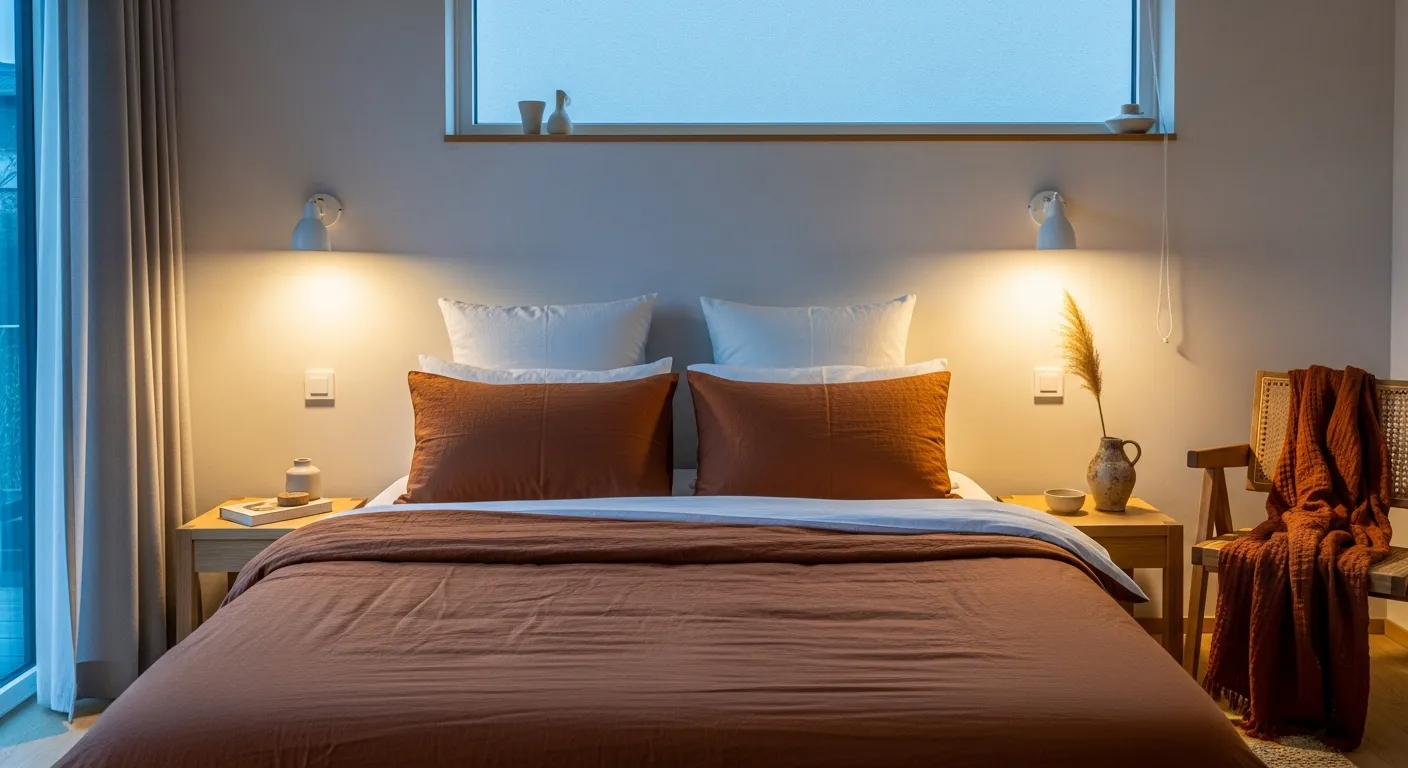
Budgeting for Your Makeover
Allocating your budget smartly is the secret to a high-end look without the designer price tag. Here is how I recommend splitting your funds:
- Splurge: High-quality bedding. Linen is a core element of this design, and a premium rust-colored duvet will last for years while improving with every wash.
- Splurge: A solid wood, low-profile bed frame. This is the centerpiece of the room.
- Save: Decor and lighting. Paper lanterns are famously inexpensive yet incredibly stylish.
- Save: Wall art. Consider DIYing textured canvas art using joint compound and leftover paint.
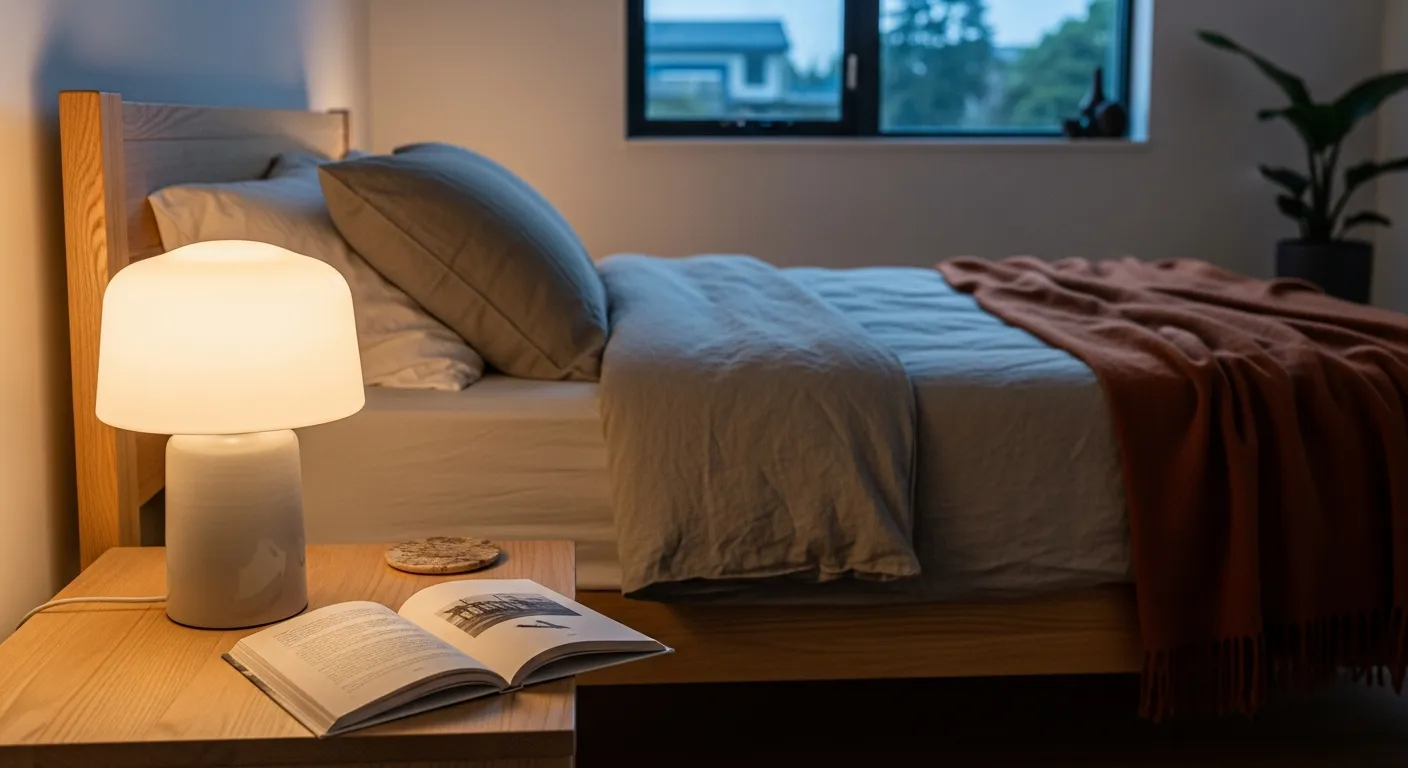
Frequently Asked Questions
Can I use color in a Japandi design?
Absolutely! While the core of the aesthetic is neutral, introducing a single, earthy accent color like rust, terracotta, or muted olive green enhances the warmth and depth of the space.
What are the best colors for Japandi Bedroom ideas?
The best palettes combine warm, milky whites, light taupes, and pale oatmeals with deep, grounding nature tones. Rust, deep charcoal, and forest green make excellent, sophisticated accents.
How do I keep my minimalist room from feeling cold?
Texture, texture, texture! If your color palette is minimal, your texture palette needs to be expansive. Mix smooth wood with rough ceramics, soft linen, fuzzy wool, and crinkled paper lighting.
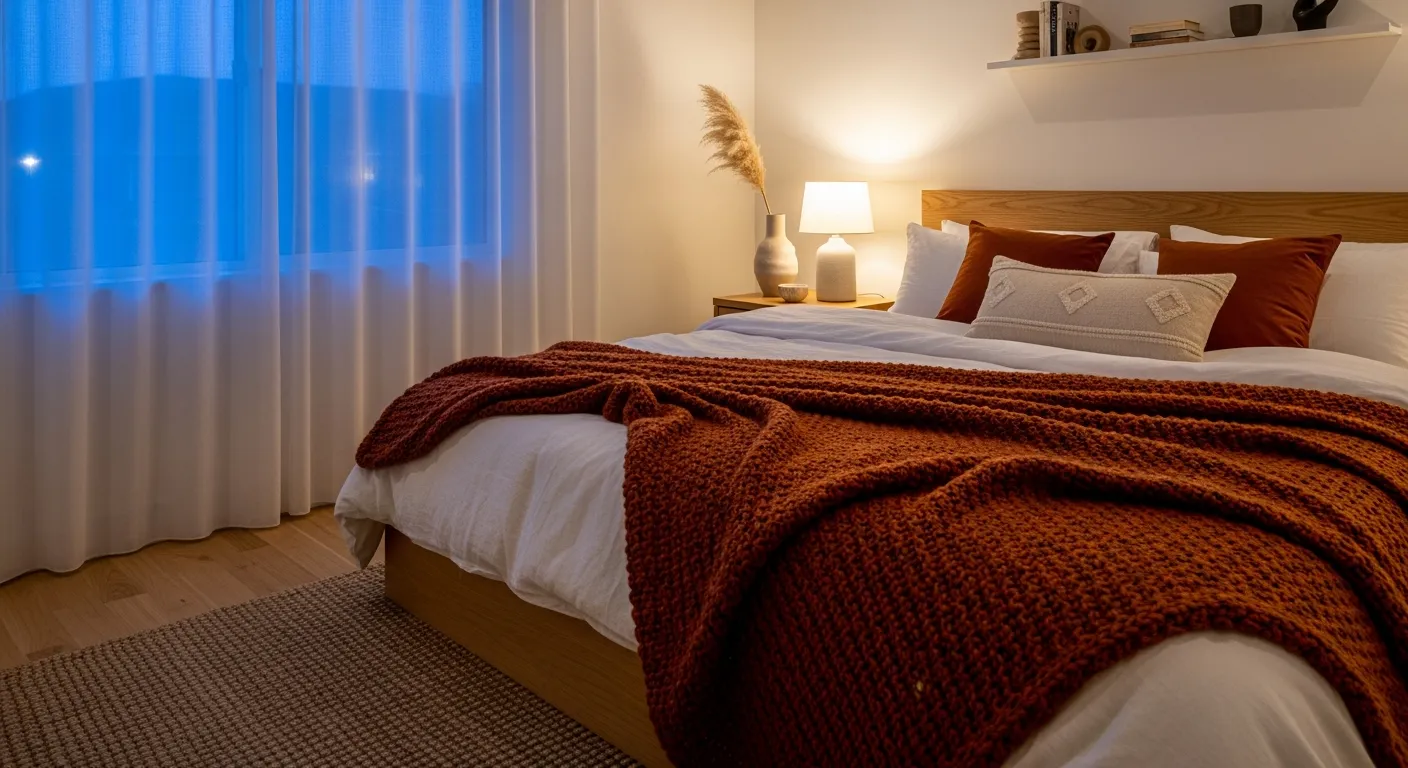
Creating a beautiful, restorative sanctuary doesn’t have to be a complicated or stressful process. By blending the functional beauty of Scandi design with the intentional, imperfect grace of Japanese minimalism, you create a space that truly supports your wellbeing. I hope exploring these Japandi Bedroom ideas has inspired you to welcome the rich, grounding warmth of rust into your own home. Remember, your bedroom is your everyday retreat—make it a place that greets you with a cozy, warm hug the moment you step through the door. Happy styling, friends!