
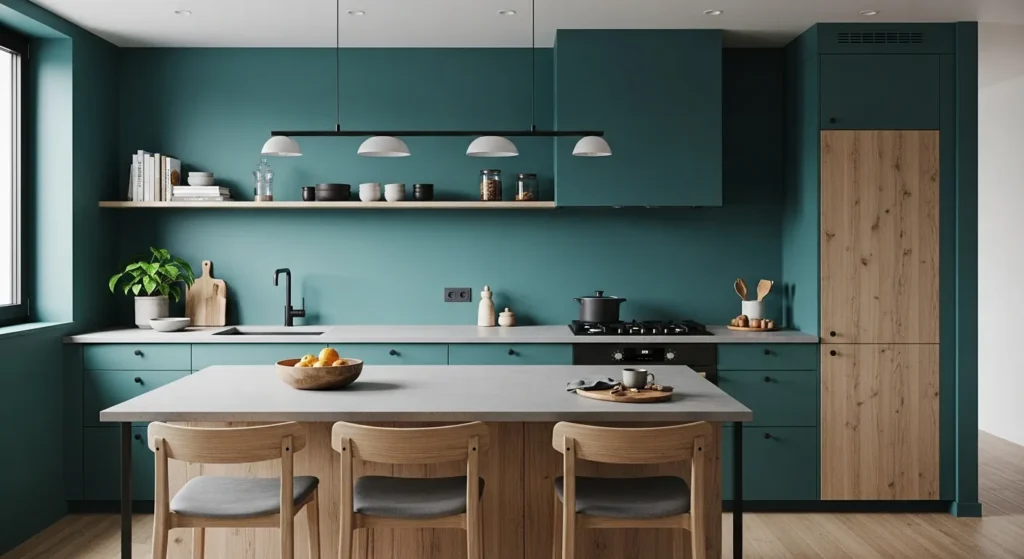

Hey there, design lovers! Welcome back to my corner of the internet. Grab your favorite ceramic mug and let’s chat about the heart of the home. If you’ve been scrolling through Pinterest lately, you’ve definitely seen the Japandi trend taking over. It’s that perfect, dreamy marriage between Japanese rustic minimalism and Scandinavian functionality. Usually, when we think of this style, we picture endless seas of beige, cream, and light oak. But what if I told you that you could keep that Zen vibe while injecting some serious personality?
Enter Teal. Specifically, a deep, rich Teal (Hex #008080). I know, I know—color in a minimalist space sounds risky! But trust me on this one. Adding a sophisticated jewel tone to a neutral palette doesn’t break the calm; it actually anchors it. In this post, we are going to explore how to blend the clean lines of Japandi with the depth of teal to create a kitchen that feels both curated and cozy. Whether you are doing a full renovation or just a weekend refresh, let’s dive into some fresh Japandi Kitchen ideas that prove you don’t have to sacrifice color to achieve serenity.
#367588
#E0D5C1
#F7F5F0
#4A7C82
#D6B58E
#F2F0E9
The Psychology of Teal in Your Kitchen
When we talk about the kitchen, we are talking about a high-traffic zone. It’s where the coffee brews in the morning and the wine is poured in the evening. The psychology of color here is paramount. Standard Japandi relies heavily on neutrals to induce calm, but sometimes, too much neutral can feel sterile.
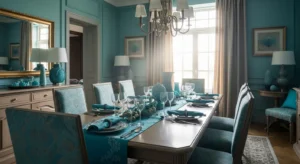
Teal is a unique psychological bridge. It combines the calming properties of blue with the renewal qualities of green. In a Japandi context, using a deep teal anchors the room. It mimics the deep shades found in nature—think deep ocean waters or dense forest canopies. This connection to the natural world adheres strictly to the Japanese concept of shibui (unobtrusive beauty) while offering the cozy hygge feeling of Scandinavian design.
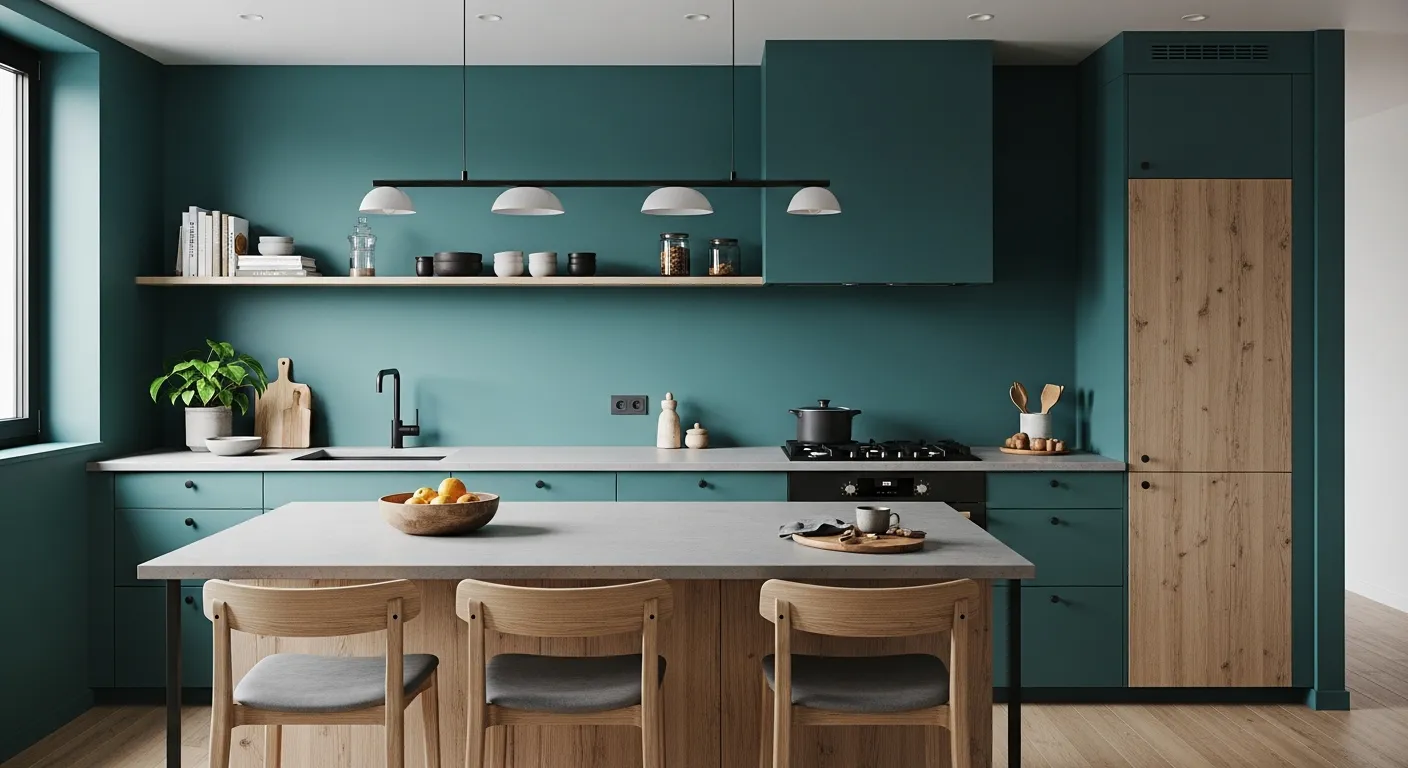
By grounding the lower cabinets or a central island in this rich hue, you lower the visual "center of gravity" in the room, making the space feel more settled and permanent, rather than fleeting and airy.
Essential Furniture & Decor Elements
To pull off this look, the furniture needs to speak the language of both East and West. We aren’t looking for ornate details or heavy carving. The silhouette should be low, clean, and purposeful.
- Cabinetry: Opt for flat-panel (slab) doors. The hardware should be minimal—think tab pulls or push-to-open mechanisms to maintain that sleek profile. If you do choose handles, matte black or brushed brass offers a lovely contrast to the teal.
- Seating: Look for bar stools that utilize natural materials. Wishbone chairs or stools with woven cord seats are quintessential Japandi kitchen ideas that bring texture without adding visual clutter.
- Countertops: Avoid busy granites. Stick to matte quartz in soft whites or concrete-look surfaces. The goal is to let the teal cabinets be the star while the countertops provide a quiet backdrop.
Color Combinations & Palette Ideas
The secret to a successful Teal Japandi kitchen lies in the ratio of colors used. You don’t want the teal to overpower the serenity. I recommend the 60-30-10 rule adapted for this style:
- 60% Neutrals (Base): Off-whites, soft creams, and pale greys (like #F7F5F0 or #F2F0E9). This should be your walls, upper cabinets (if two-toned), and backsplash.
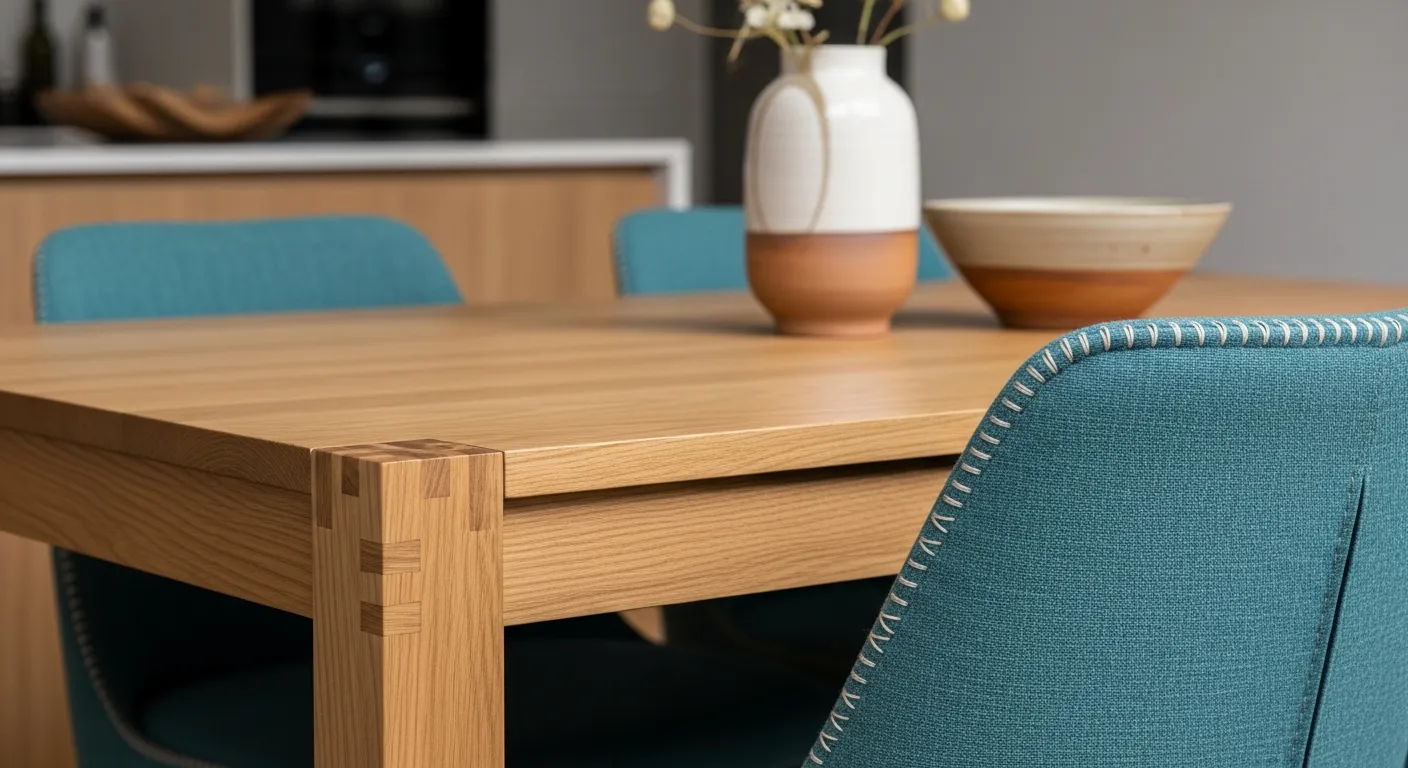
- 30% Wood & Earth Tones (Secondary): White oak, ash, or bamboo (like #D6B58E or #E0D5C1). This comes from your flooring, shelving, and furniture.
- 10% Teal (Accent/Primary Color): Your focal point. This is your island, base cabinets, or a feature pantry wall (#367588 or #4A7C82).
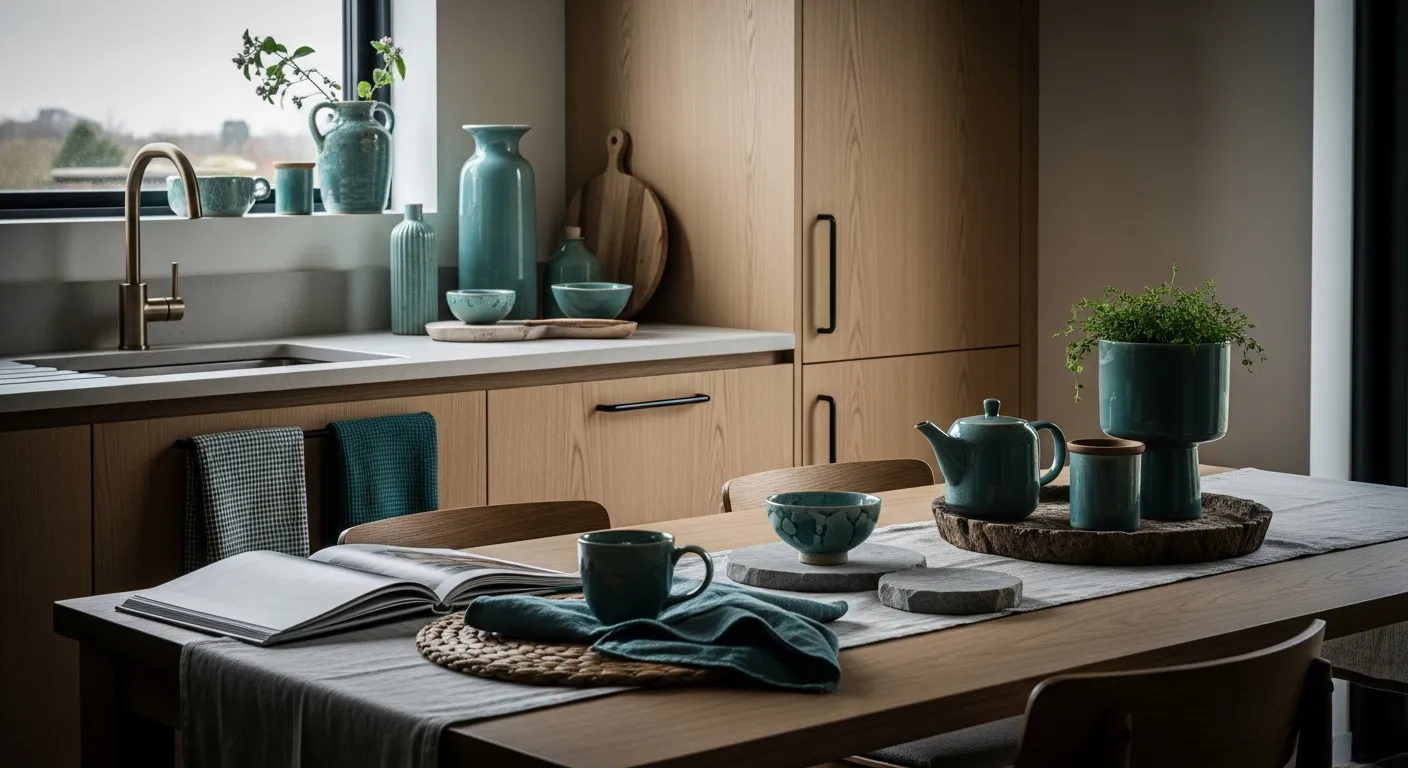
By limiting the teal to specific zones, you maintain the light and airy feel essential to Scandinavian interiors, while the wood tones ensure the space doesn’t feel cold.
Styling Tips & Budget Ideas
Styling a Japandi kitchen is an exercise in restraint. It is not about emptiness; it is about intentionality. Every object on your counter should serve a purpose or bring joy.
Start with functional decor. Instead of buying decorative vases that sit empty, invest in high-quality ceramic canisters for your coffee and tea. Display your wooden cutting boards; their texture contributes to the design. For a touch of nature, skip the massive floral bouquets and opt for a single, sculptural branch in a heavy stone vase. This embraces the Japanese concept of wabi-sabi—finding beauty in imperfection and nature.
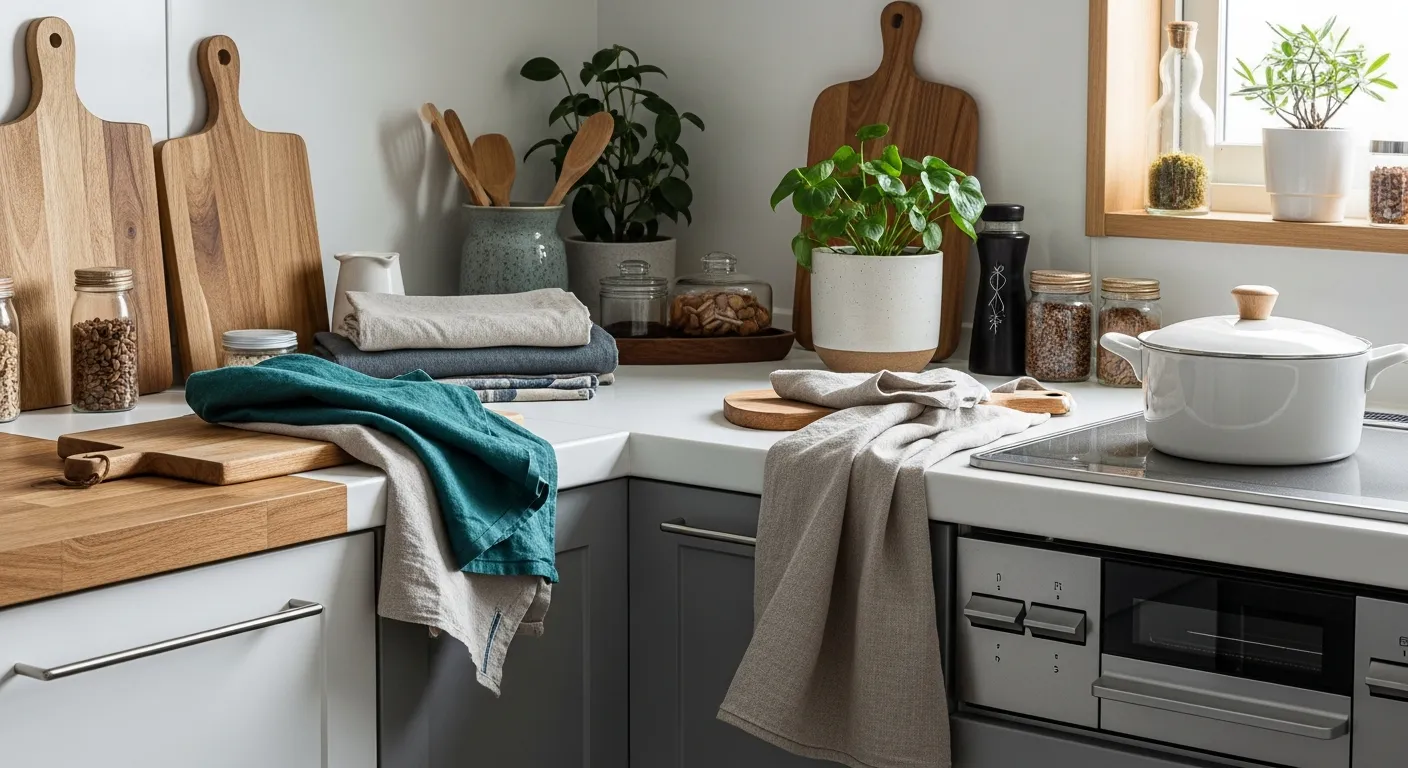
How to Recreate These Japandi Kitchen Ideas
Ready to transform your space? Whether you are planning a gut renovation or a DIY weekend, here is how to bring these Japandi kitchen ideas to life in your home.
Step 1: The Foundation
Start with your canvas. If you can, opt for wide-plank engineered wood flooring in a light oak finish. If replacing floors isn’t in the budget, a large, high-quality runner rug in neutral wool can cover outdated tile and set the tone.
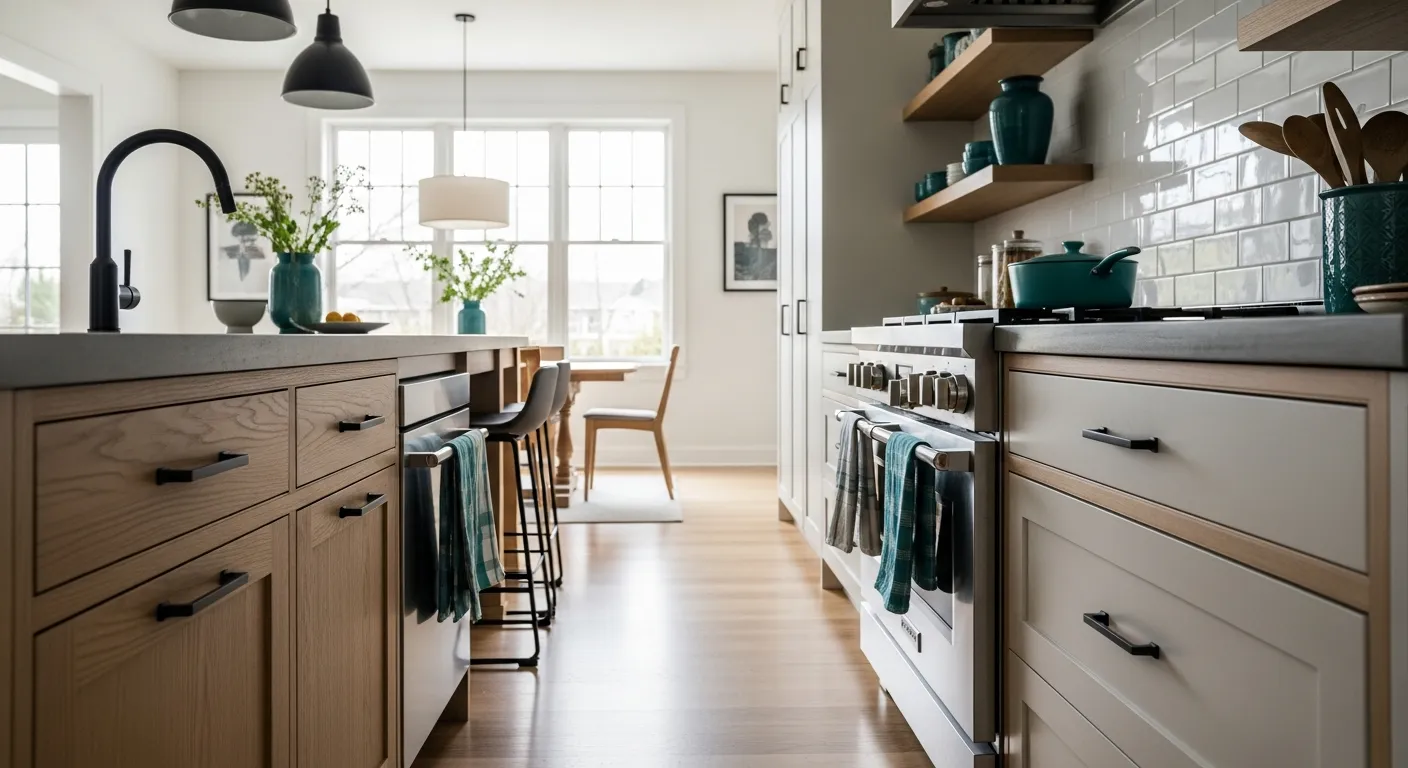
Step 2: The Color Injection
Paint is your best friend here. If you have existing wood cabinets in good condition, painting the lowers in a matte teal (try Farrow & Ball’s Inchyra Blue or Benjamin Moore’s Aegean Teal) can completely revolutionize the space. Keep the uppers white or remove them entirely in favor of open wood shelving to create that airy Japandi feel.
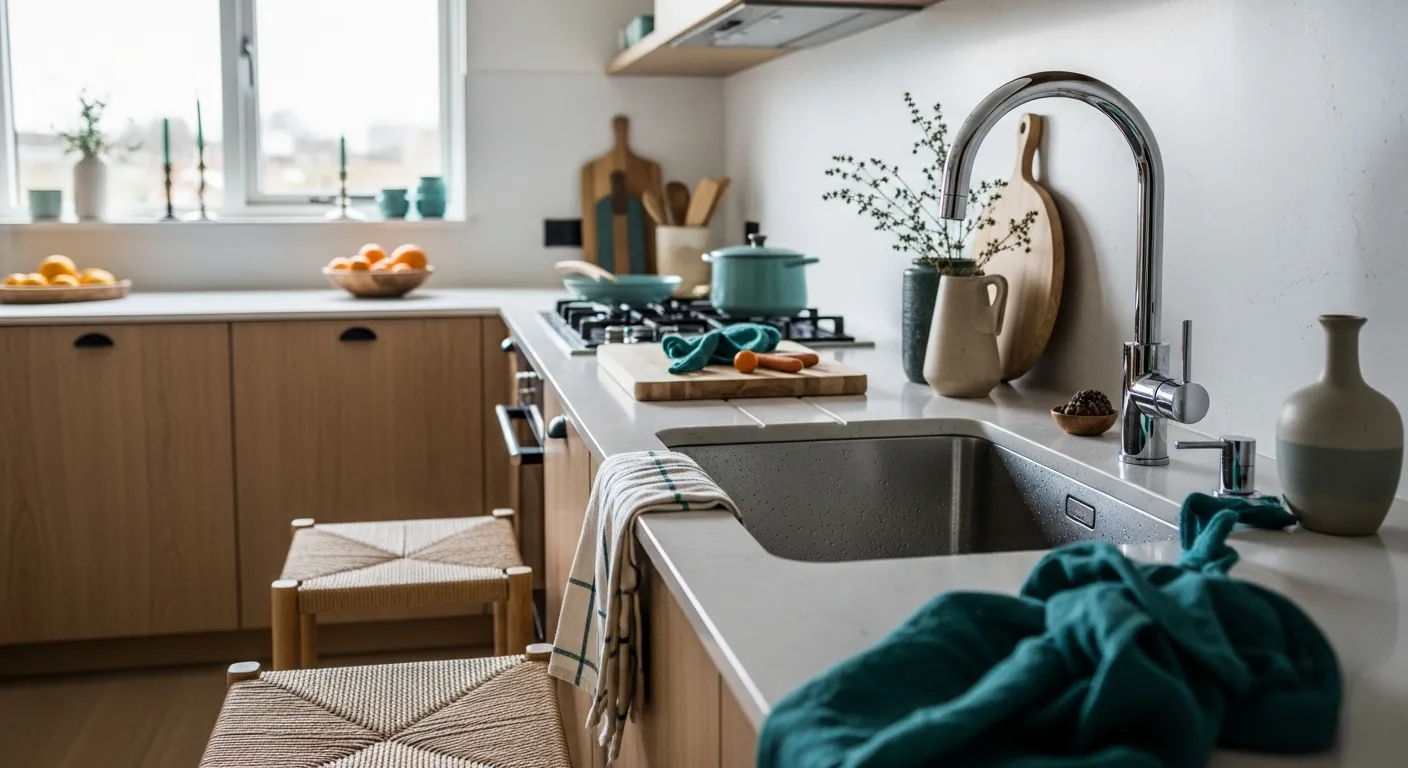
Step 3: Texture and Lighting
Lighting is crucial. Replace standard pendants with fixtures made from rattan, paper (noguchi style), or matte ceramic. The glow should be warm (2700K-3000K) to enhance the wood tones and the richness of the teal.
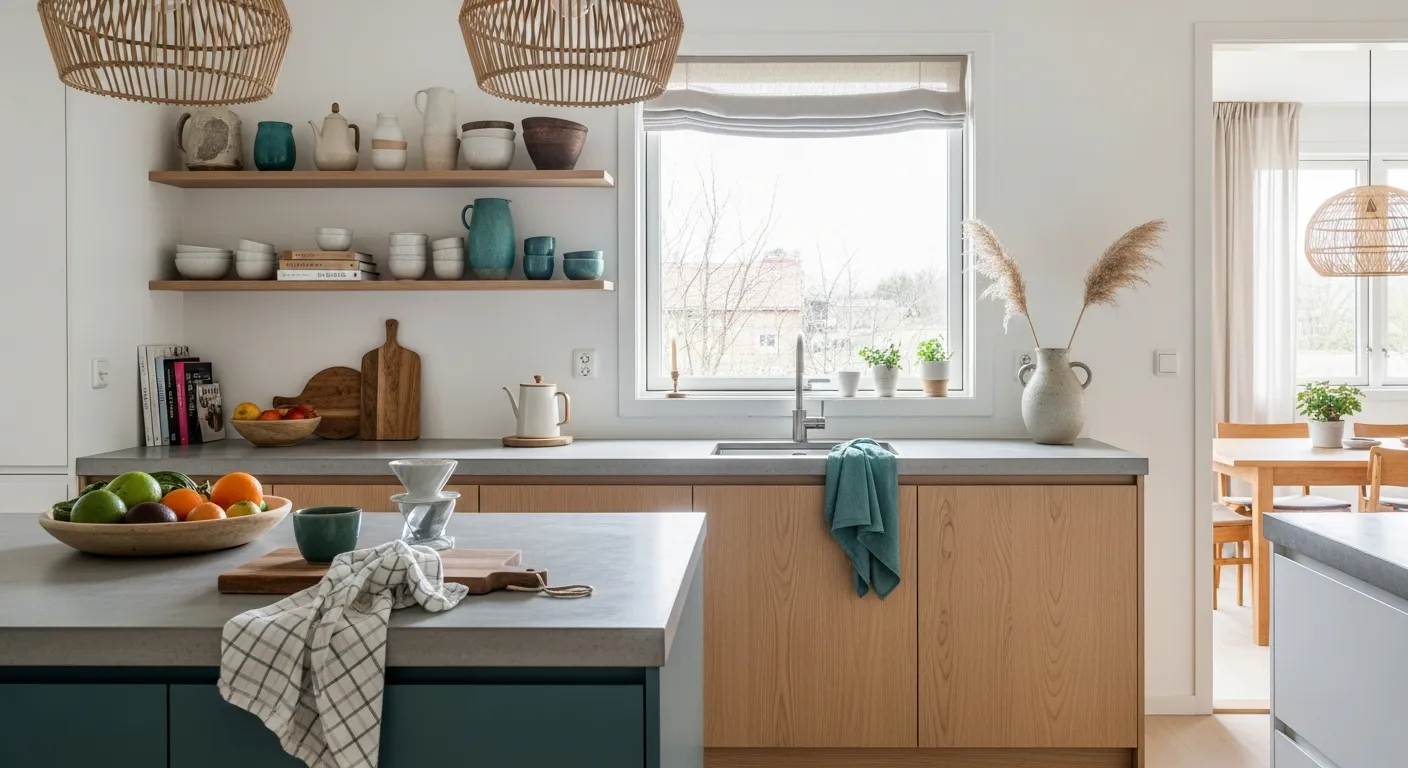
Estimated Budget Breakdown
- The Paint Refresh ($300 – $600): High-quality cabinet paint and supplies.
- Hardware Swap ($150 – $400): Minimalist pulls in matte black or brass.
- Lighting ($200 – $800): One or two statement pendants over the island.
- Decor & Ceramics ($100 – $300): Wooden boards, ceramic jars, and linen textiles.
FAQ: Common Questions
Is teal too trendy for a timeless kitchen?
Not at all. Deep teal acts similarly to navy blue—it is a "colored neutral." Because it appears in nature, it rarely feels dated compared to bright, artificial colors.
What wood tone works best with teal?
Light to medium woods are best. White Oak, Ash, and Birch provide a high contrast that looks crisp. Dark walnut can work, but it creates a moodier, heavier vibe that leans more mid-century modern than Japandi.
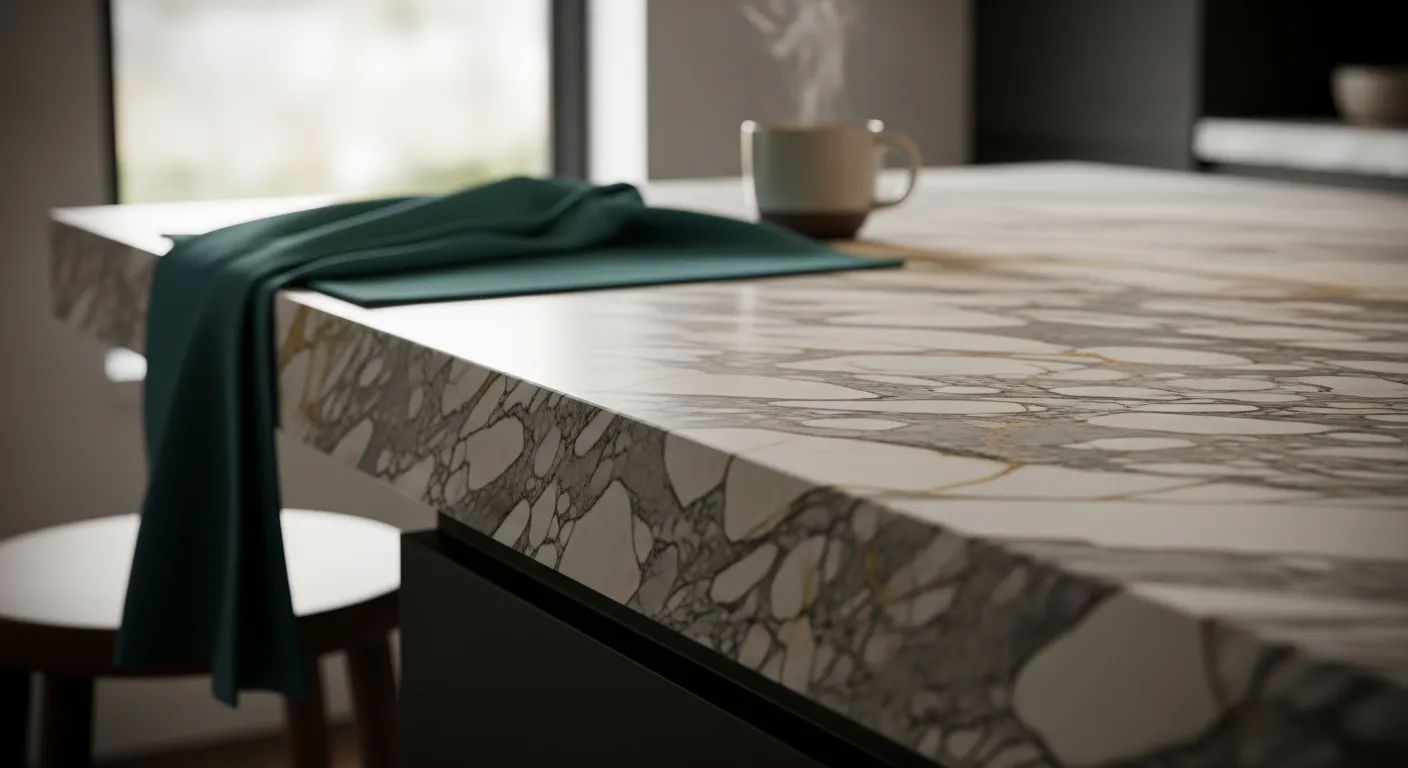
Designing a home is about creating a feeling, and the combination of Teal and Japandi offers a feeling of grounded serenity that is hard to beat. By mixing the functional simplicity of Scandinavian design with the rustic warmth of Japanese aesthetics—and adding that bold splash of teal—you create a space that is unique to you.
I hope these Japandi Kitchen ideas have inspired you to pick up a paintbrush or rethink your layout. Remember, the goal isn’t perfection; it’s creating a space that nurtures you. Have you tried adding bold colors to your minimalist spaces? Let me know in the comments below!