
They say you never get a second chance to make a first impression, and nowhere is this truer than in your home’s entryway. It is the handshake of your house, the breath of air you take when you cross the threshold after a long day. If you are craving a space that feels instantly grounding yet refreshingly light, you have likely stumbled upon the perfect design intersection: Japandi style infused with a soft pastel mint.
Japandi—the harmonious hybrid of Japanese rustic minimalism and Scandinavian functionality—has dominated the design world for years. But lately, we are seeing a shift away from purely beige-on-beige palettes. Enter Pastel Mint (#B2E0D8). This refreshing hue brings a cool, biophilic element to the warm woods typically found in Scandi-Japanese interiors. In this guide, we will explore specific Japandi Entryway ideas that leverage this soothing color to create a foyer that is not just a passageway, but a sanctuary.
The Mint & Wood Palette
#C8E6D8
#D9CBB9
#F7F7F2
#D8E6E0
#C7B299
#F5F5F0
The Psychology of Pastel Mint in Your Entryway
Why choose pastel mint for a transition space? Interior design is never just about aesthetics; it is deeply rooted in psychology. The entryway is a psychological threshold. It is where you shed the armor of the outside world—the traffic, the work stress, the noise—and step into your private sphere. Therefore, the color you choose here dictates the immediate emotional response of your home.
Mint green falls into the category of cool colors, which are scientifically proven to lower blood pressure and reduce anxiety. However, unlike a sterile white or a moody dark blue, pastel mint (specifically our target #B2E0D8) retains a sense of light and optimism. It bridges the gap between the natural world and the built environment. In Japandi design, which relies heavily on biophilia (our innate connection to nature), mint acts as a surrogate for plant life. It suggests freshness, cleanliness, and renewal.
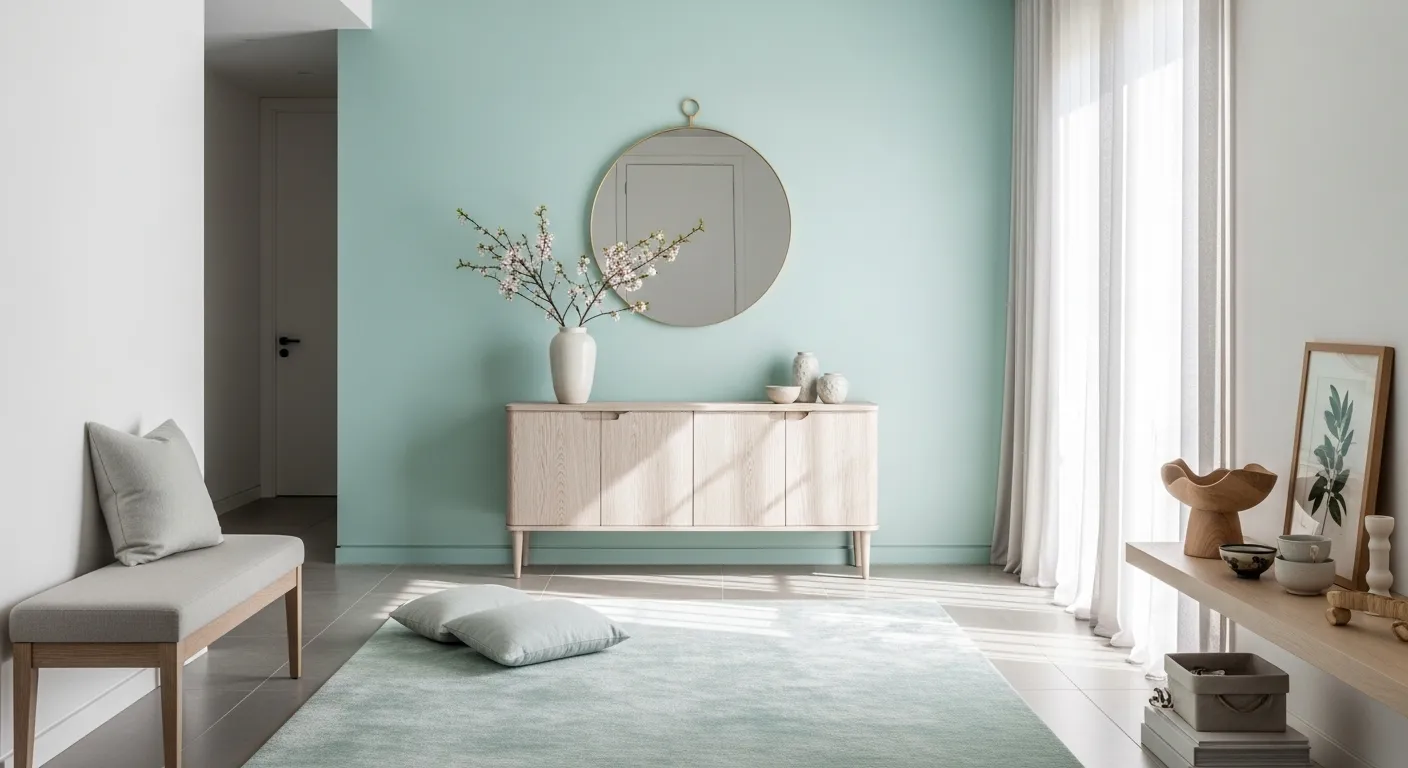
When you walk through a door painted in this hue, or into a hallway wrapped in this soft color, your brain receives a signal to ‘cool down.’ It creates a visual silence that complements the Japandi philosophy of Ma (negative space). The color isn’t demanding attention; it’s holding space for you to breathe.
Essential Furniture & Decor Elements
To execute Japandi Entryway ideas effectively, the furniture must speak the language of both functionality and form. Japandi is not about filling space; it is about curating it. Since our primary wall or accent color is pastel mint, your furniture needs to ground that airiness with warmth and texture.
The Low-Profile Console
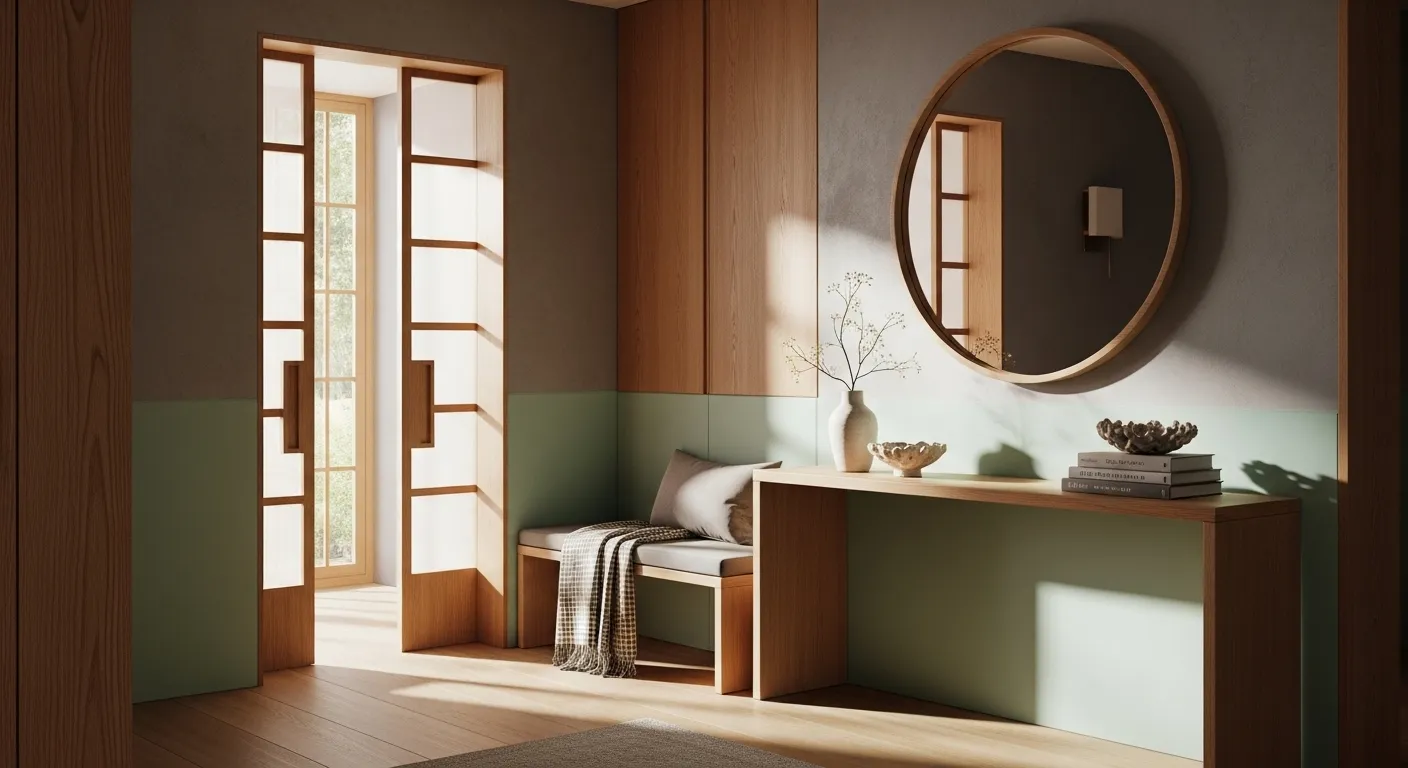
Start with a console table in light oak or ash. Japandi furniture tends to sit lower to the ground, mimicking the Japanese floor-living culture. Look for pieces with clean lines and perhaps slatted wood details, which add texture without visual weight. The wood tone is crucial here—a honey-toned oak warms up the cool mint walls, creating that perfect temperature balance.
The Functional Bench
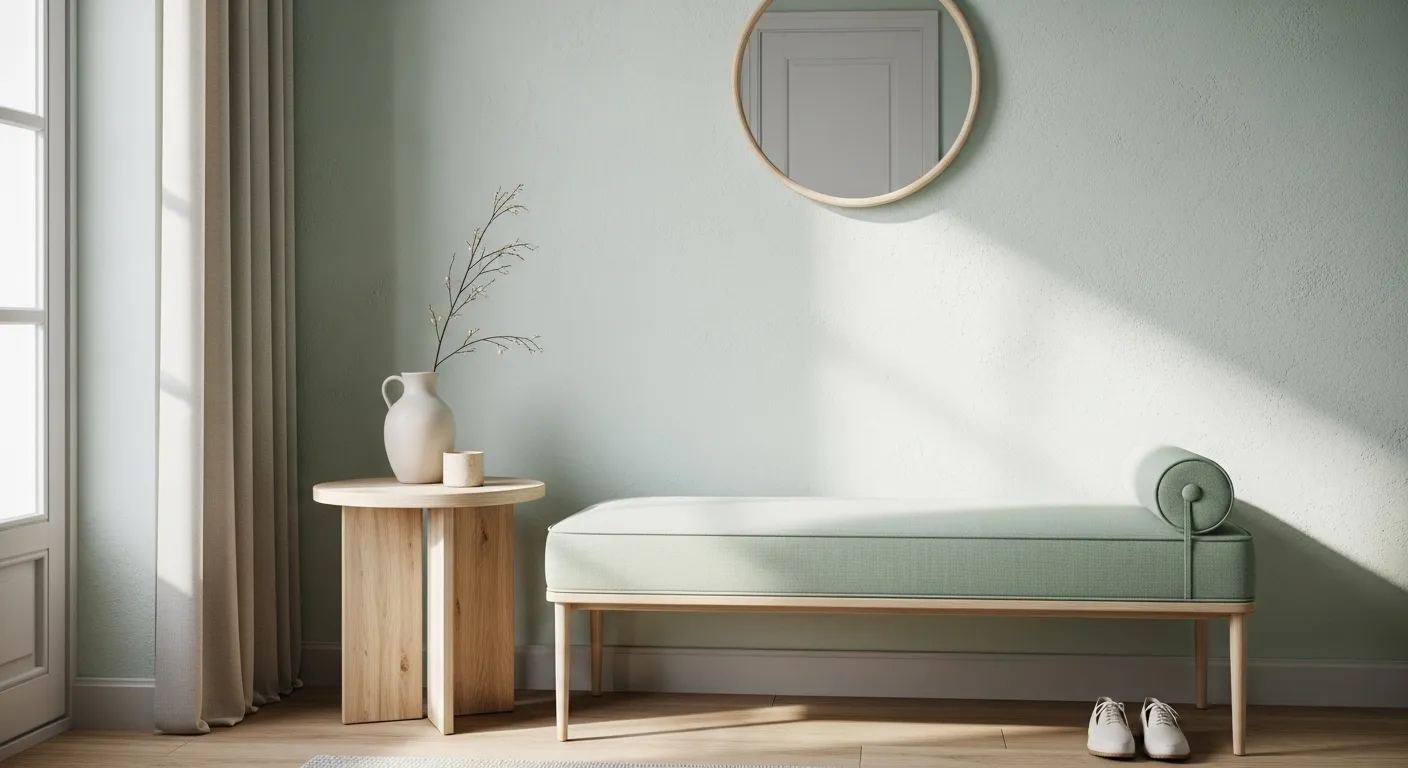
An entryway needs a place to sit. A simple wooden bench is a staple in this aesthetic. Avoid upholstered, tufted benches which lean too traditional or glam. Instead, opt for a raw timber bench, perhaps softened with a single sheepskin throw or a linen cushion in a neutral sand tone.
Storage as Decor
Clutter is the enemy of Japandi. However, real life involves keys, mail, and shoes. Incorporate storage that doubles as decor. Woven rattan baskets are excellent for hiding shoes while adding an organic texture that plays beautifully against mint walls. Think of storage not as hiding things, but as housing them with dignity.
Color Combinations & Palette Ideas
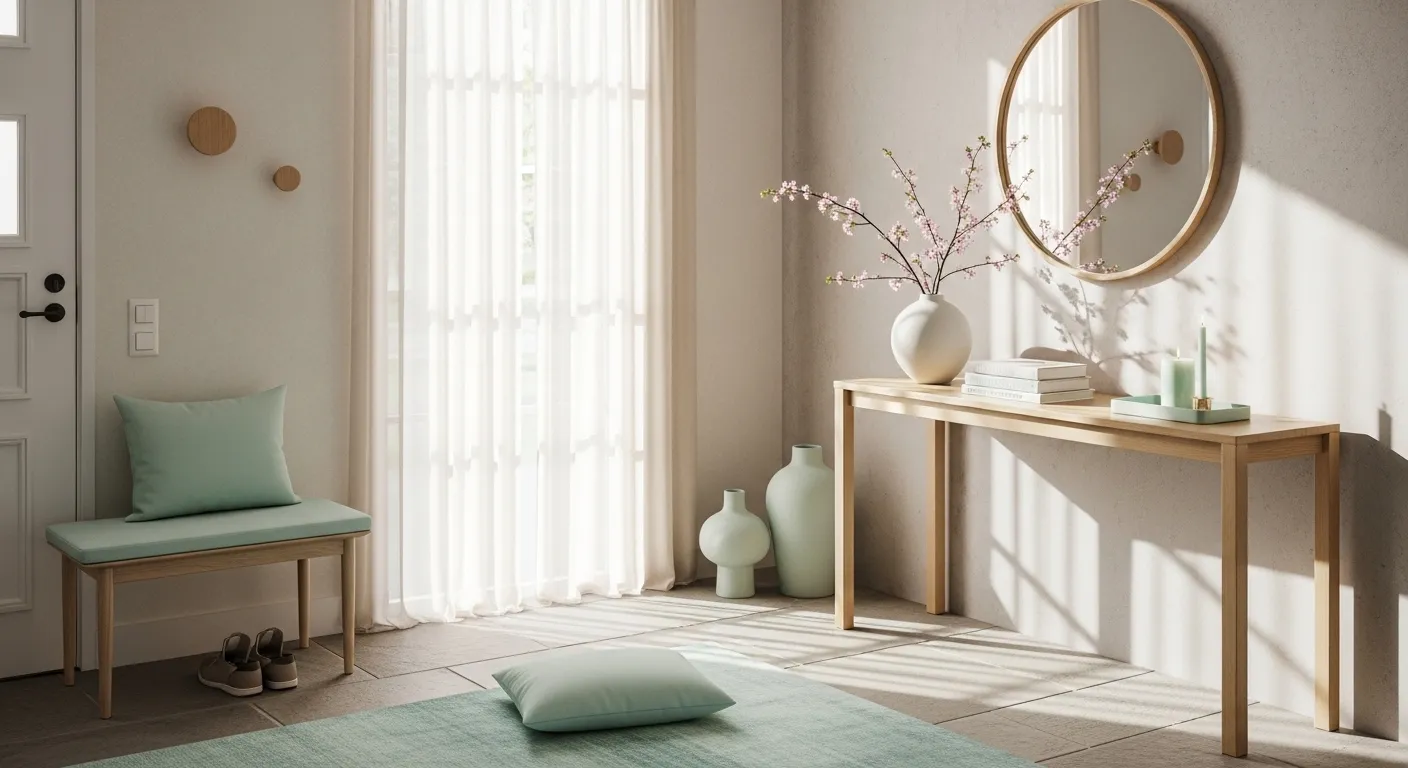
While our star player is Pastel Mint (#B2E0D8), it cannot sing without a supporting choir. The magic of Japandi lies in the contrast between the cool paint and the warm, earthy accents. Creating a cohesive palette is about ratios. We generally aim for the 60-30-10 rule: 60% dominant color (Mint or Neutral), 30% secondary (Wood/Texture), and 10% accent (Black or Brass).
The “Soft & Airy” Palette
Pair your mint walls with creamy whites (#F7F7F2) and very light birch wood. This creates a monochromatic feel that is incredibly soothing. Use white ceramics and bleached dried florals to keep the contrast low and the serenity high.
The “Grounded Contrast” Palette
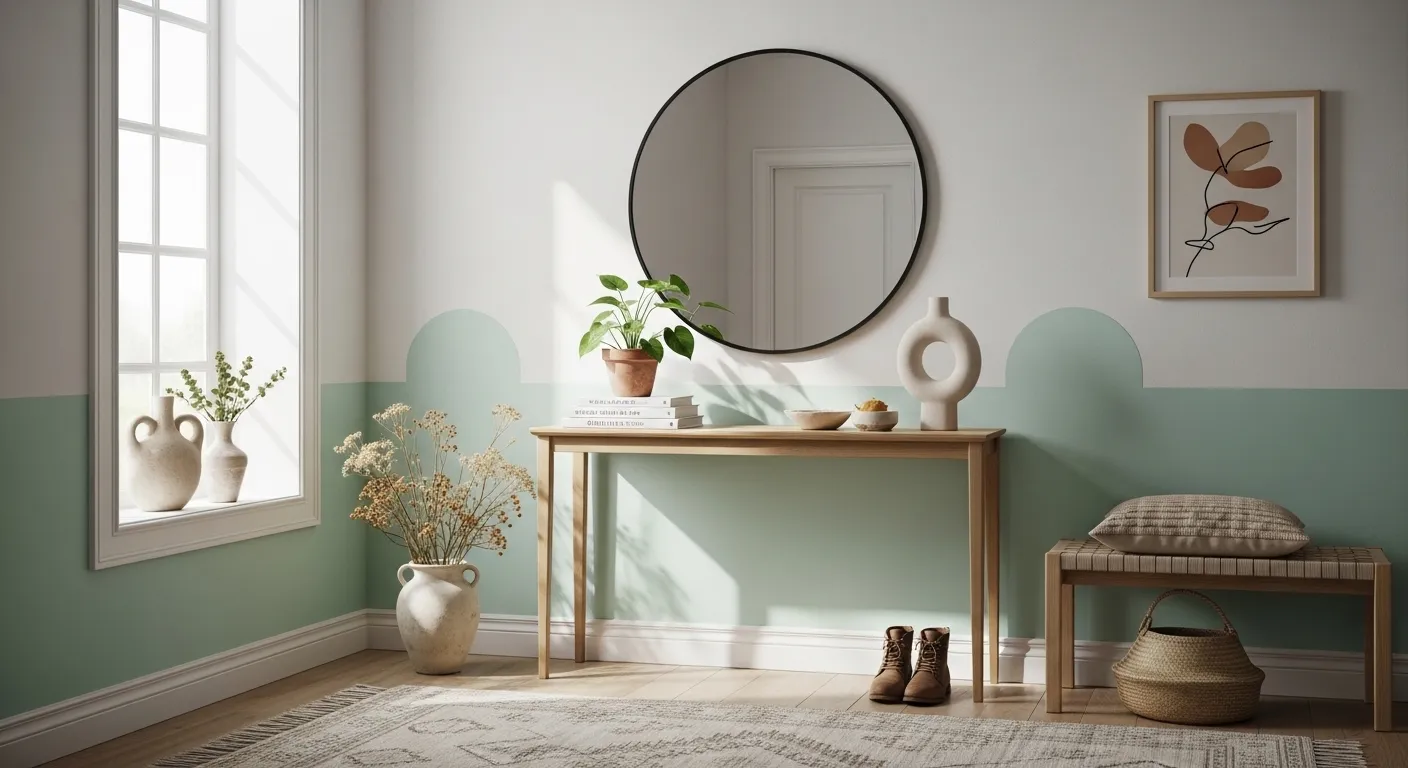
For a more dynamic look, mix the pastel mint with darker walnut woods or touches of charcoal grey. A matte black vase or a black framed mirror can provide a stunning graphic anchor against the soft green walls. This nods to the ‘Scandi’ side of the equation, which often utilizes high-contrast monochrome elements.
Styling Tips & Budget Ideas
Styling Japandi Entryway ideas requires restraint. It is often about what you don’t add. The concept of Wabi-Sabi—finding beauty in imperfection—is your guiding light here. You don’t need symmetrical, perfect arrangements. You need soulful ones.
Texture Over Color
Since the walls provide the color, let your accessories provide the texture. Use a jute or sisal runner rug to define the walkway. The roughness of the natural fiber contrasts elegantly with the smooth, painted walls. On your console, group items in odd numbers (threes are magic). A stack of linen-bound books, a rough ceramic bowl for keys, and a structural branch in a vase are all you need.
Mirrors and Light
A large mirror is non-negotiable in an entryway. For Japandi, avoid ornate frames. Go for a frameless organic shape or a simple thin wood frame. The mirror bounces light around, making your mint walls feel even fresher and expanding the perceived space.
How to Recreate This Look (Steps + Budget + FAQ)
Ready to transform your foyer? Here is your roadmap to achieving this serene mint and wood sanctuary.
Step-by-Step Execution
- The Purge: Remove everything from your entryway. If it doesn’t serve a function or spark joy (to borrow from Marie Kondo), it doesn’t come back in.
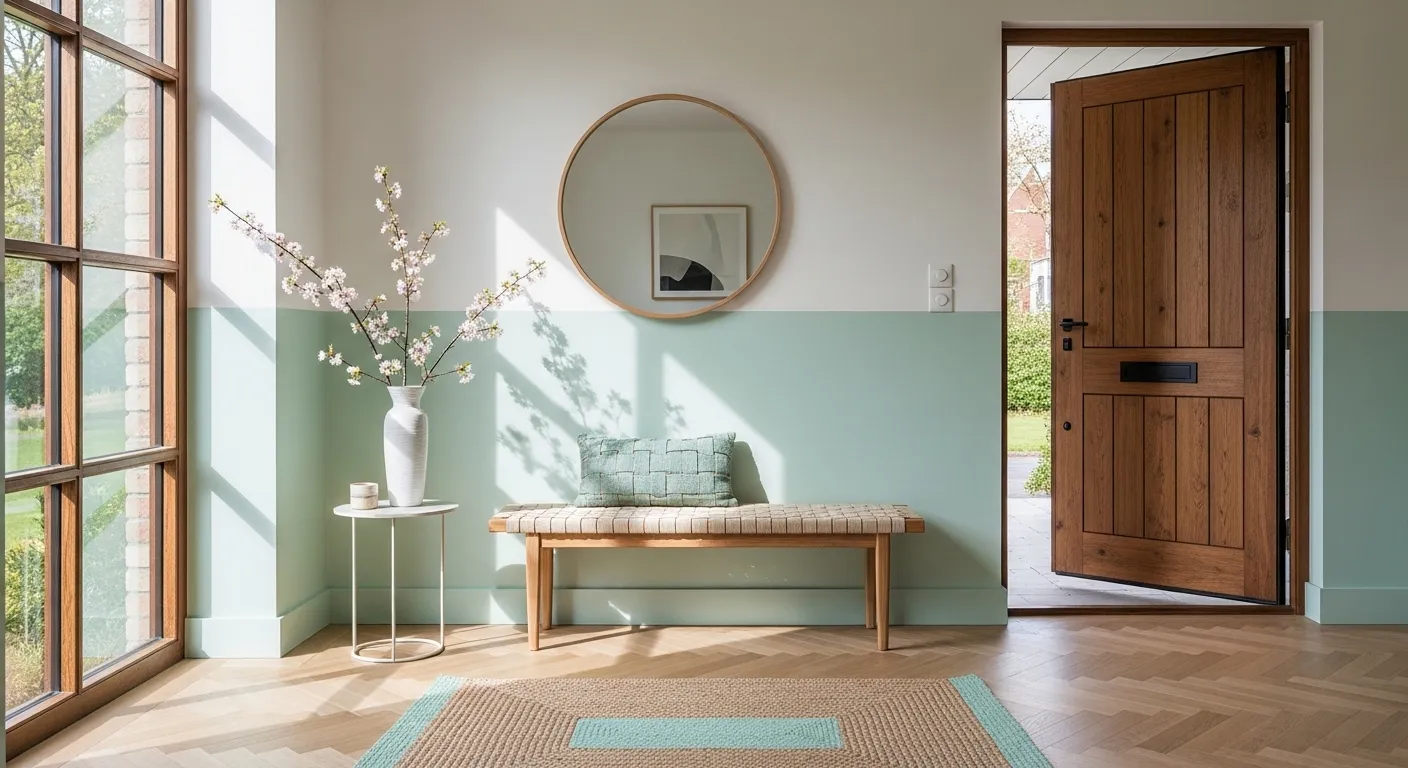
- The Canvas: Paint your walls (or just an accent wall behind the console) in the Pastel Mint shade. Ensure you test the paint first—lighting changes everything.
- The Foundation: Place your console table and rug. These are your anchors.
- The Layers: Add your lighting and mirror.
- The Soul: Style the surface with organic ceramics, a tray for keys, and botanicals.
Budget Breakdown
You don’t need a designer budget to achieve a designer look. Here is how to allocate funds for two different price points.
Low Budget (~$300)
- Paint: $50 (1 Gallon of quality satin paint).
- Furniture: $150 (Upcycle an existing table by sanding it down to raw wood, or find a thrifted bench).
- Decor: $100 (DIY paper lantern, thrifted ceramics, and foraged branches from your yard).
Mid Budget (~$1,200)
- Paint: $100 (Premium brand paint + supplies).
- Furniture: $700 (Solid oak console table and a new jute runner).
- Decor: $400 (Large architectural mirror, designer ceramic vase, and a high-quality table lamp).
Frequently Asked Questions
Is pastel mint timeless?
Yes. While ‘trends’ come and go, colors rooted in nature (like sky blue and leaf green) rarely look dated if paired with natural materials. The key is the finish—matte is timeless; high gloss can look retro.
How do I keep a Japandi entryway clean?
Minimalism actually makes cleaning easier because there is less clutter to dust around. Ensure your shoe storage is enclosed (like a cabinet) rather than open racks to reduce visual noise and dust accumulation.
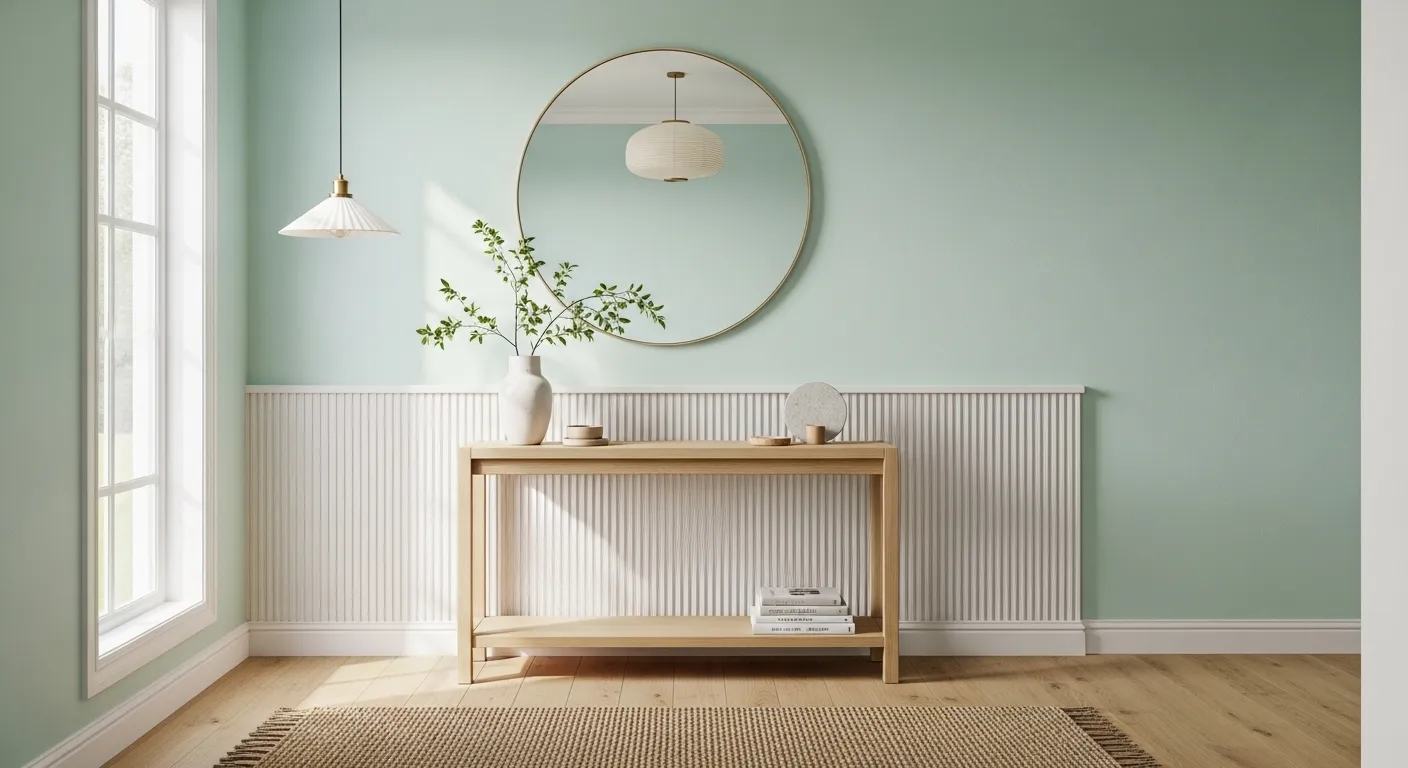
Creating a Japandi-inspired entryway is about more than just following a trend; it is about crafting a moment of pause in your daily routine. By combining the restorative properties of pastel mint with the grounded, humble nature of timber and stone, you create a space that welcomes you home with a gentle embrace. Whether you are working with a tight budget or doing a full renovation, these Japandi Entryway ideas prove that serenity is accessible to everyone. Start with the color, add the wood, and let the simplicity speak for itself.