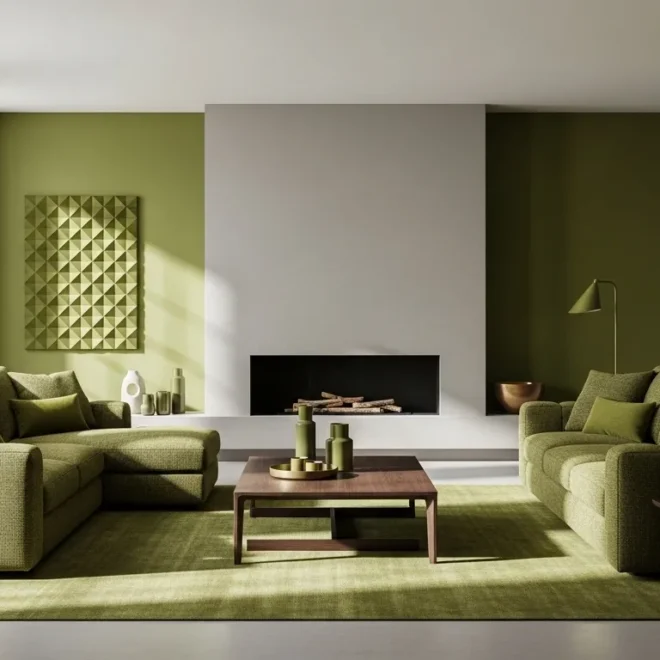

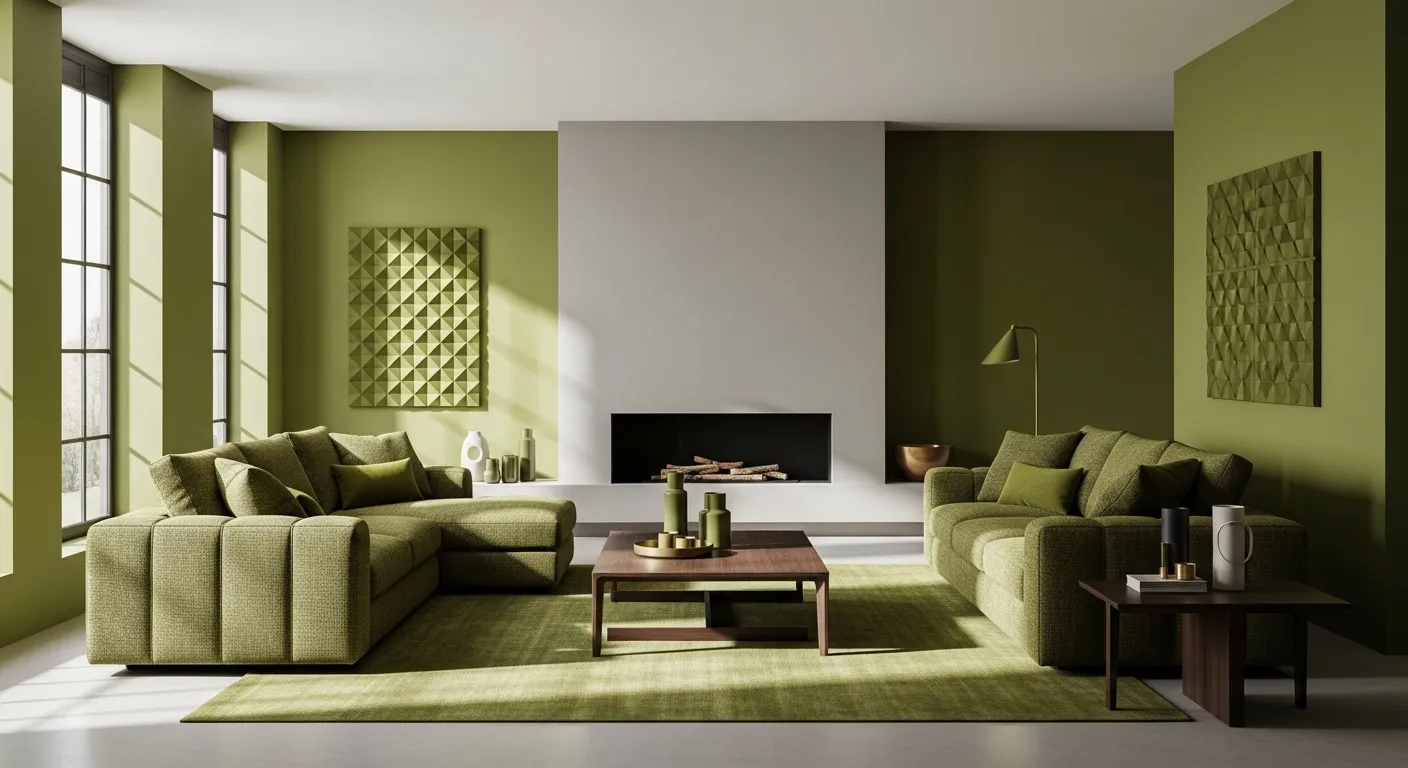
If you’re searching for Modern Living Room ideas that feel current but still livable, olive green is one of my favorite designer shortcuts. It reads sophisticated like a neutral, but it adds depth the way beige never quite can. In an everyday modern space, olive creates a calm “backdrop color” that plays well with sunlight, wood tones, and black accents—without feeling trendy in a way you’ll regret next year. This guide walks you through an Olive Green Living Room plan you can actually execute: what the color does in the room, the best pairings, the furniture that makes it feel modern, and step-by-step instructions to recreate the look with realistic budgets.
Color Palette
Moss Olive#646746
Sage Khaki#A9A687
Warm Linen#D2D2C4
Deep Olive Ink#3E3A1E
Olive Umber#6D642E
Oat Sand#D7D0AA
Modern Living Room ideas for an Olive Green Living Room
The Psychology of Olive Green in Your Living Room
Why olive green feels calming (not cold)
In my design work, olive green is the color I reach for when clients want a modern room that still feels grounded. It has the steadiness of a neutral, but it carries a subtle “nature cue” that helps a space feel restorative—especially in a living room where you want to decompress. Unlike bright greens that can feel sporty or playful, olive sits closer to earth tones, so it blends easily with wood, stone, linen, and black metal. That’s why an Olive Green Living Room can look elevated even when the layout is simple.
Olive also behaves beautifully in changing light. Morning sun warms it up and pulls out the khaki notes; in the evening it deepens and feels cocooning. This is exactly what you want for everyday Modern decor: the room should flex with your schedule, not look flat unless the lighting is perfect.
How to choose the right olive (so it looks modern)
The “right” olive is one with a slightly muted, dusty quality—too yellow and it can look dated; too gray and it can look lifeless. If you’re using olive on a sofa, keep the surrounding materials clean and simple (think: straight-lined coffee table, minimal fireplace styling, and intentional negative space). If you’re using it on a wall, treat it like an accent rather than painting every surface—modern rooms tend to feel best with contrast and breathing room.
Color Combinations & Palette Ideas
Modern pairings that always work
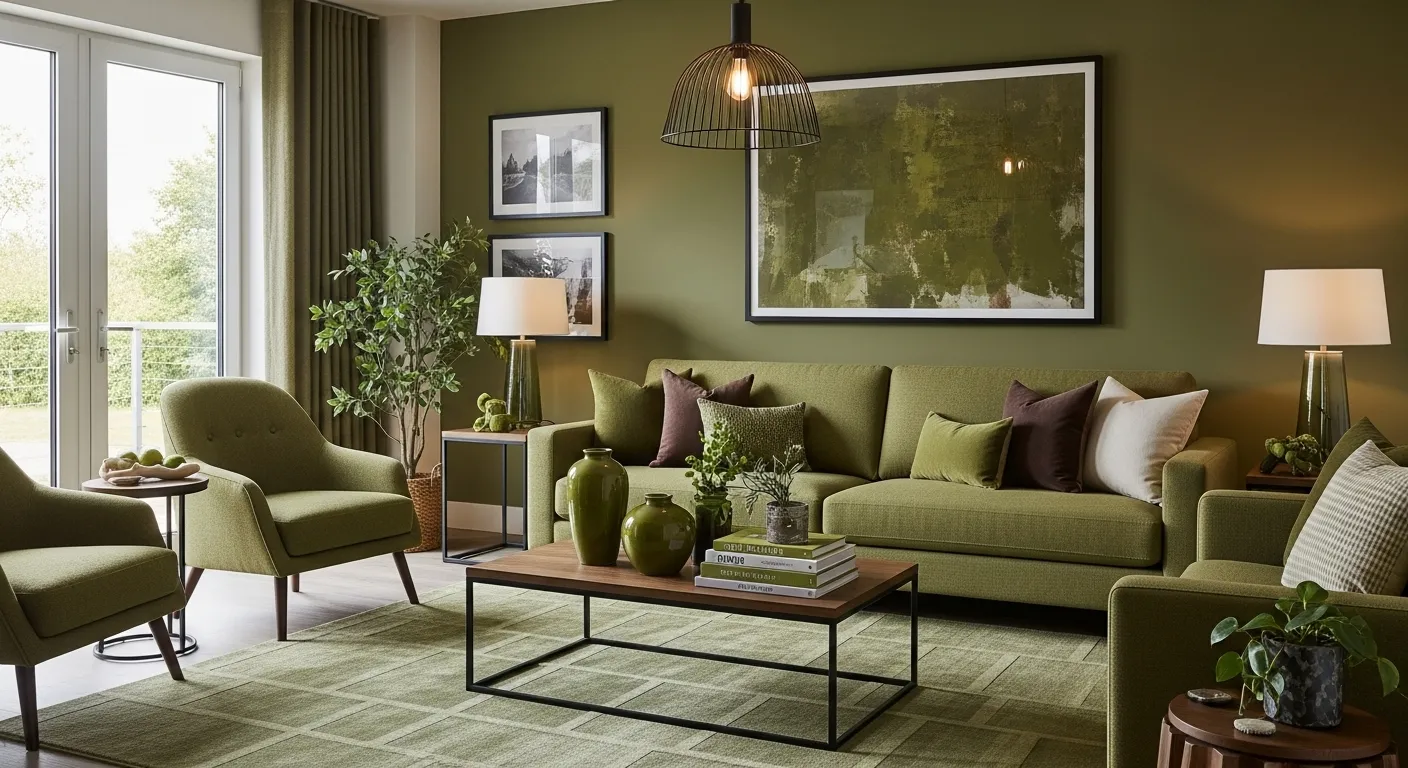
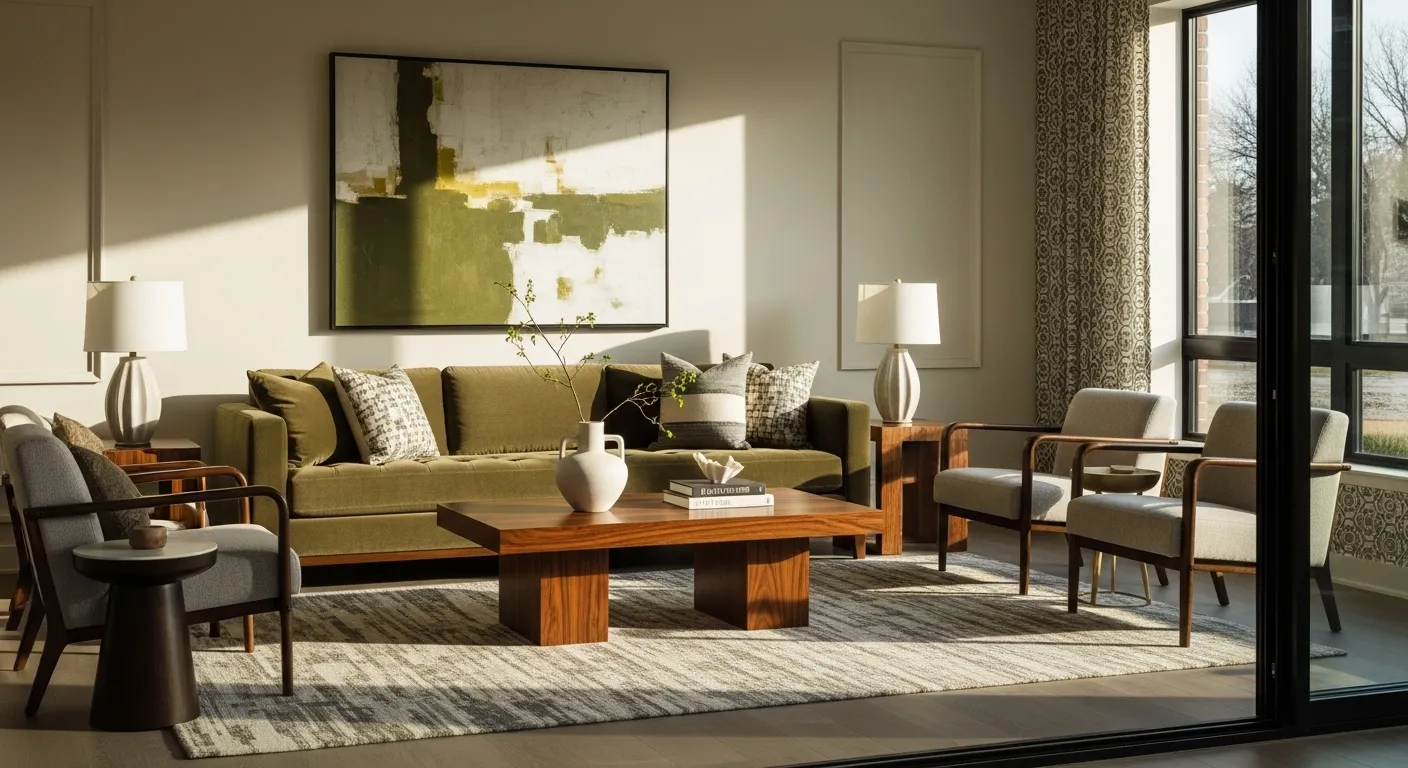
When people ask me for Modern Living Room ideas that don’t rely on stark white, I suggest a “soft contrast” palette: olive + warm off-white + a dark anchor. In practice, that means olive upholstery or an accent wall, creamy textiles (linen, bouclé, or cotton), and a single dark note—black, charcoal, or deep espresso—to sharpen the edges so the room reads modern rather than rustic.
For a balanced, designer-proof mix, aim for this ratio: 60% light neutrals (walls, rug, curtains), 30% olive (sofa, chair, or wall), 10% dark accents (frames, coffee table base, lighting). That 10% is what keeps the room crisp.
Texture + tone: the secret to depth
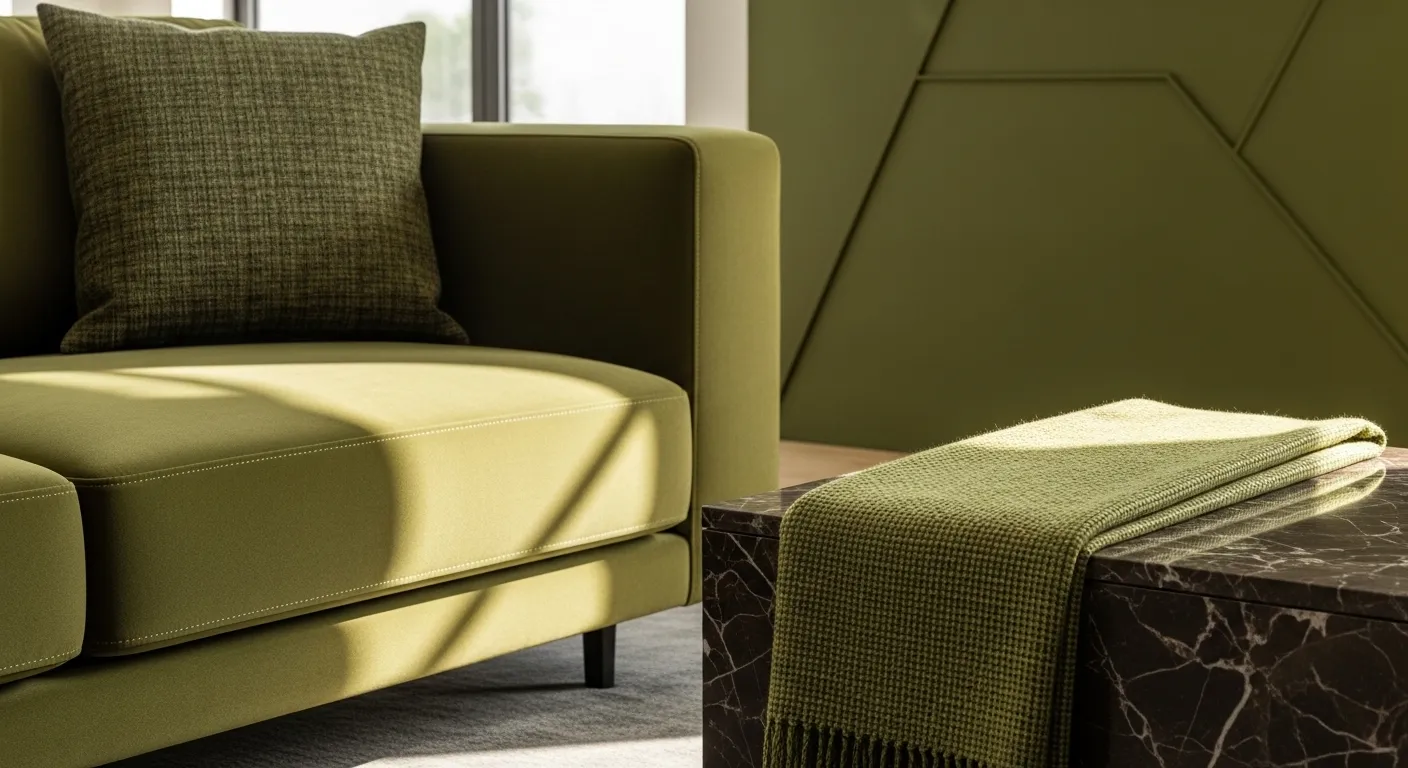
Olive looks most expensive when you vary texture more than color. Pair a matte olive sofa with a nubby throw, a smooth stone or marble table, and a wool rug. Then echo olive subtly elsewhere—one artwork with green undertones, a patterned pillow, or a tonal rug border—so the room feels intentional instead of “one big green item.”
Essential Furniture & Decor Elements
The sofa + coffee table duo (your modern foundation)
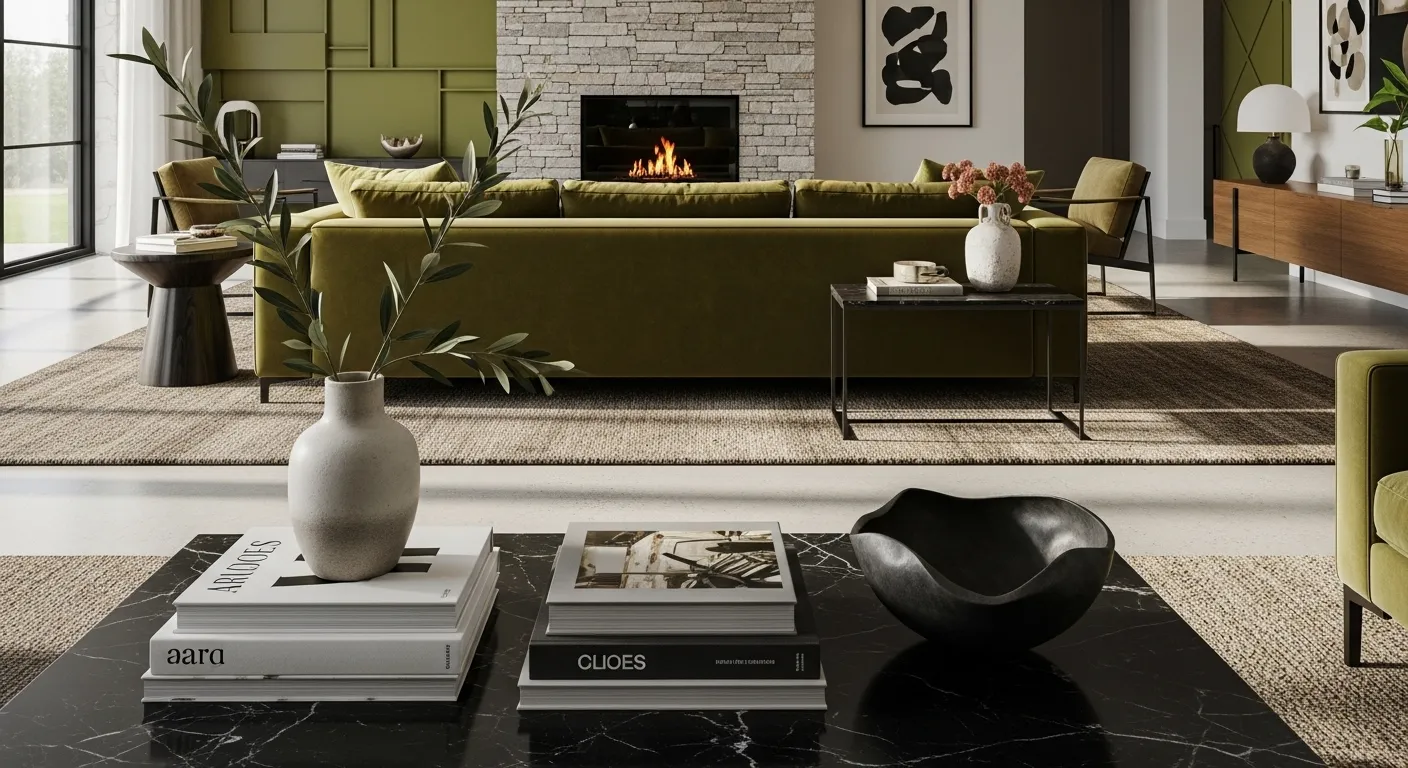
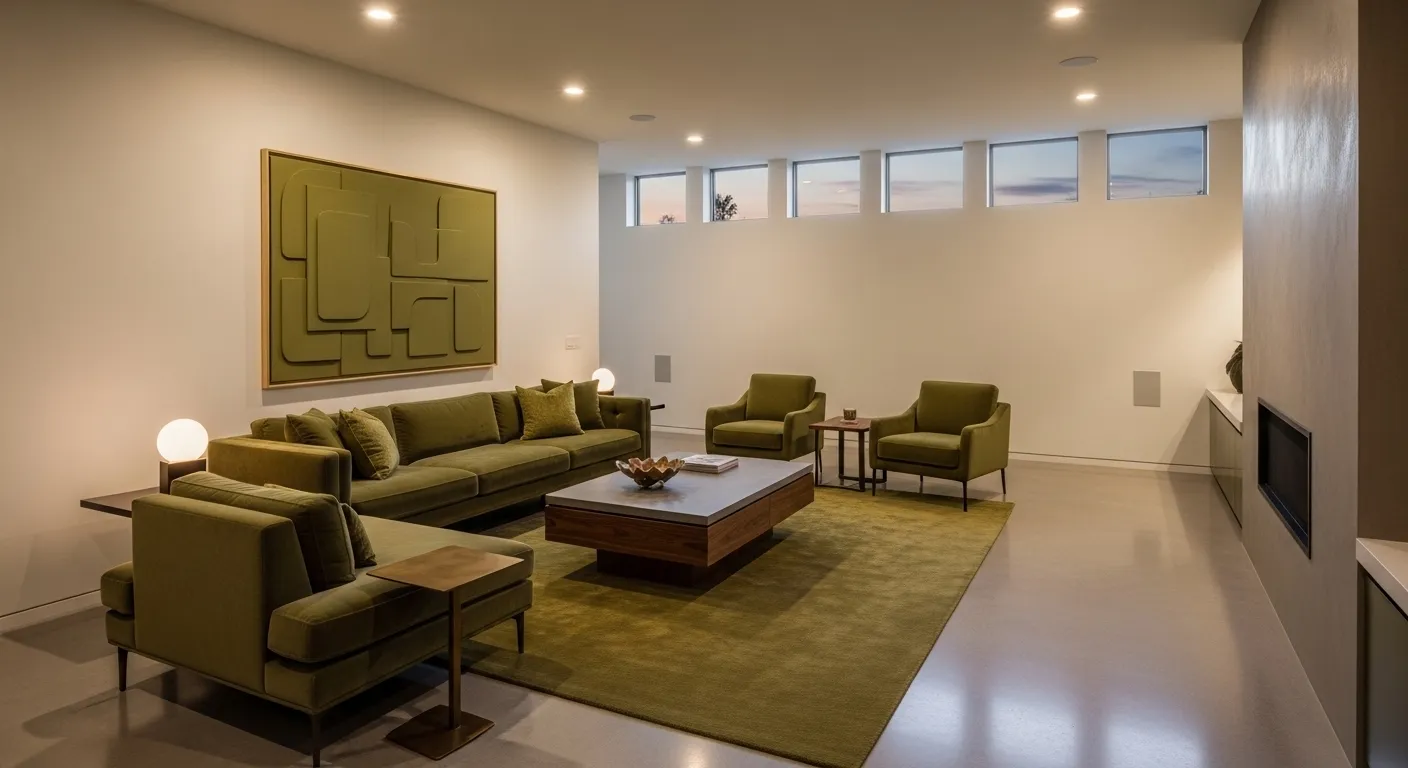
If you do only one thing from this list, make it this: invest in the sofa silhouette and the coffee table material. An olive sofa already has visual weight, so I like a tailored profile—low arms, clean seams, and either a tight back or structured cushions. That instantly pushes the look into modern territory.
Then ground it with a coffee table that contrasts: dark marble for sleek drama, or warm wood for a softer modern look. The key is scale: your coffee table should be about two-thirds the length of the sofa, and the top should sit 1–2 inches lower than the seat height for comfort.
Rug, lighting, and art that read “modern decor”
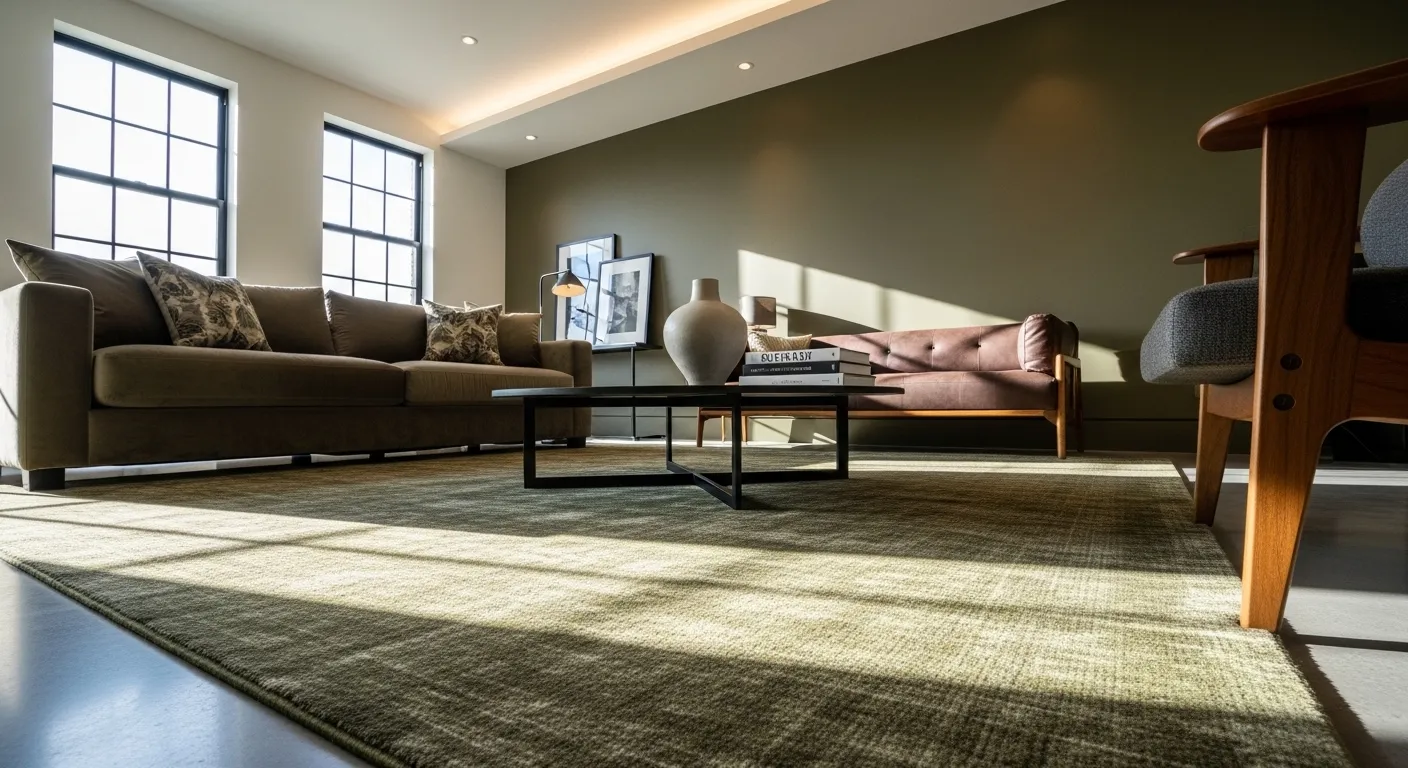
Rug: Choose a low-pile rug in an understated pattern (or a tonal solid) that pulls in your warm neutrals. For a living room, I typically specify an 8×10 minimum; 9×12 is even better if your room allows. Front legs of all seating should sit on the rug—this is one of the fastest ways to make the room feel cohesive.
Lighting: Layer it. Use one overhead (or flush mount), one floor lamp near seating, and one table lamp. Modern rooms feel best when the light is warm (around 2700K) and diffused—avoid cool white bulbs, which can turn olive harsh.
Wall art: Keep frames thin and consistent (black or warm wood). Oversized art with negative space looks more modern than a crowded gallery wall. If you want a gallery, keep spacing tight and align the top edges.
Styling Tips & Budget Ideas
Styling the “everyday” way (so it stays tidy)
My rule for a modern living room that stays livable: style with fewer, larger items. Start with a tray on the coffee table to corral remotes and coasters, then add one sculptural object and one soft item (like a folded throw). On shelves or a console, work in odd numbers (three objects, five at most) and vary height—tall vase, medium stack of books, low bowl.
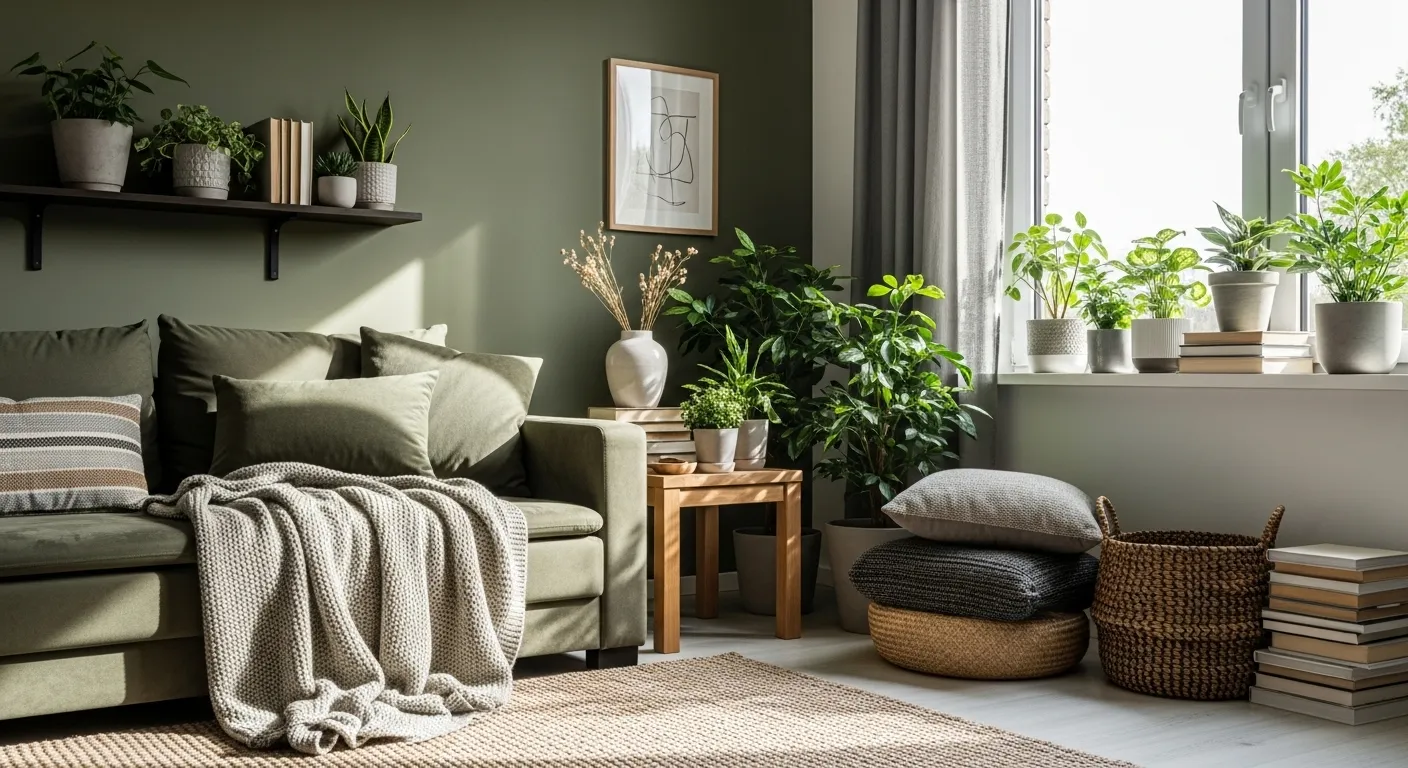
Bring in nature, but keep it architectural. Instead of many small plants, do one medium-to-large potted plant with a simple planter. Woven baskets are perfect for modern living rooms when you use them as hidden storage—extra throws, kids’ toys, or cords.
Budget ideas that still look custom
If you’re collecting pieces over time, prioritize what you touch and see the most: sofa, rug, coffee table, and lighting. Then save on accents. My favorite cost-effective upgrades: swap in oversized pillow inserts (for a fuller look), add pinch-pleat curtain panels (even from budget retailers), and choose one “hero” piece of art that’s large enough for the wall.
For an Olive Green Living Room, you can also add the color through removable wallpaper or an accent wall if a sofa isn’t in the budget. This is one of those Modern Living Room ideas that delivers a big impact without requiring all new furniture.
How to Recreate This Look
Step-by-step plan (designer sequence)
Use this order so the room comes together quickly—and you don’t waste money on “filler” items that won’t fit later.
- Pick your olive anchor. Choose either an olive sofa/sectional or an olive accent wall (not both at first). This keeps the room modern and prevents the color from taking over.
- Set your neutral base. Add a warm off-white rug and simple curtains. Keep the largest background pieces light so olive can look rich and intentional.
- Choose one statement coffee table. Go dark marble/stone for a sharper modern edge, or warm wood for a softer organic-modern vibe.
- Add two supporting seats (or one + an ottoman). Look for sculptural lines and slim legs to keep the footprint visually light.
- Layer lighting. One floor lamp + one table lamp minimum. Warm bulbs (2700K) and diffused shades make olive feel luxe.
- Finish with art + two textiles. One oversized artwork and a restrained pillow/throw combo. Stop before it looks “busy.”
Budget
Low Budget: $900–$2,000
- Sofa (or slipcovered option): $450–$900
- Rug (8×10, synthetic/wool blend): $180–$400
- Coffee table: $120–$250
- Lighting (1 floor + 1 table lamp): $120–$240
- Textiles + accents (pillows, throw, tray, plant): $30–$210
Mid Budget: $2,500–$5,500
- Olive sofa/sectional (higher-density foam, performance fabric): $1,600–$3,200
- Rug (8×10 or 9×12, wool): $450–$1,100
- Coffee table (solid wood or stone top): $350–$900
- Lighting (2–3 fixtures, better materials): $300–$900
- Art + accessories (oversized print, frames, ceramics, greenery): $200–$800
FAQ
1) Will olive green make my living room look dark?
Not if you balance it with warm off-whites and good lighting. Use olive as the anchor (sofa or wall), then keep the rug, curtains, and most upholstery light.
2) What metals look best with olive green?
Matte black is the most modern; brushed brass feels warmer and a bit softer. Mix them only if you repeat each finish at least twice.
3) What’s the easiest way to try an Olive Green Living Room without buying a sofa?
Do an olive accent wall, then add two olive pillows and one piece of art that includes green undertones.
4) How do I keep olive from feeling “too traditional”?
Use clean-lined silhouettes, minimal patterns, and a dark accent (black table base, black frames, or a charcoal lamp) to sharpen the look.
How to Recreate
- Pick your olive anchor (sofa or accent wall).
- Set a warm-neutral base with a large rug and simple curtains.
- Add a modern coffee table (dark stone for crispness, wood for warmth).
- Bring in sculptural seating and keep legs visually light.
- Layer warm lighting (2700K) and add oversized art.
Budget
Low Budget: $900–$2,000 (sofa $450–$900, rug $180–$400, coffee table $120–$250, lighting $120–$240, accents $30–$210)
Mid Budget: $2,500–$5,500 (sofa $1,600–$3,200, rug $450–$1,100, coffee table $350–$900, lighting $300–$900, art/accents $200–$800)
FAQ
Will olive green make my living room look dark? Not if you balance it with warm off-whites and layered lighting.
What metals look best with olive? Matte black for modern edge; brushed brass for warmth.
How can I try olive without a new sofa? Paint an accent wall and echo the color in pillows/art.
How do I keep it modern? Clean silhouettes, minimal patterns, and one dark anchor color.
Final Thoughts
When you want Modern Living Room ideas that won’t feel dated, olive green is a smart, flexible choice: it’s grounded like a neutral, but it adds a designer-level depth that instantly elevates the room. Keep the foundation simple, prioritize clean-lined furniture, and use warm neutrals plus a dark accent to sharpen the look. With the palette and steps above, you can build an Olive Green Living Room that feels calm, modern, and genuinely easy to live in—exactly what great Modern decor should do.