
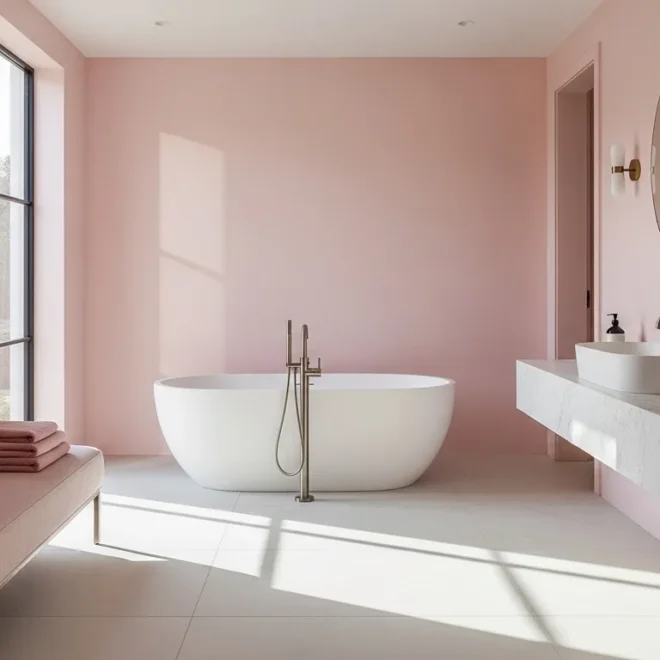

If you’re collecting Minimalist Bathroom ideas but worry minimalist will feel cold, a soft pink palette is the easiest way to keep things warm, modern, and genuinely relaxing. I’ve designed a lot of bathrooms where clients want “less visual noise” but still want personality—and this is one of my favorite directions because it reads clean, bright, and calm without looking bland. In this guide, I’ll walk you through how to use a Soft Pink Bathroom scheme with minimalist materials, what to buy (and what to skip), and exactly how to style it so it stays uncluttered in real life.
Color Palette
Dusty Blush#DCB9B7
Warm Porcelain#F9F7F4
Rose Taupe#C49A95
Powdered Petal#DCC0B8
Muted Terracotta Rose#BD8A80
Clay Blush#CDA29A
Minimalist Bathroom ideas: Soft Pink Serenity Done Right
The Psychology of Soft Pink in Your Bathroom
Why this “barely-there blush” feels calmer than white
Soft pink works beautifully in a bathroom because it gently warms the space without demanding attention. Pure white bathrooms can feel clinical—especially under cool LEDs—while a muted blush creates a subtle “skin-tone” warmth that flatters both the room and the people using it. In minimalist spaces, that matters: you’re intentionally using fewer items and fewer patterns, so the wall color and main finishes do more emotional heavy lifting.
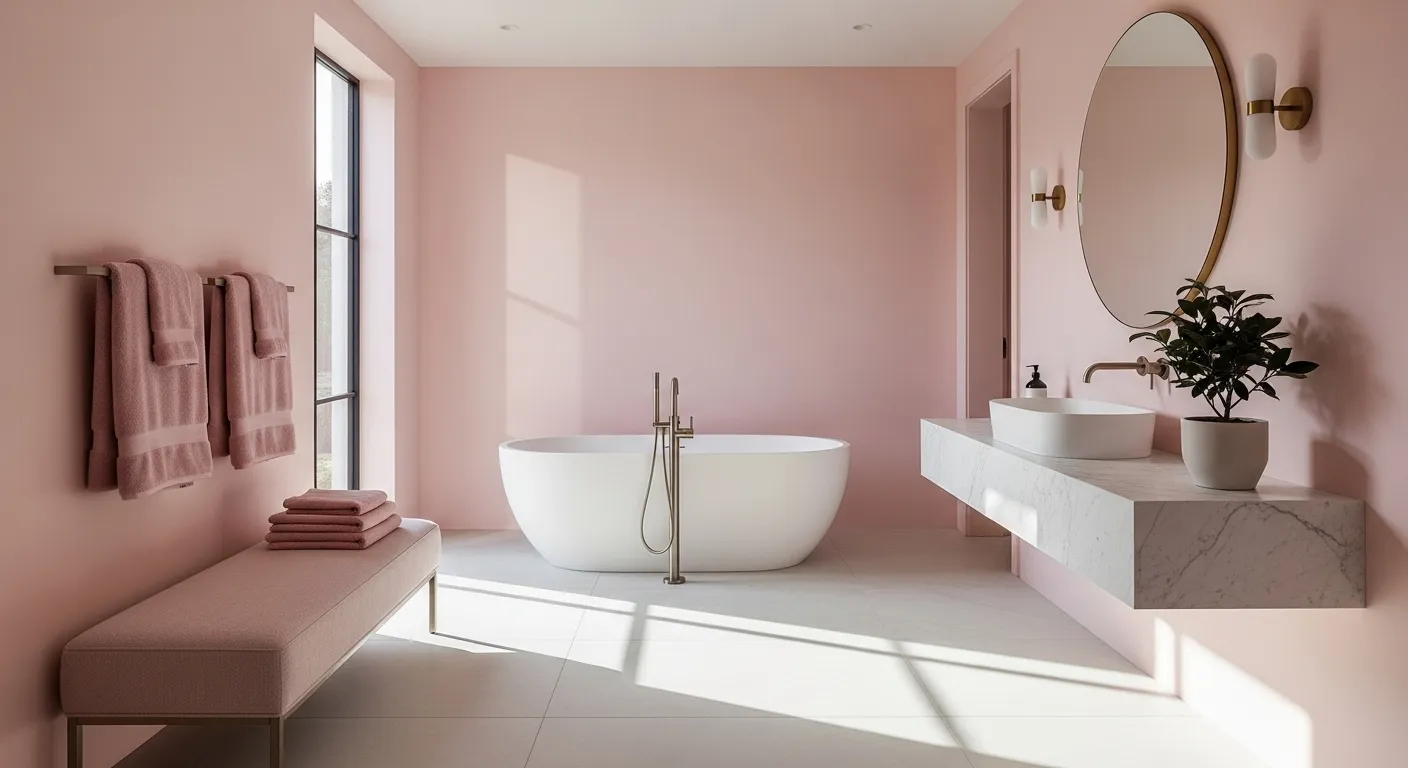
In the wide shot above, notice how the pink reads as a soft veil rather than a “color statement.” That’s the sweet spot for a Soft Pink Bathroom—the hue supports the architecture (floating vanity, round mirror, sculptural tub) instead of competing with it. This is also why this palette pairs so well with Minimalist decor: the room feels intentional even before you add a single accessory.
Where soft pink belongs (and where it doesn’t)
Use soft pink on walls, a vanity, or large-format tile to create a calm envelope. Keep high-traffic, high-water zones (shower floors, niche shelves) more neutral and grippy—think porcelain in warm white or pale greige—so practicality doesn’t undermine the serene vibe. If you want one bold contrast, do it with hardware (brass or matte black) rather than adding extra colors.
Color Combinations & Palette Ideas
Three minimalist pairings that always look elevated
When clients ask me for Minimalist Bathroom ideas that feel “designed,” I usually adjust only two things: the undertone of the pink and the temperature of the neutrals around it. Here are my most reliable combinations:
- Soft pink + warm porcelain white: Clean, bright, and spa-like. Great for small bathrooms because it bounces light.
- Soft pink + rose taupe + brass: More depth and a slightly vintage warmth, but still minimalist when shapes stay simple.
- Soft pink + cool stone + matte black: Modern and graphic—perfect if you like a sharper, editorial look.
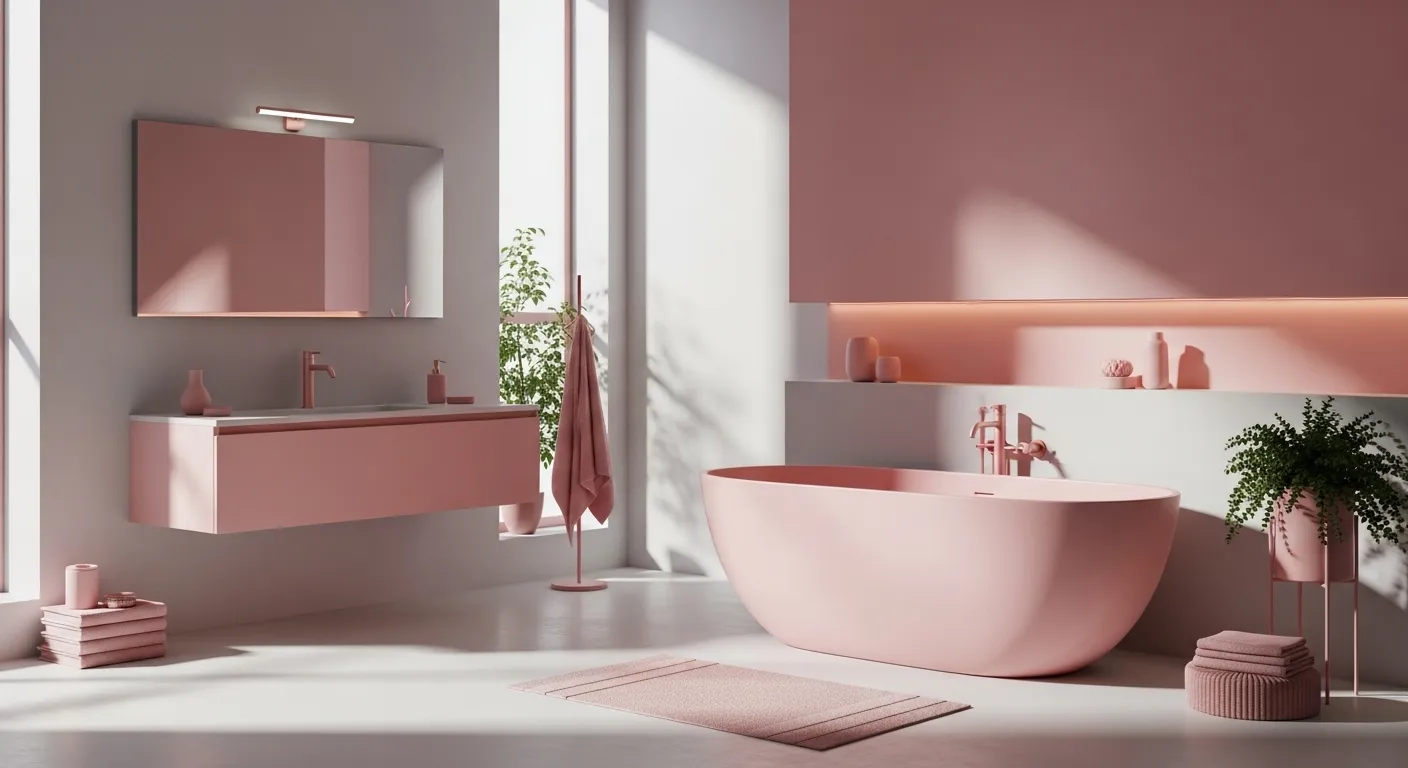
The vignette above is a great example of how to keep pink from feeling sugary: add stone-like whites, a whisper of gray, and one natural element (a single plant) for life. The goal isn’t to “decorate,” it’s to curate finishes that already look complete.
Undertones: the detail that makes the room look expensive
Soft pink can read dusty, peachy, or mauve depending on what sits next to it. Pair dusty blush with creamy whites (not blue whites). If your pink leans peach, use warmer whites and brass. If it leans mauve, you can bring in cooler stone and matte black for a crisp contrast. This is the behind-the-scenes move that keeps minimalist palettes from feeling “flat.”
Essential Furniture & Decor Elements
What to prioritize for a true minimalist layout
Minimalism in a bathroom isn’t about owning nothing—it’s about eliminating visual interruptions. That means choosing a few high-impact pieces that hide the daily mess (toiletries, backups, cleaning supplies) so your eye reads calm surfaces first. For most bathrooms, I prioritize:
- Floating vanity: Creates negative space under the cabinet, which instantly makes the room feel larger and lighter.
- Wall-spanning mirror (or oversized round): Fewer seams, more reflection, and a cleaner silhouette.
- Simple lighting: A pair of minimal sconces or a single linear fixture in a warm temperature (2700K–3000K).
- Closed storage: One tall cabinet or recessed medicine cabinet reduces countertop clutter dramatically.
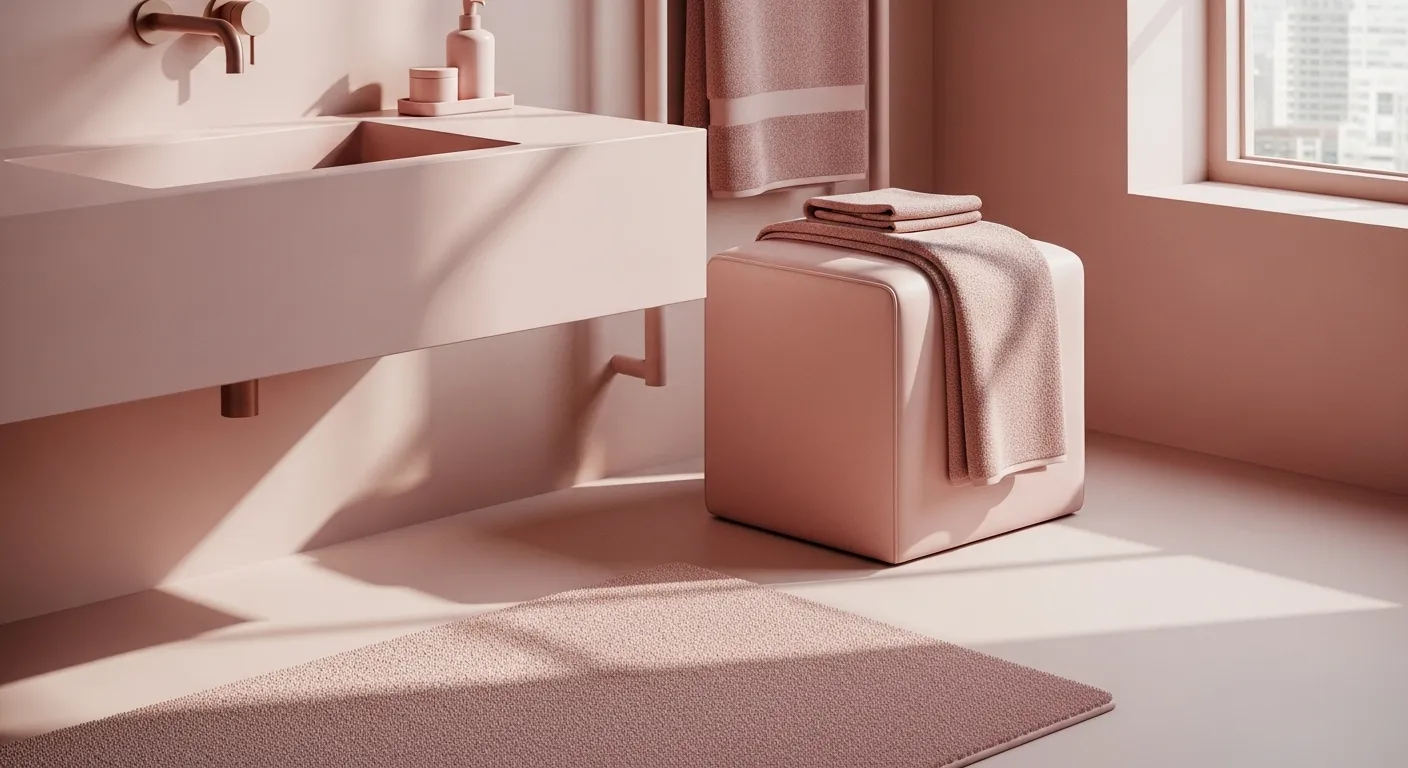
In the vanity detail above, the calm comes from restraint: a floating form, one small stool, and textiles that are neatly layered (not piled). If you want your Minimalist decor to stay functional, treat towels like part of the architecture—folded, consistent, and stored where they’re easy to maintain.
Materials that make soft pink feel modern (not childish)
To keep a Soft Pink Bathroom grown-up, rely on materials with quiet sophistication:
- Honed or matte stone look: Marble, quartz, or porcelain that mimics stone without heavy veining.
- Warm metals: Brushed brass adds glow; matte black adds edge.
- Texture over pattern: Ribbed glass, micro-cement, fluted cabinetry, or a linen shower curtain instead of busy prints.
One final essential: pick a single “hero” form—freestanding tub, statement mirror, or sculptural basin. In minimalist rooms, one strong shape reads more elevated than five small decorations.
Styling Tips & Budget Ideas
How to style without adding clutter
The styling goal in minimalist bathrooms is not “add more”—it’s “make fewer items feel intentional.” I style in micro-zones: a tub corner, the vanity surface, and a single wall moment. Start with function (soap, hand towel, tissue), then elevate with one natural element (plant or branch) and one soft element (textile or candle). Keep the palette tight so the eye rests.
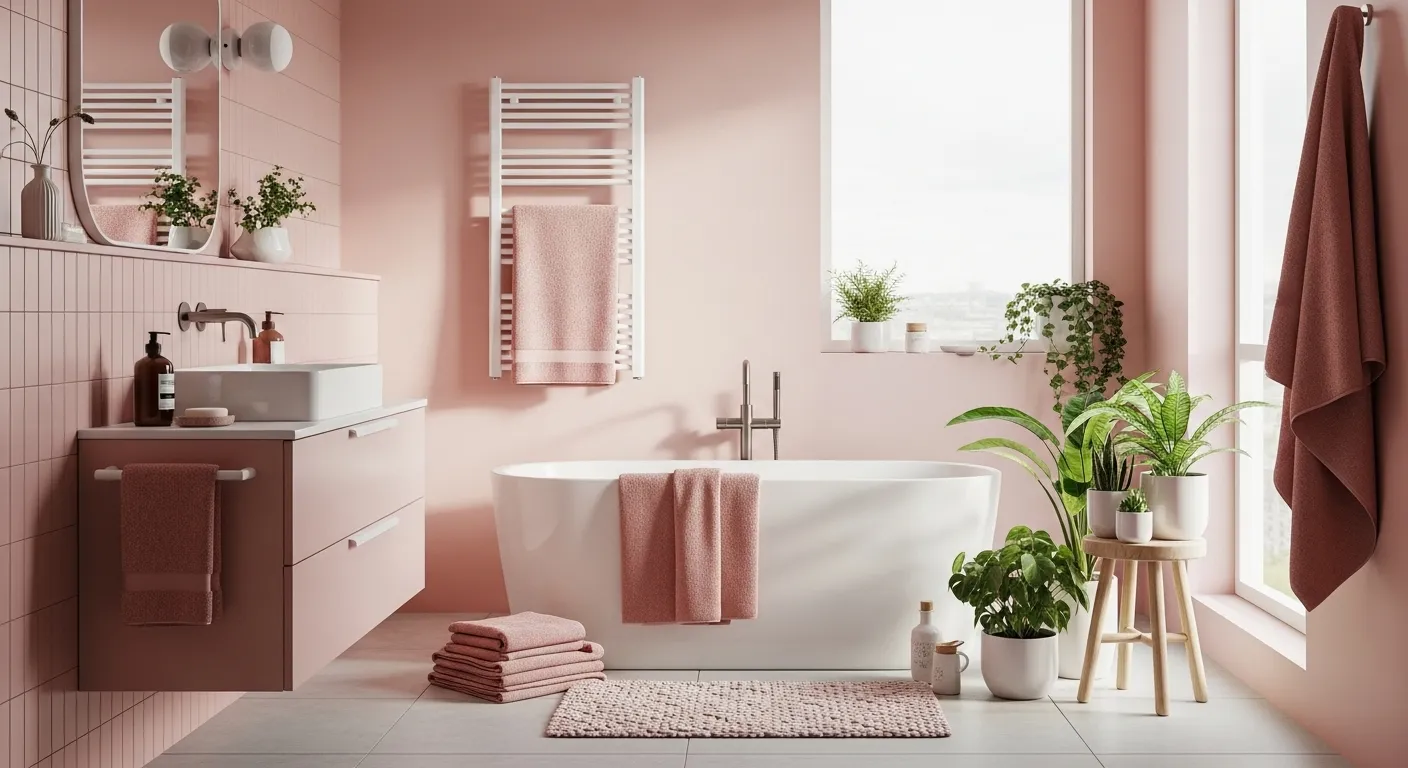
This cozy corner shows my favorite formula: white tub (clean silhouette), blush cabinetry (warmth), and greenery (life). It looks styled, but it’s also easy to maintain because each item has breathing room.
Budget ideas that still look designer
You don’t need a full renovation to get the look. If you’re working with existing tile and plumbing locations, spend your money on the elements that change the visual “read” of the room:
- Paint: A soft pink wall instantly sets the tone. Expect $45–$85 per gallon for premium bath paint.
- Hardware swap: New faucet + cabinet pulls add contrast. Plan $180–$450 for a faucet and $60–$180 for pulls.
- Lighting: One upgraded fixture can modernize everything. Budget $120–$350.
- Textiles: Matching towels and a simple bath mat look “hotel” when kept consistent. Budget $60–$180.
If you’re collecting Minimalist Bathroom ideas specifically to make mornings feel calmer, focus on surfaces: clear the counter, add closed storage, and keep only daily essentials visible. That’s the difference between “minimalist style” and a minimalist life that actually works.
How to Recreate This Look
Step-by-step plan (with a realistic checklist)
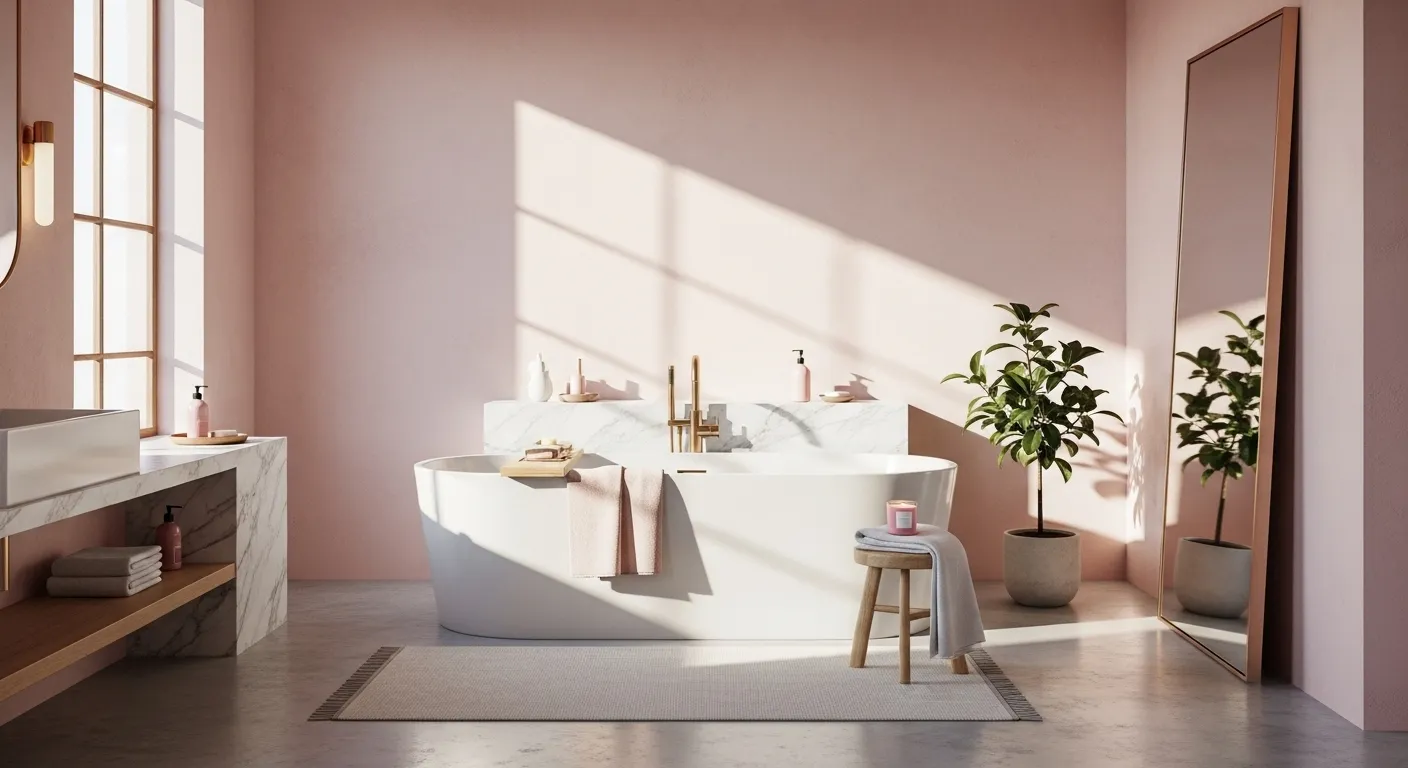
- Choose your soft pink anchor. Decide whether pink is your wall color, vanity color, or tile accent. For most homes, pink walls are the easiest and most reversible.
- Lock in two neutrals. Use a warm white for trim/tile and a stone tone for countertops or floors. This prevents the room from reading “all pink.”
- Pick one metal finish. Brass for warmth (as shown above) or matte black for contrast. Then keep it consistent: faucet, shower trim, pulls, towel bar.
- Upgrade to a floating vanity (if possible). Even a wall-hung look with a recessed toe-kick helps. Prioritize drawers over doors for daily usability.
- Go oversized on the mirror. A large mirror reduces visual fragmentation and amplifies light—one of my most-used moves in Minimalist Bathroom ideas.
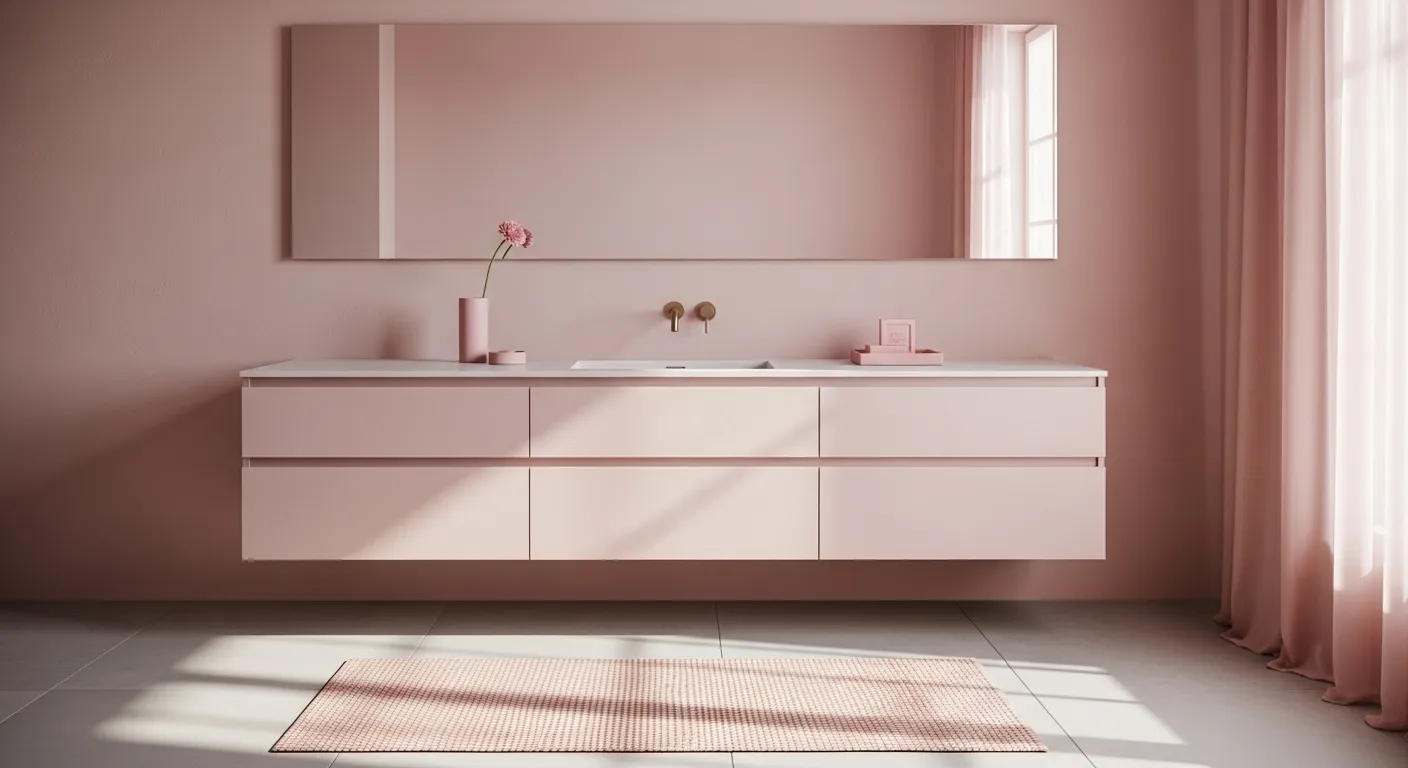
That oversized mirror + floating vanity combo is the quickest route to a clean minimalist “canvas.” From there, you’re styling—not correcting the layout.
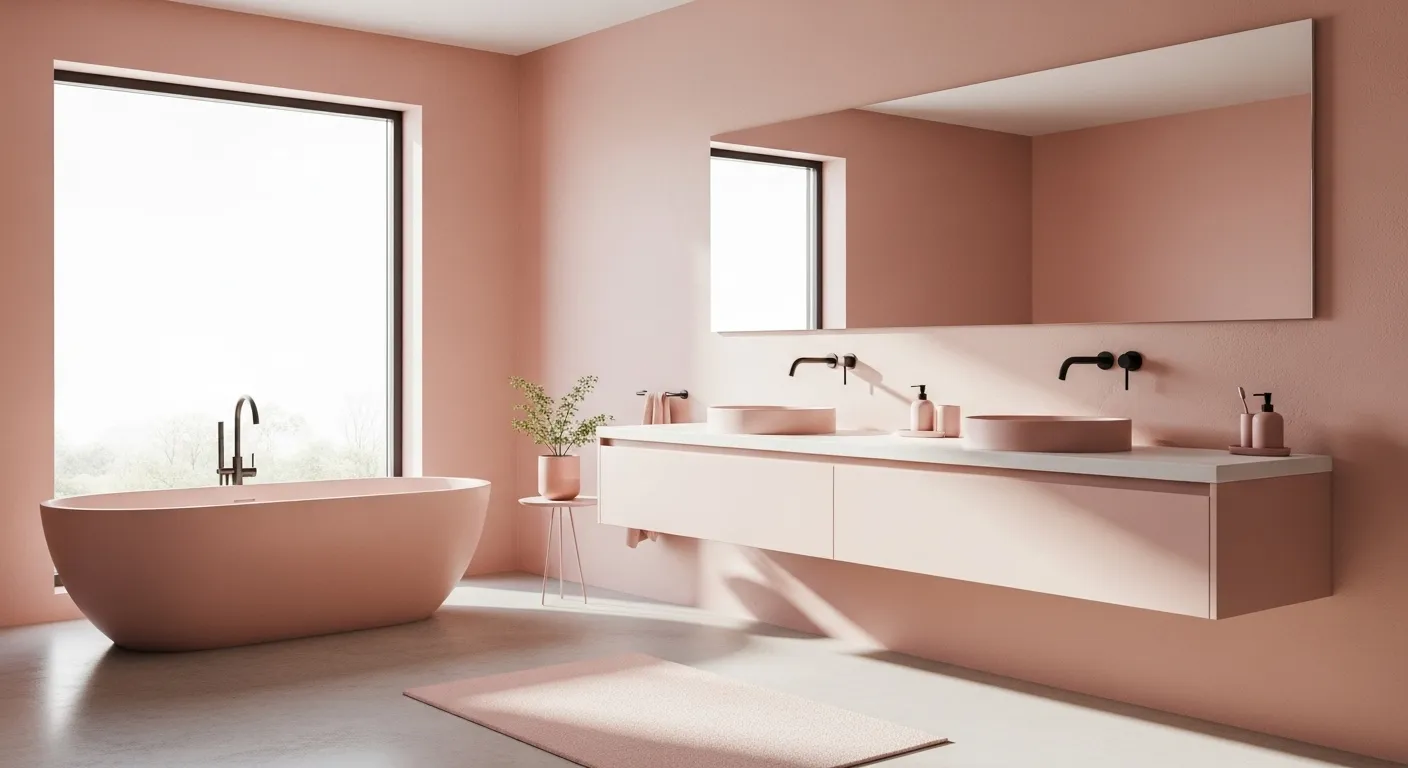
If you share the space, a floating double vanity (like the setup above) keeps the minimalist look while preventing countertop creep. Two sinks aren’t just a luxury—they’re a clutter-control strategy.
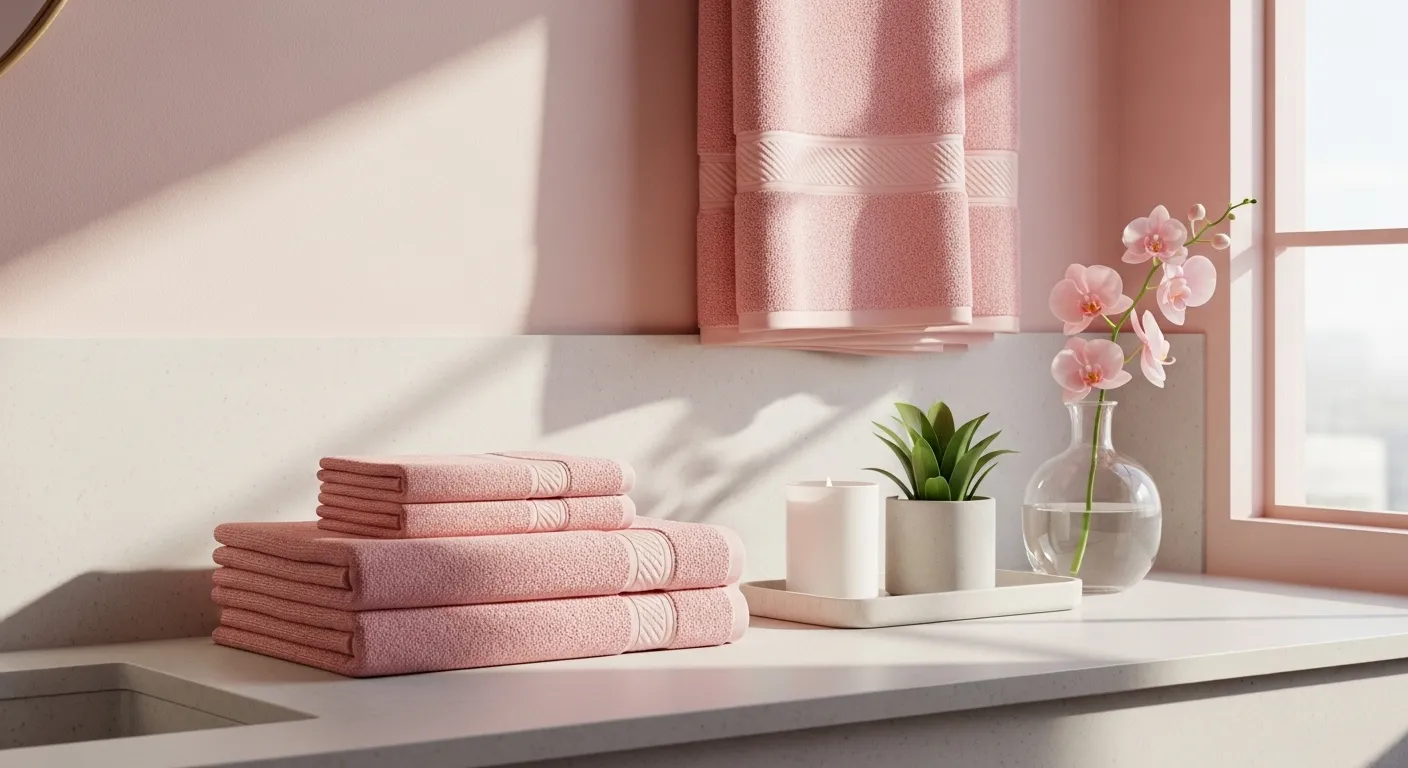
Finish with one contained vignette: a small tray, a candle or soap, and a single plant or stem. This keeps the counter usable while still feeling styled.
Budget (2 tiers)
Low Budget: $350–$900
- Soft pink paint + supplies: $90–$180
- Faucet swap (single): $180–$350
- Mirror upgrade: $80–$200
- Textiles + tray styling: $60–$170
Mid Budget: $1,500–$4,200
- Floating vanity (24″–48″) + top: $700–$2,200
- Faucet + matching hardware set: $350–$950
- Lighting (fixture + bulbs) + electrician allowance: $250–$800
- Oversized mirror / medicine cabinet: $200–$750
- Paint + pro prep (as needed): $0–$500
FAQ
- Will soft pink make a small bathroom feel smaller? Not if the pink is muted and paired with warm white. In my experience, the warmth can actually make tight bathrooms feel more inviting than stark white.
- What’s the best hardware finish for a Soft Pink Bathroom? Brushed brass is the easiest “designer” win; matte black is the most modern. Choose one and repeat it everywhere for a true minimalist look.
- How do I keep minimalist bathrooms from looking empty? Add texture, not stuff: ribbed towels, a stone tray, a linen curtain, or a matte tile. Texture reads rich without adding clutter.
- Can I do this look in a rental? Yes—paint (if allowed), swap the mirror and light, update textiles, and use peel-and-stick hardware. Keep your changes reversible and focus on a clean counter zone.
How to Recreate This Look
Step-by-step plan (with a realistic checklist)
- Choose your soft pink anchor. Decide whether pink is your wall color, vanity color, or tile accent. For most homes, pink walls are the easiest and most reversible.
- Lock in two neutrals. Use a warm white for trim/tile and a stone tone for countertops or floors. This prevents the room from reading “all pink.”
- Pick one metal finish. Brass for warmth or matte black for contrast. Then keep it consistent: faucet, shower trim, pulls, towel bar.
- Upgrade to a floating vanity (if possible). Prioritize drawers over doors for daily usability and better clutter control.
- Go oversized on the mirror. A large mirror reduces visual fragmentation and amplifies light—one of the simplest upgrades for Minimalist Bathroom ideas.
Budget
Low Budget: $350–$900
- Soft pink paint + supplies: $90–$180
- Faucet swap (single): $180–$350
- Mirror upgrade: $80–$200
- Textiles + tray styling: $60–$170
Mid Budget: $1,500–$4,200
- Floating vanity (24″–48″) + top: $700–$2,200
- Faucet + matching hardware set: $350–$950
- Lighting (fixture + bulbs) + electrician allowance: $250–$800
- Oversized mirror / medicine cabinet: $200–$750
- Paint + pro prep (as needed): $0–$500
FAQ
- Will soft pink make a small bathroom feel smaller? Not if the pink is muted and paired with warm white; it often feels softer and more open than stark white.
- What’s the best hardware finish for a Soft Pink Bathroom? Brushed brass for warmth or matte black for modern contrast—choose one and repeat it.
- How do I keep minimalist bathrooms from looking empty? Use texture (matte tile, stone tray, ribbed towels) instead of extra objects.
- Can I do this look in a rental? Yes—focus on paint (if allowed), mirror/lighting swaps, consistent textiles, and reversible upgrades.
Final Thoughts
The best Minimalist Bathroom ideas aren’t about perfection—they’re about creating a space that’s easy to reset in two minutes. A Soft Pink Bathroom palette is one of my go-to solutions because it keeps minimalism feeling livable: warm walls, clean silhouettes, and a few tactile materials do all the work. Keep your finishes consistent, commit to closed storage, and style in small, contained zones. When you do, minimalist becomes the most relaxing room in the house—not the most demanding.