
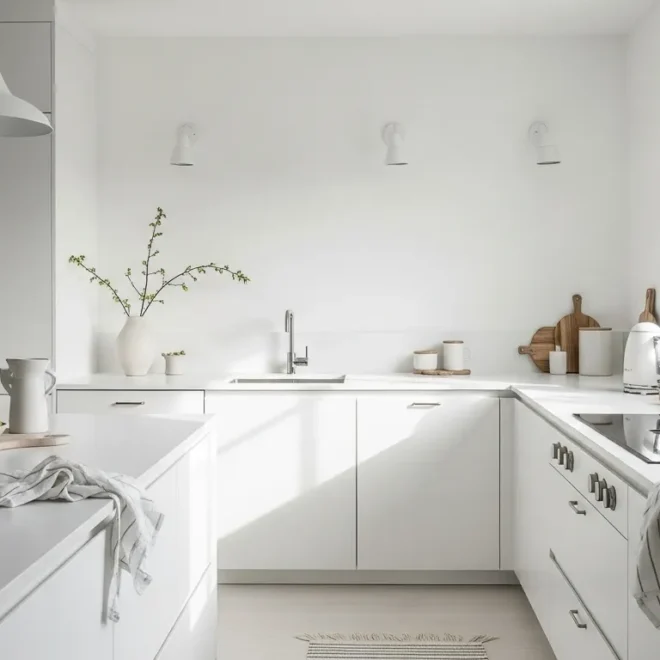

Scandi Kitchen ideas work so well in real homes because they’re not about perfection—they’re about making the busiest room in the house feel lighter, calmer, and easier to use. A White Kitchen is the Scandinavian classic for a reason: white surfaces reflect daylight, reduce visual noise, and create a “reset” feeling every time you walk in (even when dinner prep gets chaotic).
In my projects, the most successful Scandinavian kitchens are the ones that balance crisp white with warmth: light wood, matte finishes, soft textiles, and just enough contrast so the room doesn’t feel flat. Think: clean but cozy, minimal but practical, and styled with everyday objects that earn their place.
Below you’ll find the psychology behind white, simple palettes you can copy, the furniture and Scandi decor details that make the look believable, plus budgets and a step-by-step plan to recreate it without turning your kitchen into a showroom.
Color Palette
Soft Stone#D8D8D5
Warm Gray#B5B6B2
Mossy Slate#8B8F88
Frost White#F3F3F3
Cloud Gray#CFCFCF
Soft Graphite#A8A8A8
The Psychology of White in Your Kitchen
Why white feels like a “reset” in daily life
When clients ask me why Scandinavian spaces feel so livable, I usually start with one thing: the background color. In a kitchen, your eyes process a lot—appliances, packaging, utensils, crumbs, mail, homework, you name it. White acts like visual noise-canceling. It’s linked with cleanliness and clarity, which is why a White Kitchen often feels more organized than it actually is.
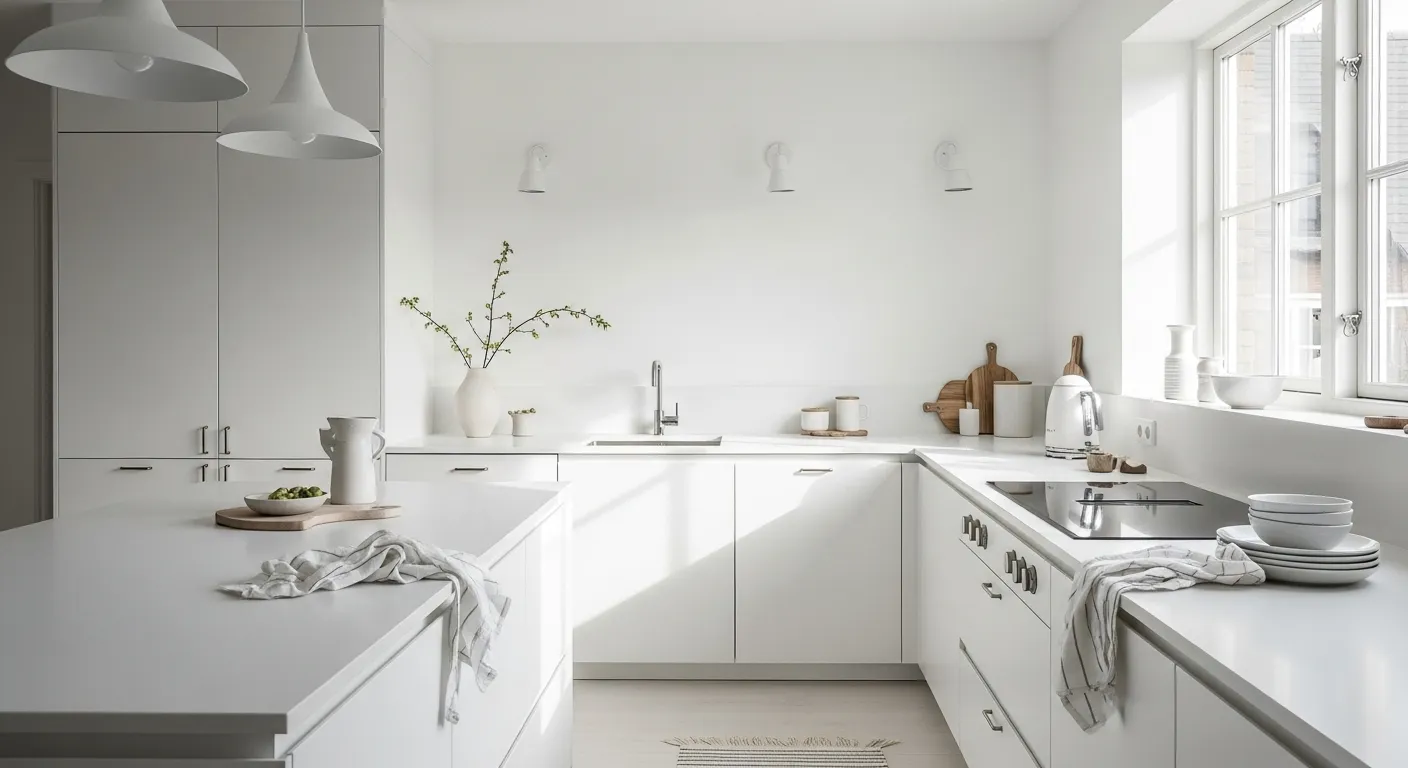
It also changes the way you experience natural light. In Nordic countries, daylight is precious; white multiplies it. That’s exactly what you see in the wide, airy view below: clean lines, bright surfaces, and a window doing most of the heavy lifting. It’s one of my favorite starting points for Scandi Kitchen ideas because you can build warmth on top of it.
How to keep white from feeling cold
White is honest: it reflects whatever you put near it—light temperature, material undertones, and even your clutter. If the lighting is too cool (4000K+), white can go clinical fast. If the finishes are all glossy, it can look hard and echo-y.
To preserve that calm Scandi mood, pair white with tactile warmth: pale oak, woven textures, linen towels, matte ceramics, and a gentle contrast color (soft gray, greige, or muted black). This is the psychological sweet spot: bright enough to energize mornings, soft enough to decompress in the evening.
Color Combinations & Palette Ideas
Four palettes that stay Scandinavian (and livable)
The best Scandi Kitchen ideas use white as the “quiet canvas,” then add depth through undertones and natural materials. I keep palettes simple so they hold up to real life: kid art on the fridge, a loaf of bread on the counter, and a sink that’s actually used.
1) White + warm oak + soft greige
This is my go-to for cozy Scandinavian. Use white on cabinets and walls, then bring oak through stools, shelving, or a table. Greige belongs in the backsplash, runner, or Roman shade—subtle, not busy.
2) White + matte black + natural textures
If you want a sharper look, add matte black in small doses: faucet, pulls, or pendants. Keep the rest warm (oak, creamy textiles) so the contrast feels graphic—not harsh.
3) White + sage accents + light wood
Sage reads “nature” instantly. I like it for a small painted island, a few ceramics, or art. It calms the room without darkening it.
4) Layered whites (soft minimal)
Mix a crisp cabinet white with a slightly creamier backsplash tile and a warmer wall white. The room feels expensive because the layers are intentional.
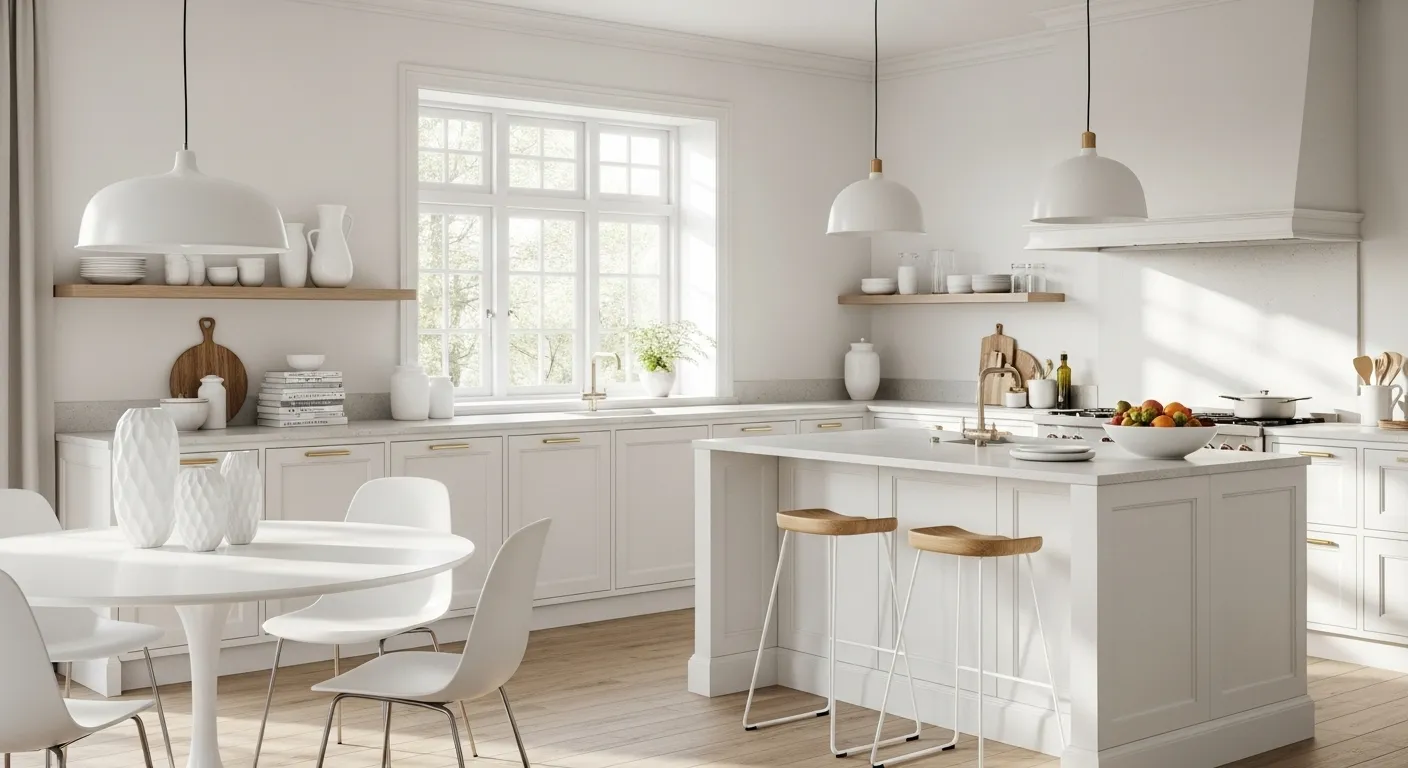
The vignette below shows this balance beautifully: bright cabinetry, warm wood, and gentle contrast—exactly how a Scandinavian palette stays airy without looking flat.
Essential Furniture & Decor Elements
The foundation pieces that make it feel “Scandi,” not sterile
Scandinavian kitchens look minimal because the big elements do most of the work. If the cabinetry, counters, and lighting are right, you can style with less—and the room still feels finished. This is where Scandi decor becomes practical: fewer objects, better shapes, better materials.
Cabinetry: For a real-life-friendly White Kitchen, I prefer matte or satin over high-gloss. Fingerprints show less, and it photographs softer. Flat-front doors lean modern; Shaker fronts lean classic—both can be Scandinavian if the color and hardware stay restrained.
Countertops: Keep the pattern quiet. White quartz, pale stone-look surfaces, or a very subtle veining reads clean and calm. If you want warmth, a light wood counter can be beautiful—just make sure it’s properly sealed and maintained.
Sink + faucet: Choose simple silhouettes. One streamlined faucet in matte black, brushed nickel, or brushed brass is enough contrast—especially against white.
Seating: Light wood stools with comfortable footrests are my staple. They add warmth and keep the room from feeling “all built-in.”
The image below is a perfect example of why Scandinavian kitchens feel effortless: flat-front cabinetry, a hardworking island sink, and stools that add warmth without visual clutter.

Everyday decor that earns its place
Think “useful beauty.” A ceramic utensil crock, a wood cutting board that lives on the counter, a stoneware bowl for fruit, and a matching soap bottle set can act as decor without becoming clutter.
Styling Tips & Budget Ideas
Make it feel calm on a Tuesday night (not just in photos)
The Scandinavian look holds up because it’s based on routines: clear counters, smart storage, and a few repeatable styling moments. When I’m styling a White Kitchen, I’m not trying to fill space—I’m trying to create pauses for the eye.
Tip 1: Create one “hero” moment.
Pick one small zone to keep consistently pretty: a coffee station, the sink corner, or the cooktop wall. A tray + soap set + one plant is enough.
Tip 2: Use the “two textures + one contrast” formula.
Choose two warm textures (oak + linen, or ceramic + woven basket) and one contrast (matte black, soft graphite, or brushed brass). This is one of the most reliable Scandi Kitchen ideas because it creates depth without clutter.
Tip 3: Style open shelving like a capsule wardrobe.
Repeat shapes and colors: white stoneware, clear glass, one wood element. Leave negative space so it feels intentional, not busy.
The cozy corner below shows this perfectly—warm wood shelving, a little greenery, and simple ceramics that look good because they’re edited.

Quick budget refresh ideas (no renovation required)
Hardware swap: $60–$220 for pulls/knobs in matte black or brushed nickel (depending on count).
Lighting warmth: $25–$80 for warm LEDs + $35–$120 for a dimmer switch (electrician not included).
Textiles: $40–$140 for a washable runner + linen towels.
Countertop styling kit: $35–$110 for a tray, soap bottle, and a ceramic crock.
If you can only do one thing: fix lighting. Warm, layered lighting is what makes white feel like “home,” not a lab.
How to Recreate This Look
Step-by-step plan (with the order I use on real projects)
If you want the look to feel cohesive, sequence matters. Start with the largest, most permanent surfaces, then add contrast and texture at the end. The following steps are the same ones I’d use to implement Scandi Kitchen ideas in an everyday home.
- Choose your white (and commit). Pick one cabinet white and one wall white (often the wall is slightly warmer). Sample in daylight and nighttime lighting.
- Lock in the warm material. Decide where wood will live: stools, shelves, a table, or accessories. In Scandinavian kitchens, wood is the “softening agent.”
- Pick one contrast finish. Matte black, brushed nickel, or brushed brass—just one family. Apply it to faucet + hardware + one light if possible.
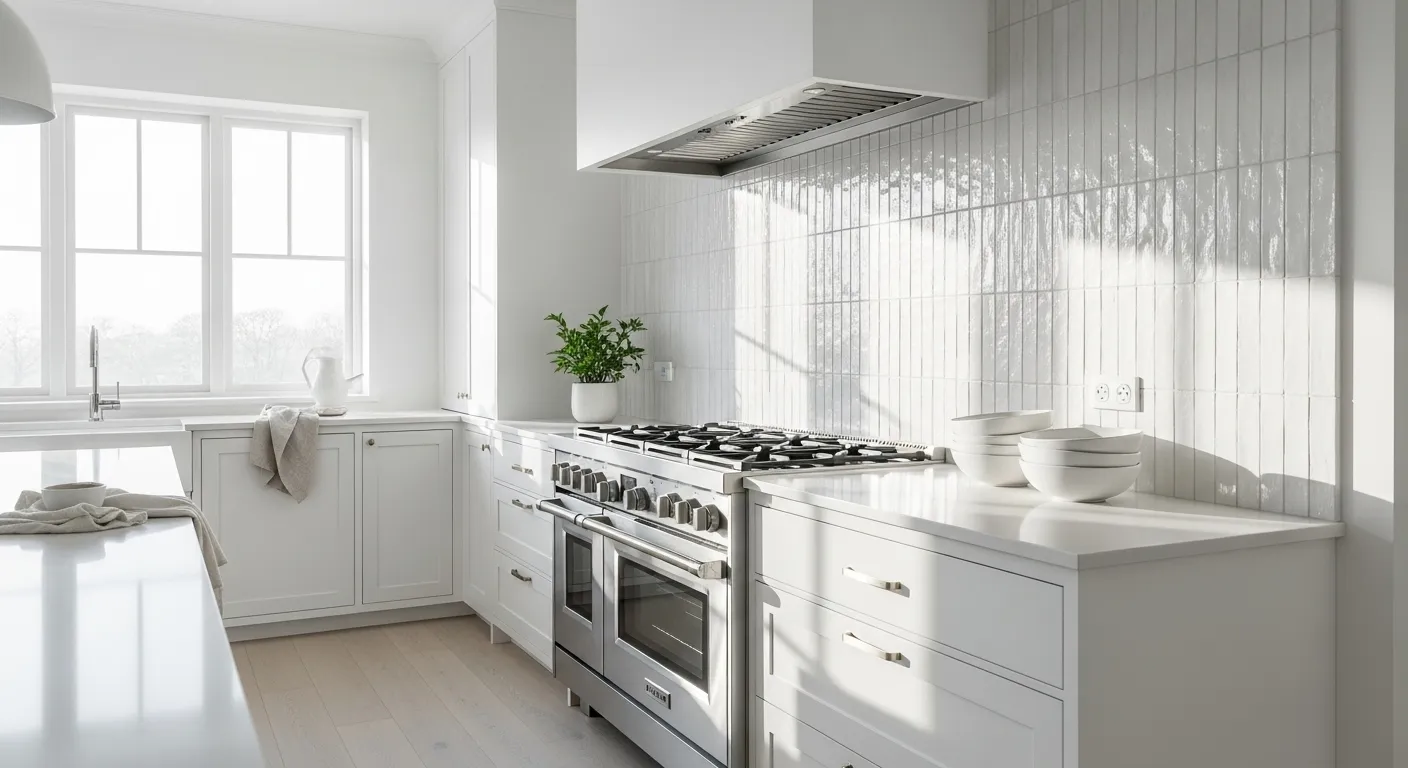
- Refine the backsplash. Keep it simple: vertical stack tile, classic subway, or a quiet stone look. The glossy vertical tile in the image below is bright, clean, and still textured.
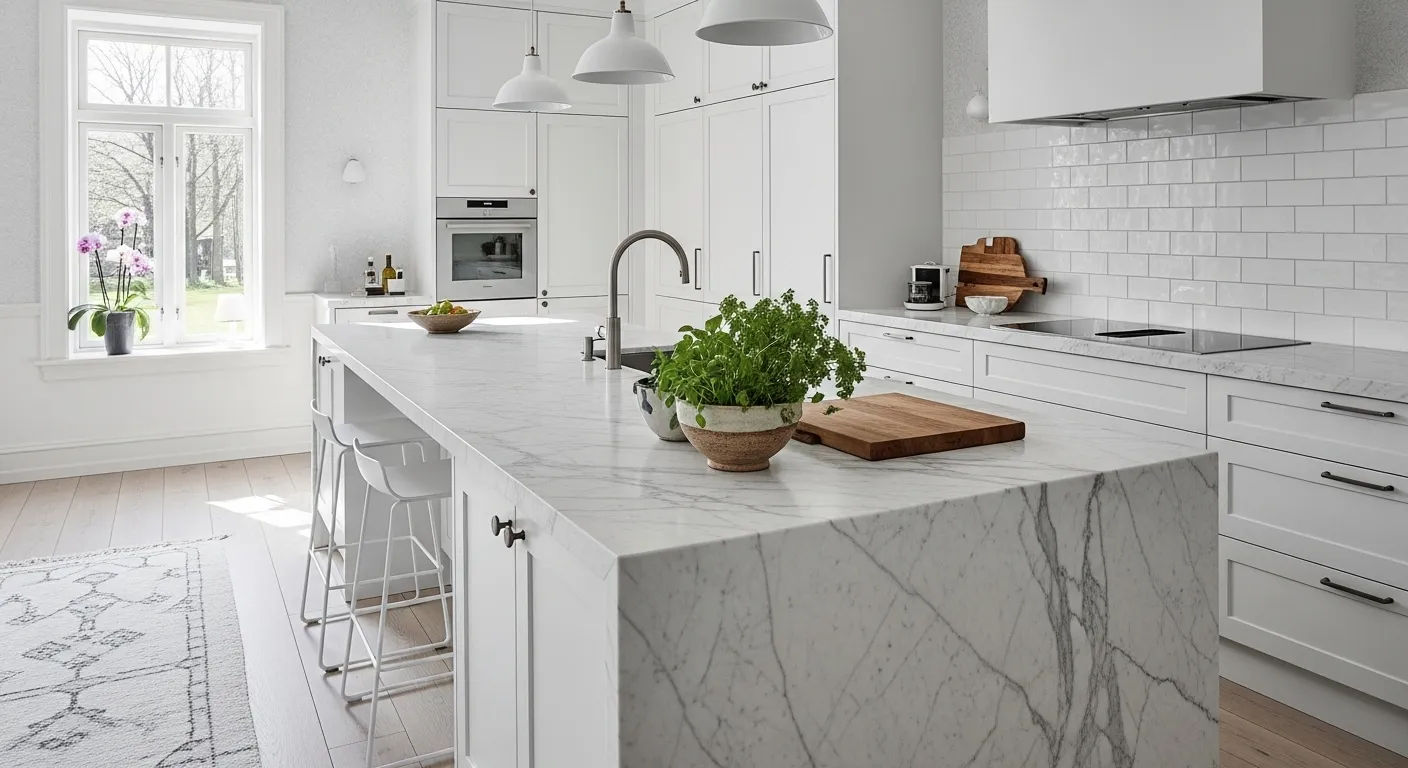
- Upgrade one “wow” surface (optional). If budget allows, a waterfall island creates a clean architectural moment. The marble version below is dramatic, but still Scandinavian because the palette stays restrained and the lighting is soft.
- Edit and zone your surfaces. Create a coffee zone or sink zone with a tray, then keep everything else clear. This is the difference between “minimal” and “empty.”
- Finish with soft styling. Add one plant or branch, one bowl of fruit, and textiles that match your undertones.
Right before you call it done, do a final “scan” from the entry. The airy island-and-shelves composition below is a great model: light, open, and calm, with just enough contrast to define edges.
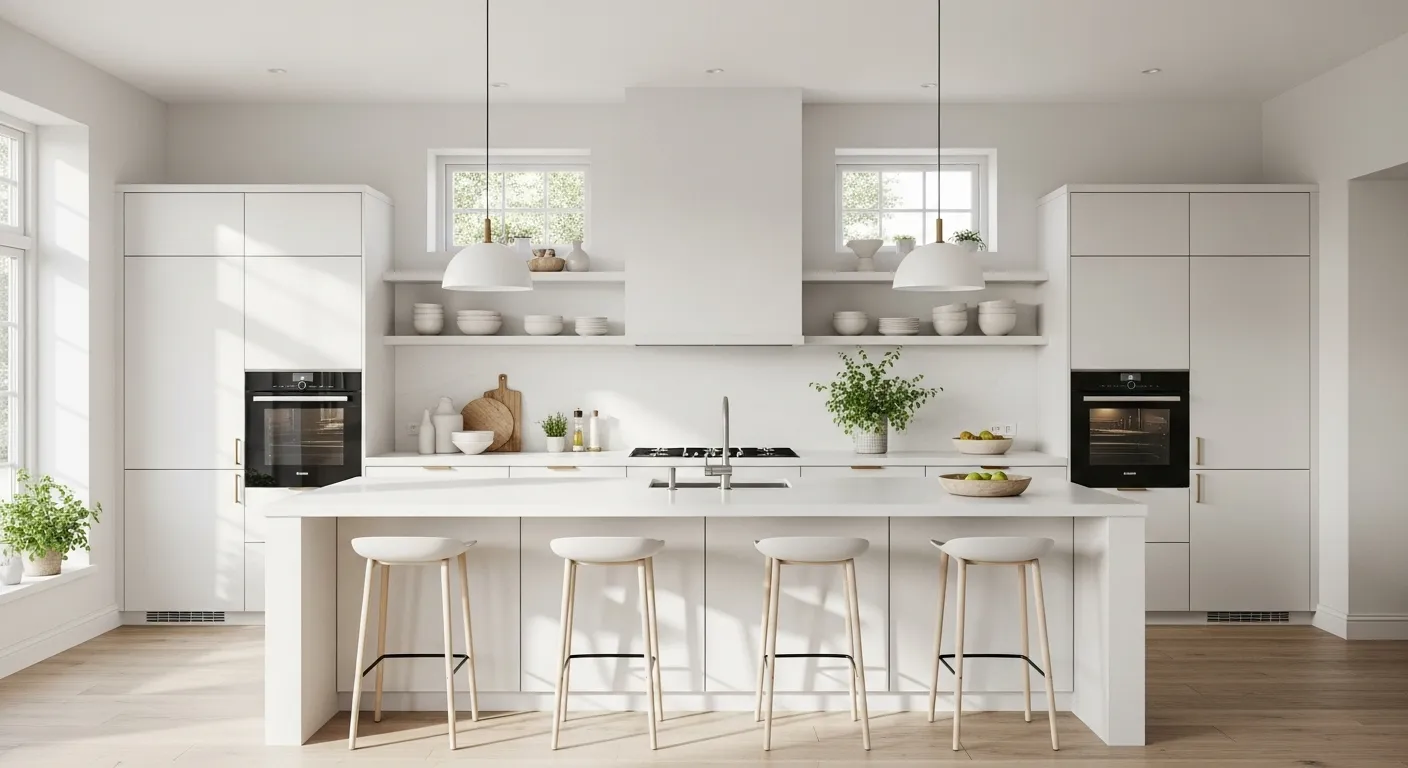
Finally, I like to do a “lighting check” photo at night. If the kitchen still feels soft and warm, you nailed it. The seamless white cabinetry and gentle pendants below show that calm finish you’re aiming for.

Budget (2 tiers)
Low Budget: $450–$1,250
• Paint + supplies for walls/cabinets touch-ups: $120–$350
• Hardware swap (pulls/knobs): $60–$220
• Warm LED bulbs + dimmer: $60–$200
• Textiles (runner + 2–3 towels): $40–$160
• Styling kit (tray, soap bottles, utensil crock, small plant): $70–$320
Mid Budget: $2,800–$7,500
• Professional cabinet repaint or refinishing (average kitchen): $1,800–$4,500
• New backsplash installed: $650–$1,800
• New pendant lighting (2 fixtures) + install: $350–$1,200
FAQ
1) What white paint finish is best for a Scandinavian kitchen?
For walls: eggshell or matte-washable. For cabinets: satin or matte cabinet-grade finish. Matte looks most “Scandi,” satin is often more forgiving for cleaning.
2) How do I keep a white kitchen from feeling sterile?
Add warm wood, soften with textiles, and switch to warm lighting. One plant and one natural material (oak, linen, rattan) goes a long way.
3) Can I do Scandi decor if I have stainless appliances?
Yes. Stainless reads clean and functional—very Scandinavian. Keep the rest of the palette quiet and avoid busy patterns.
4) What’s the easiest “one change” to get the Scandinavian look?
Lighting temperature + a hardware swap. Warm bulbs and simple pulls instantly move a kitchen toward Scandinavian calm.
How to Recreate This Look
- Choose your white (and commit). Pick one cabinet white and one wall white (often slightly warmer). Sample in daylight and at night.
- Add one warm wood element. Stools, shelves, or a small dining table will keep the White Kitchen from feeling cold.
- Select one contrast finish. Matte black, brushed nickel, or brushed brass—use it consistently on faucet + hardware.
- Keep the backsplash quiet. Vertical stack or simple subway tile works best; avoid high-contrast patterns.
- Zone surfaces. Make one tray-based vignette (sink or coffee) and keep remaining counters clear.
- Warm the lighting. 2700K–3000K bulbs + dimmer for nightly coziness.
Budget
Low Budget: $450–$1,250
Paint/supplies $120–$350; hardware $60–$220; bulbs/dimmer $60–$200; textiles $40–$160; styling $70–$320.
Mid Budget: $2,800–$7,500
Cabinet repaint/refinish $1,800–$4,500; backsplash installed $650–$1,800; pendants + install $350–$1,200.
FAQ
1) Best finish for Scandinavian cabinets?
Matte or satin—matte looks most Scandi, satin cleans easily.
2) How do I add warmth quickly?
Oak accents + linen textiles + warm bulbs.
3) Are open shelves required?
No—one short run of shelving is plenty if you want the look without maintenance.
4) Can I mix metals?
In Scandi style, it’s cleaner to choose one main finish and repeat it.
Final Thoughts
The reason Scandi Kitchen ideas last is that they support real routines: bright mornings, calm prep space, and cozy evenings—all without needing constant styling. Start with a clean white foundation, layer in warm wood and matte textures, and keep contrast intentional. Do that, and your White Kitchen will feel timeless, practical, and genuinely restful—exactly what Scandinavian design is meant to deliver.