
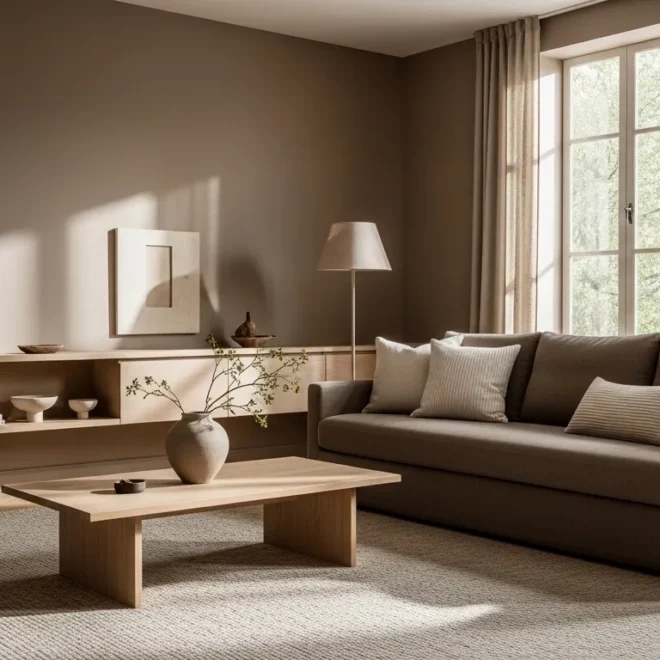

If you’re collecting Japandi Living Room ideas and you keep saving rooms that feel calm, warm, and quietly elevated, taupe is your shortcut. In my own design work, taupe is the “bridge” color I reach for when clients want the softness of beige but with more depth—and when they love wood tones yet don’t want the room to read orange or rustic. The result is a living room that feels grounded (Japanese restraint) and welcoming (Scandinavian comfort), without looking stark or overly styled.
Below, I’ll walk you through the exact decisions I make—paint direction, wood tone, furniture scale, and the small styling moves that make a Taupe Living Room feel intentional rather than bland. Everything is actionable, and you’ll find clear budget ranges so you can plan with confidence.
Color Palette
The Psychology of Taupe: Why It Works for Japandi Living Room ideas
Taupe is one of those colors that behaves beautifully in real homes—especially in everyday spaces that need to look good in morning light, afternoon glare, and cozy evening lamp light. Unlike cool greige (which can go flat and slightly clinical), taupe carries a gentle warmth that plays nicely with wood, linen, and natural stone. In Japandi design, that matters because the style isn’t about “decorating” as much as it’s about creating a sense of quiet order. Color should support that calm, not compete for attention.
From a designer’s perspective, taupe also solves a common problem: clients often love minimalism in photos but feel uncomfortable living in stark white rooms. A Taupe Living Room gives you the softness people crave while still reading clean and pared back. It’s forgiving with kids and pets, it hides minor scuffs better than white, and it makes negative space feel intentional instead of empty.
The emotional effect is subtle but real. Taupe tends to lower visual noise, which makes the room feel slower and more restorative—perfect for a living room where you want conversation, reading, and downtime. If you’re drawn to calm interiors but you don’t want your home to feel cold, this is your lane.
Notice how taupe dominates the room without feeling heavy in the wide shot below—the warmth sits in the background, letting wood and texture do the storytelling.
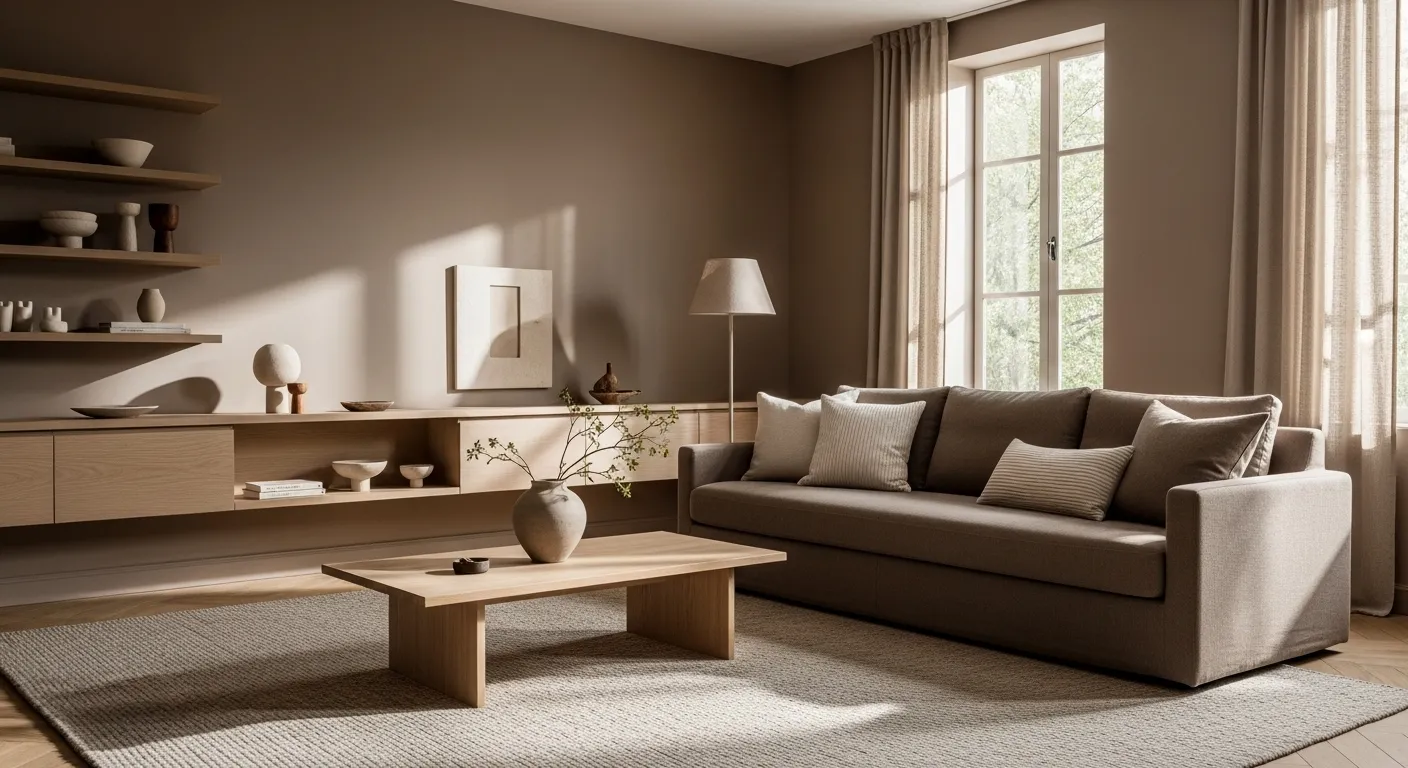
Action step: if you’re starting from scratch, commit to taupe on the walls or in the largest upholstered piece (sofa). Doing both can work, but only if you add contrast with darker wood, black accents, or a strong off-white in textiles to keep the room from blending into one note.
Essential Furniture & Japandi decor to Get the Look Right
The fastest way to make Japandi feel authentic is to focus on proportion and materials before you worry about accessories. Japandi rooms almost always lean lower to the ground (visually and literally). That doesn’t mean you need a floor sofa, but it does mean you should avoid overly tall, puffy pieces that read traditional suburban living room. Look for a lower-profile sofa with clean lines, a comfortable but structured seat, and upholstery that has texture (bouclé, woven linen blends, tight basketweave). In a Taupe Living Room, texture is what keeps neutrals from looking flat.
For the coffee table, I nearly always recommend a low wood piece with softened edges—rounded corners, pill shapes, or a subtle waterfall edge. Wood tone is your “temperature control”: pale oak feels airy and Scandinavian; mid-tone oak feels warm and organic; walnut or smoked oak introduces sophistication and contrast. Pair one strong wood note with one secondary (for example: oak coffee table + slightly deeper oak shelves) rather than mixing three competing woods.
Then add one to two supporting pieces that do quiet work: a slim console, a simple lounge chair, or a closed storage cabinet. In Japandi decor, hidden storage is part of the aesthetic—less visual clutter equals more calm. If you can swap an open bookshelf for a cabinet with doors, you’ll instantly get that serene, gallery-like feeling.
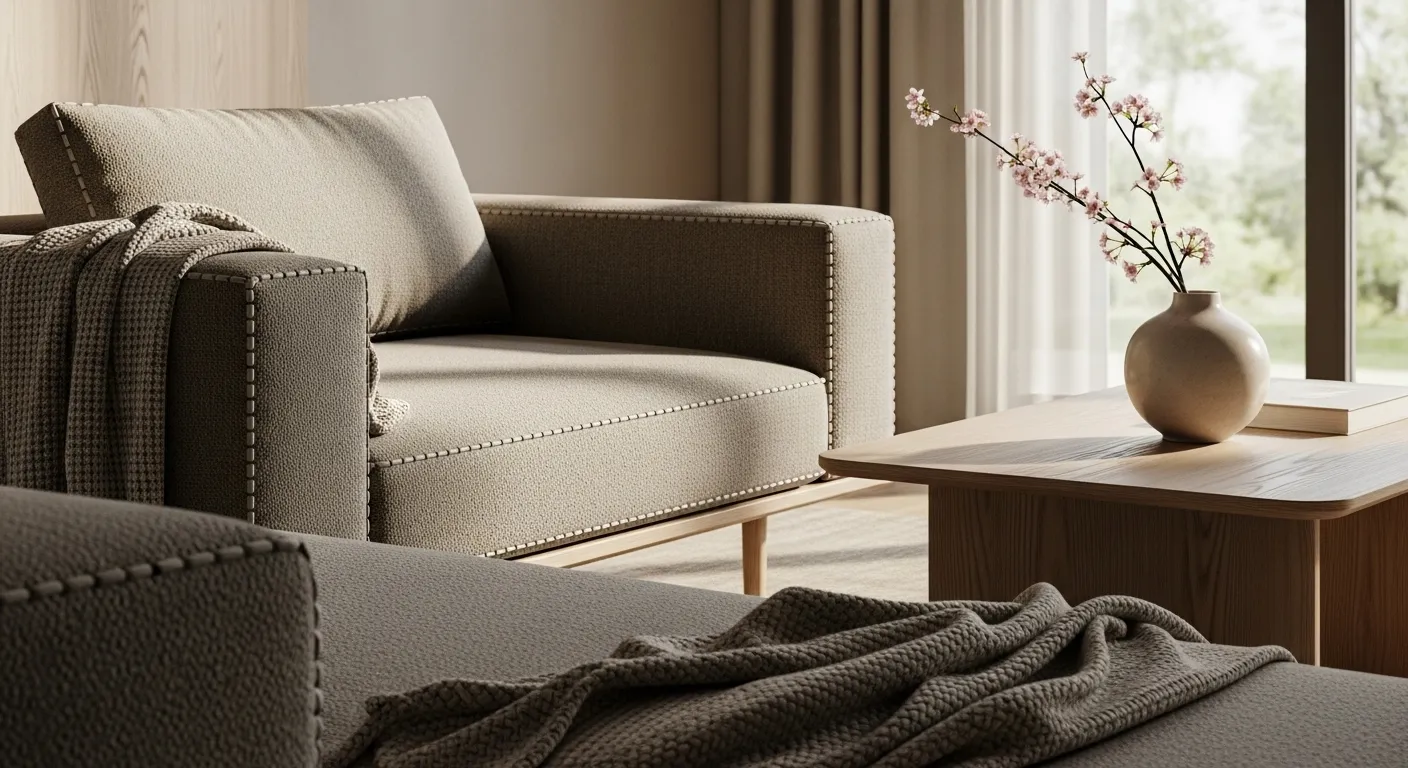
The detail shot below shows the exact mix I aim for: textured upholstery, a low wood table, and a single sculptural ceramic moment that feels intentional, not fussy.
Action steps you can do this weekend:
- Measure your current coffee table height. If it’s higher than your sofa seat height, consider swapping to a lower table for an instant Japandi shift.
- Edit surfaces: keep 1–3 objects per surface (tray, vase, book). Everything else gets stored.
- Choose one ceramic family (matte stoneware, off-white, or sand) and repeat it twice in the room for cohesion.
Color Combinations & Palette: Layering a Taupe Living Room
Taupe is a chameleon, so the key is choosing a palette with clear roles. I build most Japandi color stories with a “60/30/10” approach:
- 60% soft taupe (walls or sofa) as the calm foundation
- 30% warm off-whites and sand tones (rug, curtains, larger textiles)
- 10% contrast and depth (espresso wood, charcoal accents, black metal, or deep brown)
When people tell me their taupe room feels dull, it’s almost always because they skipped the 10%. That 10% doesn’t need to be loud—it just needs to be decisive. A darker wood coffee table, a black floor lamp, or a charcoal cushion can do the job.
Another professional trick: repeat your undertone. If your taupe leans rosy, choose off-whites that also lean warm (creamy, not icy). If your taupe leans more greige, keep your whites more neutral. This reduces that “why does this feel off?” problem that happens when you mix warm and cool without intention.
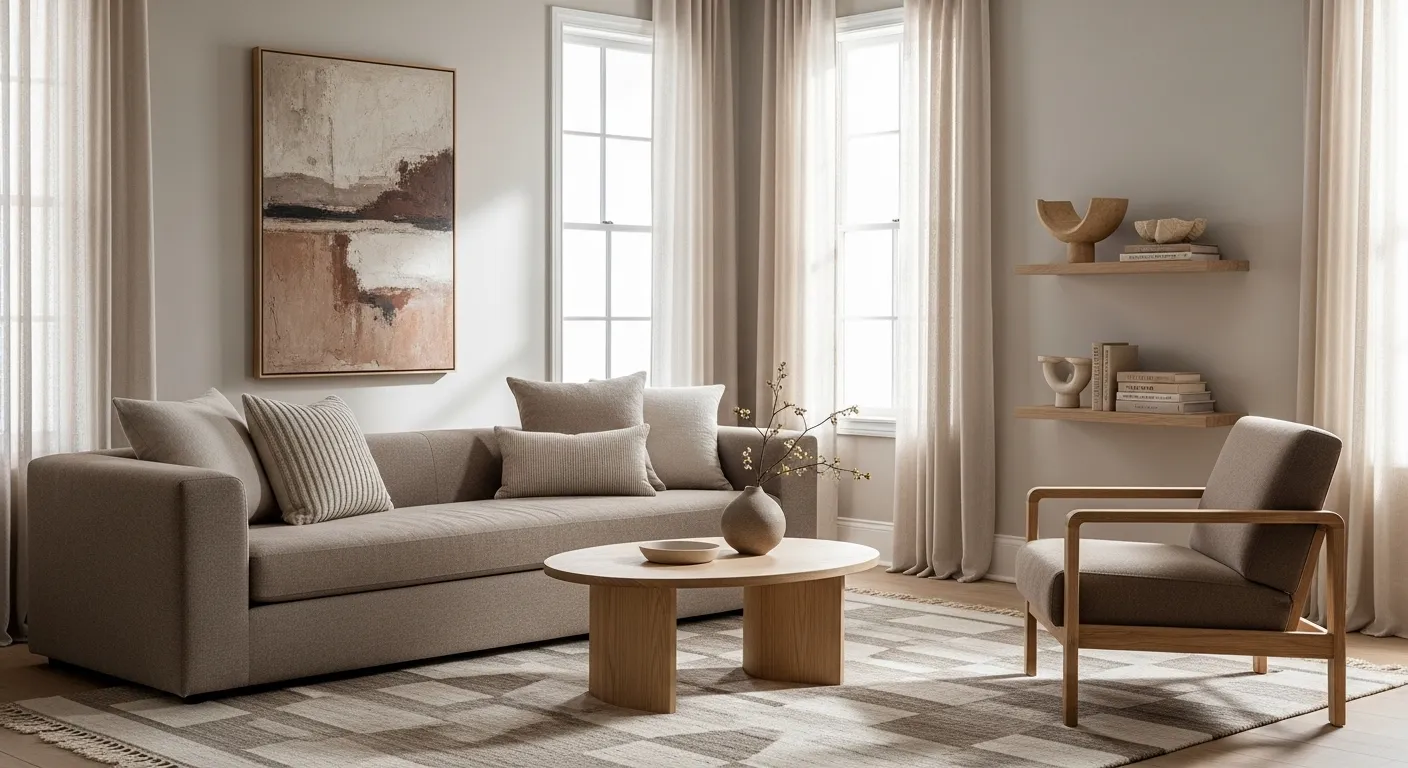
The vignette below is a great example of soft taupe paired with oak and airy linen—notice the gentle contrast created by the table tone and the curtain softness.
Actionable palette pairings (choose one lane):
- Soft & airy: taupe + warm off-white + pale oak + matte ivory ceramics
- Warm & grounded: taupe + sand + mid-tone oak + espresso accents
- Modern contrast: taupe + warm white + oak + small hits of black (frames, lighting, hardware)
One more note: greenery counts as a color accent. A single sculptural plant (olive tree, ficus, or even a simple branch arrangement) can replace “decor color” while staying aligned with Japandi restraint.
Layout, Flow & Negative Space (The Part Most People Skip)
In Japandi rooms, the layout does as much work as the decor. If you want the calm you see in photos, plan for negative space: breathing room around furniture, clear sightlines, and fewer obstacles. I often rework living rooms by removing a piece before I add anything. Even one extra side chair that’s rarely used can make circulation feel tight and visually cluttered.
Start with the “conversation rectangle”: sofa + coffee table + (optional) one chair. Keep walkways at least 30–36 inches where possible. If your room is small, go narrower on the coffee table (or use two small nesting tables) rather than pushing everything against walls. In Japandi, “floating” a sofa a few inches off the wall can actually make the room feel more designed, even if it seems counterintuitive.
Next, anchor the zone with a rug large enough that at least the front legs of the sofa sit on it. Undersized rugs are one of the biggest reasons a Taupe Living Room feels like it’s missing something—your eye can’t settle because the zone isn’t defined.
Finally, be intentional about what you see from the doorway. Japandi loves a composed focal point: a centered coffee table vignette, a single piece of wall art, or a simple shelf styling moment. If the first view is a pile of cords, a crowded bookcase, or scattered toys, you’ll never experience the calm the style promises.
Action steps:
- Stand in the doorway and take a photo. Circle what feels visually messy. That’s your first edit list.
- Choose one “quiet focal point” (coffee table, artwork, or shelves) and simplify everything else around it.
- Use closed baskets (lidded if possible) for everyday items like remotes, chargers, and toys.
Styling Tips & Budget-Friendly Upgrades That Still Feel Premium
Styling a Japandi living room isn’t about adding more—it’s about choosing better. When I style a space like this, I aim for a small number of objects with strong material presence: wood, linen, stone, ceramic, paper, and a little matte metal. That material mix is what reads “premium,” even if the objects themselves are affordable.
Start with textiles. A linen-look curtain instantly softens a taupe wall and adds that airy Scandinavian layer. Then add a rug with texture rather than pattern: wool loop, jute-wool blend, or a subtle ribbed weave. On the sofa, layer two pillows in slightly different taupe/off-white tones (not identical), plus one throw with a visible weave. The goal is to create depth without introducing busy prints.
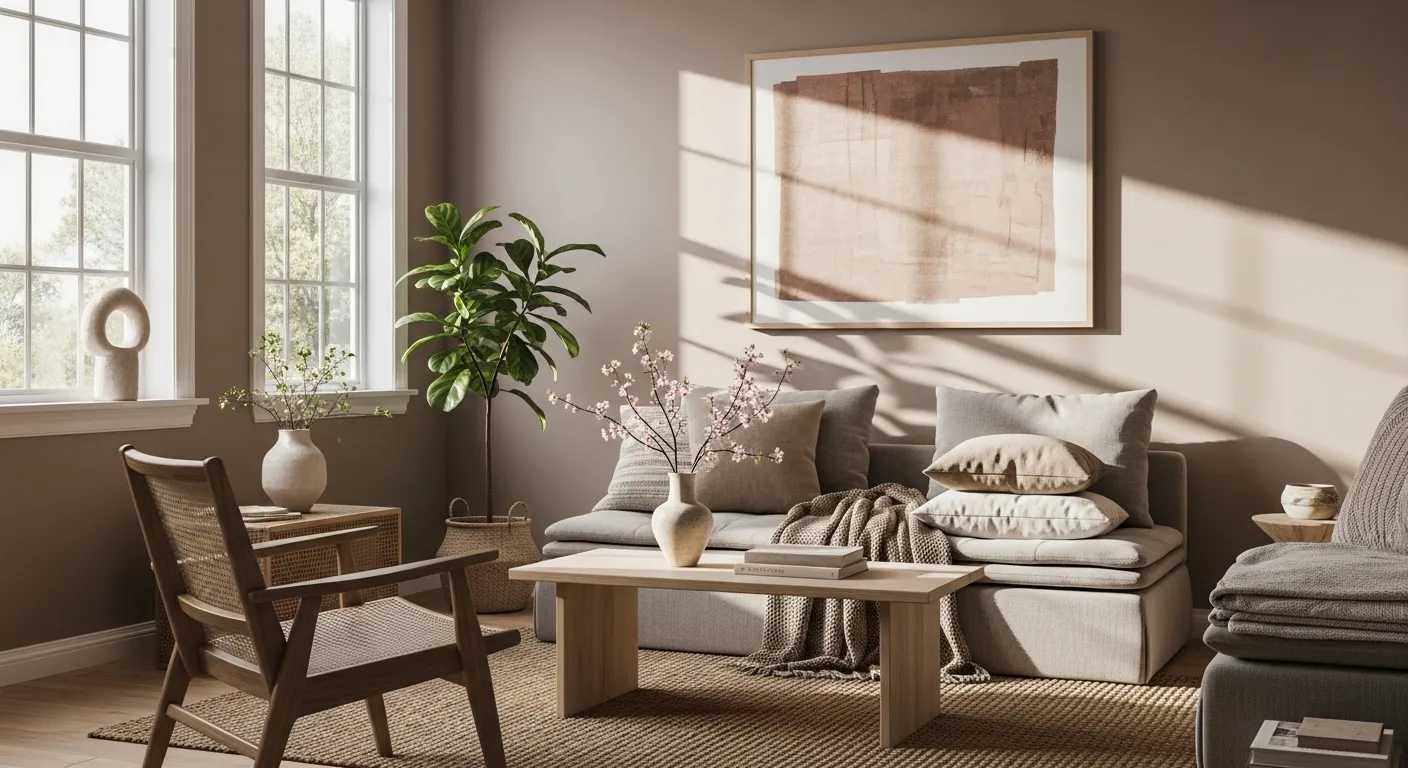
Next, the coffee table vignette: I almost always do a tray (wood or matte stone), one low bowl, and one vertical element like a small branch in a ceramic vase. Keep height variation modest—Japandi styling looks best when it feels grounded and stable. The cozy corner below shows exactly that: layered cushions, a low table, and warm light that makes neutrals look intentional.
Budget-friendly upgrades that make the biggest visual impact:
- Swap shiny hardware for matte black or soft brushed metal (often $25–$80 total for a small room).
- Replace cool bulbs with warm LEDs (2700K) and add one paper or linen shade ($30–$180).
- Add one oversized art piece in a thin wood frame (DIY printable art + frame can be $60–$200).
- Upgrade cushion inserts to feather/down alternative for that relaxed “designer” sit ($10–$30 each).
Action step: pick one surface (coffee table, console, or shelf) and style it with a rule of three: one flat object (book/tray), one rounded object (bowl), one vertical object (vase/branch). Then remove anything else on that surface for a week. If you don’t miss it, it doesn’t belong.
Lighting, Textiles & Finishing Touches (The Calm-Maker Layer)
Lighting is where Japandi becomes livable. Taupe can look different hour-to-hour, so you want layered lighting that keeps it warm and consistent. I recommend three layers:
- Ambient: overhead light on a dimmer (or at least a warm bulb)
- Task: a reading lamp by the sofa or lounge chair
- Accent: a small table lamp that makes the room feel “on” even when the overhead is off
For window treatments, linen or linen-look panels are the most Japandi-friendly choice because they soften light without feeling fussy. Hang them high (close to the ceiling) and wide (so the panels stack mostly off the glass). That simple install choice makes ceilings feel taller and the room feel calmer.
Finishing touches should be intentional and minimal: a sculptural branch, a matte ceramic vessel, a single black frame, or a woven basket. This is also where scent and sound matter more than people admit—one subtle diffuser and a soft throw nearby can change the entire experience of the space.
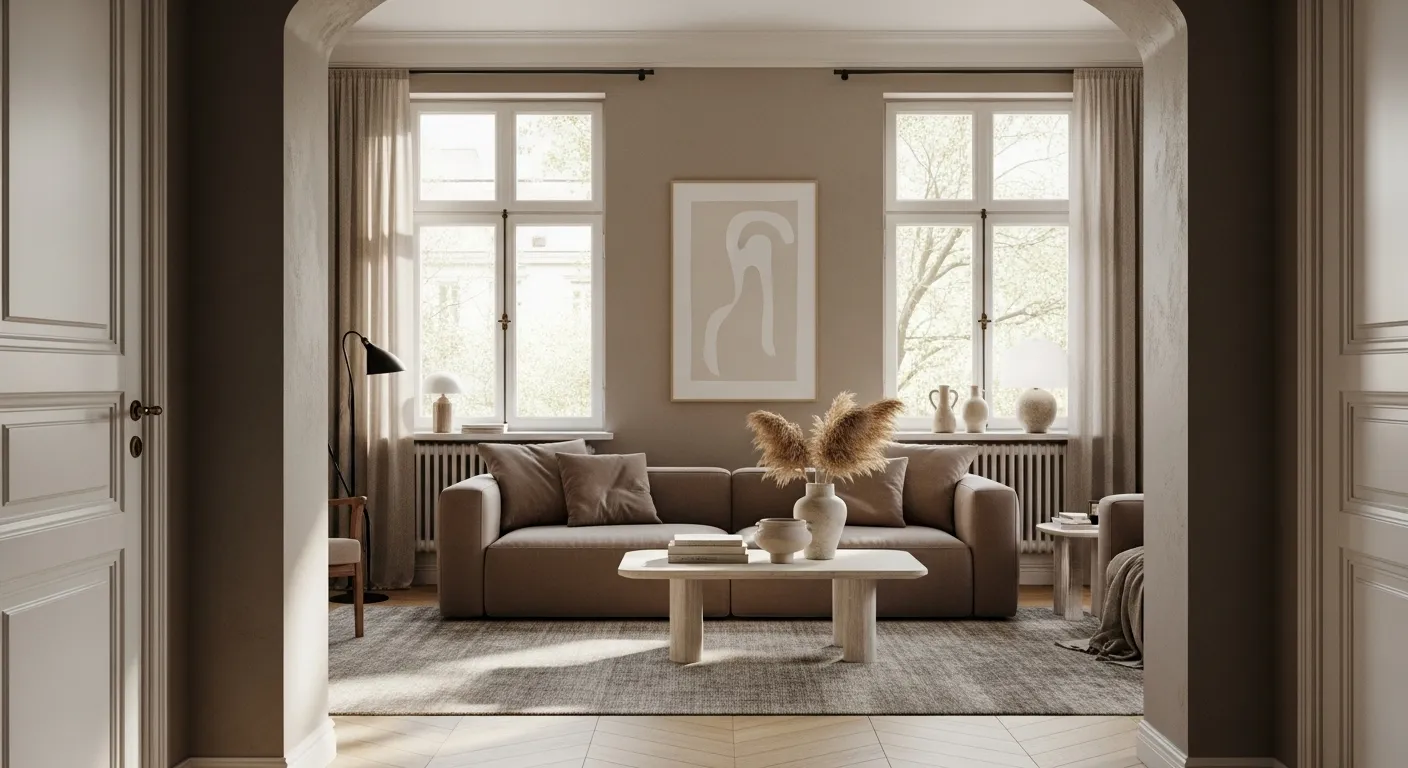
The room below captures that airy finish beautifully: pale wood, neutral textiles, and drapery that filters light in the most flattering way for taupe.
Action steps to finish the room:
- Add a dimmer (or smart bulbs) and set an evening scene around 30–40% brightness.
- Choose one “signature texture” and repeat it twice (linen curtains + linen pillow, or ribbed ceramic + ribbed vase).
- Keep decor to functional beauty: trays corral clutter, baskets hide it, and ceramics soften hard lines.
How to Recreate This Japandi Look
Use this step-by-step plan to build the look without second-guessing. I’m writing it the same way I’d guide a client through an install: foundation first, styling last.
- Choose your taupe anchor. Decide whether taupe lives on the walls (paint) or on the sofa (upholstery). If you rent, start with the sofa and textiles.
- Select your wood tone. Pick one primary wood (pale oak, mid-oak, or walnut) for the coffee table and repeat it once elsewhere (shelf, frame, side table).
- Go low and simple. Choose a low-profile coffee table and keep the silhouette rounded or softly squared—no bulky legs or ornate details.
- Lay the foundation textiles. Add a textured rug in a warm neutral (off-white/sand) and linen-look curtains to soften daylight.
- Build contrast intentionally. Add one small dark element: a black lamp, charcoal cushion, or deeper wood accessory to keep taupe from feeling washed out.
- Style with restraint. Use a tray + one bowl + one vase/branch on the coffee table. Stop there and live with it for a week.
- Edit for calm. Move anything “miscellaneous” into closed storage. Japandi looks best when your surfaces can breathe.
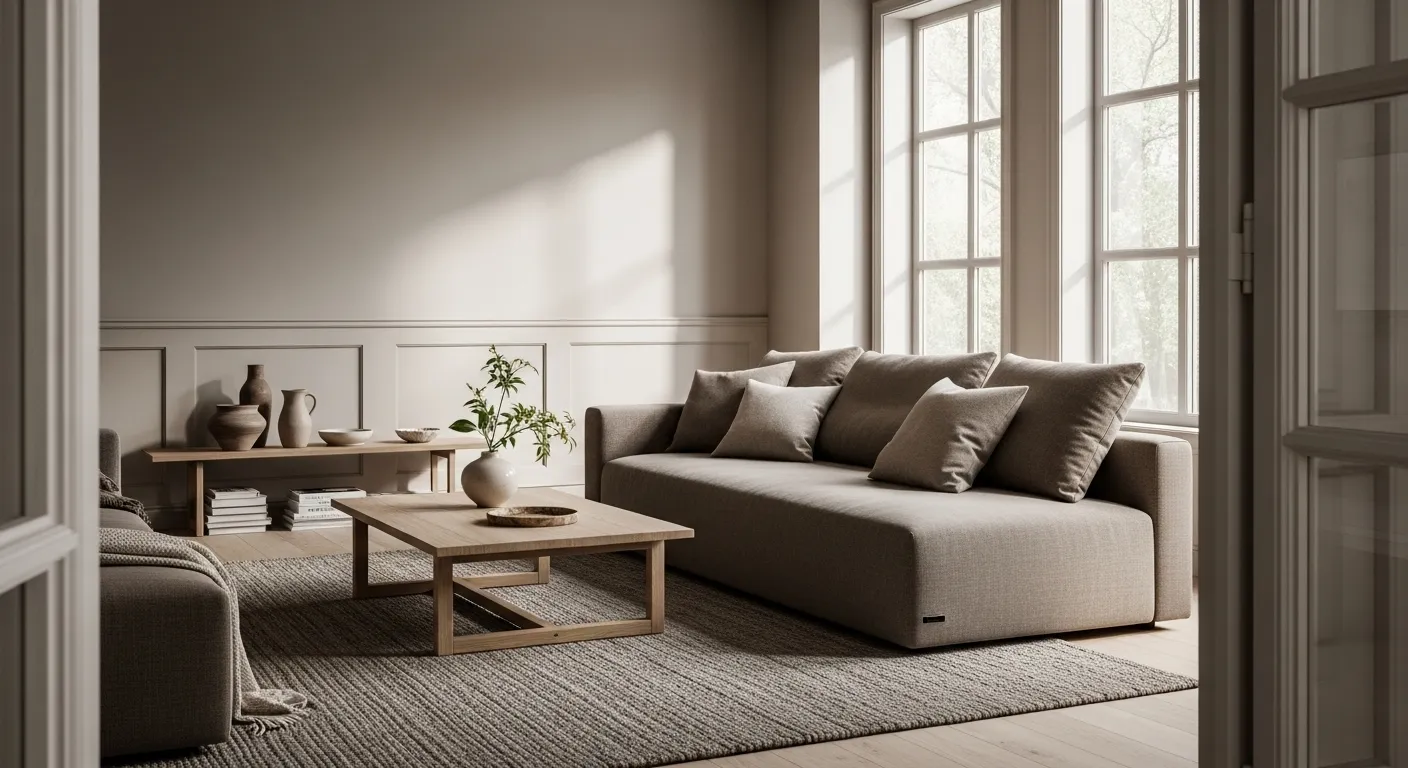
Use the image below as your visual reference for proportions: low sofa, pale wood table, and soft daylight that flatters taupe.
Budget Breakdown
These ranges reflect what I typically see when clients recreate a Japandi-inspired Taupe Living Room with a low wood coffee table, neutral seating, textiles, and a few pieces of Japandi decor. Prices vary by size and quality, but the categories below help you plan realistically.
Low Budget: $650–$1,500
- Rug (synthetic or jute blend): $150–$400
- Curtain panels (linen-look): $60–$180
- Coffee table (simple wood or veneer): $120–$300
- Lighting (one floor lamp + warm bulbs): $80–$250
- Accessories (tray, vase, branch, pillows): $120–$370
Mid Budget: $1,800–$4,500
- Rug (wool or wool blend): $450–$1,200
- Curtains (better fabric + hardware): $250–$700
- Coffee table (solid wood): $400–$900
- Accent chair or closed storage: $450–$1,500
- Lighting + dimmers: $250–$700
- Decor (ceramics, art, baskets): $200–$500
High Budget: $5,000–$12,000+
- Rug (hand-knotted or high-end wool): $1,500–$4,000
- Custom linen drapery: $1,200–$3,500
- Solid wood coffee table (artisan): $900–$2,500
- Designer sofa or reupholstery: $2,500–$7,500
- Layered lighting plan: $600–$2,000
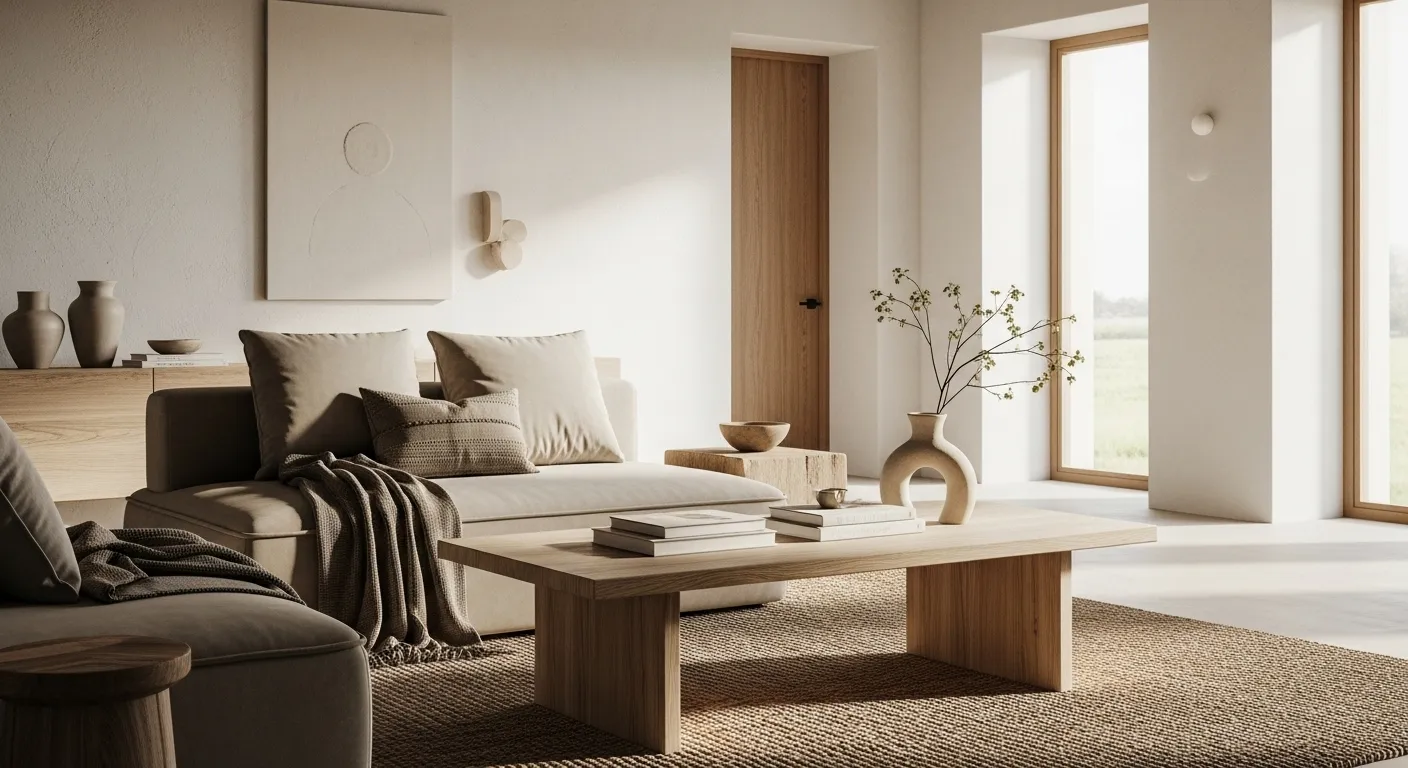
This image captures the type of balanced, sunlit neutral scheme you can achieve at multiple budgets—the key is prioritizing proportion and texture first.
Where to Shop
You can recreate a Japandi look without hunting specific designer labels. Focus on categories and materials, then filter for clean lines and warm neutrals.
Furniture Categories to Search
- Low-profile sofa in taupe, sand, or warm gray with a structured seat
- Low wood coffee table (oak, ash, walnut) with rounded corners
- Closed storage cabinet (slatted wood, simple shaker fronts, or flat fronts)
- Accent chair in light wood + woven seat or neutral upholstery
Textiles & Soft Goods
- Wool or wool-blend rugs with low-contrast texture
- Linen or linen-look curtains in warm off-white
- Pillows in nubby weaves, bouclé, or basketweave (avoid shiny fabrics)
Japandi Decor & Finishing Pieces
- Matte ceramics (stoneware, sandy glazes, off-white)
- Wood trays and bowls to corral clutter
- Paper or linen lampshades for soft glow
- Baskets (lidded if possible) for everyday storage
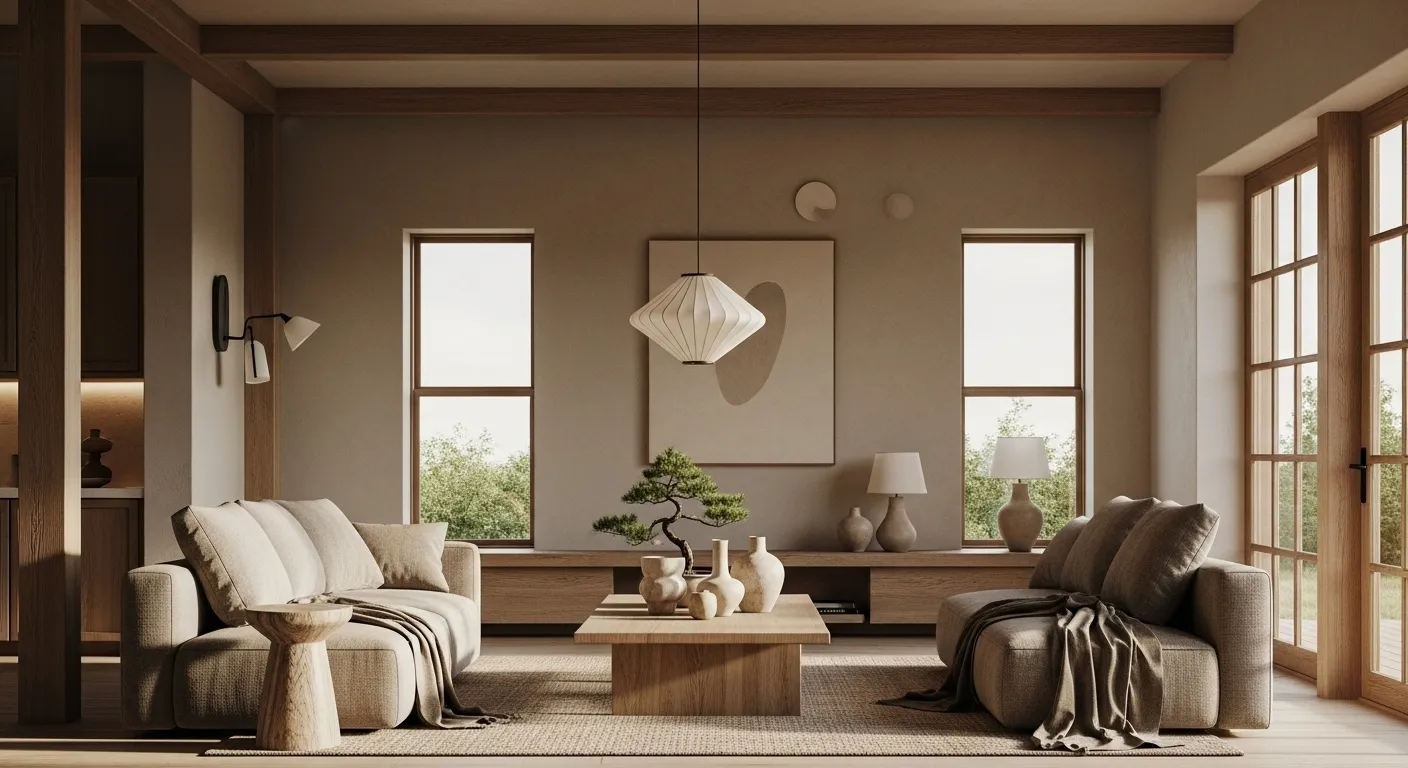
The scene below is a great shopping reference: two low sofas, warm wood structure, and minimalist ceramics—simple pieces, thoughtfully chosen.
FAQ
1) Is taupe a good color for a small living room?
Yes—taupe is often better than bright white because it reduces glare and feels softer. Keep contrast controlled (warm white textiles + one darker accent) and use sheer or linen curtains to maximize flattering light.
2) What’s the easiest way to make a Taupe Living Room feel more “Japandi”?
Lower the visual profile: swap to a lower coffee table, simplify your surfaces, and add one strong natural material (oak, linen, stoneware). Japandi decor is more about restraint than buying lots of accessories.
3) Can I mix black accents with taupe Japandi style?
Absolutely. A small amount of black (lamp, frame, hardware) creates clarity and keeps taupe from looking washed out. The key is using black sparingly and repeating it once or twice for cohesion.
4) What kind of rug works best in Japandi?
Go for texture over pattern: wool loop, subtle ribbed weaves, or very low-contrast tone-on-tone designs. Avoid busy, high-contrast prints if your goal is a calm, minimalist feel.
5) What wood tone should I choose with taupe?
Pale oak looks airy and Scandinavian; mid-tone oak feels warm and organic; walnut adds sophistication and contrast. Choose one primary wood and repeat it to keep the room from feeling mismatched.
6) How do I keep taupe from feeling boring?
Use a clear contrast element (dark wood or black), and add tactile layers—linen, nubby knits, ceramics, and a textured rug. In Japandi spaces, “interesting” comes from materials and light, not bright color.
Final Thoughts
The most successful Japandi Living Room ideas don’t rely on lots of stuff—they rely on smart foundations: a taupe anchor, warm woods, low proportions, layered textiles, and lighting that makes the room feel calm from morning to night. If you take one thing from this guide, let it be this: edit first, then add only what earns its place. That’s how a Taupe Living Room becomes quietly luxurious—and how Japandi decor stays timeless rather than trendy.